

Since I began my dedicated exploration of the American handgun marketplace years ago, things have changed. What was once a much more diverse selection of action types, sizes, frame materials and calibers seems to have been washed away by a tidal wave of compact, striker-fired, polymer-framed semi-automatics chambered in 9 mm. These are certainly useful defensive pistols with dozens of configurations from a variety of manufacturers. But it seems like what was true for Ford’s Model T back in 1914 is now the case for modern handgun fans. You can have any color you want, just as long as it’s black.
But one American manufacturer continues to take a stand against this polymer tsunami. Bond Arms, of Granbury, Texas, is celebrating 30 years of making stainless-steel, big-bore pistols sized to slip into a pocket. Let’s take a look at the features these break-action double-barrels have to offer, a few of this company’s model milestones and the special editions being offered to celebrate this anniversary.
Don’t Call It a Derringer!
When longtime tool and die maker Greg Bond founded Bond Arms in 1995, “derringer” was sort of a dirty word in the shooting sports industry. This was due, in no small part, to the plethora of cheaply produced, sub-caliber handguns that gained popularity during the 1960s and 1970s. Although these handguns were inexpensive to purchase, they were often shoddily constructed from questionable materials and could not be counted on to operate reliably.
Among these pot-metal pocket pistols were inexpensive clones of the Remington Model 95 derringer. Originally chambered in .41 Rimfire, this pocketable two-shot over-under pistol was manufactured from 1866 to 1935. Along with being popular in its day for concealed carry, it’s become a staple of Old West movies. It’s that little double-barrel being pulled out of the boot tops and vest pockets of crafty card sharps when things don’t go to plan at the poker table.
Although the original Remington Model 95 was as well made as the technology of the day would allow, the design had fundamental flaws, in particular, its lack of external safeties and a barrel latch that might not lock up properly. By the early 1990s, many clones of the platform were manufactured using questionable lightweight alloys in small calibers like .22 LR, .25 ACP and .32 ACP. Overall, they were not handguns that anyone could really take any pride in owning.
A Next Generation Double-Barrel Pistol
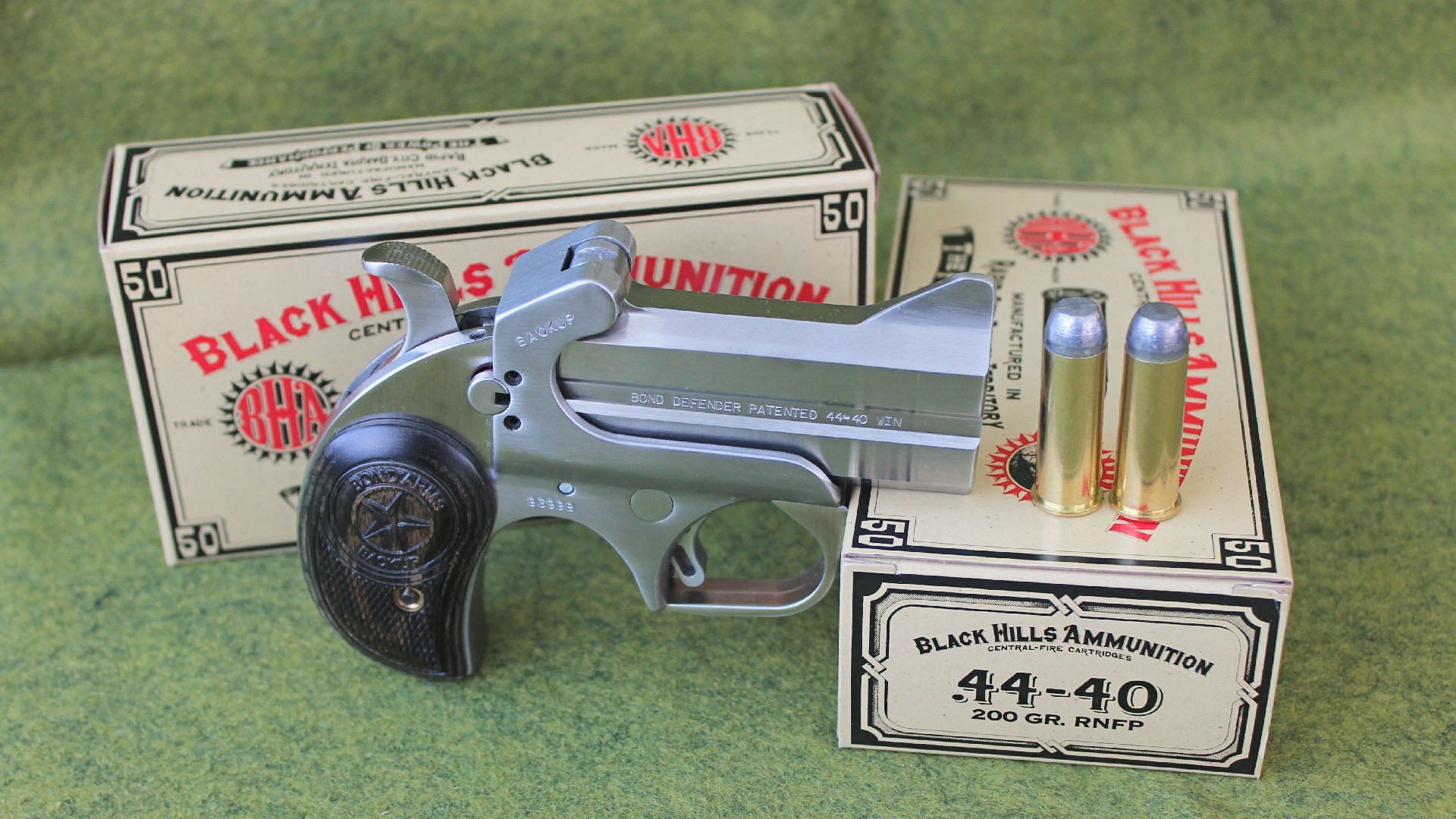
To counter these double-barrel derringer stigmas, Greg Bond took the Remington Model 95 back to the drawing board. The frame, barrel and barrel latch were beefed up and reinforced to handle big-bore rounds up to .45 caliber. The mystery metals were discarded in favor of an all-stainless steel construction. And high production values were at the top of the list. Each pistol would be carefully constructed and polished so they would stand out from their low-grade competitors. The results of his work are now reflected in the Hand Cannon series, which are sharp looking little guns that are built like a tank.
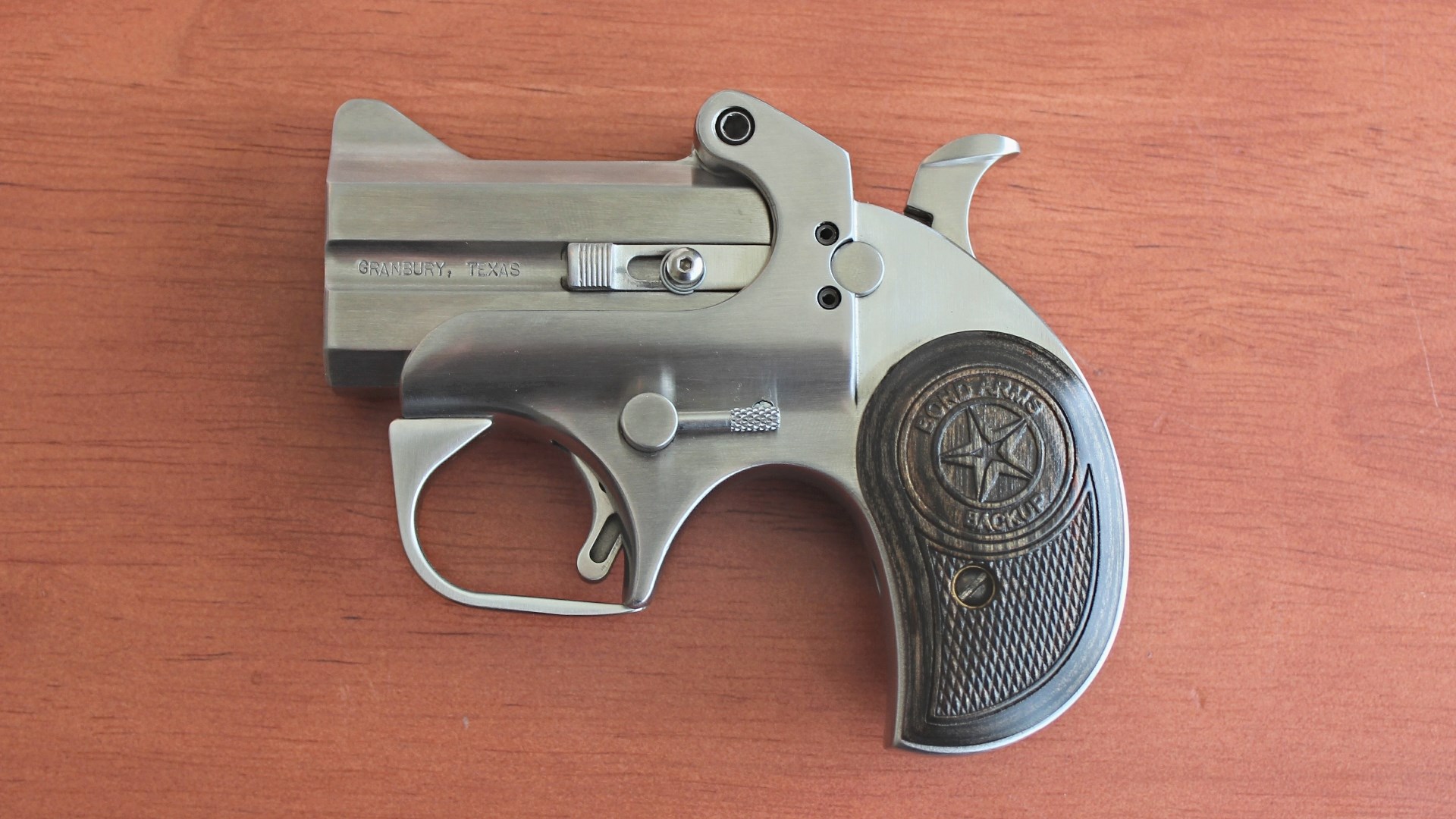
An important part of Bond’s re-design was the incorporation of modern safety features. A patented safety was added the trigger. In essence, it’s a hook that locks the barrel release lever in place as the pistol is fired. This prevents the barrel from swinging open if the release is bumped by the shooter’s thumb when the gun recoils. A push-button, cross-bolt safety, commonly found on rifles and shotguns, is installed in the frame behind the trigger. Set in the Safe position, it blocks the hammer from striking the dual firing pins, even if the pistol is fully cocked and the trigger is pressed.
Bond pistols are outfitted with a rebounding hammer mechanism. Each time the gun is fired, the hammer rebounds and locks in a half-cock position away from the frame. This means the hammer never rests against the firing pins so that the gun will not fire if bumped or dropped. The trigger is single-action-only, which requires the hammer to be manually cocked for each shot fired. Frames are available with a removable trigger guard for those who want it.
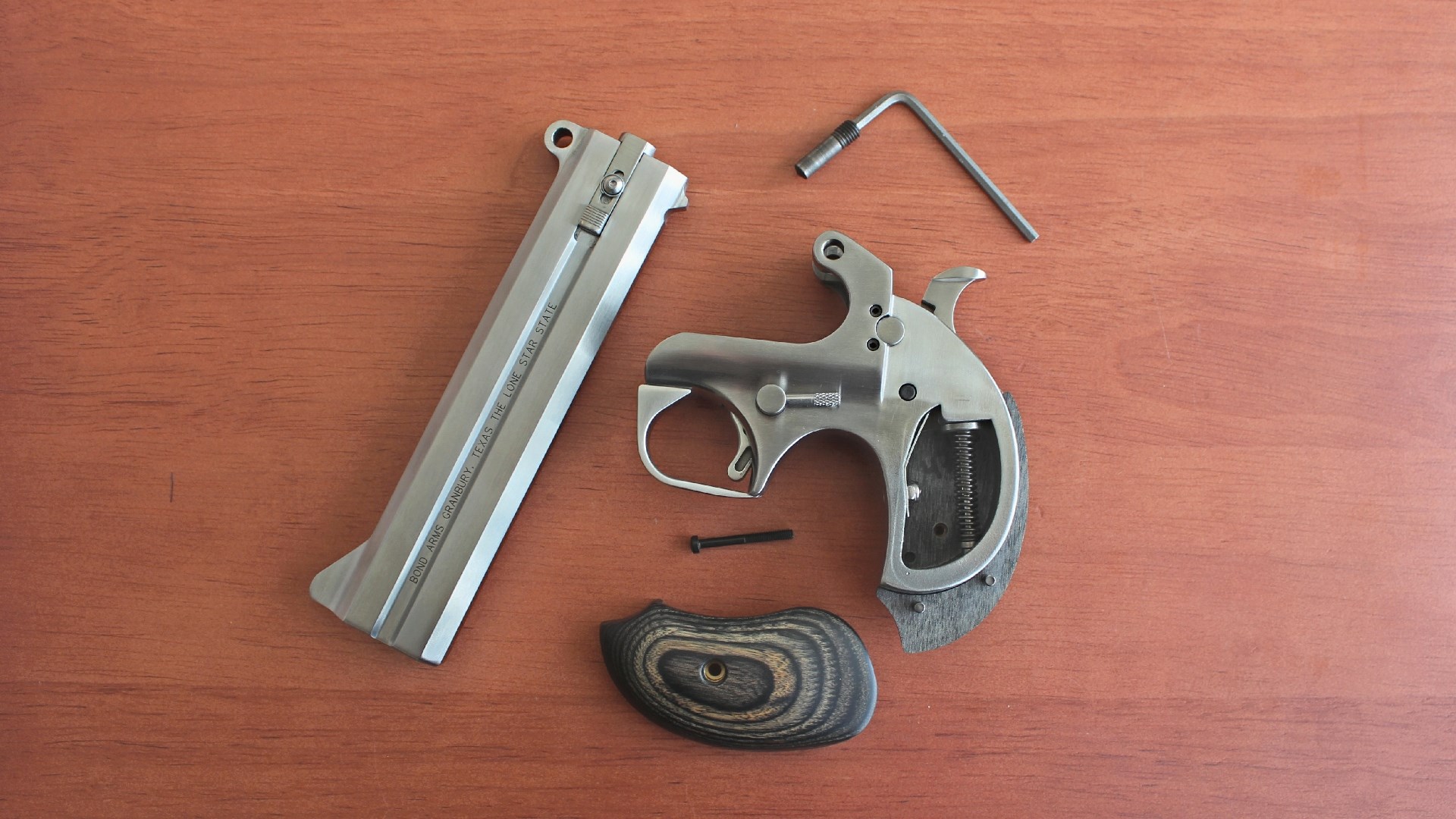
Despite all of these changes, the Old West derringer influences are still clearly evident in these pistols. The sight system consists of a fixed blade front sight paired with a notched rear sight, both of which are integral to the barrel. The barrels swing up and away from the grip frame for loading. The compact rounded bird’s head grip shape completes the unmistakably derringer profile.
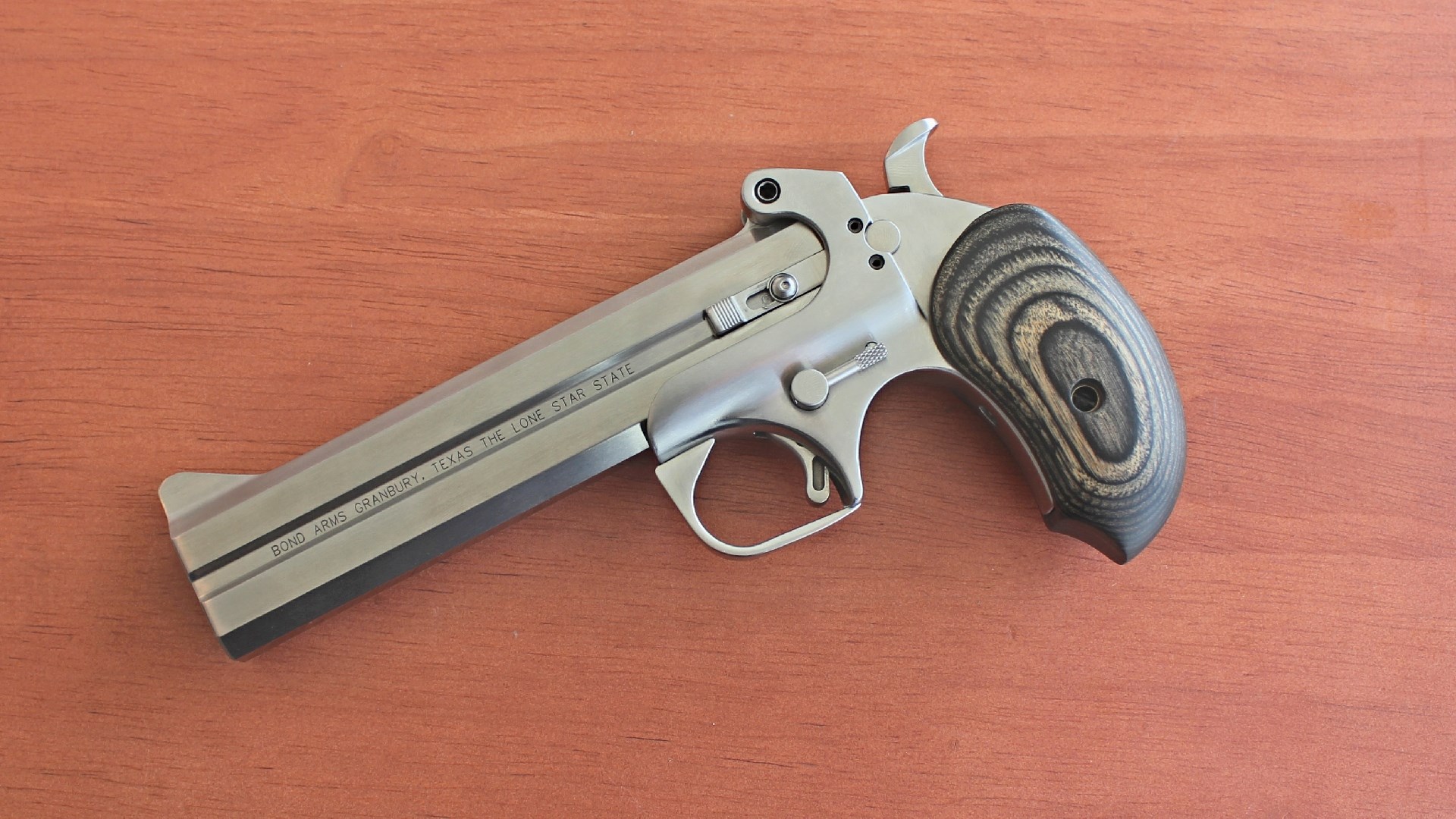
Grips & Caliber Conversion Barrels
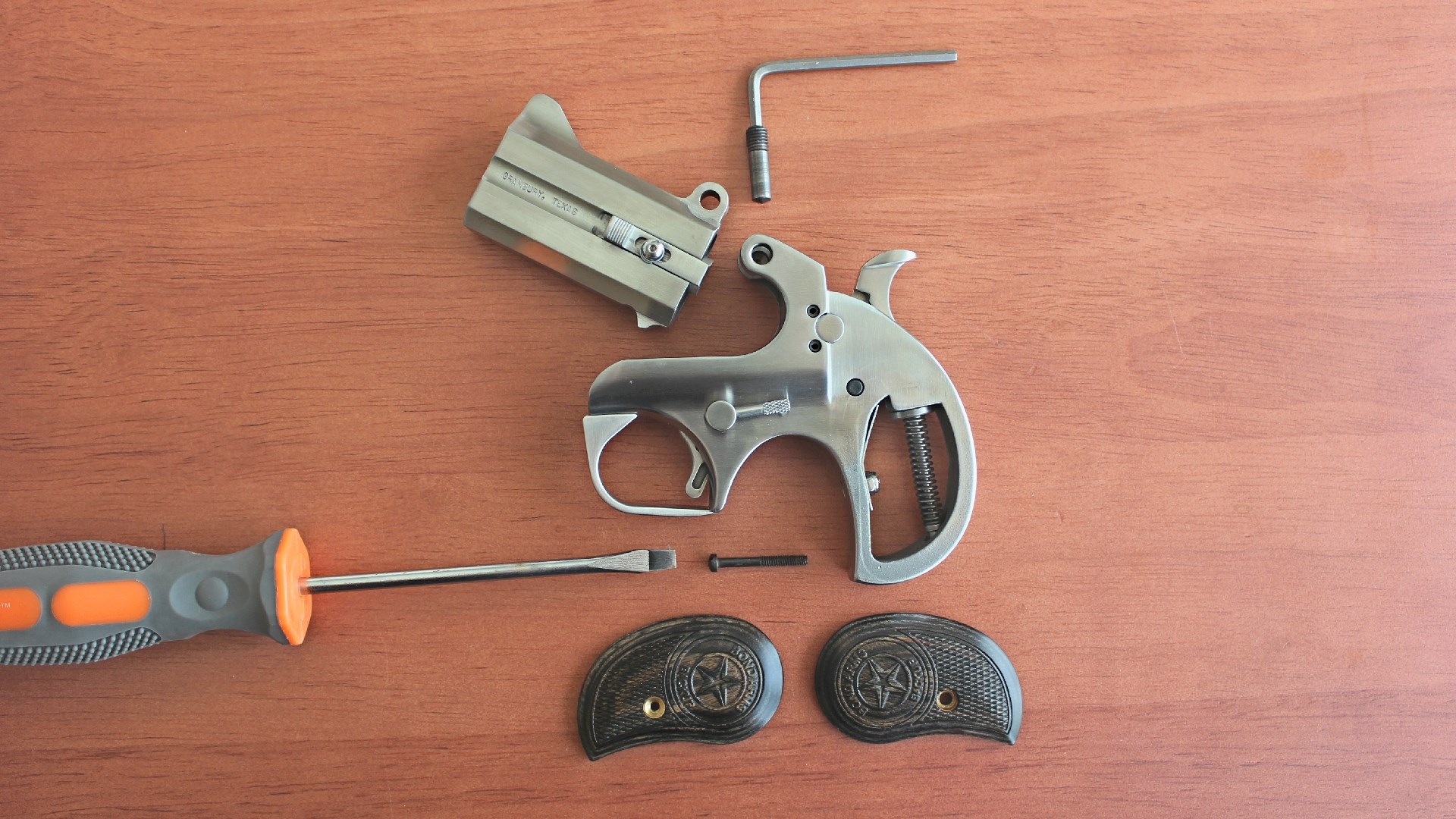
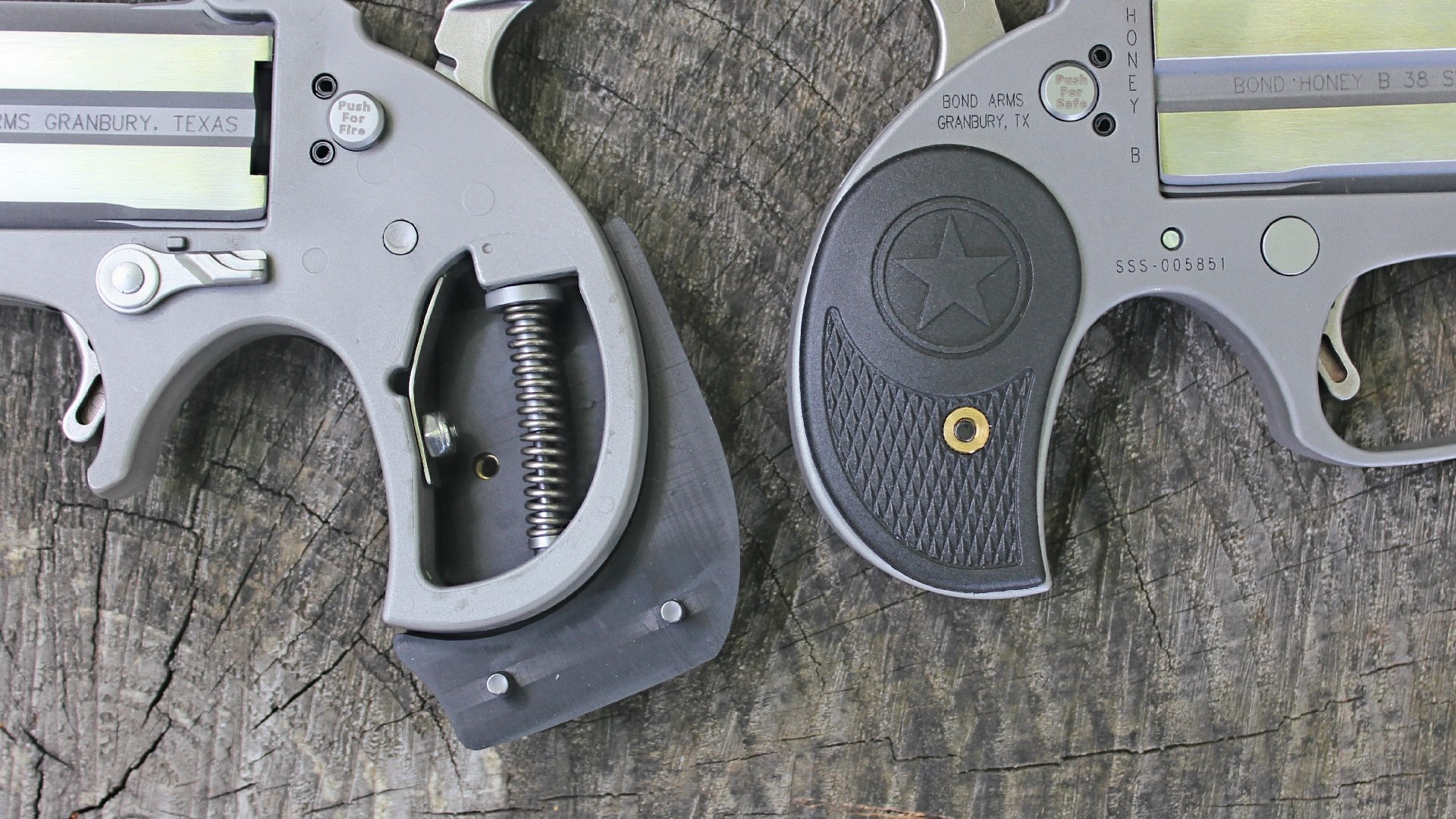
What some folks don’t know about Bond Arms is that the company’s pistols were modular before drop-in pistol parts were in high demand. Once you own a Hand Cannon grip frame, it can be converted into just about every other model and caliber option that the company offers. This is made possible with a broad selection of accessory grips and barrels. With a twist of the grip screw, grip panels can be removed and exchanged for a compact, two-finger grip, an extended three-finger grip or a hand-filling jumbo grip. Grip materials include textured rubber, laminated hardwoods and a durable B7 resin.
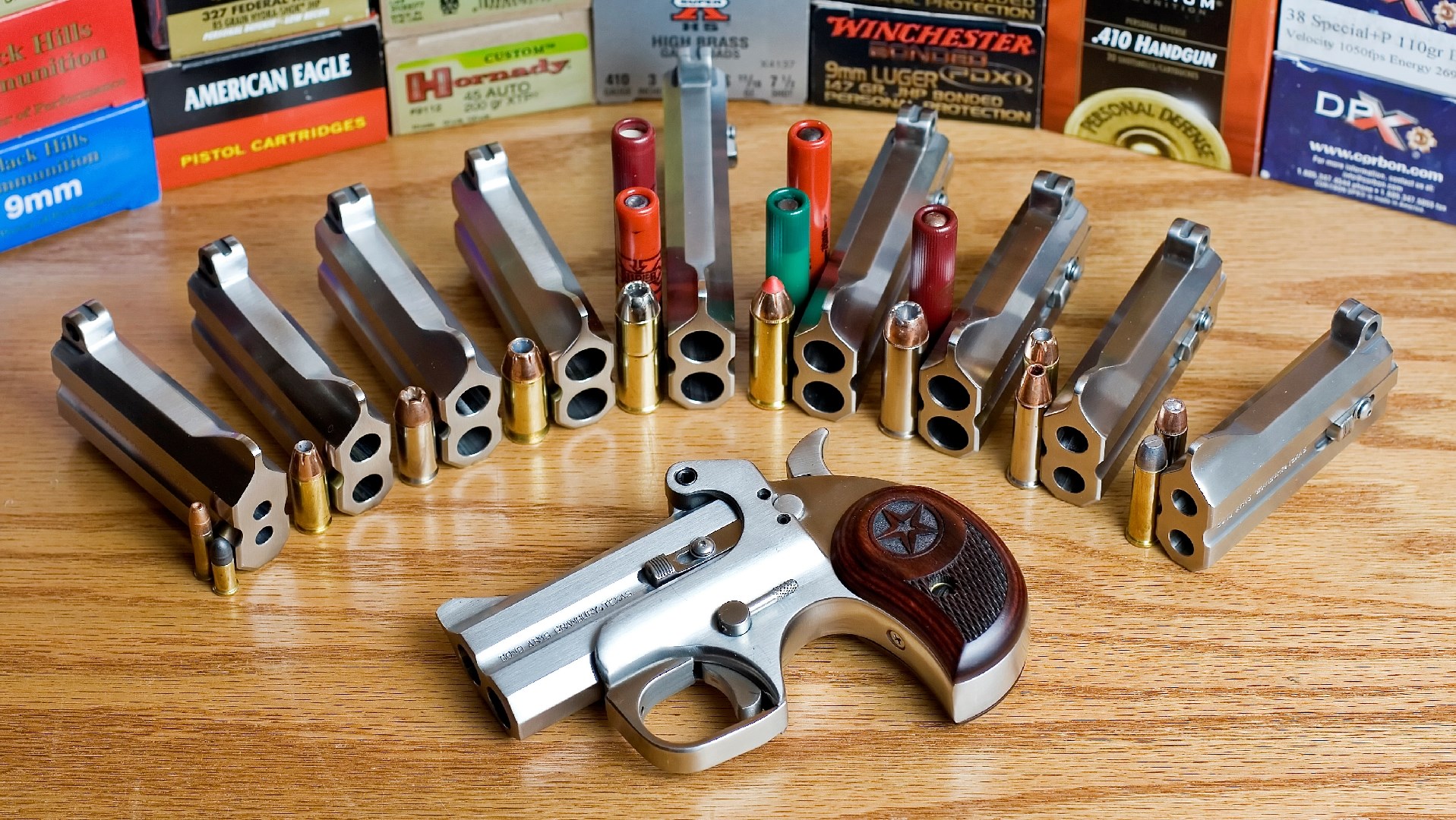
A key to the Bond pistol’s success is the ease with which the caliber and barrel length can be changed. The barrel’s hinge can be removed using a hex wrench to separate the double barrel from the frame. The barrels made for rimmed revolver rounds are fitted with a spring-loaded extractor mounted to the left side of the chambers. Caliber options include .327 Fed. Mag.; .357 Mag/.38 Spl.; .44 Spl.; .44-40 Win.; .45 Colt and the ever-popular dual-caliber .45 Colt/.410 bore shotgun shell barrels. The barrels chambered for semi-automatic pistol calibers exclude the ejector in favor of a chamber notch for lifting out the rimless cartridge cases. Available calibers include .380 ACP; 9 mm; .357 Sig.; .40 S&W; 10 mm Auto; .45 ACP and .30 Carbine.
The Rough Series
In 2007, Gordon Bond, Greg’s brother, purchased the company, which he continues to operate as president today. At that time, he continued with the standing business model of offering high-polish, all-stainless steel pistols. Folks who found their way to the company and its products became loyal fans. But the pistols remained more of a niche product due to their relatively high suggested retail prices. Pistols cost between $535 to $700, depending on the model.
By the late 2010s, the firearm marketplace had changed dramatically. First off, Bond Arms’ competition had almost completely dried up. The cheap Remington Model 95 clones were all but a memory, and no one was stepping up to offer their own take on a modern double-barrel design. Secondly, there was growing pressure from the shooting sports community for manufacturers to offer less-expensive products.
In 2019, Gordon and his team went over the pistol with a fine toothed comb to see how they could possibly cut production costs without sacrificing quality or safety. As it turned out, all they had to do was drop a single step in the manufacturing process to cut costs by about 50 percent. They simply stopped polishing the frames. That’s right, the time, labor and tools used to make the grip frames and barrels shiny were nearly doubling the costs.
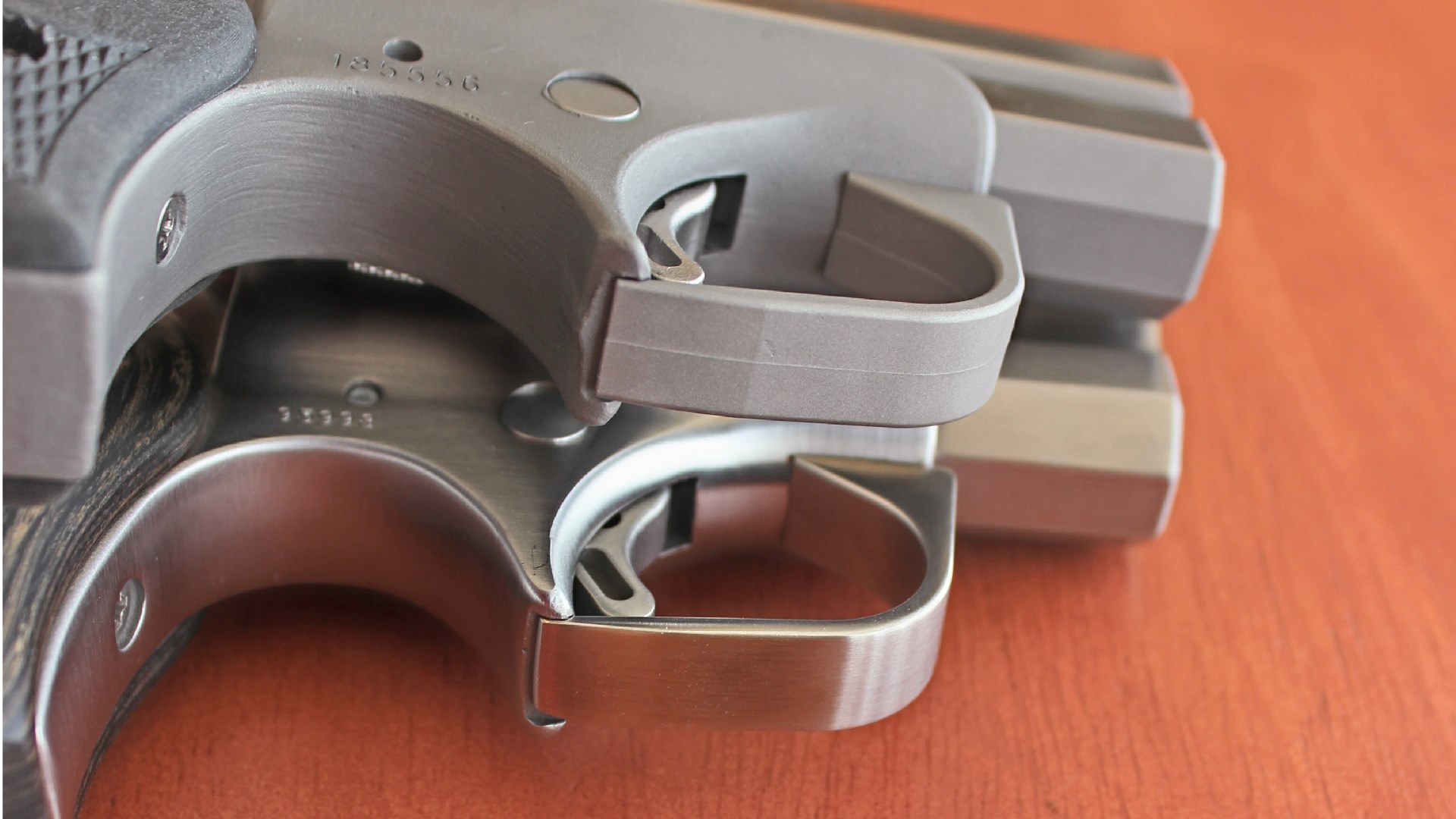
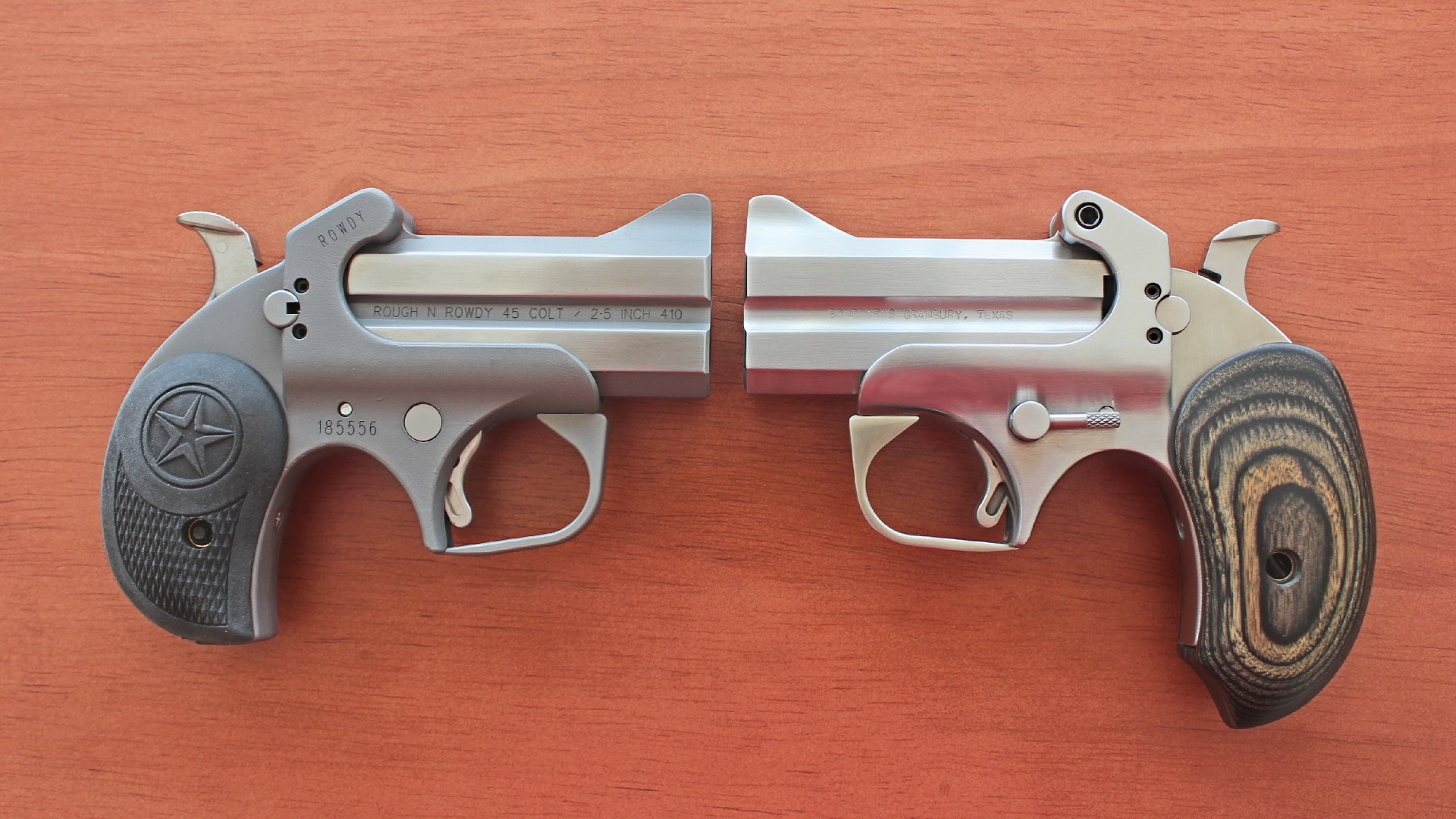
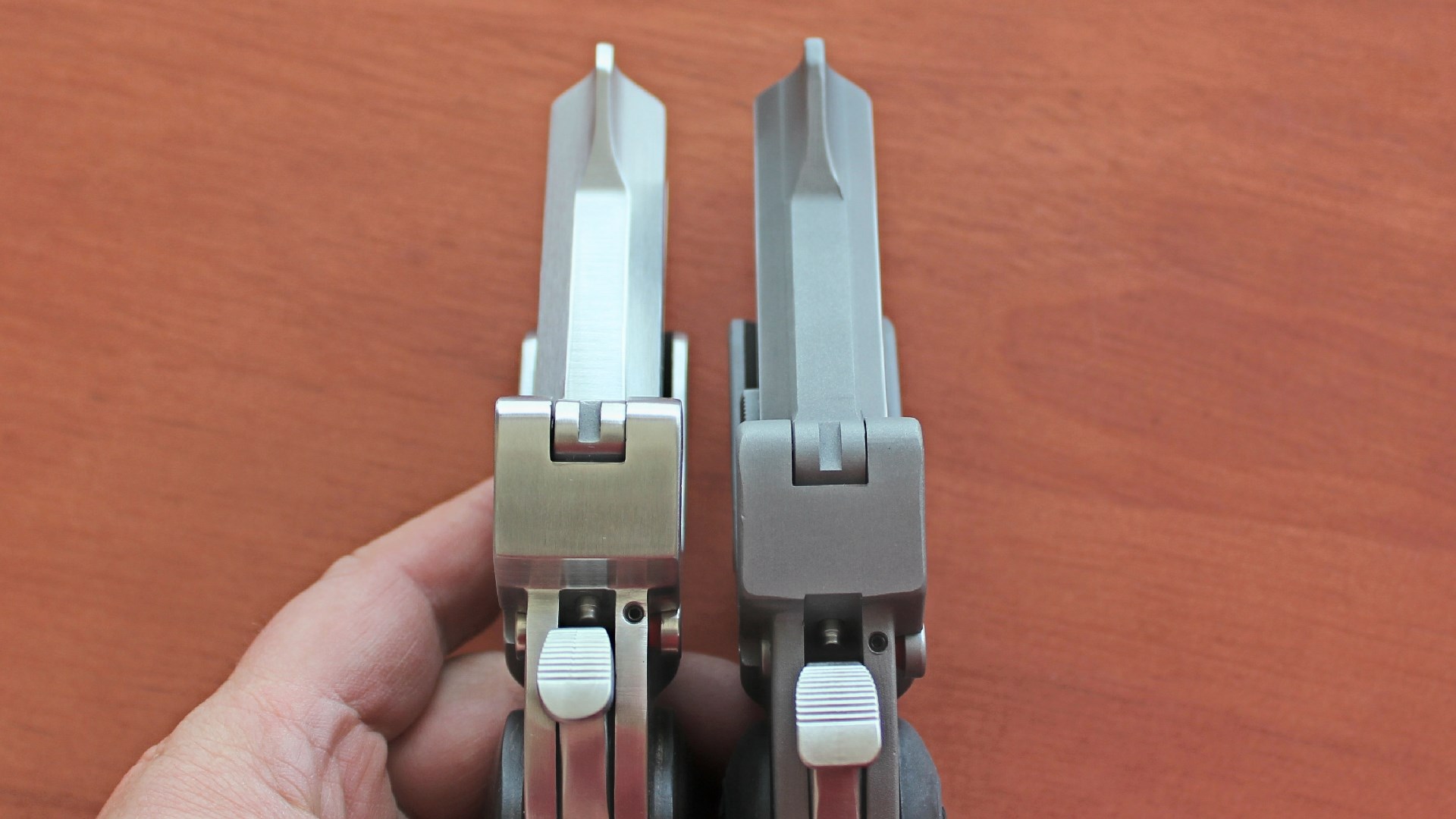
Thus the Rough Series was conceived. These Hand Cannon-frame pistols are mechanically identical to their high-polish predecessors in every way. They offer the same modularity, employ the same components and are manufactured using the same processes. But the frames receive a minimal rubdown that leaves them with a matte finish that may show visible mold and machine marks. With retail prices ranging from $249 to $377, no one seems to be complaining. In fact, the Rough series guns are now the company’s top-selling line.
The Stinger & Stinger RS Series
By 2021, Bond Arms was ready to tackle a longtime customer request. Although there are plenty of fans of the Hand Cannon-frame guns, some customers were looking for a slimmer, lighter configuration better suited to pocket carry. Their wish was granted in the form of the aluminum-frame Stinger.
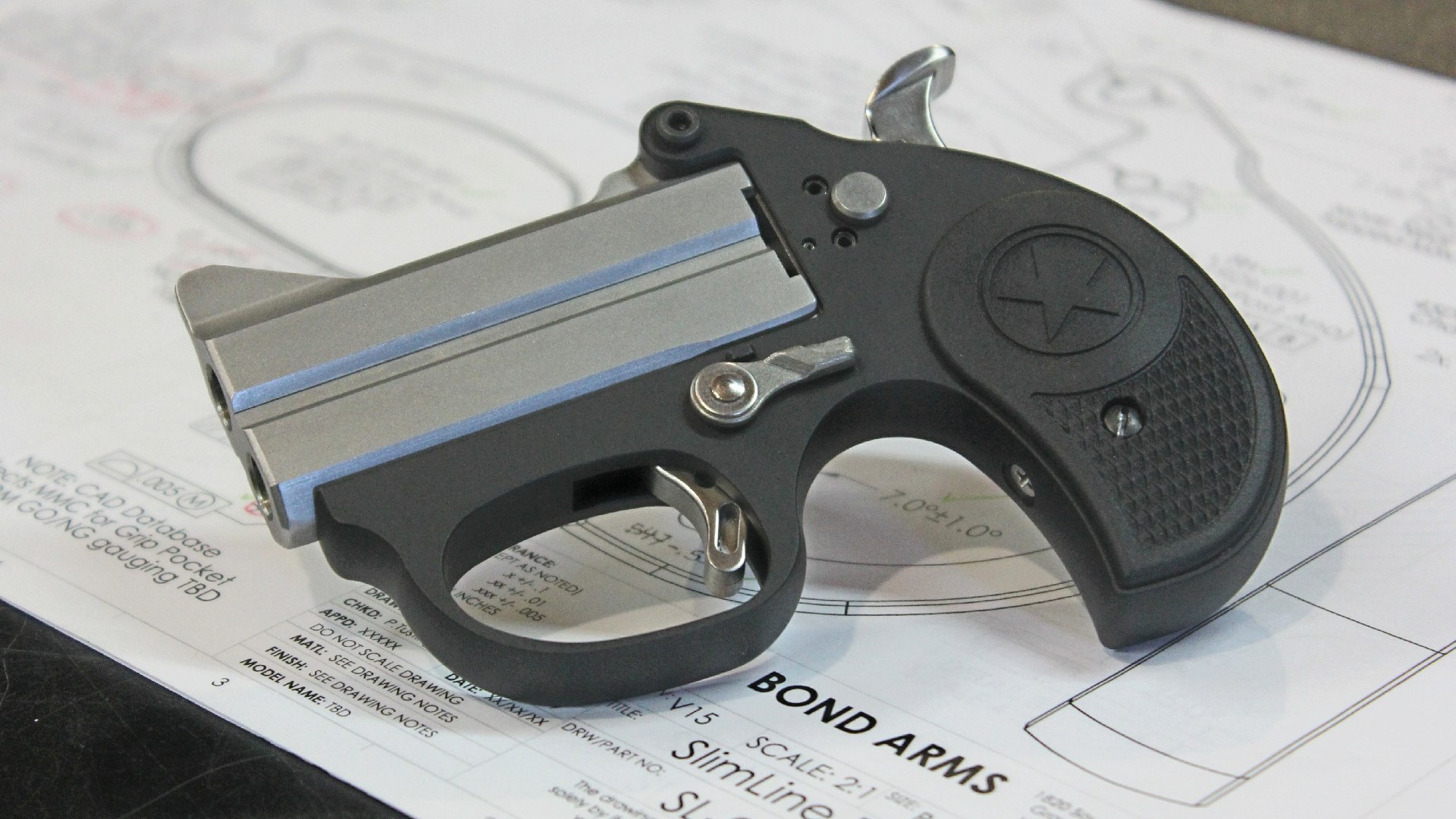
The all-steel Hand Cannons have 0.7-inch wide barrels, 0.96-inch wide frames (at the widest point) and a grip thickness of roughly 1.25 inches, depending on the grips. They weigh between 19 ozs. to 27 ozs., depending on the caliber and barrel length. The Stinger’s stainless barrel and aluminum frame have been trimmed to a width of 0.55-inch with a grip thickness range of 0.90-inch to 1.15 inches depending on which panels are installed. With the rest of the controls made from stainless steel, this model tips the scales at just 11.5 ozs.
It was important to Gordon that customers knew Bond Arms was not drifting into “Saturday Night Special” territory with this model. This is why the frames are milled from billets of 7075 aluminum and treated with a hardcoat anodized finish, just like AR-15 receivers. Because the barrels are narrower, the pistol and revolver caliber options are limited to .38-cal. or smaller. It should be noted here that Hand Cannon and Stinger barrels and grip frames are not interchangeable. However, Stingers are caliber-convertible for .380 ACP, 9 mm and .38 Spl. ammunition using the correct accessory barrels. This pistol is available with compact rubber grips for $389 or with extended B6 grips for $10 more.
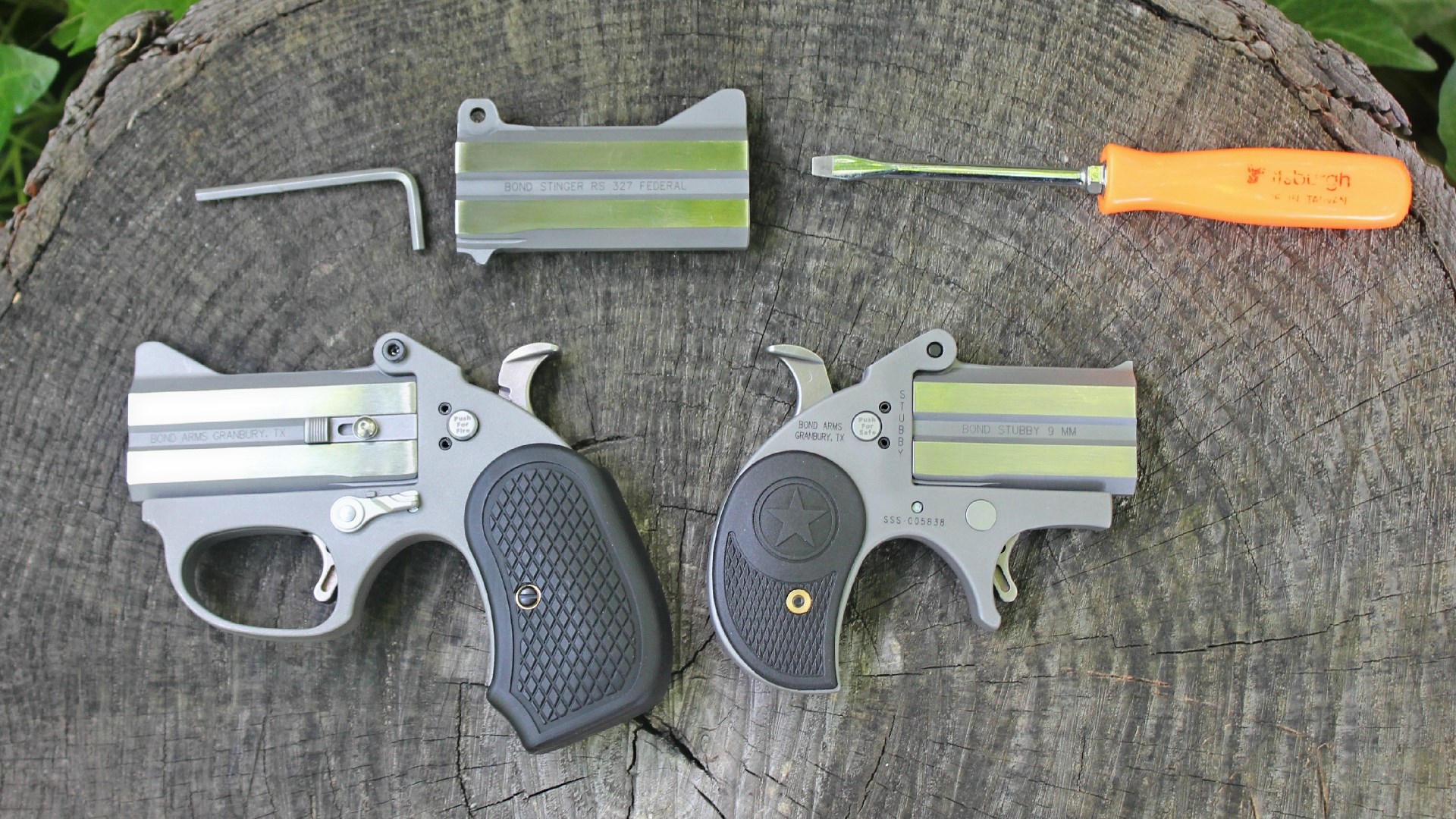
Not long after the Stinger genie was out of the bottle, Bond Arms enthusiasts came back with another request. They said the Stingers were the pocket-carry size they were hoping for, but was there any way the company could shave a bit off of the price? In the summer of 2022, the company met this request with the Stinger RS (Rough Series) models. They keep the slim profile of the aluminum Stinger but sport a matte finish stainless steel frame. This frame change bumps the pistol’s weight up into the 16-oz. to 18-oz. range but drops the prices down to $279.
One-Eyed Monsters: The Cyclops
Back in 2020, I approached Gordon with the request for a Bond Arms pistol chambered in .45-70 Gov’t. I was politely told to get in line with everyone else who had mentioned this idea over the years. Early on, his brother had offered the company’s double-barrels chambered in .44 Mag. which had resulted in two key mechanical challenges. One was the issue of cracked grips. Laminated hardwood is tough stuff, but it can’t defy the laws of physics.
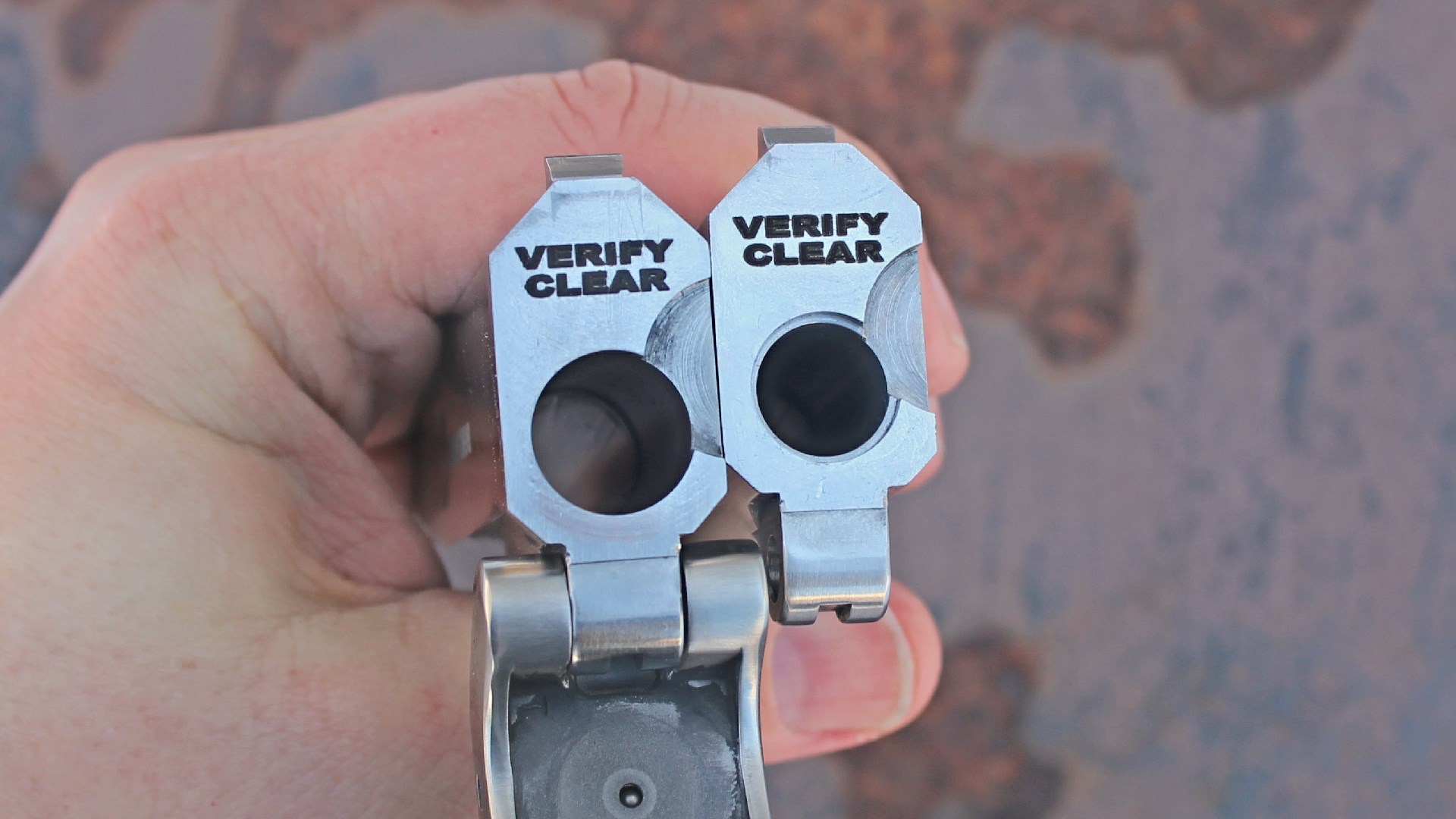
The other problem was what they call “doubling.” The magnum-level recoil generated by firing one barrel could cause the rebounding hammer to gain enough rearward momentum that it would fall forward and touch off the second barrel. The effect, from the shooter’s perspective, was that both barrels were firing at nearly the same time. It was by no means a positive shooting experience at either end of the pistol.
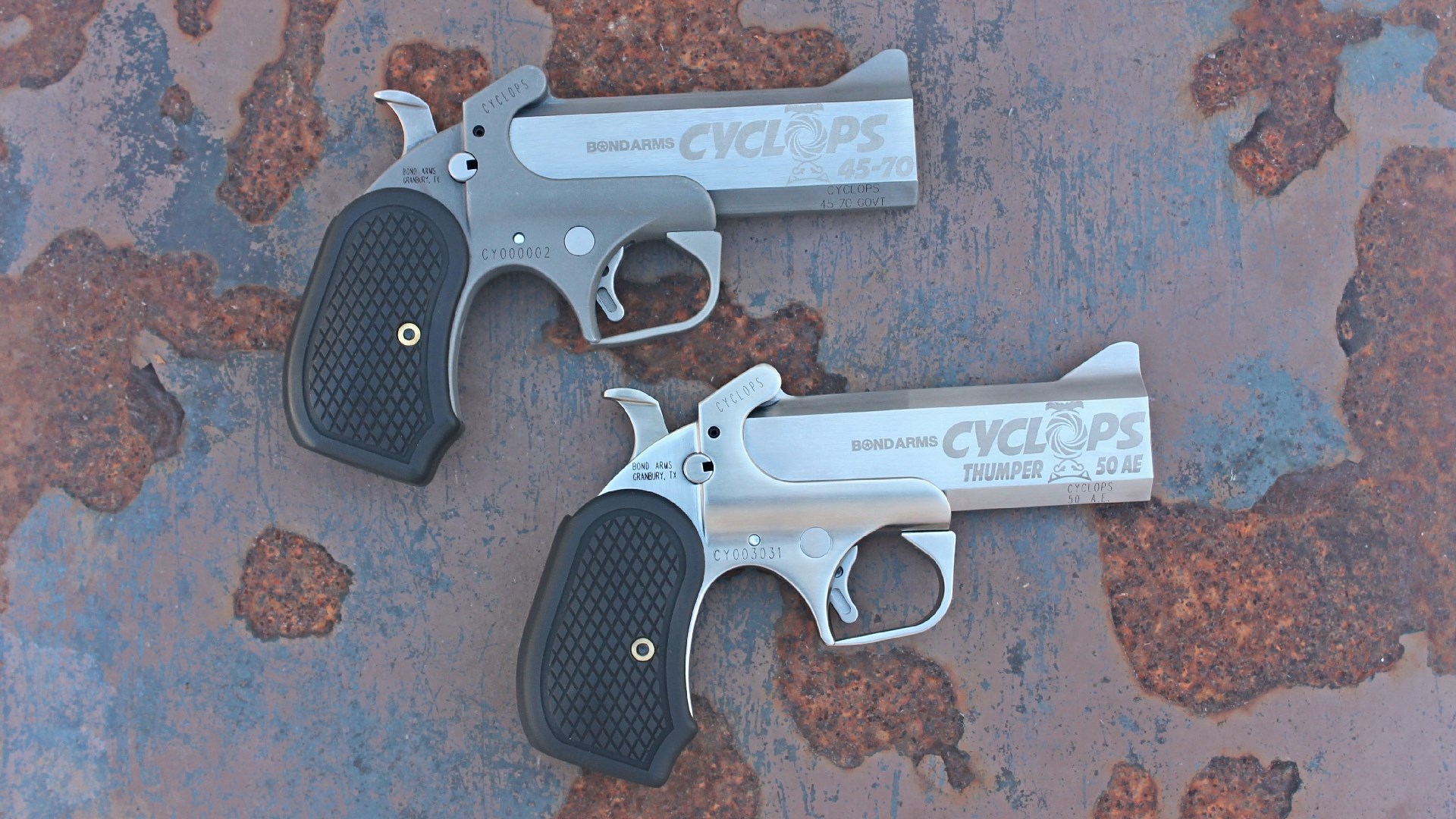
Could these problems be addressed by making a pistol that was a single shot instead of a double barrel? The answer was yes and no. Redesigning the pistol around a single bore and firing pin completely eliminated the doubling problem. As for the cracked grips, none of the existing models were a good fit. That’s why the team worked up a brand-new extended grip design made from a tough B6 resin that could withstand the added recoil force.
Dubbed the Cyclops, these biggest of the big bores were launched in 2023. They sport 4.25-inch barrels chambered in .45-70 Gov’t and .50 AE (they had a .44 Mag. version, but it’s been discontinued). Rather than delving too deeply into the mechanical differences of the Cyclops models here, or the impressively energetic shooting experience they provide, I would invite the curious and to read the reviews. My range evaluation of the .45-70 can be found here, with the .44 Mag. and .50 Action Express review and video here.
30th Anniversary Special Editions
That brings us to today. Despite the ups and downs of an ever-changing industry, Bond Arms is still working hard to offer its customers American-made, caliber-convertible double-barrel pistols, including a broad selection of more affordable models. Some companies have celebrated major milestones like this one by offering limited or special editions dressed up to the point of making them too precious to shoot. But Gordon took what I think is a wiser and more practical route.
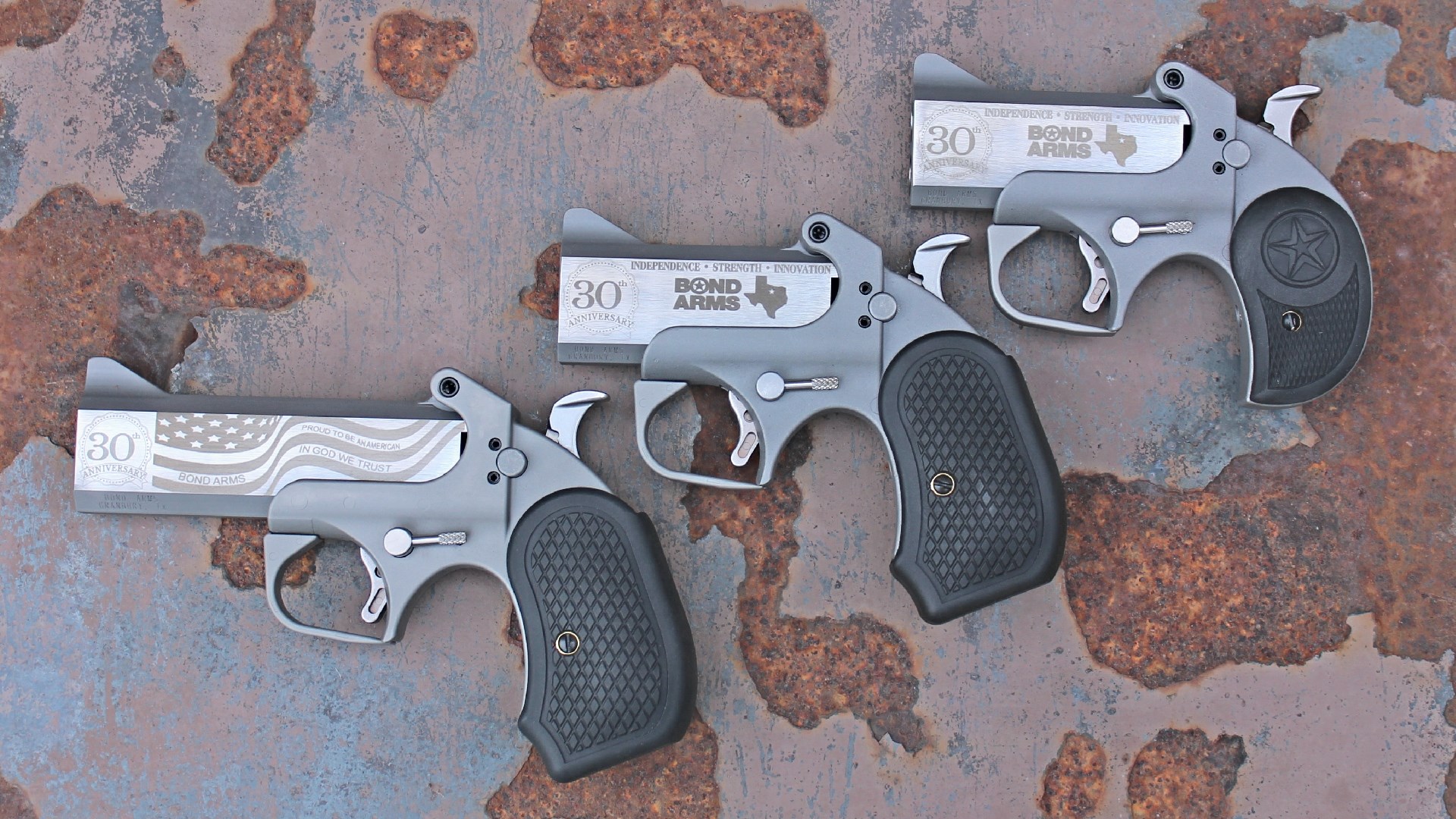
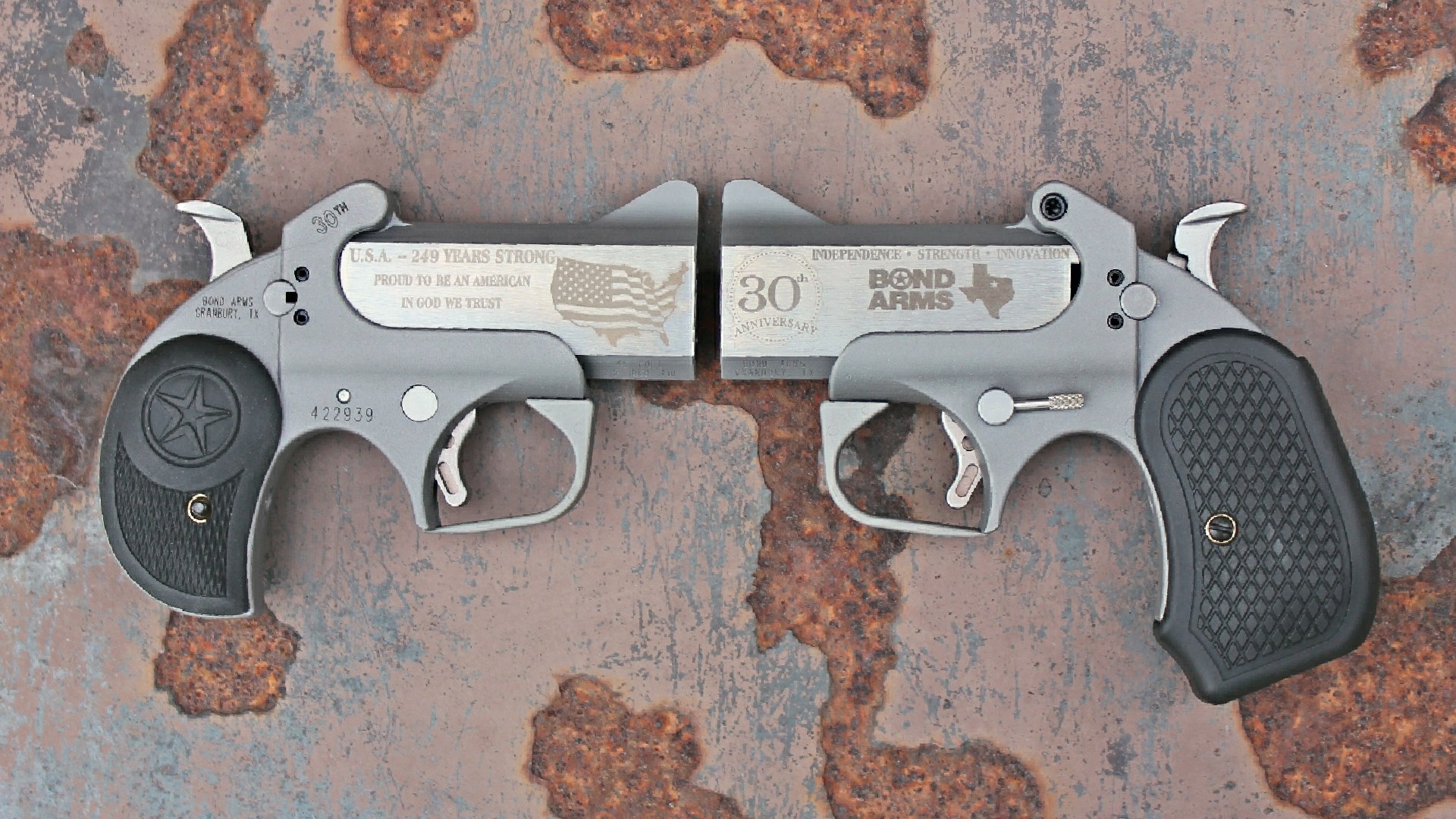
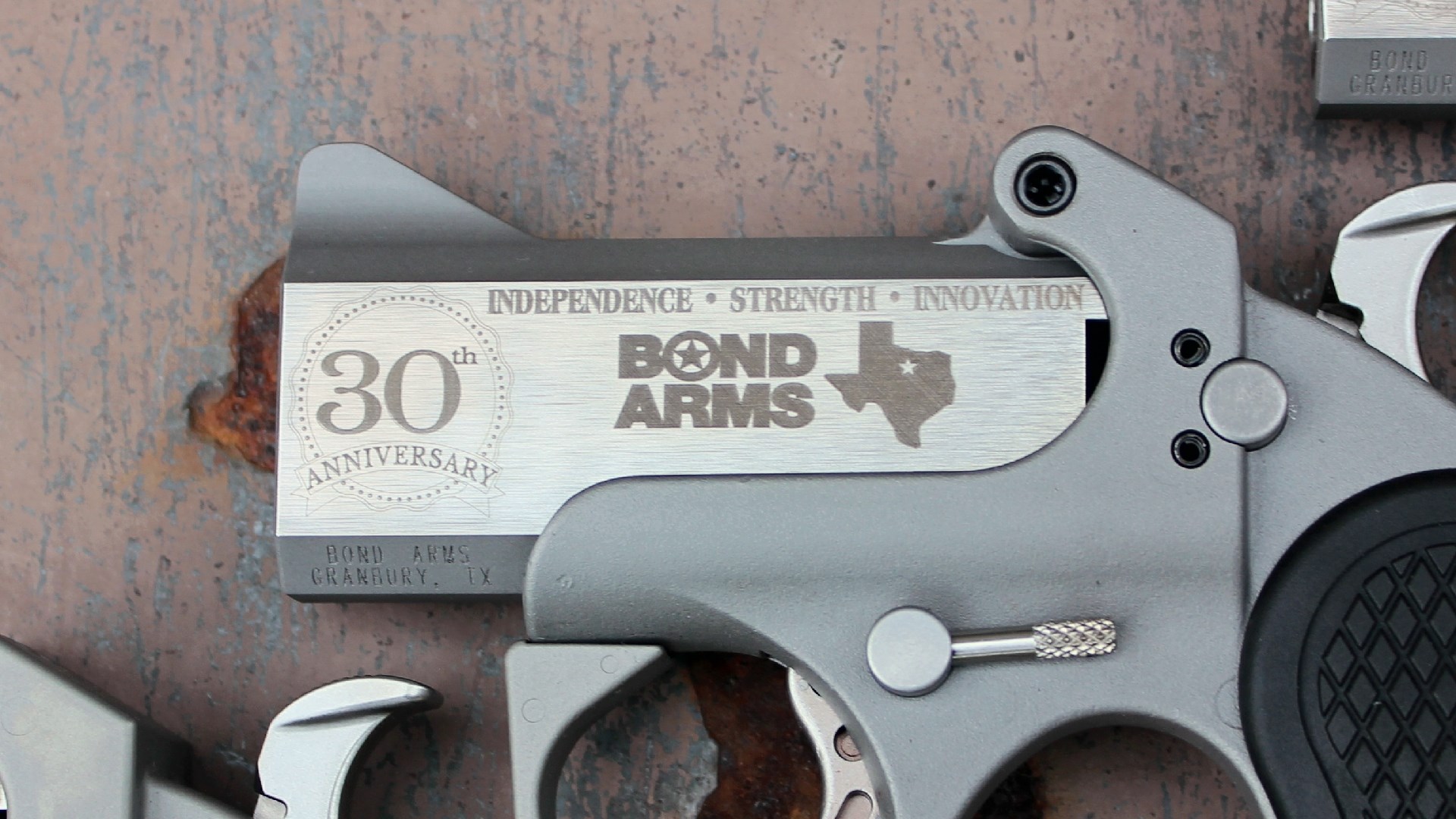
Bond Arms’ three 30-year anniversary models are based on the more affordable Rough series models with flat-sided barrels that have been engraved to mark this special occasion. The 30th model features compact rubber grips, a removable trigger guard and a 3-inch long .45 Colt/.410 bore barrel. The barrel markings on the left side denote the anniversary while the right celebrates the USA—249 years strong! This model is currently available for $249. The second in this limited series, the 30th XL, is the same gun as the 30th version except the grip has been upgraded to the B6 extended version for a suggested retail price of $280.
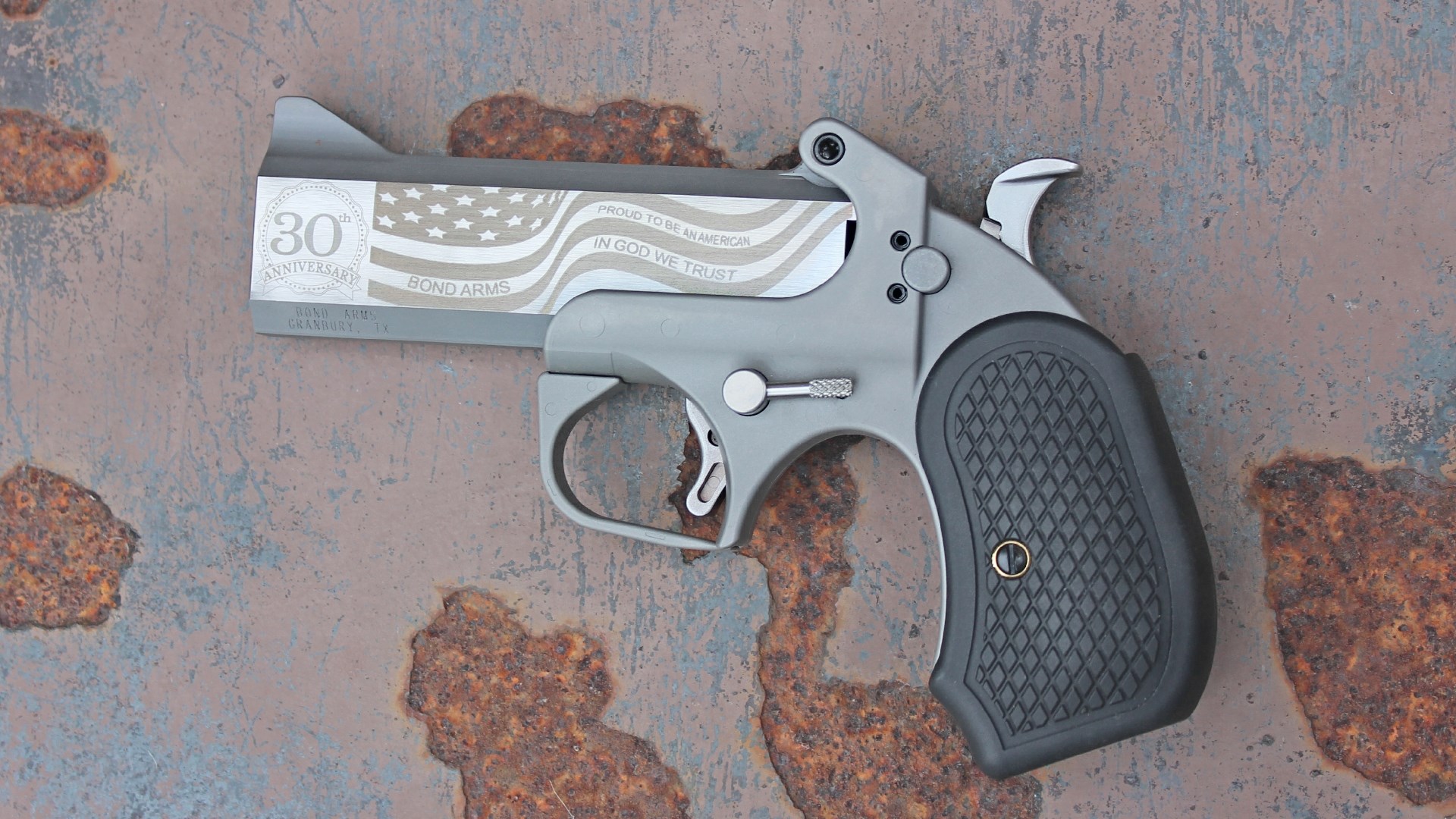
The 30th VET is a tribute to our men and women in uniform. Also chambered in .45 Colt/.410 bore, this version is outfitted with a 4.25-inch barrel. On the left side is a waving American flag and the 30th anniversary seal. On the right, you’ll find the silhouette of a saluting soldier. It reads, “Thank you veterans! Loyalty, Honor, Bravery, Duty, for God and for country. The land of the free because of the brave.” Outfitted with extended B6 grips, this model is listed for $399.
What’s Next?
Who would have thought that a redesigned 19th century pocket pistol could be configured in so many different ways? Fans of the platform won’t be surprised to see more variations in the years to come. But the double-barrel pistols are not the only project the company is working on. Bond Arms is closing in on a shipping date for the new MSR-inspired, short-throw LVRB lever-action rifle. It’s taking a bit longer to get it out the door than previously predicted. But just like this company’s other products, they won’t sell it until its ready. For more information, visit bondarms.com.
Read the full article here