
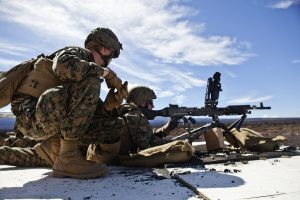

For more than half a century, the U.S. Army’s standard infantry rifle has undergone a remarkable transformation, from the battle rifles of the World War II era to the compact, modular carbines carried by soldiers today. This evolution reflects advances in technology, as well as hard-won lessons from jungle warfare in Vietnam, urban combat in Iraq and counterinsurgency operations in Afghanistan.
Watch our “American Rifleman Television” feature segment above to hear the story of U.S. military small arms development from the 1950s until the present day.
The M14: Refining a Legend
By the late 1950s, the M1 Garand, which had served American troops through World War II and the Korean War, was beginning to show its age.
“By the late 1950s, the Garand had seen service in World War II. It had seen service in Korea. It was considered somewhat long in the tooth, and a program was initiated to develop a so-called ‘lightweight rifle,'” American Rifleman’s Brian Sheets said. “Well, this lightweight rifle, through a series of prototypes and tribulations, both politically and mechanically, would end up being what we now know as the M14.”
Formally adopted by the American military in 1957, the M14, in reality, was similar in many ways to the M1 Garand it had replaced. Unloaded, the design weighed only 5 ounces less than the Garand. But more significant and notable improvement occurred with its chambering. The storied .30-’06 Sprg. cartridge had been replaced with the standardized 7.62 NATO cartridge. The M14 also featured a detachable box magazine and a revised gas system. But there were deeper issues.
From the outset, the M14 was burdened with an ambitious, and arguably unrealistic, goal devised by the U.S. Army’s Ordnance Department: to replace not just the Garand, but also the M1 carbine, the M3 submachine gun and the Browning Automatic Rifle in a single platform.
“The M14 never did reach the really unrealistic goal of replacing the Garand, the carbine, the M3 and the BAR. That goal was never realistic to begin with. So if you measure the M14’s success after 1.3 million rifles made by four contractors over a multi-year period, observed in that manner, the M14 can be considered somewhat of a failure.” Sheetz said. “If you look at the M14 as a refinement of the M1 Garand, did it achieve those goals? Did it serve well in the jungles of Vietnam? Did it go on later to serve in roles as a designated marksman rifle in places like Afghanistan? Then certainly it’s really hard to judge it poorly.”
The AR-15 & M16: A Rifle For the Space Age
By the early 1960s, a new school of thought was emerging in military circles. The future of the infantry rifle, proponents argued, lay not in a heavy, large-caliber battle rifle, but in a lighter firearm chambered for a small-caliber, high-velocity cartridge. A smaller cartridge meant soldiers could carry more ammunition, and such an infantry rifle could be more controllable in automatic fire. By February 1967, after years of trials and field-testing, the U.S. Army officially adopted the M16A1.
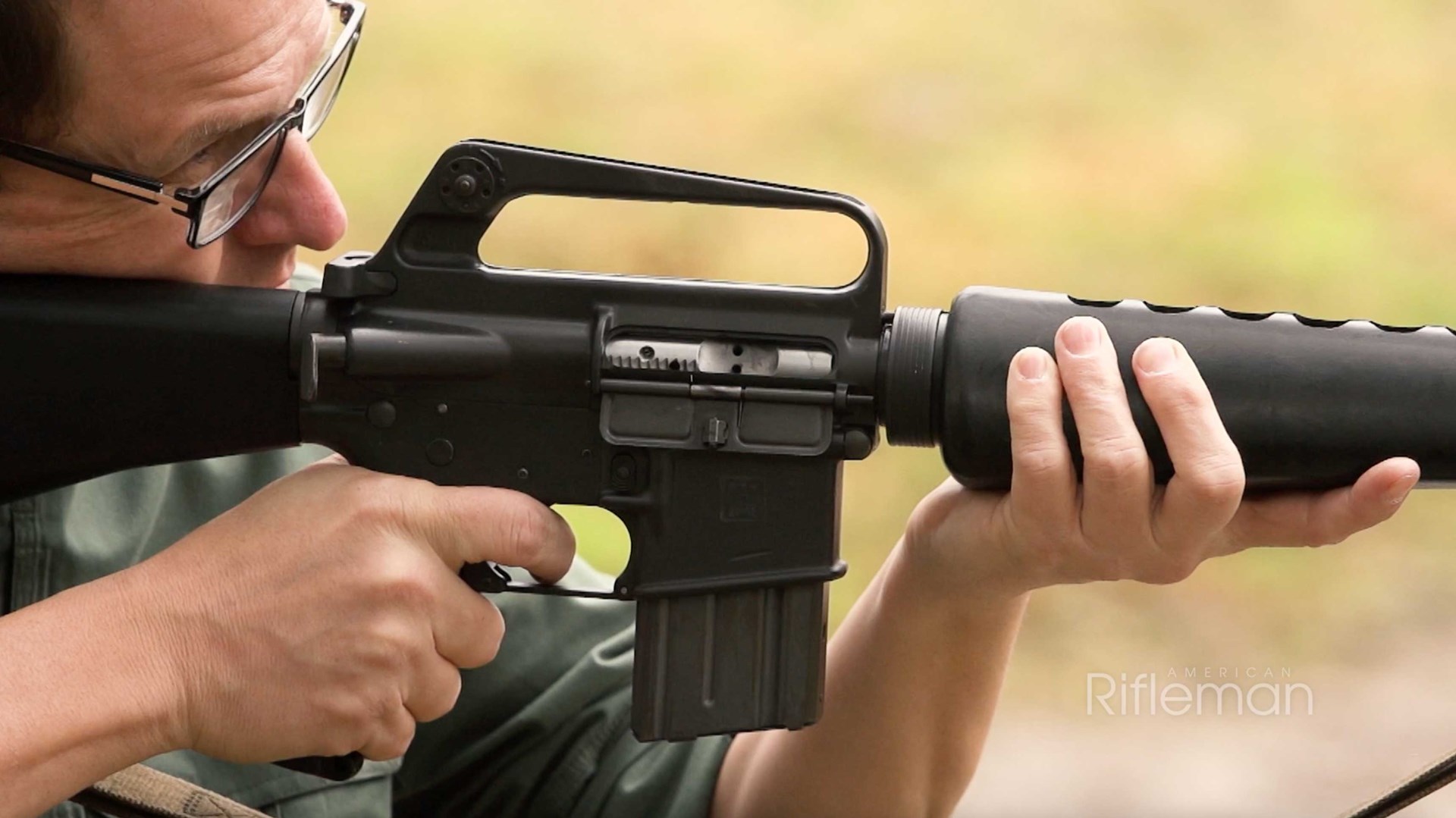
“This is a select-fire rifle making extensive use of aircraft grade aluminum, and the cartridge that it’s initially developed for, we to this day refer to it as XM193, a .223 caliber bullet weighing in at 55 grains that leaves a 20-inch barrel moving at almost 3,300 feet per second,” American Rifleman Field Editor Martin K.A. Morgan said. “A very, very fast-moving bullet.”
Despite its promising design, the M16’s early combat record in Vietnam was not without serious issues. Two problems emerged as the primary culprits: ammunition incompatibility and the absence of chrome lining in the chamber and bore. The problems were serious enough to warrant a formal congressional investigation. The Ichord Committee submitted a 48-page report in October 1967, recommending tighter specifications for propellant powder and mandating chrome-lining of both the bore and chamber.
The M4 Carbine: A Compact Design for Modern Combat
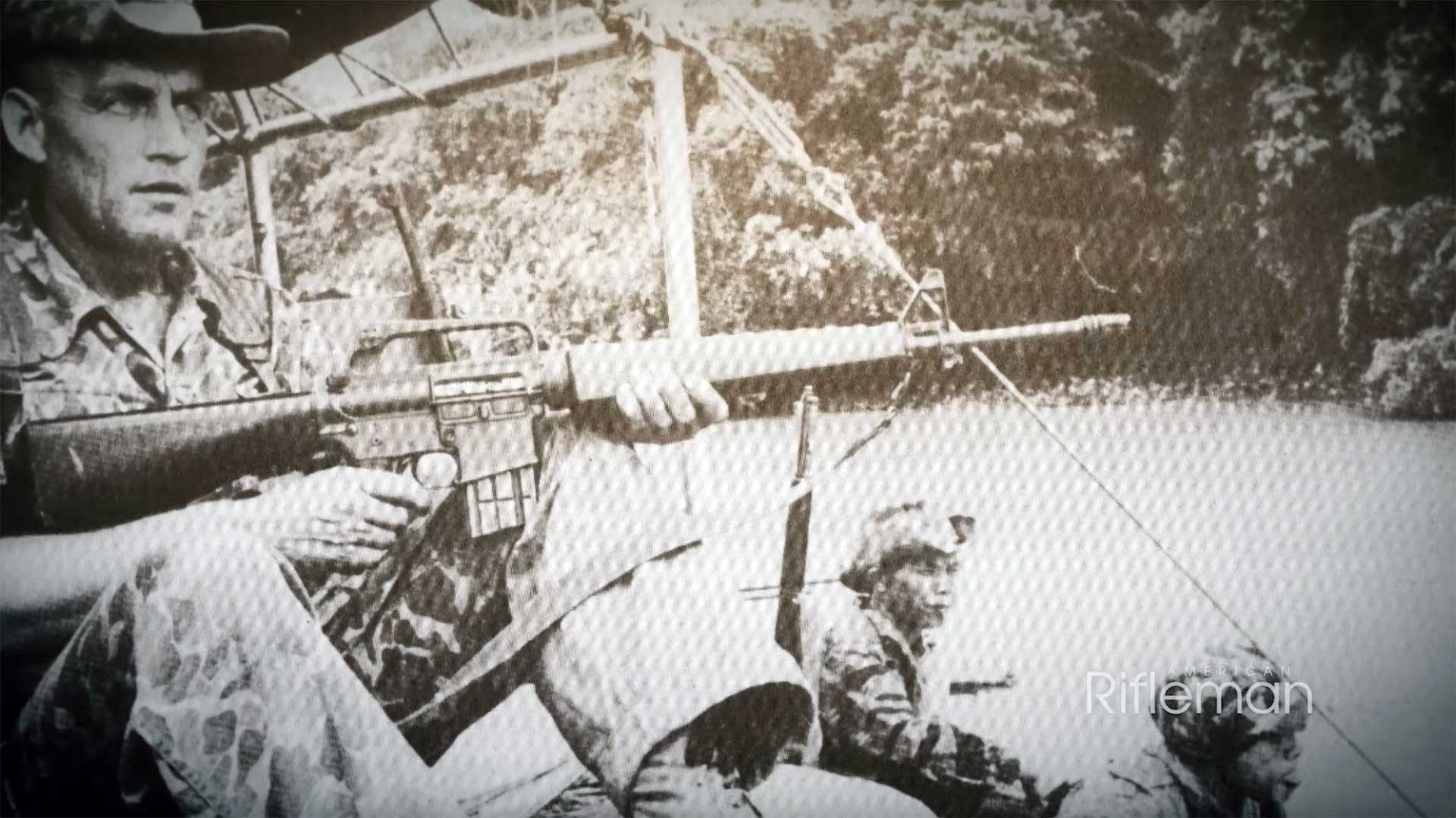
Even as the M16A1 proved its worth in Vietnam, compact variants were already being developed for special operations units. Groups like MACV-SOG needed shorter, more maneuverable weapons for clandestine missions. Those early experiments provided a proving ground for a concept that would eventually reshape the Army’s standard-issue small arm.
“Warfare has changed. We are getting in and out of vehicles. We’re working in tight confines. We need to take into consideration that we’re entering urban areas where there’s going to be conflict in close quarters,” American Rifleman Executive Editor Evan Brune said. “We need a shorter, more compact platform.”

That need ultimately led to the adoption of the M4 carbine, which entered service in the late 1980s and early 1990s.
Initial feedback from operators pointed to two shortcomings. Some wanted a higher cyclic rate of fire, and many objected to the three-round burst mechanism used in the M16A4, preferring instead to have full-auto capability. But building these features into the M4 design created other issues.
“There’s a likelihood that they’ll overheat the weapon, and this is proven in the Battle of Wanat in Afghanistan, where M4 carbines quickly begin overheating,” Morgan said.
The answer was the M4A1 carbine, which provided full-auto capability while addressing the overheating problem with a heavier barrel profile.

Beyond The M4A1: The Future of U.S. Infantry Small Arms
The M4/M4A1 carbine has continued to evolve incrementally, with SOPMOD programs providing greater flexibility in terms of optics, accessories and configuration. But its essential operating system largely remains the same as that initially developed by Eugene Stoner in the late 1950s. But a potential successor is now on the horizon. The SIG Sauer XM7, chambered in a new 6.8×51 mm cartridge, is being fielded in limited numbers as a possible replacement for the M16/M4 platform and its 5.56 NATO chambering.
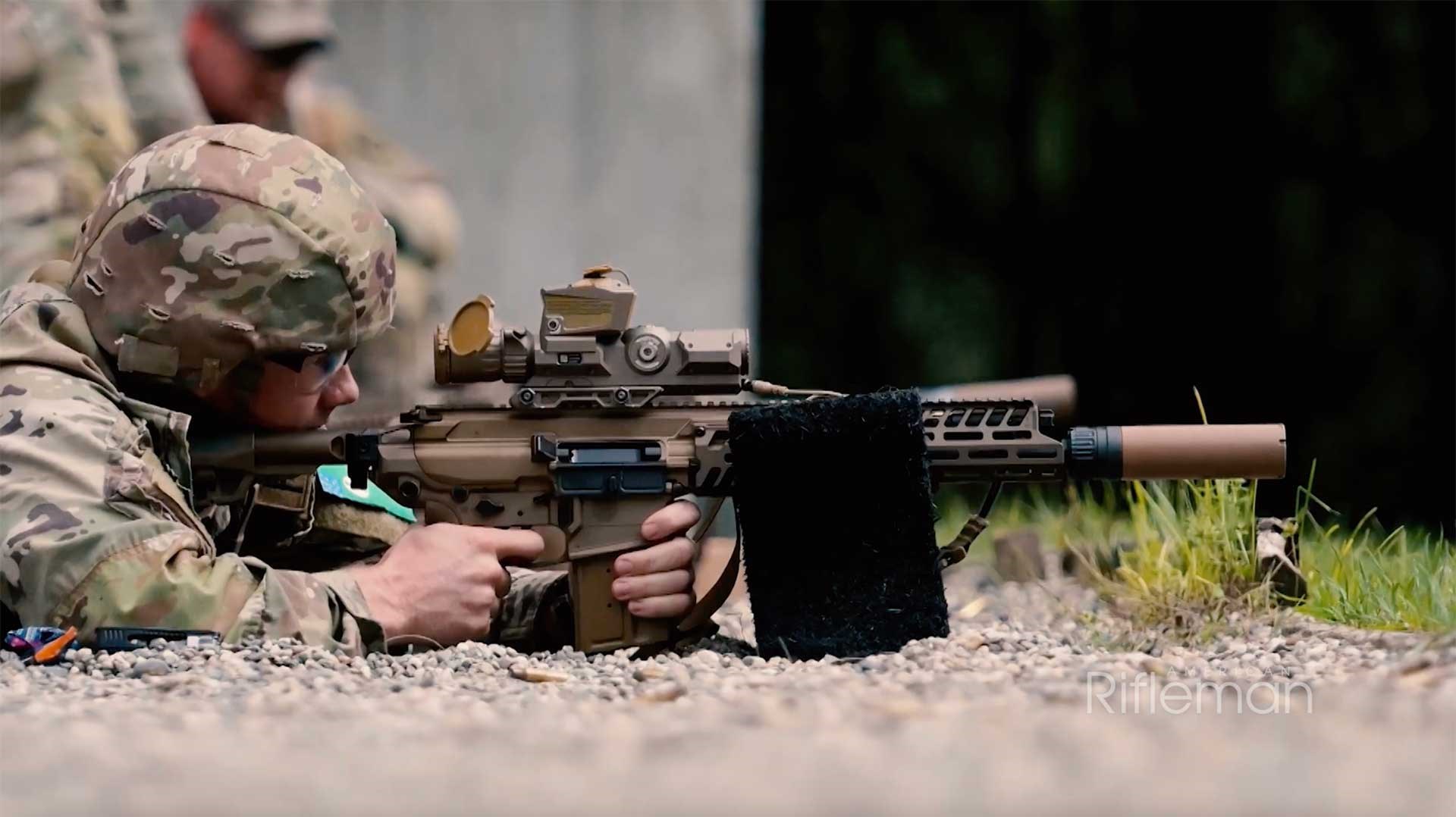
“While there is a lot of discussion and a lot of experimentation about what the future of U.S. Army small arms looks like, still today, we rely on that iconic AR action designed by Eugene Stoner,” Brune said.
To watch complete segments of past episodes of American Rifleman TV, go to americanrifleman.org/videos/artv. For all-new episodes of ARTV, tune in Wednesday nights to Outdoor Channel 8:30 p.m. and 11:30 p.m. EST.
Read the full article here