

In colonial America, it was firearms from other countries that armed soldiers, but for most of the civilian populace, American-made fowlers fit the bill. A “fowler,” so called because they were often used to hunt birds, or fowl, were constructed using smoothbore barrels, often of great length, that were capable of firing both shot and solid round ball for larger game and are of a type of arm that might later be called a shotgun in the modern vernacular. These firearms were used primarily as hunting guns to put food on the table, but also did double-duty as a defensive arms against enemies, with many equipping the Minutemen and militia troops that fired on British troops at Lexington and Concord, kicking off the first shots of the American Revolution.
The first fowlers were often fashioned from parts discarded from other firearms. Although American gunsmiths had the capability to fashion an entire firearm, by the late 1700s, it was still cheaper to make guns using salvaged parts. These American-built fowlers armed rural Americans and put food on the table, and with 95 percent of colonists living in the rural environs in 1775, most of the American populace needed arms. There weren’t too many households that didn’t house a gun. A statement issued in 1759 by the Governor of Virginia, Sir Jeffery Amherst stated, “Most people in North America have arms of their own.”
At the opening of the 18th century, America’s population was sitting at a quarter of a million souls. A century later, there were five million American citizens, many of them pushing ever westward. This population explosion spurred an insatiable need for more firearms. American gunmakers heeded the call, with many replicating the style of the fowlers produced by gunmakers on the other side of the Atlantic. Fowling pieces were also “particularly favored by Native Americans for their quality locks, barrels, stock wood, and brass mountings, which were more than those found in trade guns.”
The fowler, with its characteristically long barrel, can lay claim as the first type of gun produced in significant numbers in the American colonies. Gunsmiths who settled in the same region created fowlers that were quite alike. Those made in other areas carry their own unique signature touches. There a number of distinct versions of fowling guns, with most able to be categorized into one of six general types.
Hudson Valley Fowlers
Hudson Valley fowlers, with barrels sometimes approaching 5 or 6 feet in length, are imitations of the Dutch guns, used for hunting waterfowl, that were made during the 17th and 18th centuries. Hudson Valley fowlers, with the eye-catching sculpting of their stocks, the etching on the brass hardware and impressive overall length of the firearm, are decidedly attractive-looking arms. These waterfowl-hunting guns were used not only on the Hudson River, but were also put to use on Virginia waterways as well. Virginia gunsmith James Geddy placed an advertisement in the Virginia Gazette stating he was offering “Fowling pieces, of several Sorts and Sizes”. In a 1738 advertisement, Geddy stated, “Gentlemen and Others, may be supply’d by the Subscriber in Williamsburg, with neat Fowling-Pieces, and large Guns fit for killing Wild-Fowl in Rivers, at a reasonable rate.”
The Hudson Valley fowlers were a bit more crudely made in comparison to those turned out by the Dutch. The gunsmiths turning out the Hudson Valley fowlers, neglected to put a signature to their fowlers, thus foiling efforts in trying to ascertain just where exactly the guns were made. Hudson Valley fowlers most likely first appeared circa 1700, and production carried on until the Revolutionary War. Putting a number as to just how many of the guns were made is impossible to ascertain. Just as hard to pin down is how many Hudson Valley fowlers exist today.
British-Style Fowlers
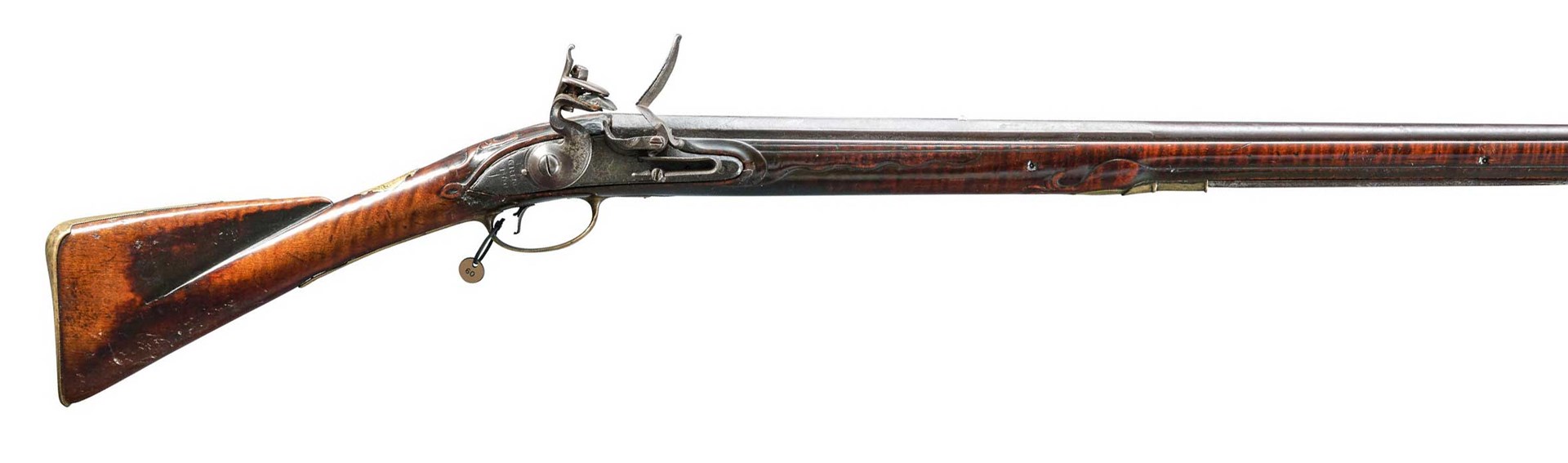
British-style fowlers display features of British fowlers and muskets made in England. These guns measure between five and six feet in overall length. The buttstocks of these fowlers resemble the British Brown Bess, even including the swell of the stock located at the rear ramrod thimble. A great number of British style fowlers often have a shell pattern, located at the barrel tang, rear ramrod pipe or trigger guard. It seems this shell pattern is indicative of fowlers made in the environs of the New York City, but most gunsmiths crafting British-style fowlers neglected to sign their work, so pinning down their history remains problematic. The lack of a signature makes it nearly impossible to draw any conclusions as to an identifiable region of manufacture.
British-style fowlers, often as large as the Hudson Valley fowlers, were generally put to use in hunting waterfowl in lower New England. The American-made examples of this style closely match their British counterparts, leaving it challenging to differentiate between the two. On the British models, the carving, the hardware and the engraving displays as superior to the American-made fowlers. Making it difficult in identifying one from another, is the fact that American fowlers are frequently found with British locks and barrels so one has to refer to the quality and composition of the stock, the carving and the finish to tell the tale.
Two notable examples of British-style fowlers stand out in contemporary collections, and both were made in Philadelphia. The first carries the name as follows: “Perkin”on the lockplate and “Perkin Philada” on the barrel of one fowler. The second example is signed “Perkin-Coutty”on the lock. It’s fortunate that these signatures attach names to the gunsmith and location.
Kentucky Fowlers
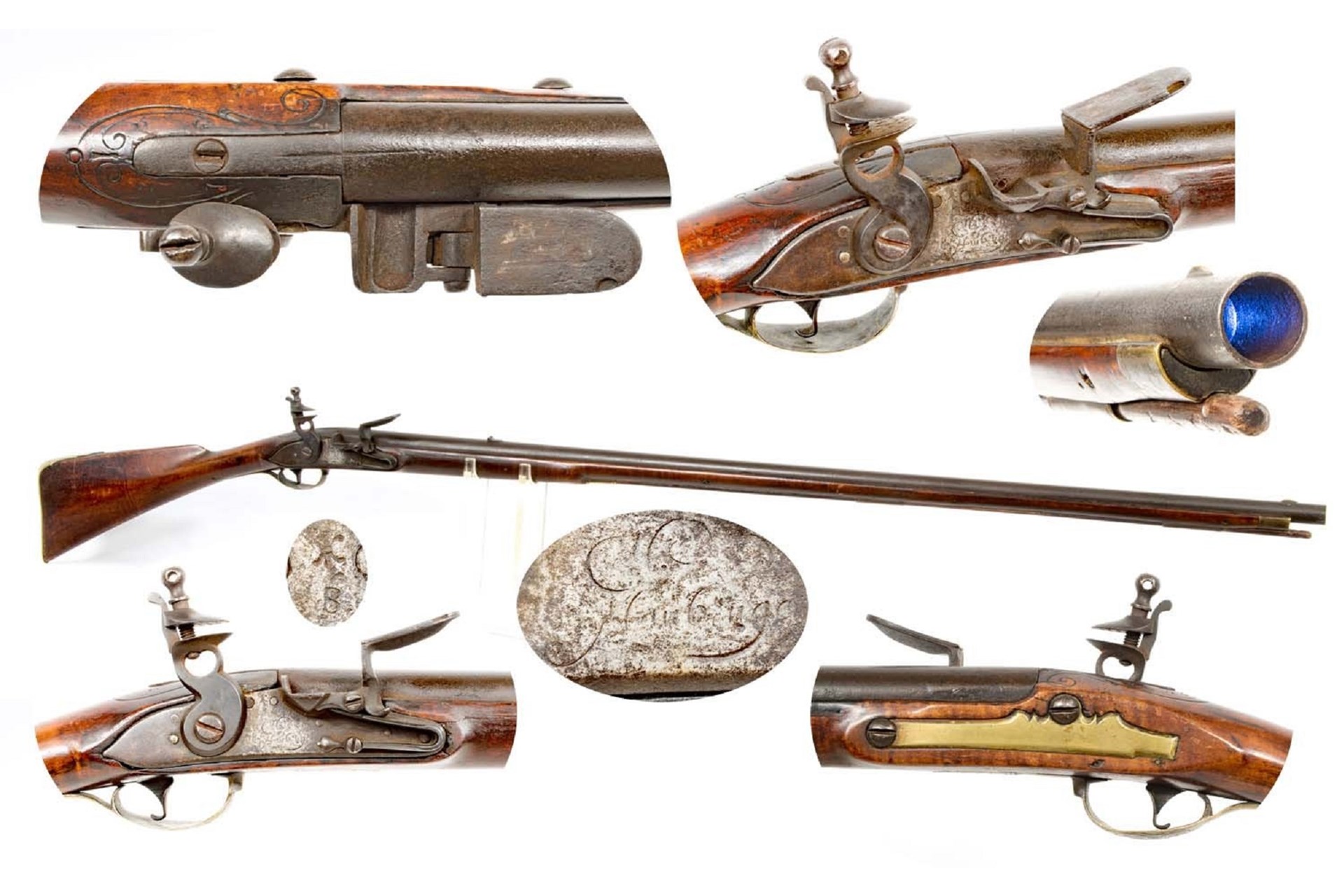
Several Kentucky fowlers have survived over the years. It is also fortunate that a number of Kentucky gunsmiths added their signature to the firearms they fashioned. The barrel of up to 44 inches on the lion’s share of surviving Kentucky fowlers is generally described as thin walled, with an octagonal to round barrel design, with the remaining lesser number of fowlers having fully round barrels. But a number of Kentucky fowlers were crafted with thicker walled barrels. Those fowlers were designated as “buck-and-ball” guns and could either fire buckshot or a single musket ball. Most fowlers are equipped with a rear sight. Kentucky fowlers generally sport a plain rounded bow, and the underside of the fowler’s butt is rounded, lacks a cheekpiece and has no patchbox.

New England Fowlers
New England fowlers were produced in greater numbers than any other type of fowling piece. There are a number of reasons for this. First of all, New England possessed a larger cadre of gunsmiths. The New England fowlers turned out guns to arm folks over a larger area than gunmakers in other regions. The barrel length of many of the New England fowlers measured between 44 inches and 52 inches.
American gunmakers generally replicated existing European designs, with many New England guns displaying French characteristics. Dutch weapons were also copied by New England gunsmiths. New Englanders, Phineas Sawyer, and Welcome Mathewson made their guns with vine-like tendrils carved around the barrel tang, at the finial of the trigger guard and at the rear ramrod pipe. They adopted this from 18th century Dutch gunsmith Clamer Hendrick Sleur.
Of the several New England hubs of gunsmithing, Boston and environs claimed the prize as the largest. Traveling west from Boston, one could find gunsmiths and small-scale gun manufactories in the Worcester-Sutton vicinity. Continuing west, gunmakers continued to work up the Connecticut River Valley. Connecticut and Rhode Island colonies were home to a number of gunmakers. As was the case with gunsmiths in other regions, many New England makers of fowlers used both European and homemade parts in turning out their guns.
One specific famous New England fowler, a .62-caliber weapon, was carried onto Lexington Green on April 19, 1775, in the hands of Militia Captain John Parker. Although these guns were primarily employed for shooting game, when faced with a fight, men equipped with a fowler could shoot buckshot or larger round balls. Surely, Parker’s firearm was loaded with a ball that day.
Club-Butt Fowlers
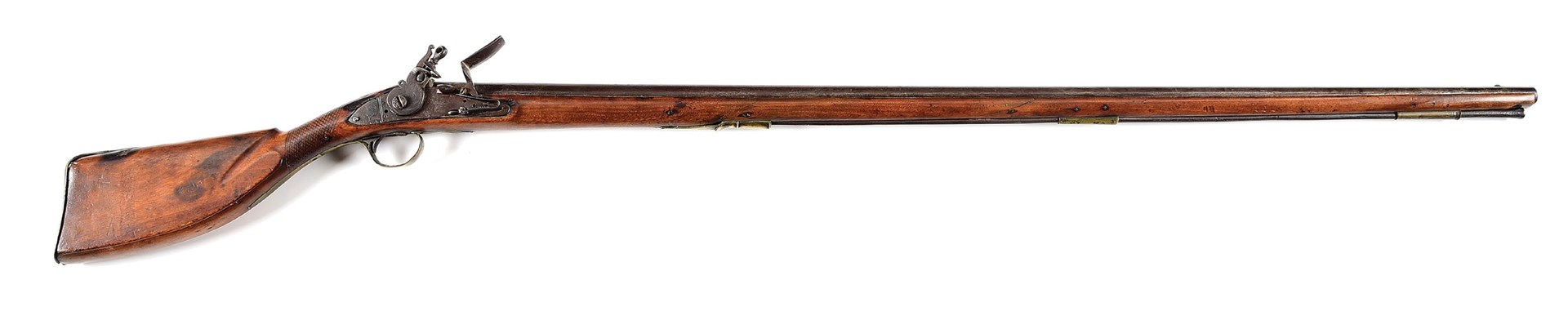
Massachusetts and conceivably Rhode Island were homes to the gunmakers turning out so-called “club-butt” fowlers. The gun is so named because for the uncommonly prominent section at the butt of the gun, which sported a particularly large, heavy and convex underside of the buttstock and was replicated from European guns dating back to matchlock designs from earlier in the 17th century. This served as the pattern from which the American colonists produced their club-butt fowlers.
Club butt stocks originating in England, Liege, and France functioned as patterns copied by the gunmakers in eastern Massachusetts and Rhode Island. Some of these club-butt fowlers are signified as “Marshfield” fowlers, as they originated around Marshfield, a community located below Boston. These Marshfield fowlers were manufactured from 1675 until early 1800s, and were most likely employed in hunting waterfowl and other game birds. Characteristically, club-butt fowlers have large bores, with 12 gauge (roughly .75 to .78 caliber) being the most common size. The length of the barrel measures 46 inches or longer. They’re often quite a hefty gun, weighing in excess of 10 pounds, and were turned out in notable numbers by New England gunsmiths in the pre-Revolution era.
One-of-a-Kind Fowlers
There a number of fowlers that do not fit into any of the prior classifications. In this group, each fowling piece is not noted for its likeness to any other gun, but for its own unique traits. Possibly, an unknown gunsmith, or even blacksmith, may have fashioned a “one-and-done” fowler, using homemade parts or left over hardware to assemble a useful fowler hybrid fashioned from cast-off bits from older weapons. These examples underscore the home gunsmithing that often occurred in the rural areas and backwoods of colonial America, where residents and settlers had to rely on their own resources and scrounge for components to produce usable firearms for hunting and town defense.
Regardless of their type, the colonial fowler was one of the most important arms in existence in the years leading up to the American Revolution. While flintlock longrifles and military muskets often gather outsized attention from contemporary histories, it must be remembered that the workhorse firearm for many Americans was the simple, smoothbore fowling piece that could be pressed into service in hunting small game, large game or, when the time called for it, in militia service against the troops of the British empire.
Read the full article here