

American Rifleman’s September 2025 article, “Scout The Trail To A General-Purpose Rifle” concisely laid out the history of the “general-purpose rifle,” tracing its roots to the work of Col. Jeff Cooper and his “Scout Rifle” concept, and giving a clear picture of the contemporary state of that class of firearm. Noted within the piece was the fact that the Steyr Scout is considered “the only authentic factory-made example.” Much has changed in the general-purpose rifle world since the Steyr Scout was introduced in 1998. In 2023, Steyr updated its Scout with a Mk II version. Faced with heavy competition, is it still the benchmark?
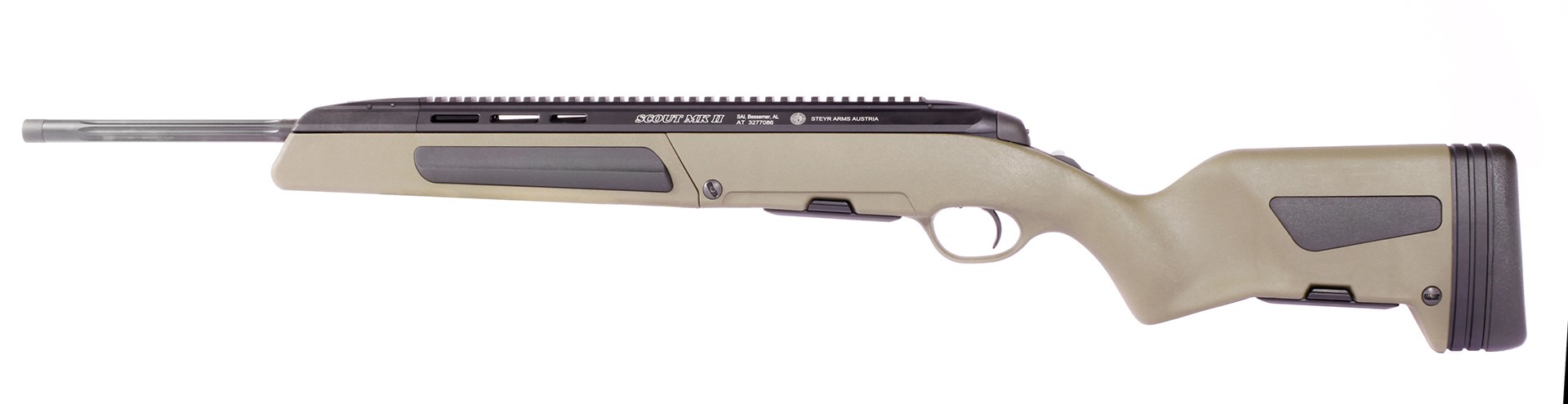
The Rifle
Cooper’s requirements for a scout rifle are chiseled in stone somewhere and are repeated here, as compared to the Scout Mk II:
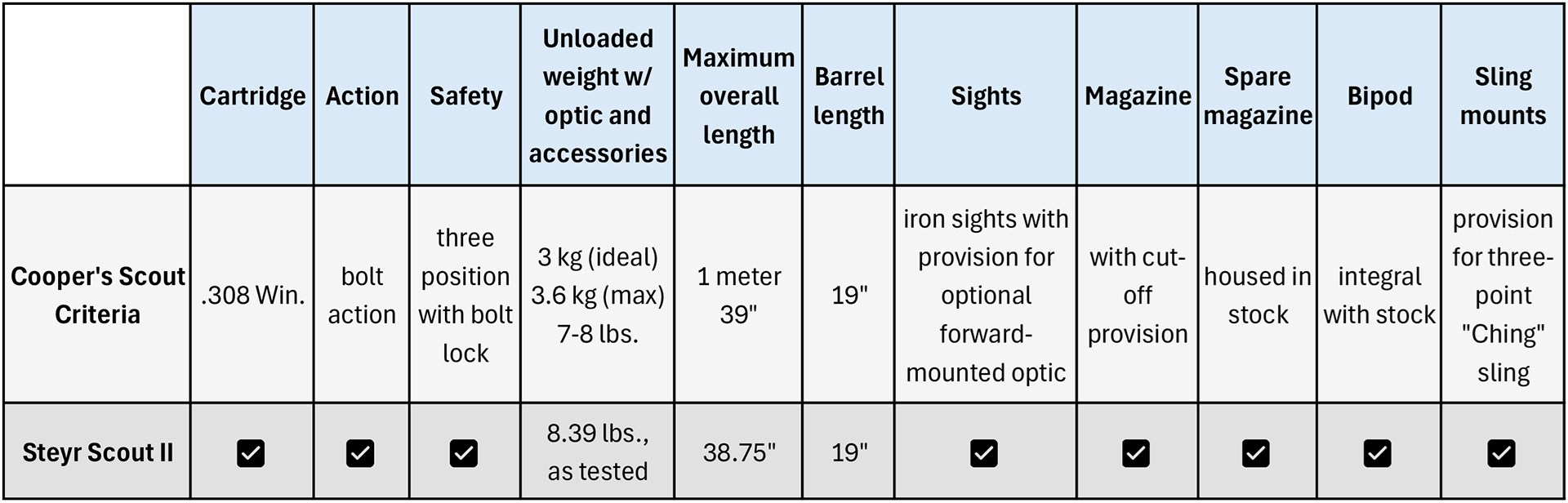
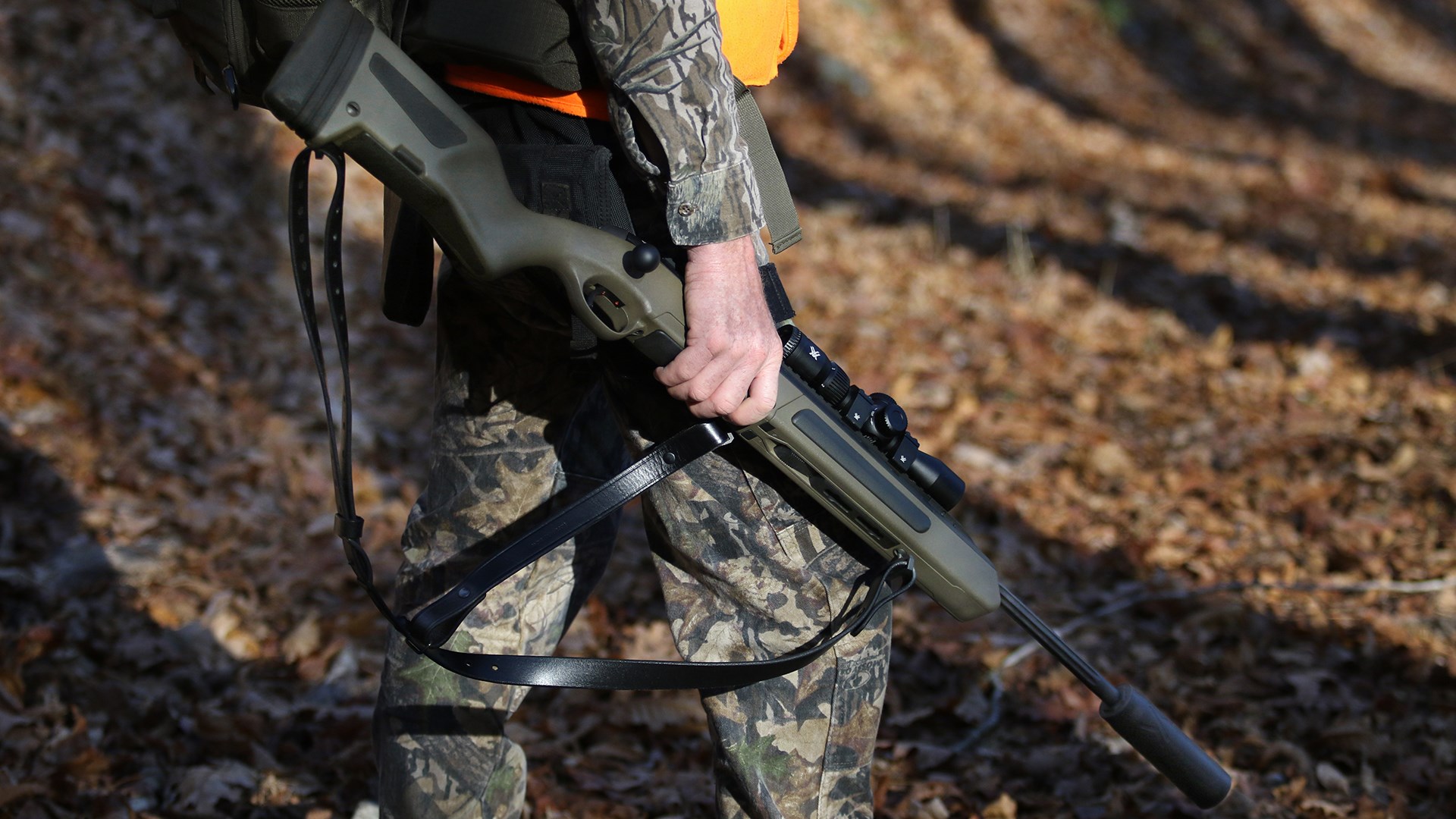
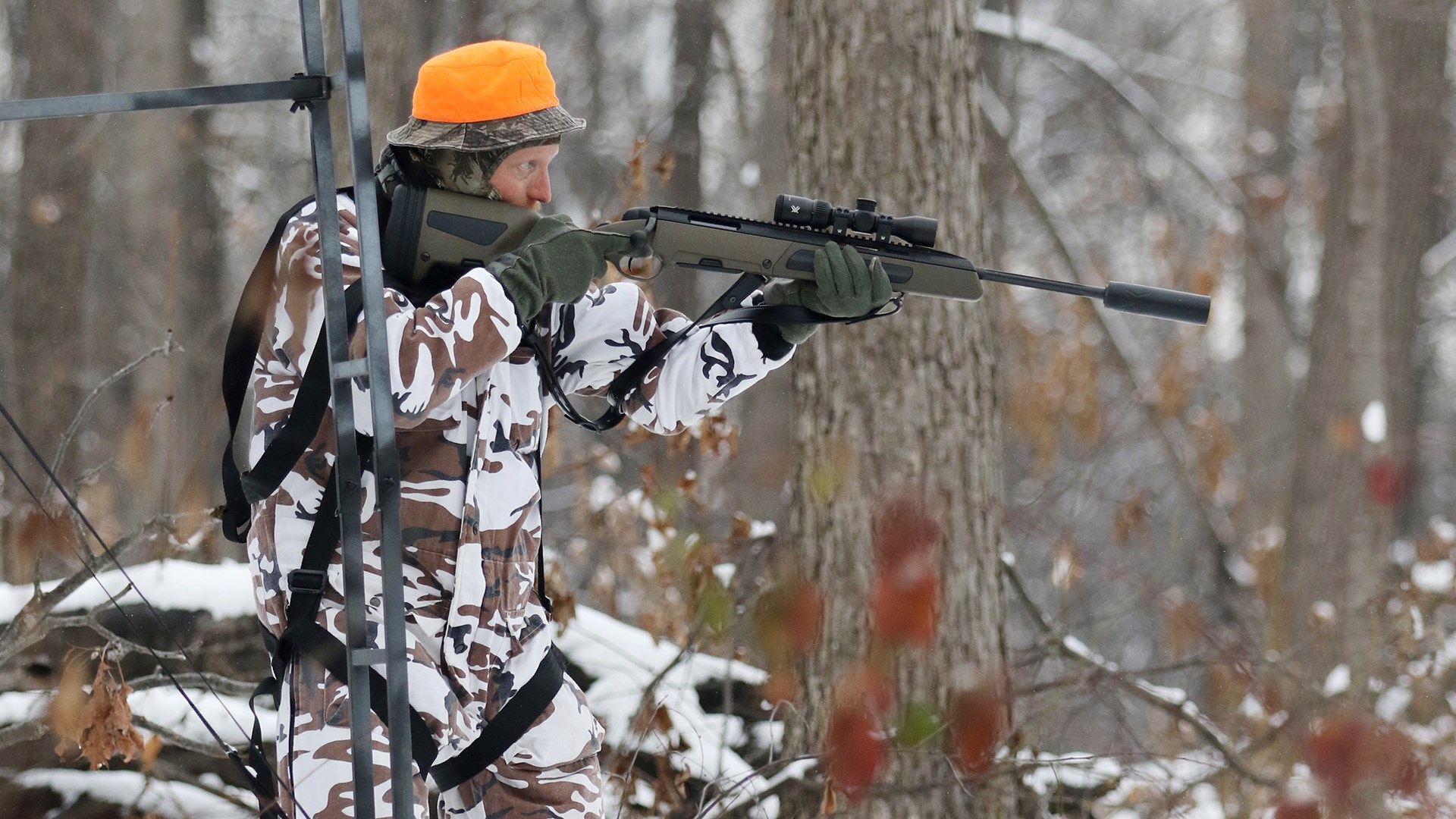
While other factory scouts use a shorter barrel, the Steyr sticks to Cooper’s dictated 19-inch length. The barrel is cold-hammer-forged. It uses a lightweight profile and is fluted to further reduce weight and improve cooling. Among the Mk II updates are that barrel threads have been changed from the original 1/2×20 TPI to the more common 1/2×28 TPI. In the field, we used the rifle with Silencer Central’s Banish Backcountry suppressor. The Backcountry’s direct thread universal hub is available with the less common for .30-cal. suppressors 1/2×28 TPI pattern. At 5.5 inches overall and weighing just 7.8 ounces, the titanium suppressor doesn’t alter the Scout’s action-centered balance point and kept its overall length handy.
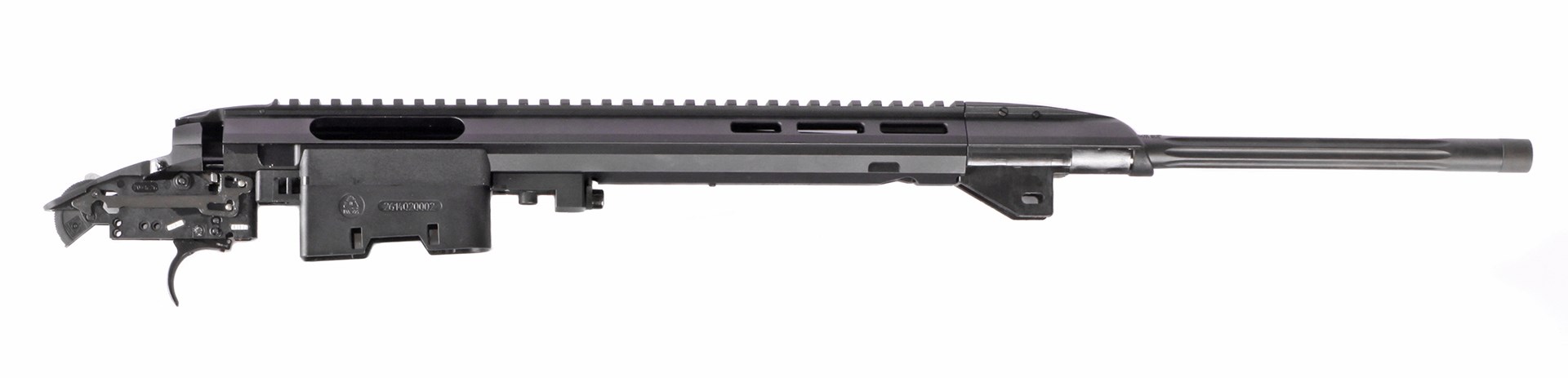
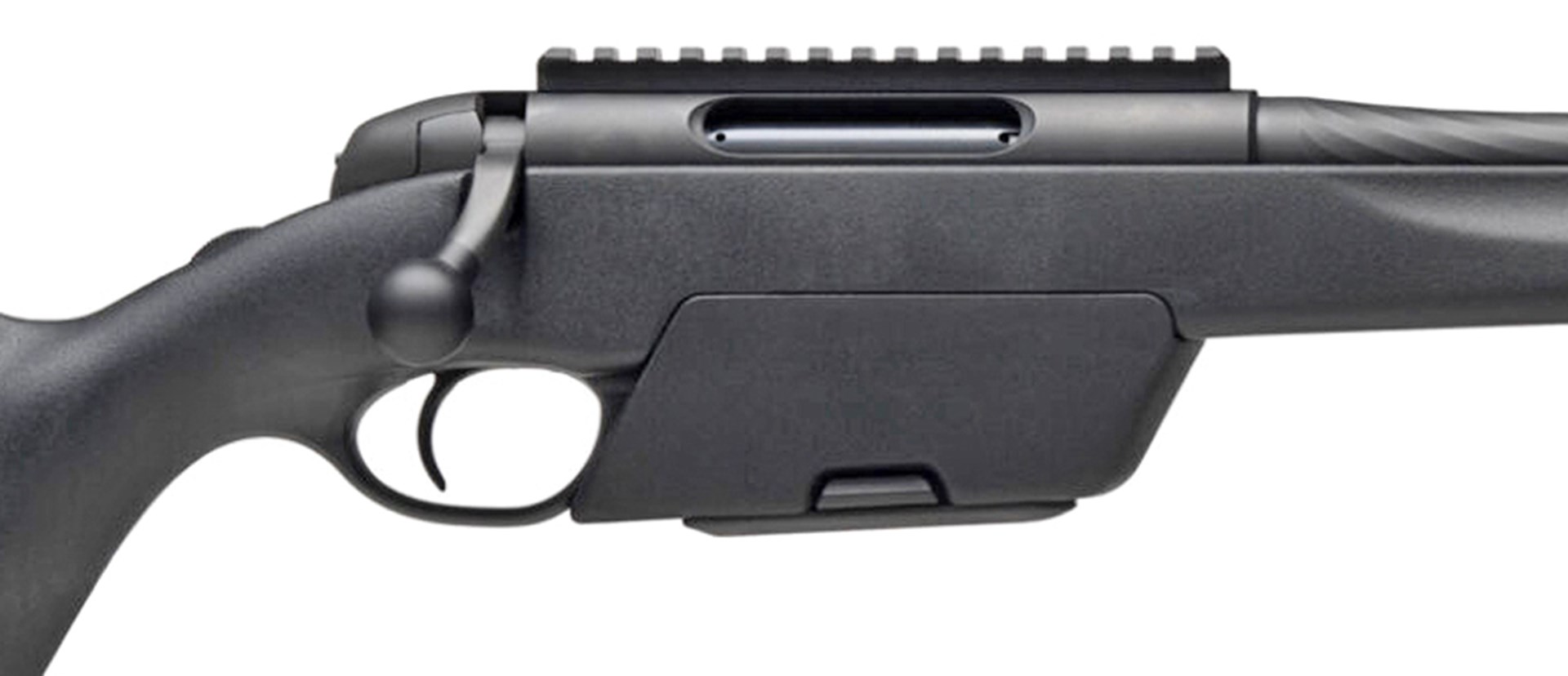
At just under 7 pounds with both empty magazines onboard, the Scout Mk II is one of the lightest factory scouts available. Steyr accomplishes this by using an aluminum-alloy chassis that houses the bolt and the barrel it locks directly into, with Steyr’s Safe Bolt System (SBS) action. Its bolt, with two pair of opposed lugs, has a 70-degree throw and features debris-eliminating flutes. The aluminum chassis extends along the barrel, allowing it to free-float and providing a place to mount optics that is not direct to the barrel, unlike other scout rifles. On the Mk II Scout, this chassis is one piece and has a Picatinny rail along its entire length to give more flexibility in optics mounting. In the 2-o’clock position in front of the action, three cooling vents that also function as M-Lok mounting points have been added on each side.
While original Steyr Scouts had more of a spatulated “butterknife” bolt handle, newer versions and the Mk II use a large, threaded-on, round knob. While I would prefer the lower-profile butterknife, the Scout has a feature that allows the handle to be pushed in closer to the action and locked in place when the safety is in the bolt-lock position. This is handy when carrying the rifle in a scabbard…or squeezing the gun into an overcrowded safe. The handle automatically unlocks and returns to its normal position when the safety is disengaged.
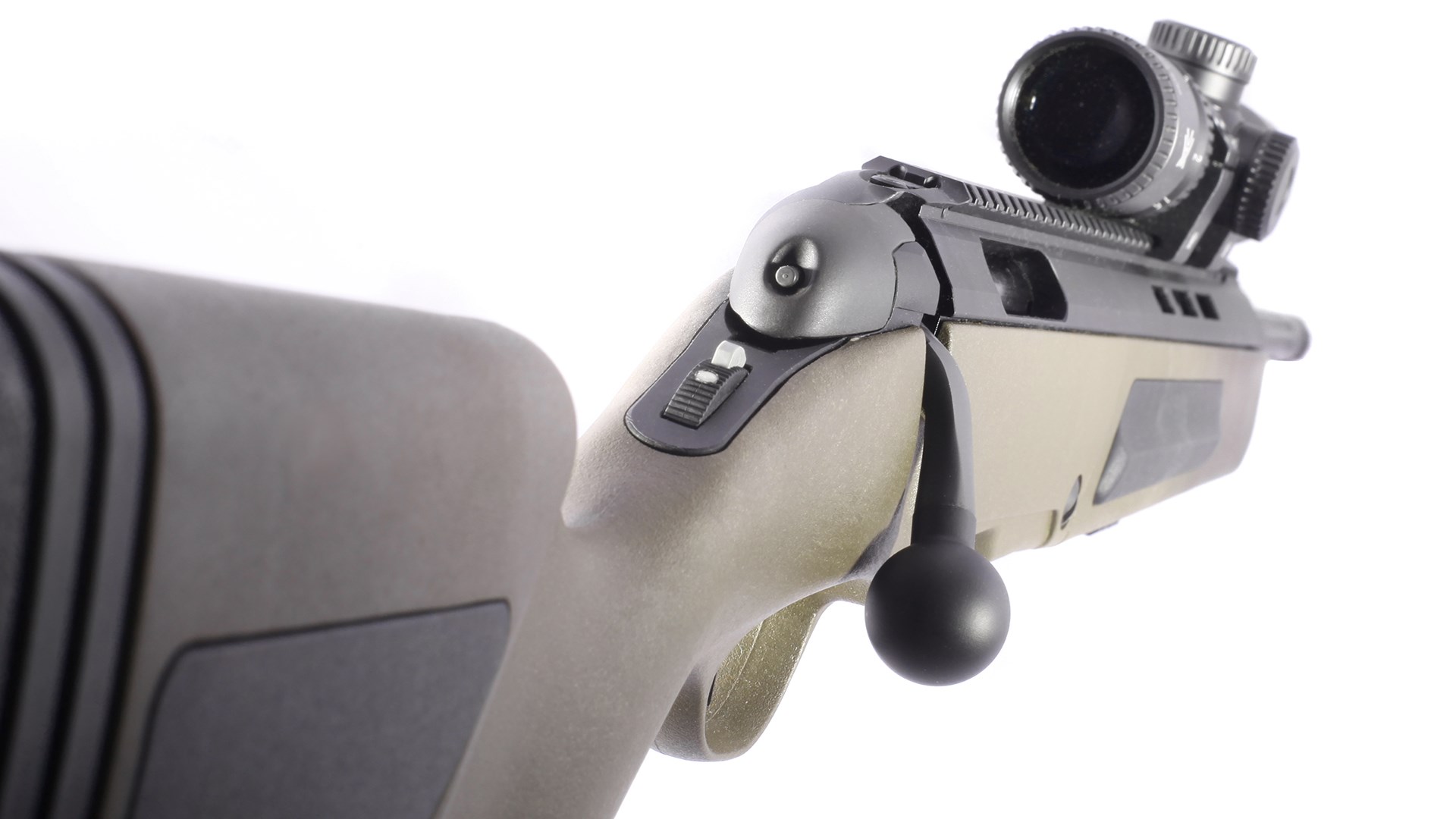
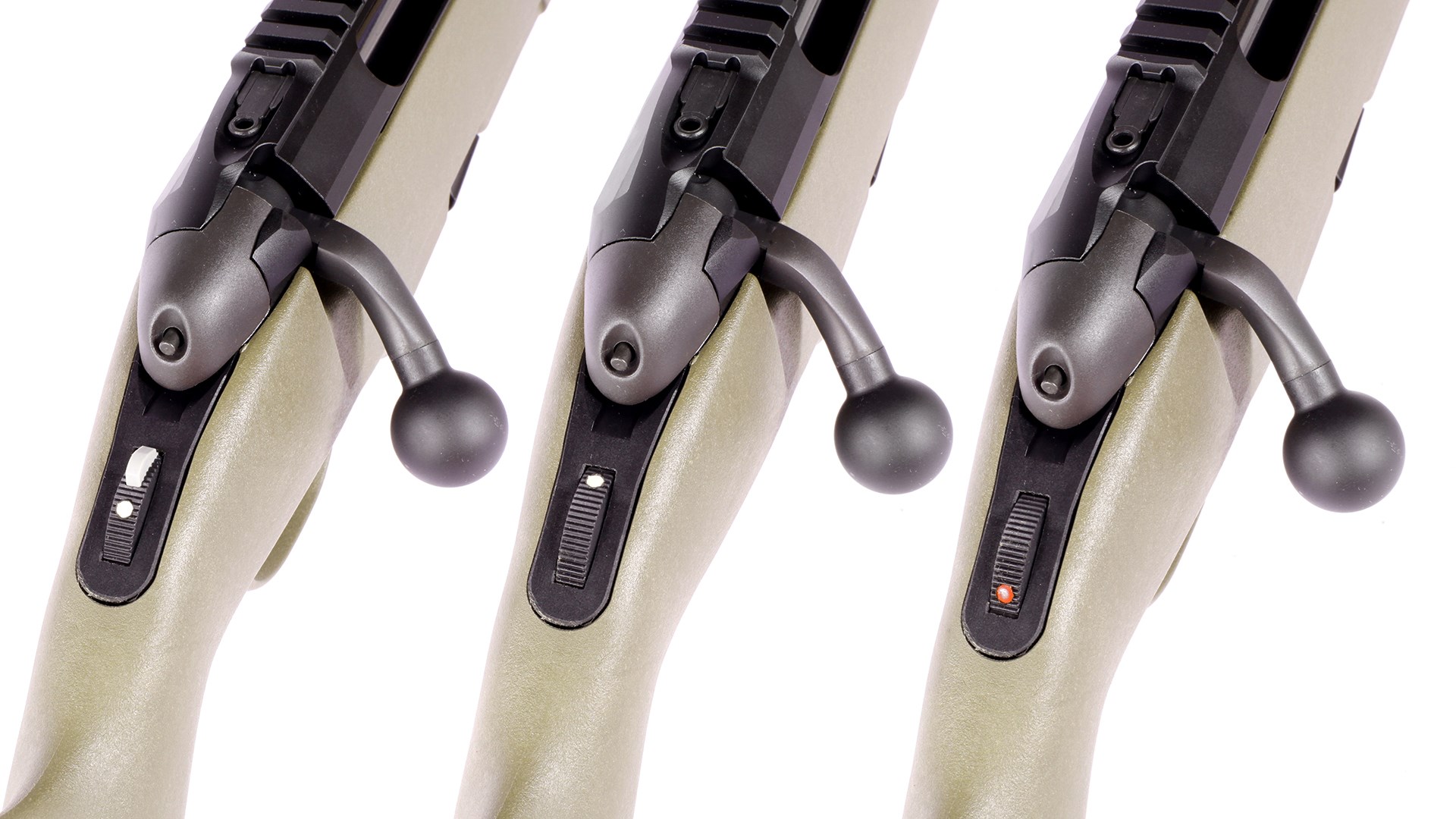
Cooper stipulated that a scout should have a three-position safety, with one position that locks the bolt closed. The Steyr accomplishes this with a unique “2+1” rotary safety located in the tang area of the stock’s grip. The safety switches easily and silently between the Fire and Safe positions, so easily in fact, that in the field, I used it as a “stalking safety,” applied only when the rifle was held in a shooting grip. When the terrain got rough or the rifle was carried slung, I applied the bolt-lock safety position. This deploys a small tab to keep the safety locked in place. It is nearly as easy to disengage, but requires a deliberate two-part movement, like disengaging the retention device on a holster.
The trigger is two-stage, as a proper hunting rifle trigger should be. You pull through a short first stage and hit the solid wall of the second stage. Continuing to pull results in a crisp break after minimal travel. The trigger breaks cleanly at just under 3 pounds (another Cooper criteria). It is adjustable, but Steyr recommends any changes be made by a gunsmith.
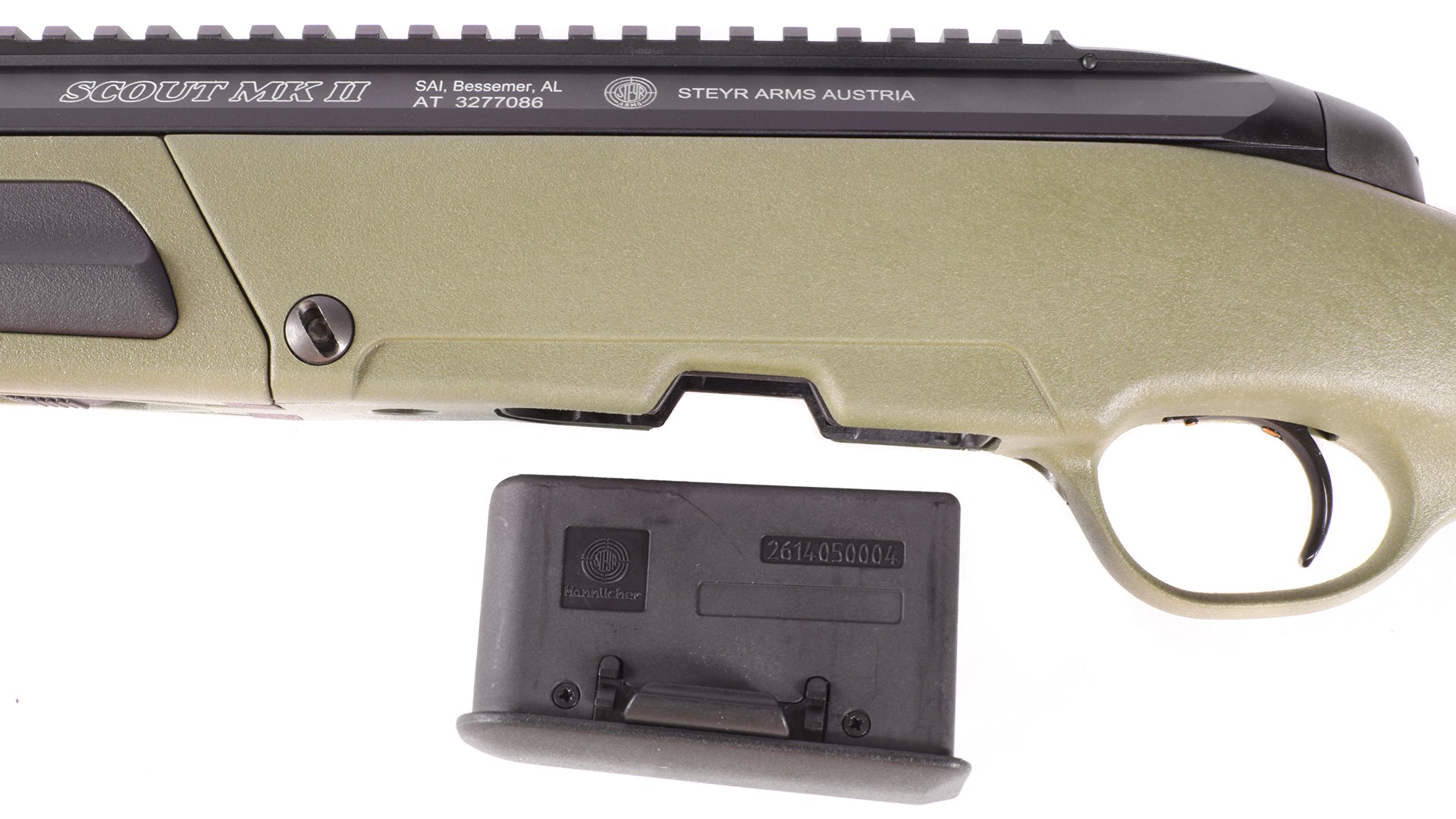
The Scout’s magazines are proprietary and hold five rounds. The rifle is supplied with two. It is released by pressing two tabs on opposite sides of the magazine at the same time. This feature kept the magazines, both the one in the action and the spare in the stock, secured. A unique feature of the Scout’s feed system is that the magazine can be locked into a lower “magazine cutoff” position, where the bolt can be worked without picking up a cartridge. Not only is this feature useful for loading single rounds with the magazine in reserve, I used it to remove a round and close the bolt on an empty chamber with a loaded magazine in place.
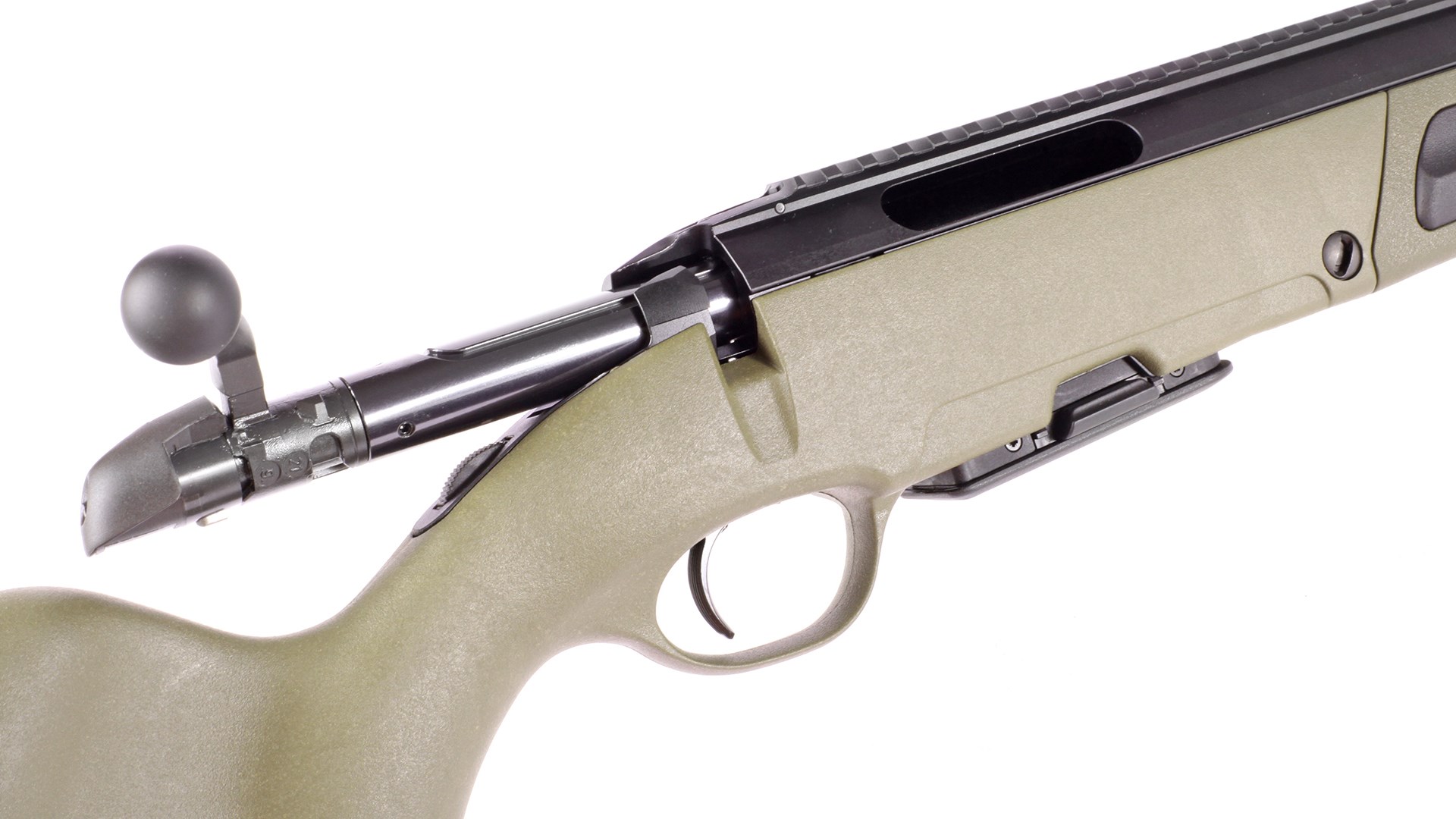
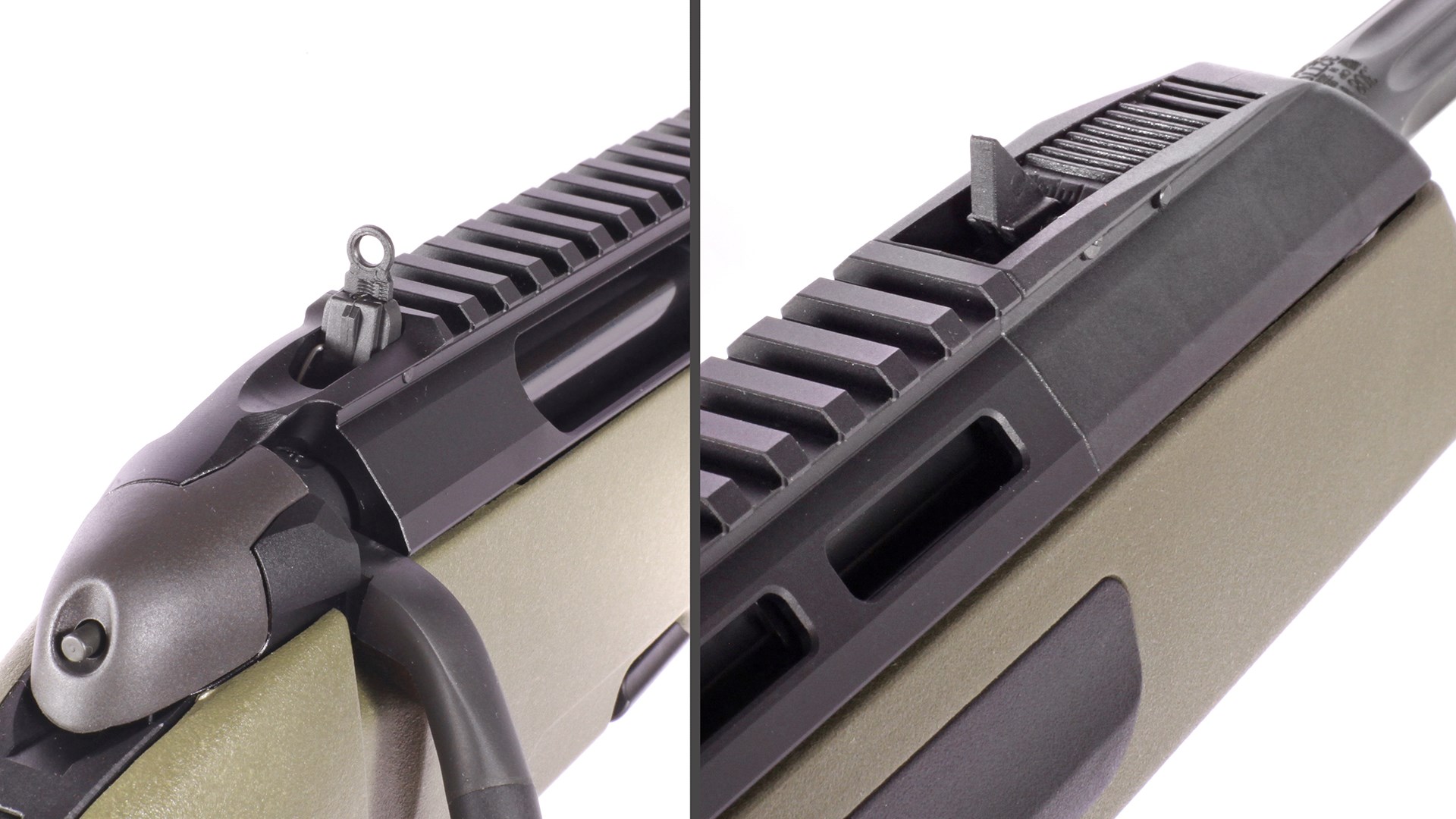
Content with an iron-sight-only Scout rifle, Cooper believed that if the rifle was equipped with an optic, it still needed back-up iron sights. The Scout stays true to this concept, with a rear aperture, adjustable for elevation, and front post, adjustable for windage, that are built into the chassis and fold down when not in use.
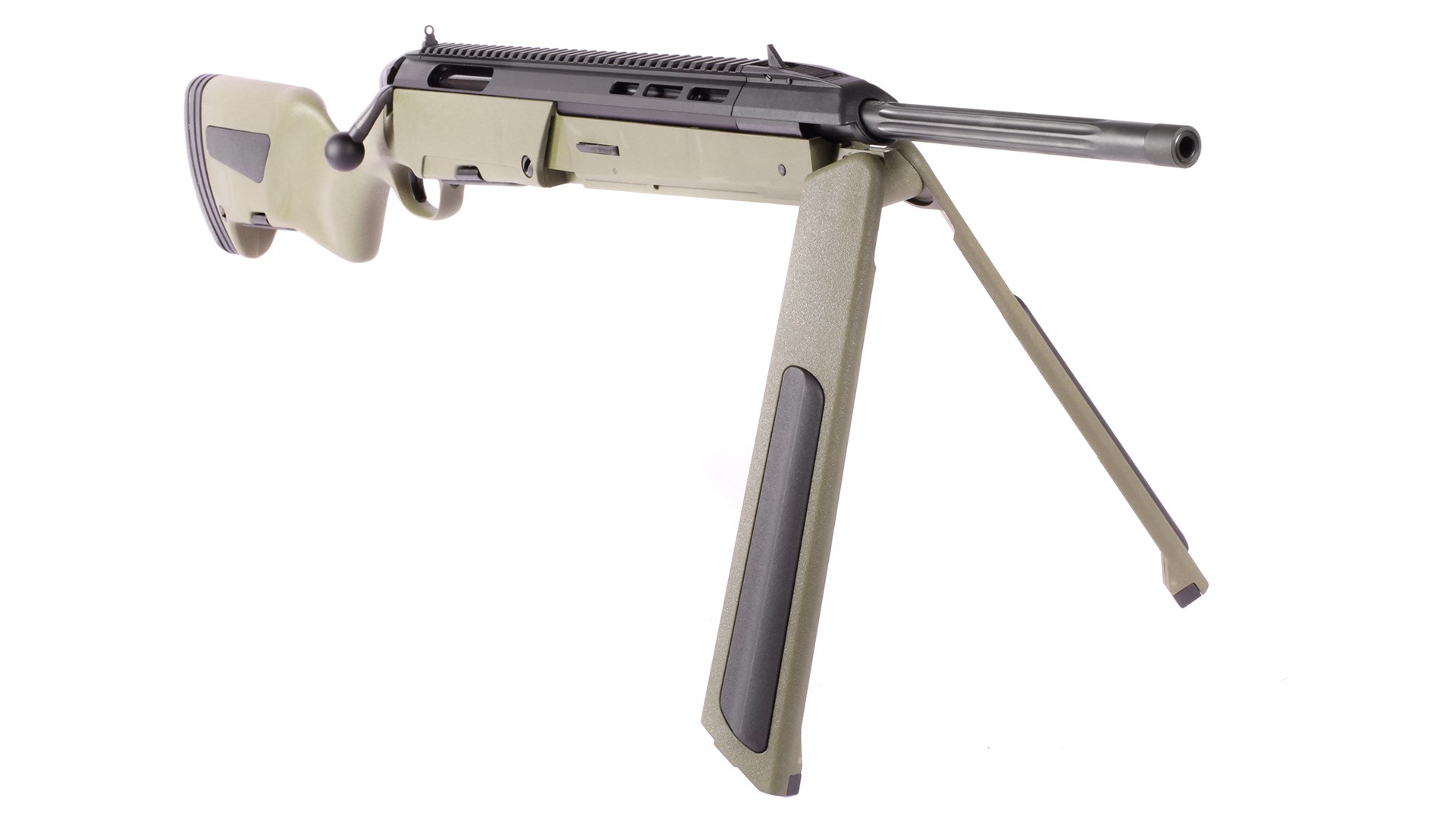
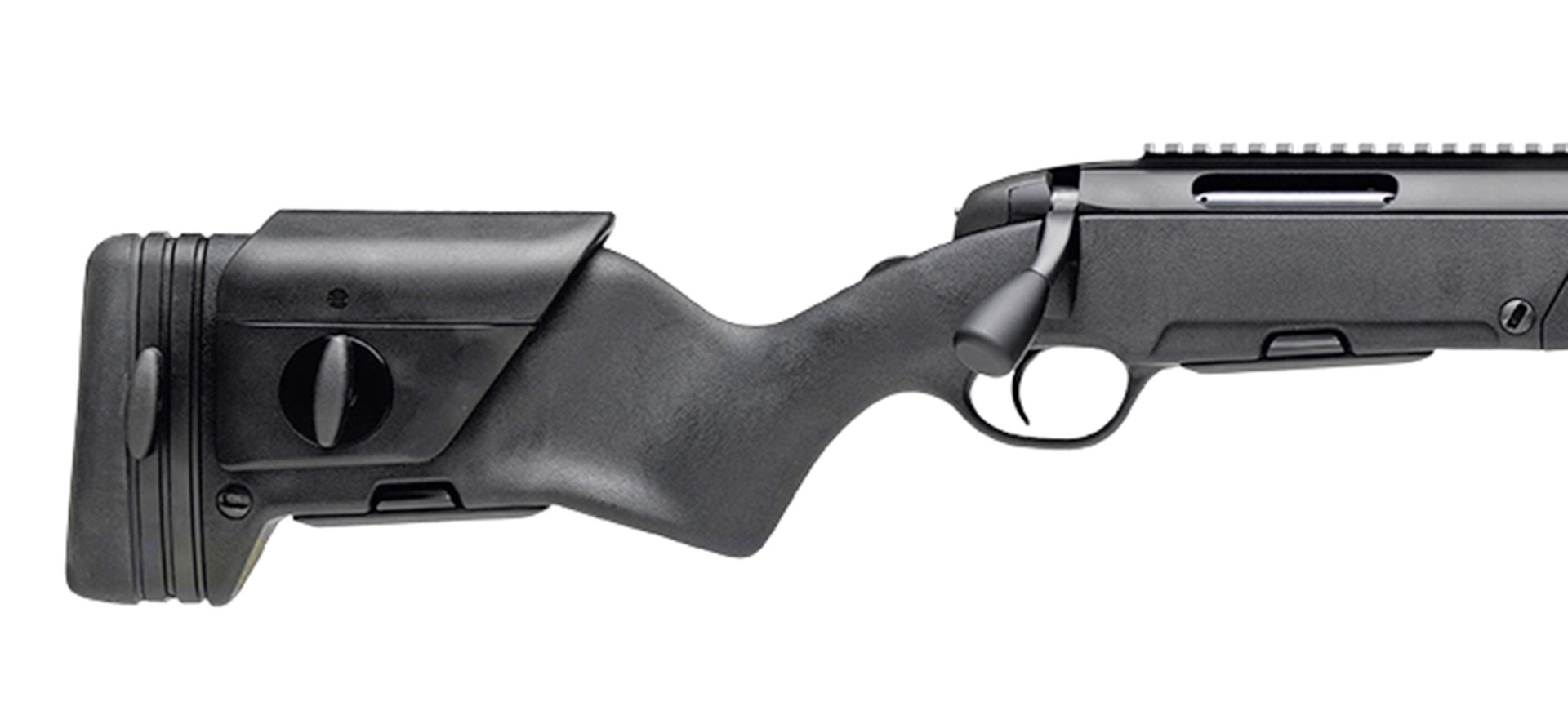
Like the original, the Mk II Scout’s stock is polymer and has an integral trigger guard. Most importantly to Cooper’s criteria, the sides of the Scout’s fore-end fold out to make a bipod. In a world where sophisticated rests have increasingly become a part of hunting, the Scout’s bipod should be thought of as more of an emergency tool. The bipod’s height is non-adjustable and it offers minimal pan or tilt, but if you’re in a situation where you have the time to deploy it, it can make a longer distance shot more accurate.
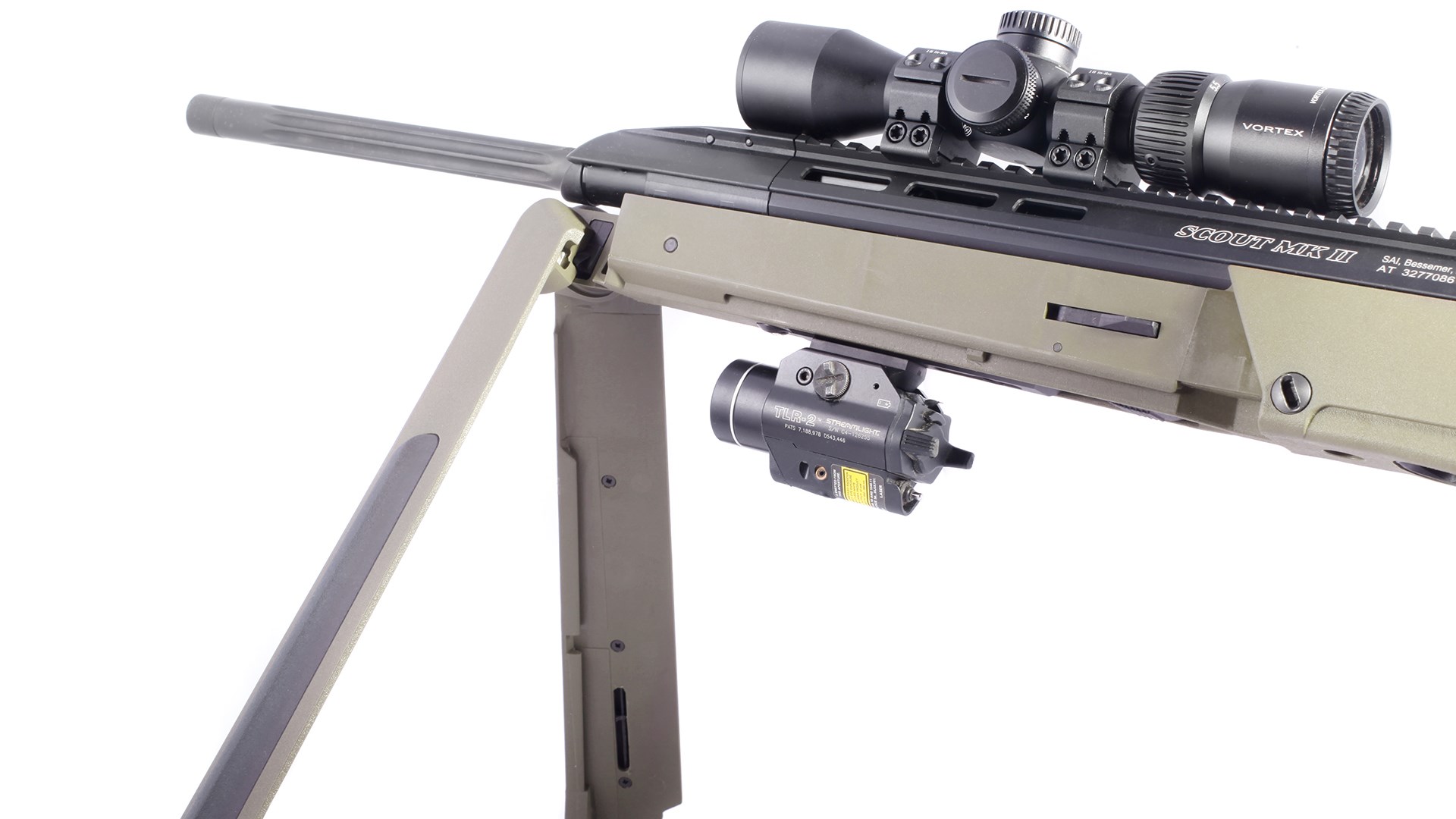
Under the fore-end, the original Scout’s UIT rail has been replaced with two M-Lok slots. These can be used by those who feel they need a “real” bipod, but I found these slots better suited for mounting a flashlight, for either defensive use or for past-dusk tracking and recovery. There are five Millett-type flush-mount sling attachment points, and three swivels are provided with the rifle for the use of “Ching” slings. Attachment points are positioned at 6-o’clock on the fore-end, one each on both sides of the rifle just in front of the action, and an opposing pair at the rear of the buttstock.
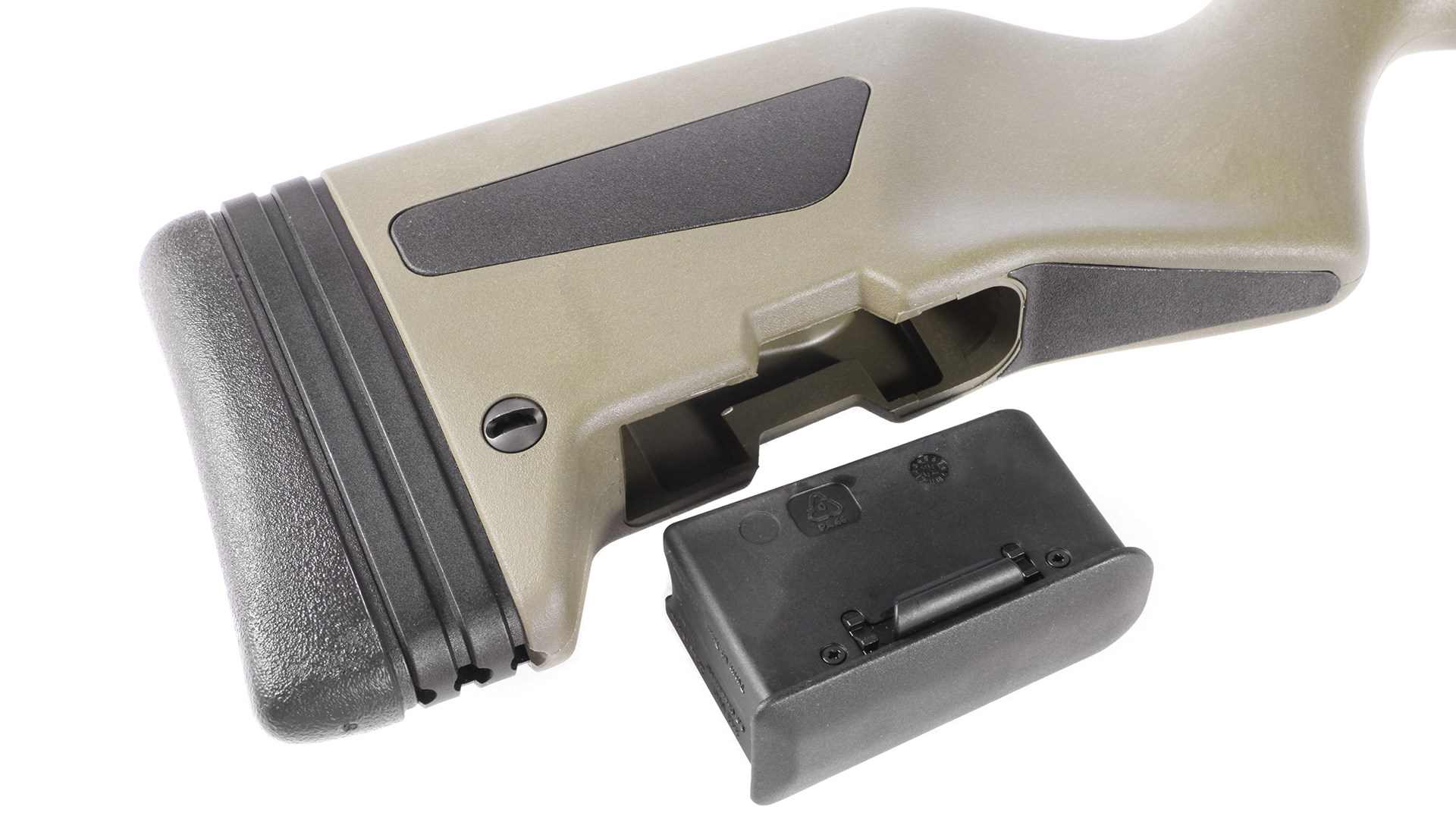
A spare magazine fits into a holder in the rear of the stock, and there is also a capped storage space in the pistol grip. The Scout stock has a provision for an optional adjustable cheekpiece, and length-of-pull is also adjustable through the use of spacers, and is available in black, tan or olive-drab green colors. Metal parts are given a flat black “Mannox” gas-nitride finish.
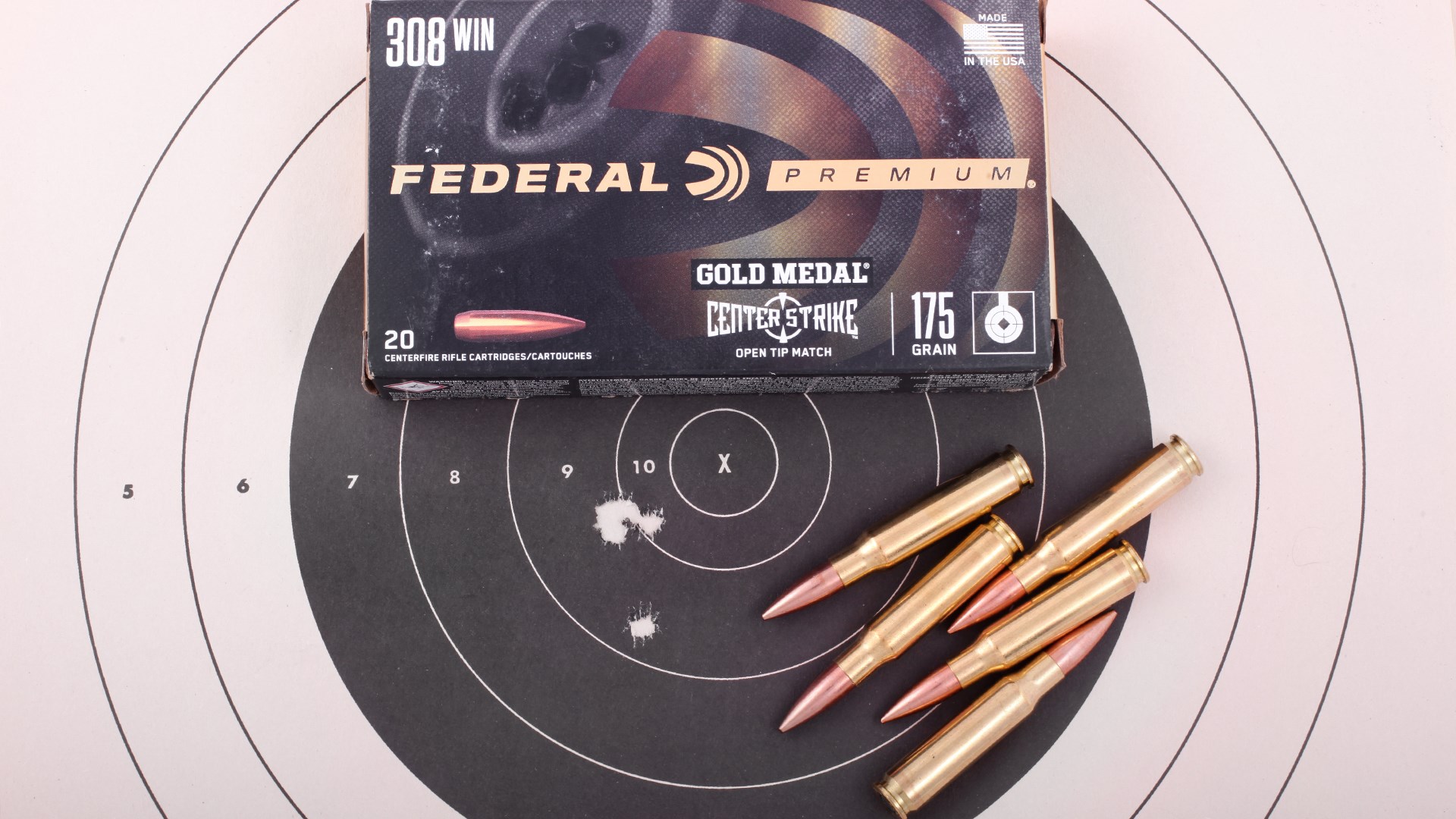
The Scout II is available chambered in .223 Rem., .243 Win., 6.5 Creedmoor, 7mm-08 Rem., and .308 Win. For our test, we chose Cooper’s preference of .308. The Scout uses 1:12-inch twist rifling, which is typically optimized for 150-grain or lighter bullets, but it performed well with bullets weighing between 150 and 175 grains, averaging just over 1.25 inches for five-shot groups with all ammunition tried and often grouping at or under 1 MOA. Look for full test results in a future Gun Locker.
The Optic
As pointed out in the general-purpose rifle article, the scout criteria of a forward-mounted optic was necessitated by Cooper’s requirement that the fixed-magazine scout rifles of the day could be loaded via stripper clips. The fact that most modern scout rifles use a detachable box magazine, combined with the many quality low-power variable optics (LPVOs) on the market today, have made some see this point as antiquated.
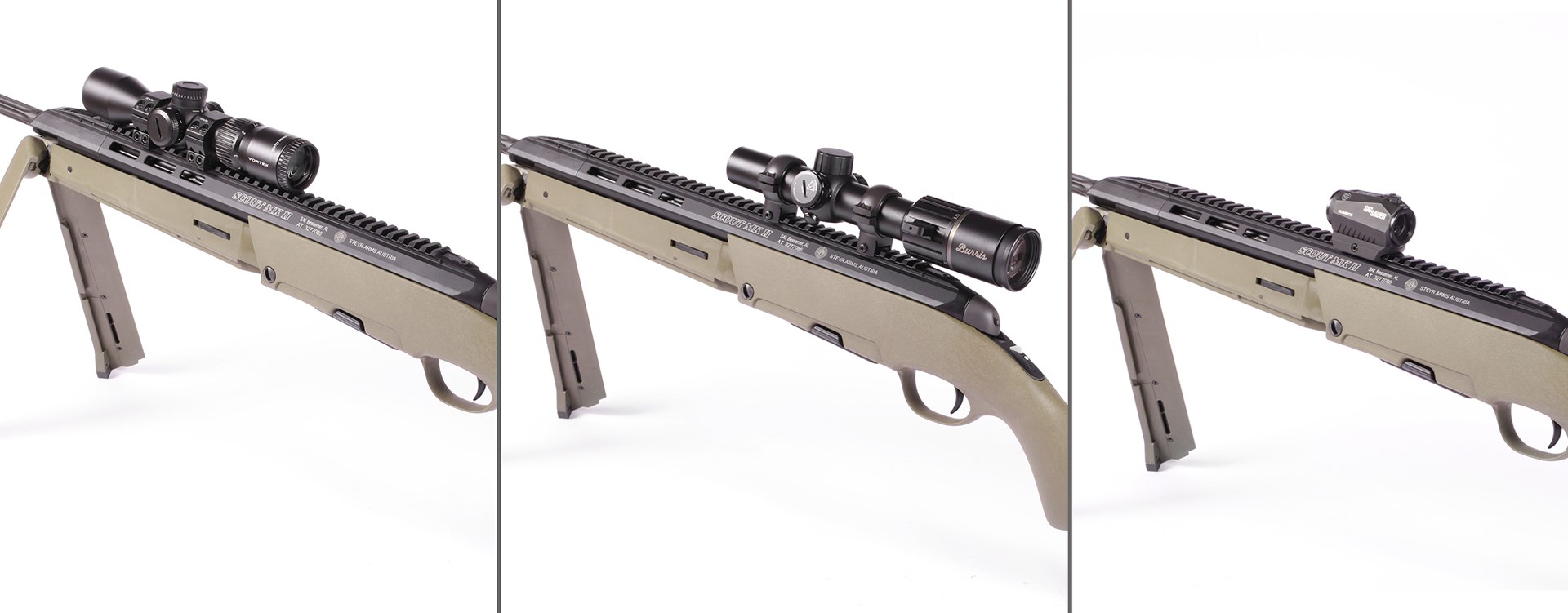
I tested the Scout MK II with red-dot sights, LPVOs mounted in the conventional rearward position and forwarded-mounted scout scopes. My conclusion is that the scout scope concept is still a valid one, for the following reasons:
- It allows the shooter to keep both eyes open. When used on their lowest power settings, a forward-mounted scope can be used like a red-dot “reflex” sight.
- Its forward position blocks less of the the shooter’s field-of-view when using both eyes open. These first two points mean that a moving target can be acquired and tracked quicker, while maintaining better situational awareness, important qualities for both hunting and self-defense.
- When the optic is mounted in the forward position, the rifle is better-balanced and can be carried with one hand at its balance point around the action.
The forward-mounted scope’s disadvantage is that it doesn’t transmit light to the shooter’s eye as well, due to its longer eye relief. This can hinder a scout scope’s low-light performance, especially considering that, until recently, scout scopes weren’t available with illuminated reticles.
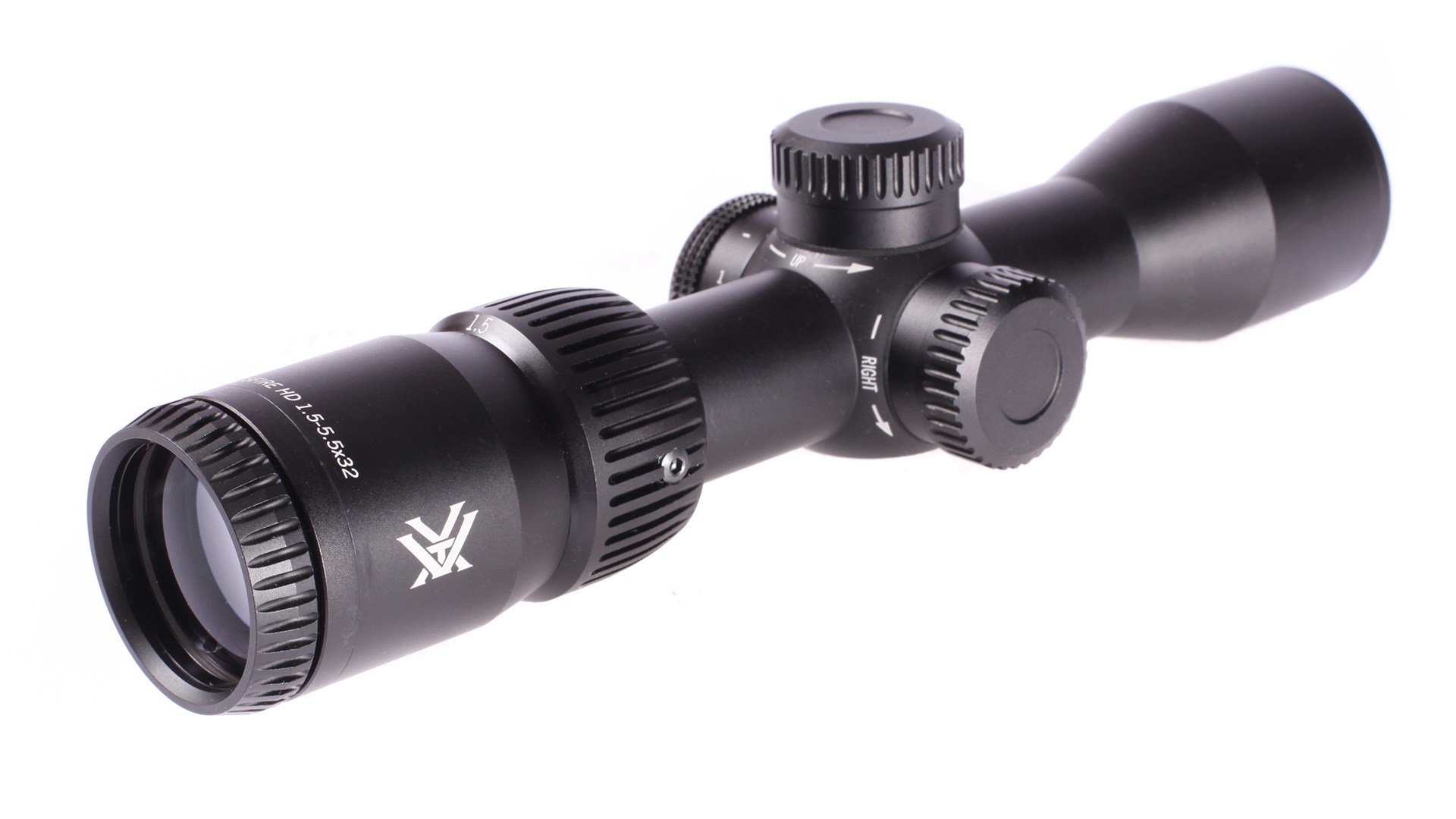
That latter fact changed when Vortex introduced its Crossfire HD 1.5-5.5X scout scope last year. While Cooper stipulated a fixed 2-3X scope, the variable Crossfire is no larger or heavier than other scout scopes on the market, at 8.7 inches long and 11.6 ounces. I mounted the scope with a pair of low height Vortex Sport rings, which held the scope at minimal clearance on the Scout’s top rail for a low-profile and streamlined overall package.
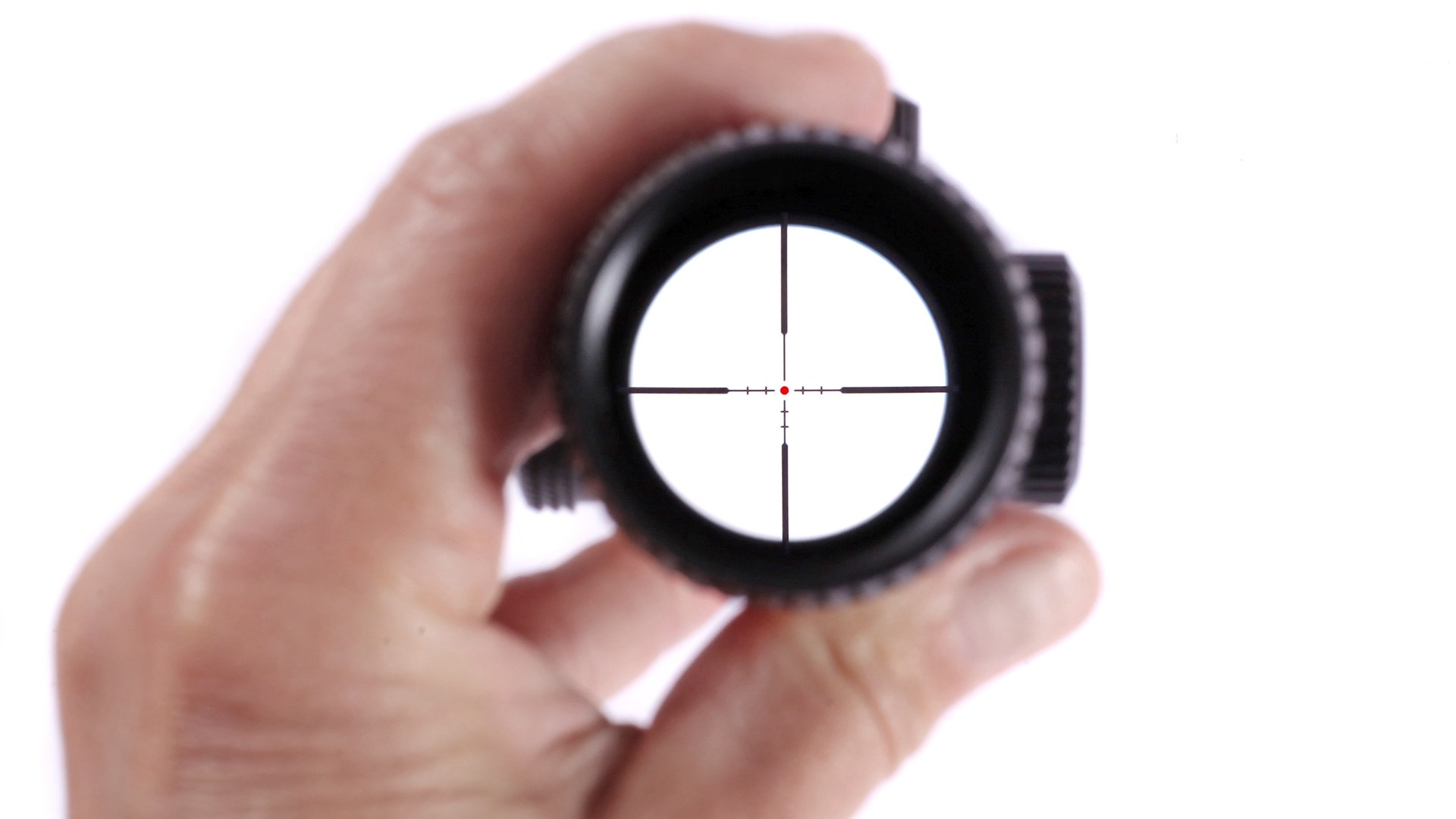
It also allowed for a solid cheek weld without the need of Steyr’s adjustable cheekpiece. Both on the range and in the field, the scope’s illuminated Dead-Hold BDC reticle rendered a positive sight picture in low-light conditions with its simple lighted center dot, and at its 1.5X magnification, it had the speed of a un-magnified red-dot. In hunting conditions, including heavy rain and snow, the Crossfire proved as rugged and reliable as the Scout.
The Sling
In the scout concept, the sling is important as both a carry strap and a shooting aid. To this end, Steyr’s Scout rifles have a unique sling swivel setup that allows the use of a three-point “Ching” sling (named after designer Eric Ching). The Ching sling uses a third attachment at the rifle’s mid-point to make a permanent arm loop that can quickly be assumed in the field. While the shooting sling’s value has been overlooked in a world of hunting bipods and tripods, its use can result in rock-solid field positions. Under real-world conditions, the Ching sling proved handy. Though seemingly complicated, it excelled for both carry and shooting.
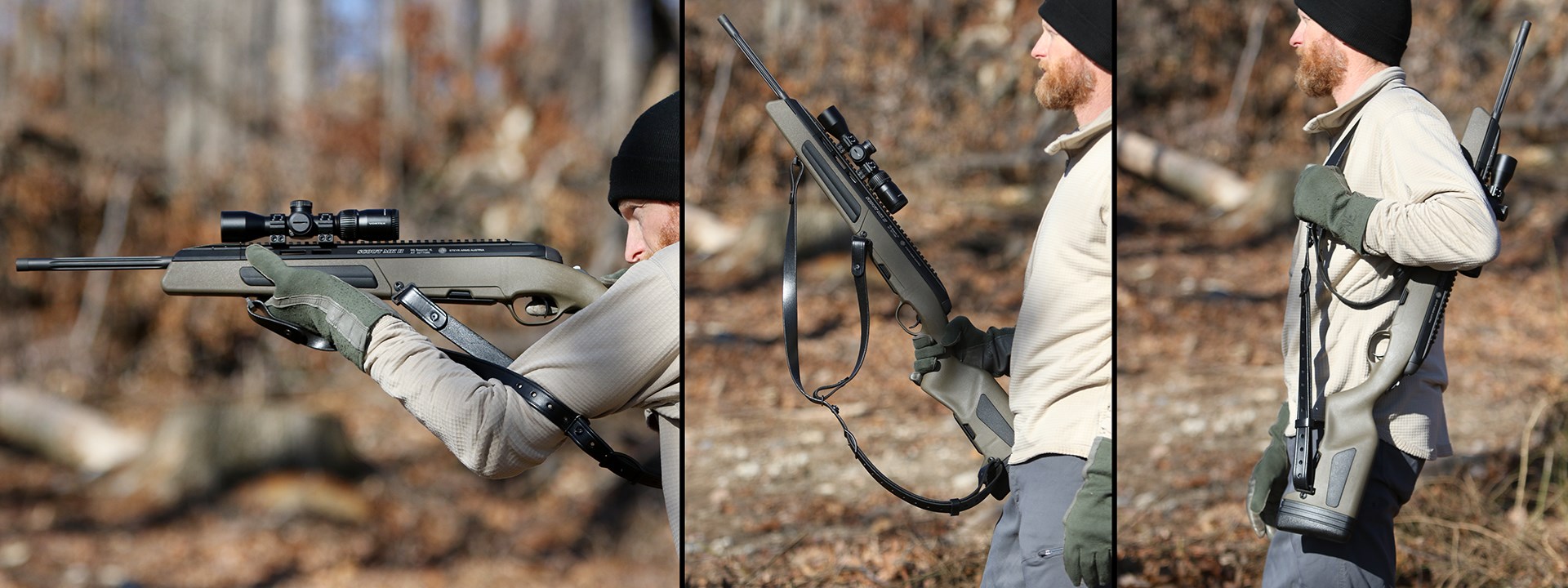
The modern purveyor of scout slings is Andy’s Leather. Owner Andy Langlois makes two high-quality leather slings that work well with the Scout, both of which we used for our testing. Along with his Ching sling, for those wanting a simpler setup, Andy also makes his Rhodesian sling, which uses two attachment points, but still has a built-in shooting loop.
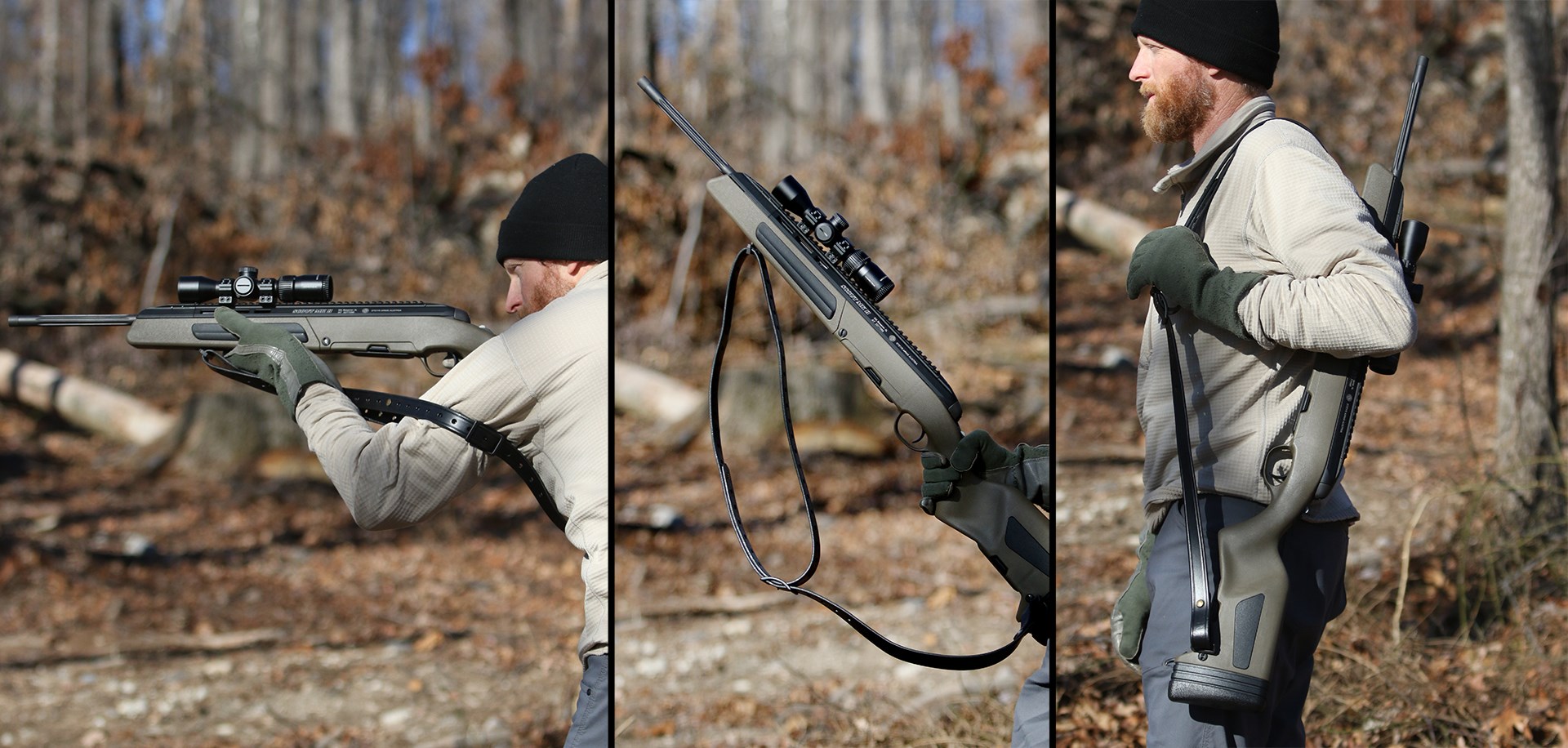
With the Crossfire mounted, the Andy’s leather Ching sling attached, and both unloaded mags installed, the Scout II tipped the scales at 8 pounds, 4 ounces. This weight breaks down as follows:
- Rifle with two unloaded magazines – 6 pounds, 12.5 ounces
- Vortex Crossfire scope: 11.6 ounces.
- Vortex Sport rings: 3.2 ounces.
- Andy’s Leather Ching sling and Steyr swivels: 8.7 ounces.
Room for Improvement?
If the Scout II is the best in its class, is it perfect? Not quite. There are a few changes I would have made when re-vamping the model.
The rifle’s polymer stock feels dated, especially its texture, when there are so many other more modern stock materials on the market. To be fair, it’s kind of an “if it ain’t broke, don’t fix it” item. Steyr’s experience in using polymer for firearms components dates back to the AUG of the 1970s, and the Scout’s stock is tried and true.
Steyr could have updated the Scout’s Millett sling swivels for the more modern push-putton QD swivels. While the Millett swivels are perfectly functional, simple, and low-profile, they hold the swivel in one orientation, whereas a push-button swivel rotates, which would allow better positioning of a three-point scout sling.
My final nitpick is magazine compatibility. The Scout’s magazine is proprietary. While the two five-rounders supplied would be certainly adequate for the average hunter, for someone considering the Scout for a home-defense or tactical rifle, their price ($55 MSRP) and capacity would be a limiting factor. Steyr does make a 10-round magazine for the Scout that requires an adapter ($80 MSRP), but the rifle’s bottom-locking magazine design means that with the adapter in place, only ten-round magazines ($120 MSRP) can be used (although bonus points are gained by the adapter giving the Scout a cool Mannlicher look). Something like a .308 PMag would match the Steyr mag’s double-column, double-feed geometry or a re-design of the bolt face may be necessary to utilize the single-feed AICS-pattern magazines popular with so many of the Steyr’s competitors.
Is the Steyr Scout Mk II still the benchmark when it comes to factory-built scout rifles? Yes. It’s the only one that checks all of the boxes of Cooper’s original scout criteria. But that box -hecking comes at a price. The Mk II is also the most expensive factory scout rifle on the market.
In a world of highly specialized firearms, where a hunter or home defender can own multiple guns that are each tailored to a very specific task, the Swiss Army Scout stands out. It is not a long-range precision rifle, nor is it a backcountry or ultralight rifle, or a tactical rifle or modern sporting rifle. It’s a firearm that does all things well, if no one task perfect, making it the ultimate rifle for the one-rifle man.
Steyr Scout Mk II Specifications
Manufacturer: Steyr Arms GmbH, Kleinraming, Austria
Importer: Steyr Arms, Inc., 2530 Morgan Road, Bessemer, AL 35022; (205) 417-8644; steyr-arms.us
Action Type: bolt action, centerfire rifle
Chambering: .308 Win.
Receiver: aluminum alloy
Finish: gas nitride Mannox finish
Barrel: cold hammer-forged steel, four groove, 1:12-inch RH twist, muzzle threaded 1/2×28 TPI
Stock: polymer with built-in bipod and magazine storage, optional length-of-pull spacers and adjustable cheekpiece
Magazine: 5-round, detachable box (10-round magazine available)
Trigger: two-stage; 2-pound, 15.6-ounce pull
Sights: folding rear aperture sight adjustable for elevation, folding front post adjustable for windage, Picatinny optics rail
Weight: 6 pounds, 15.5 ounces
Accessories: hardcase, owner’s manual, three sling swivels, muzzle thread protector, muzzle cap, spare magazine
MSRP: $2,183
Barrel length: 19.00 inches
Overall length: 38.75 inches (with two stock spacers installed)
Length of pull: 13.25 inches (with two stock spacers installed)
Drop at comb: 1.39 inches
Drop at heel: 1.27 inches
Read the full article here