


I was lying on my stomach in the damp grass with a stock in my shoulder and my eye to the scope. An old college-ruled notebook was in front of me with a page full of what appeared to be the scribbles of a mad scientist, full of equations, graphs and scratched-out mistakes. There was a slight breeze coming from my left that kept speeding up and slowing down with little hope of steadying out, so I had to get my timing right. If I waited too long, all of those notes I took would mean nothing. If I were too impatient, I would make a mistake.
The wind came to a mysterious dead spot, and I felt my opportunity. With a steady exhale and a smooth pull of the trigger, I let my shot ring out. A blast you could feel in your chest broke the silence of the Kentucky hollers, kicking up dust and dirt obscuring my vision. My coach, Butch, sat 6 feet to my right watching through his spotter’s scope, and I watched his face intently to read his reaction. He smiled slightly and simply said “Impact!”
The art of long-distance shooting requires a mixed skill set in meteorology, mathematics and physics. The factors involved in the launch of a projectile from start to finish are put into three groups: internal, external and terminal ballistics. Internal ballistics is how a bullet behaves inside of the gun from the moment it is fired until the bullet leaves the barrel. Terminal ballistics is how the bullet behaves upon impact, i.e., whether it penetrates, ricochets or splatters. Shooters do very little to read these behaviors because they have little control over them in that moment, but external ballistics is easily read and compensated for by a practiced shooter.
External ballistics is how a bullet behaves from the moment it leaves the barrel until it impacts its target, no matter how far away. The number of factors that need to be compensated for can be daunting at first and only increase their influence the farther away you go. Gravity, velocity, air density, wind and shot angle are some of the most influential when it comes to reaching the 1,000-yard mark or further.
Gravity acts upon all things equally at an accelerating rate of 9.8 meters per second per second, or meters per second squared (m/s2). That is, for every second an object is in the air, it will drop 9.8 meters and continue to drop at that rate until it hits the ground. This has the greatest effect on trajectory, as every other factor covered will change the amount of time the projectile is exposed to the forces of gravity. From the moment a bullet leaves the muzzle, it will begin to drop. Because gravity acts in a predictable manner, the shooter can compensate for that drop and elevate their sights above their intended target.
In close relation to gravity is velocity. A faster projectile will drop less than a slower one when fired at the same distance. This is not because the higher-velocity projectile has any gravity-defying traits but simply because it is airborne for a shorter period of time. For example, a faster projectile traveling 1,000 yards with a one-second flight time will drop 9.8 meters, while a very slow projectile traveling 200 yards with the same flight time will also drop 9.8 meters.
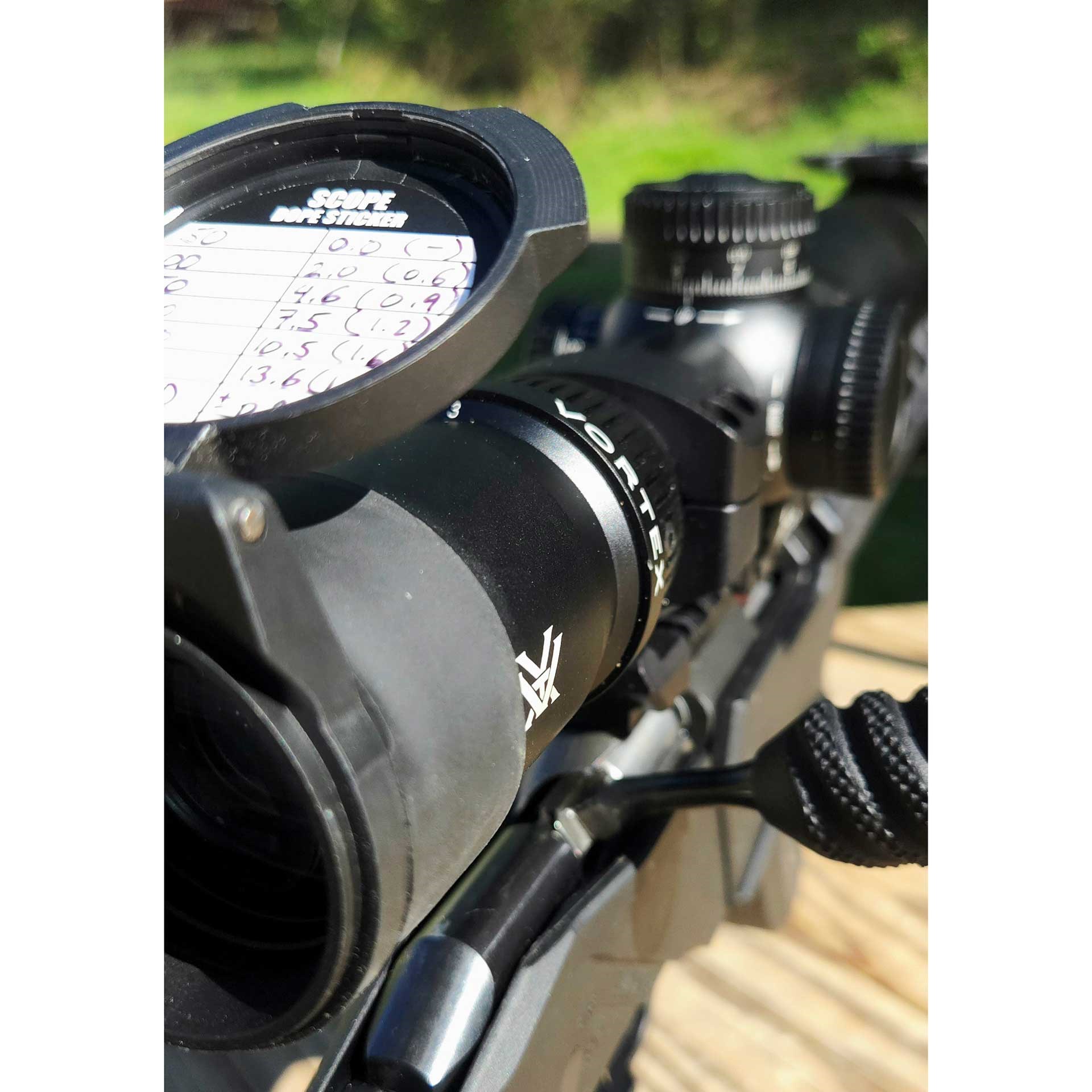
The range has little to do with the effects of gravity. In this case, the velocity of the projectile simply dictates its flight time and subsequently how long it is exposed to gravity’s pull. A 2017 article in Gun Digest states this plainly. “…with the effects of atmospheric drag aside, all small bodies will fall to the earth at the same rate. This applies to projectiles as well. Whether fired at Mach III or simply dropped from your hand, the bullet falls to the ground in the same amount of time.”
Air density is where some of the meteorological skills come into play. Determining air density will help the shooter predict the rate at which their bullet will slow down. Knowing the projectile’s velocity when it leaves the muzzle is not enough to compensate for its drop. As stated above, gravity causes a bullet to drop, and velocity determines how long a bullet has to drop. Air density will determine how much a bullet slows down, greatly affecting its flight time the further the distance.
Elevation, temperature, barometric pressure and humidity all come into account when calculating air density. Dense air will slow down a projectile faster than thin air. Picture a football quarterback who can throw a ball 50 yards across a field. Now imagine how far he could throw it through a denser matter, like water. A throw that would travel 50 yards in the air may only go a couple feet underwater because the higher density of the water slows the football at a more rapid rate.
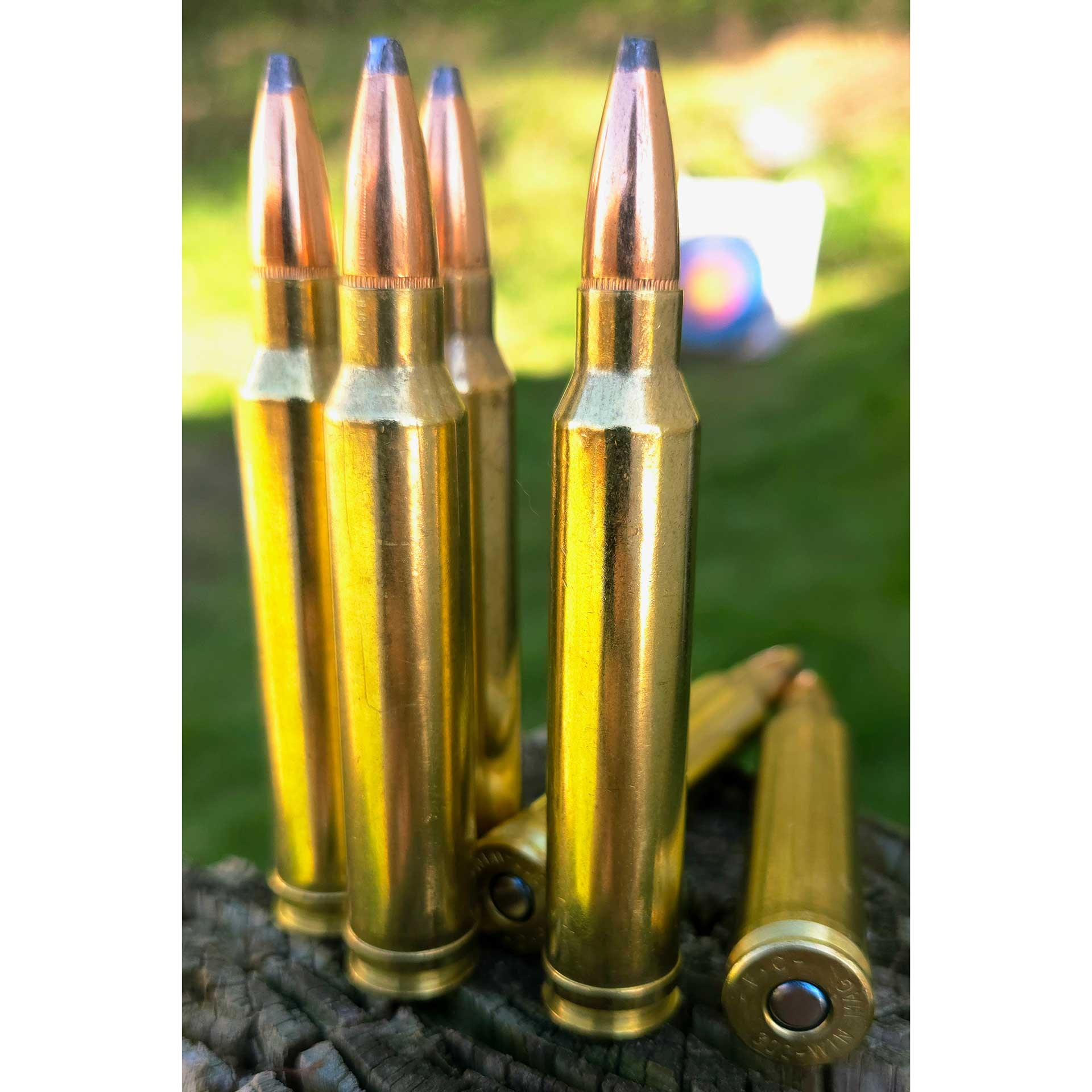
All bullets are rated with a ballistic drag coefficient (BC) which, simply put, is a measurement of the aerodynamic traits of a projectile. This measurement is commonly listed on a box of precision bullets as a G1 or G7 BC. The higher the number, the less drag it experiences. According to Ballistics: Theory and Design of Guns and Ammunition by Carlucci and Jacobson, “The drag on a projectile is the force exerted on it by the medium through which it is moving… Since drag is generated by the motion of the projectile through the air, it is naturally directed opposite to the velocity vector.”
The amount of drag produced by a projectile at any given velocity can be calculated mathematically using its shape, size and surface friction. It can also be measured by a doppler radar which is what many bullet manufacturers use to verify their calculations. Lastly, it is worth mentioning that BC is a velocity-based measurement. A .30-caliber projectile traveling at 2,000 feet per second will not have the same drag coefficient as the same projectile moving at 1,200 feet per second.
Wind speed and direction is almost the only factor that can change a projectile’s horizontal movement. A headwind and tailwind, or wind traveling parallel to the bullet’s direction of travel has little to no effect on the trajectory of the projectile and can generally be ignored, but wind traveling perpendicular to the direction of travel can have a significant effect. Using the ballistic drag coefficient, a shooter can predict how much a bullet will veer off path based on the speed and direction of the wind.
Wind traveling at or near a 90-degree angle to the direction of travel is calculated as a full value, where wind traveling at or near a 45-degree angle is calculated as a half-value. If a shooter is aiming for a target due north and there is a 10 mph wind coming in from the west, a full value, they will have to hold their shot to the left by a calculated amount to allow the wind to push the projectile toward the target. If the same shot is being taken with the same wind speed but from the southwest, the shooter would calculate it as a half-value.
For example, if the wind correction for the full value was to hold the reticle 8 inches left, the half value would be to hold 4 inches left of target because the angle of the wind cuts the amount of push on the bullet in half. Spin drift, horizontal drift caused by the rapid rotation of the bullet, will cause a projectile to change its horizontal point of impact. This is a very predictable measurement, as a rapid right-hand barrel twist will make a bullet drift right more than a lighter twist. A left-hand twist works in the opposite direction.
Finally, shot angle will have a significant effect on how all the above calculations are used. Shot angle can be simply described as shooting uphill or downhill. Previously, all calculations were made assuming the line of sight from the shooter to the target were on a level plane. When an upward or downward angle is introduced to the equation, a variety of changes must be made. A shot fired vertically up or down has zero change in trajectory from gravity while a shot fired at a flat 90 degrees experiences the fullest effects of gravity. Ron Spomer describes that, “the farther we depart from a 90-degree angle, the less the drop and the higher our bullet strikes from the horizontal drops we expect. It’s the degree of the angle that matters, not whether it is up or down.”
The change in shooting angle causes a noticeable change in the actual range to target. The Pythagorean Theorem can be used to determine the true slant range based on the horizontal distance to target and the angle at which the shot is being taken. It is worth noting that a laser rangefinder operates on line of sight and will only ever return the slant range to target, not the horizontal distance.
For example, a rangefinder reading a target that is horizontally 1,000 yards away at a 15-degree downward angle will display approximately 1,035 yards. However, because gravity acts only upon the horizontal component of the bullet’s flight, the shooter must compensate for elevation based on the horizontal distance rather than the slant range. Multiplying the slant range by the cosine of the shooting angle will give the shooter their corrected firing distance.
In this example, 1,035 yards multiplied by the cosine of 15 degrees, approximately 0.966, returns the shooter to the original horizontal distance of 1,000 yards. Whether the shot is taken uphill or downhill, this correction always results in a shorter compensated distance than the slant range, meaning angled shots consistently require less elevation holdover than a flat shot at the same slant range would suggest.
As initially stated, calculating all these factors can be a daunting task for those new to long-distance marksmanship. Compensating for gravity, velocity, air density, wind and shot angle is a lot of work and is very time-consuming, but the gratification of seeing all those elements in play and correcting for them to achieve good impacts on target is worth every moment spent calculating a shot.
Shooting was once thought of as a crude skill where shooters relied on their guts and trial and error experience to make long-distance shots, but there is now a proven scientific method for reaching the 1,000-yard mark and well beyond. So grab your best rifle, pick up a box of precision ammo, head to the longest range you can find and take a shot at seeing how far you can reach.
Read the full article here