
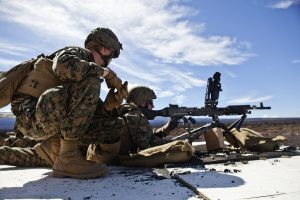

Most shooters don’t need a “war belt.” While enthusiasts like the idea of preparing for every contingency, the vast majority of us need a reliable platform for a range session, a training class or a local club match. In a true emergency, a belt that we regularly use and train with is superior to a complex rig gathered only for a worst-case scenario.
The war-belt concept gets complicated. Social media often suggests that anything less than a direct-action rig with a dozen pouches is insufficient. For the everyday marksman, we need to scale back to something simple, streamlined and effective: the “tactical belt.”
A tactical belt is a lightweight, do-most-things-well platform that keeps your essentials in the same place every time. Using the same belt for nearly everything means that when it really matters, you’re proficient with its use.
Defining the Civilian Tactical Belt
Think of the tactical belt as a middle ground between a concealed-carry belt and a full load-bearing harness. It carries more than your belt loops can comfortably support but remains comfortable for all-day wear. If you need more ammunition for a specific event, you can scale up with a chest rig or plate carrier, but the belt remains your foundational constant.
Here are three principles to keep in mind:
- Carry what you’ll actually use: Every pouch adds weight. Don’t include “just in case” pouches since they tend to get filled with unnecessary gear. Carry the minimum required to support your needs.
- Skip the suspenders: If your belt requires a harness to stay up, it’s no longer a streamlined tactical belt. Keep the weight manageable to the waistline alone.
- Keep things off your legs: Drop-leg holsters and gear carriers increase energy expenditure with every step while simultaneously making movement awkward. Use a rigid offset holster adapter to lower the draw stroke (if needed) without anchoring gear to your thighs.
A Simple Starting Tactical Belt Layout
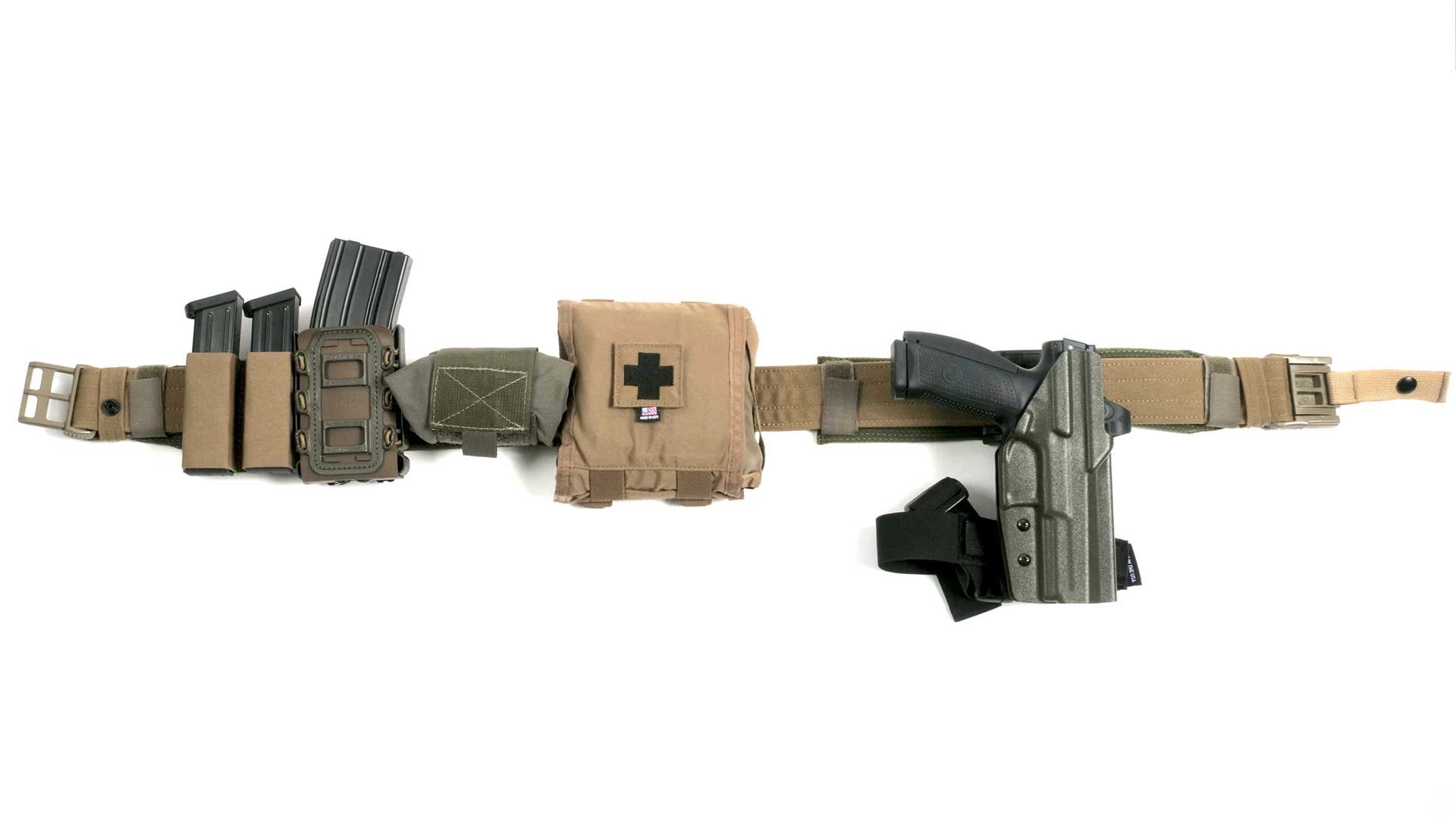
Rather than building a tactical belt by feel, organize it into “zones” from your support side to your strong side.
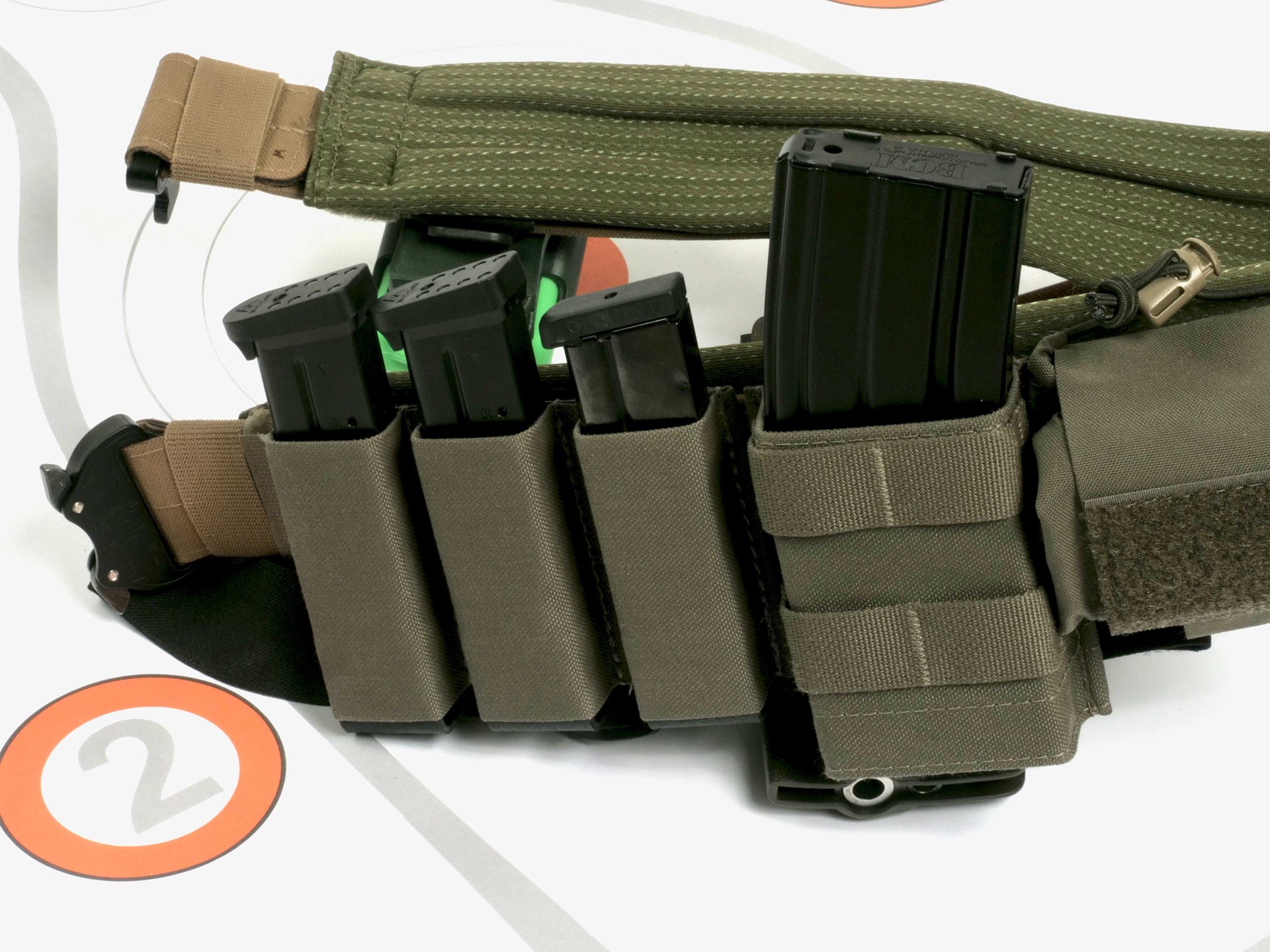
Ammunition (10- to 8-o’clock): This is the belt’s core purpose. Start with two pistol magazine pouches (three if you’re a single-stack enthusiast like me) and one rifle pouch. Position them starting at 10 o’clock and moving counter-clockwise. This keeps your centerline clear for kneeling or prone positions. Use open-top pouches with strong retention to balance speed and security.
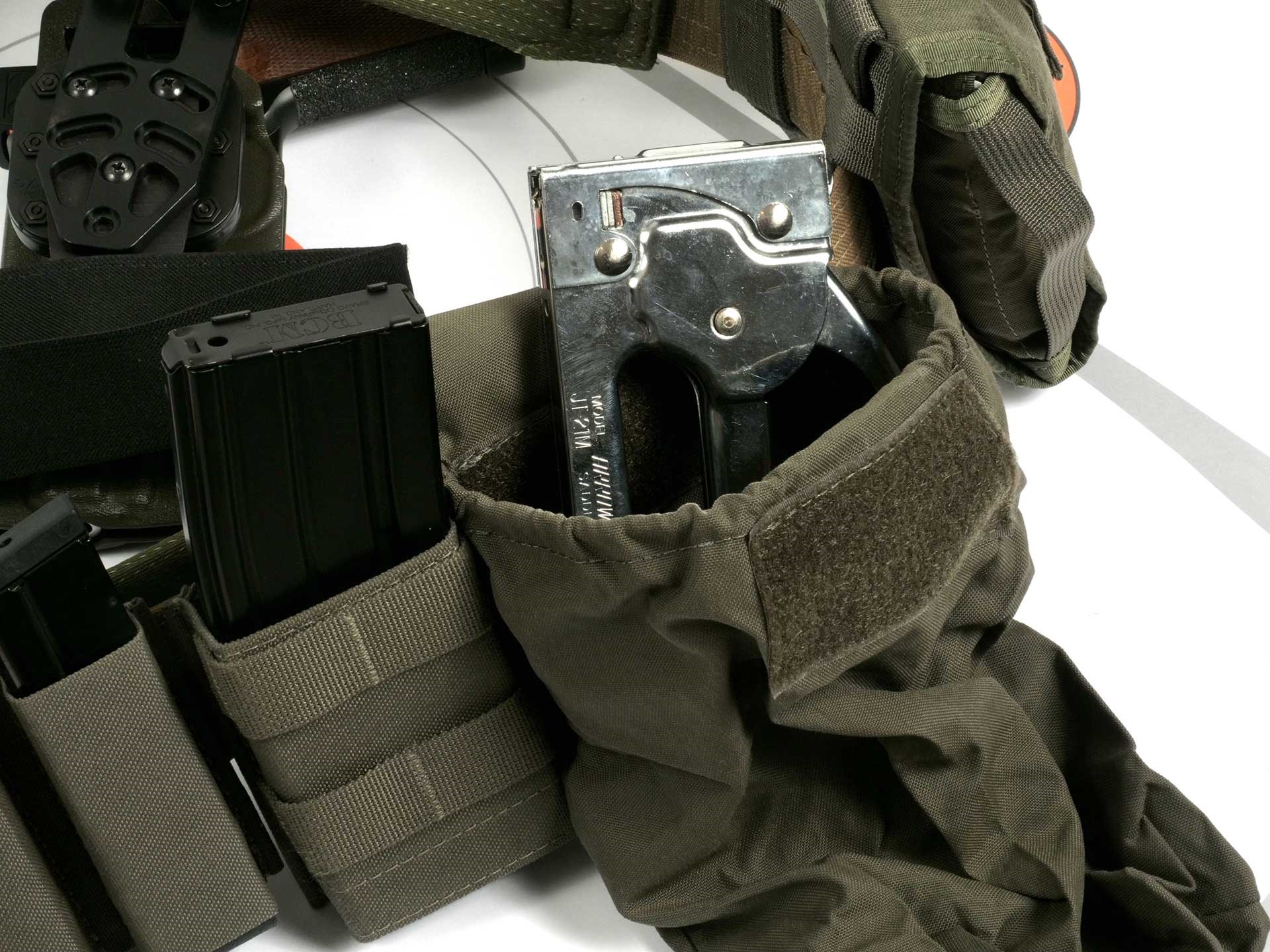
Utility (8- to 7-o’clock): A roll-up dump pouch is a versatile addition. It stays out of the way when empty, but is invaluable for spent magazines, range tools like tape or a stapler, or water. A hydration pouch works well, too. If your training is rifle-heavy, replace it with a second rifle magazine pouch.
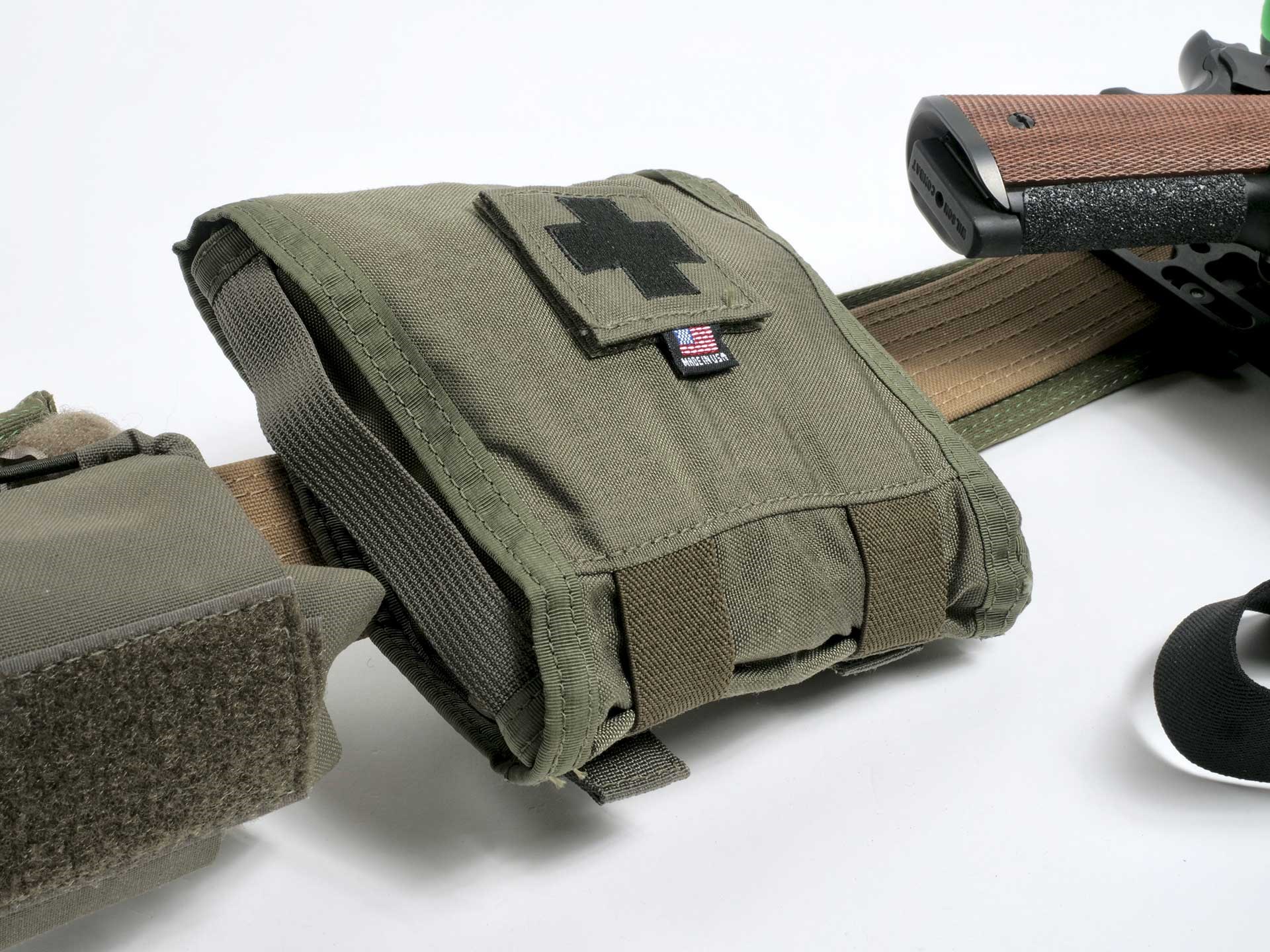
Medical (6-o’clock): An individual first aid kit (IFAK) is non-negotiable. A flat, low-profile kit at the small of the back is accessible by either hand and won’t interfere with sitting or driving. Ensure you have formal training on every item in the kit.
Holster (3-o’clock): Put this on the strong side, adjusted for a clean and repeatable draw. Keep the immediate area around it clear to avoid snagging your draw stroke.
“Open Access” (1-o’clock): This open space is an ideal spot for a shot timer during training or a horizontally mounted tourniquet for more involved courses. Either way, avoid anything hanging down vertically that might get in the way of your thighs from moving up and down stairs or terrain.
Which Belt System
Two-piece “inner/outer” belts are currently popular. These use a Velcro-lined inner belt threaded through your loops, with a main belt attached over the top. It’s excellent for stability, but less ideal if you need to throw the belt on over a jacket or in a “bump in the night” scenario. I also find that the hook-and-loop material wears out and gets dirty over time, especially if you’re in the dirt a lot.
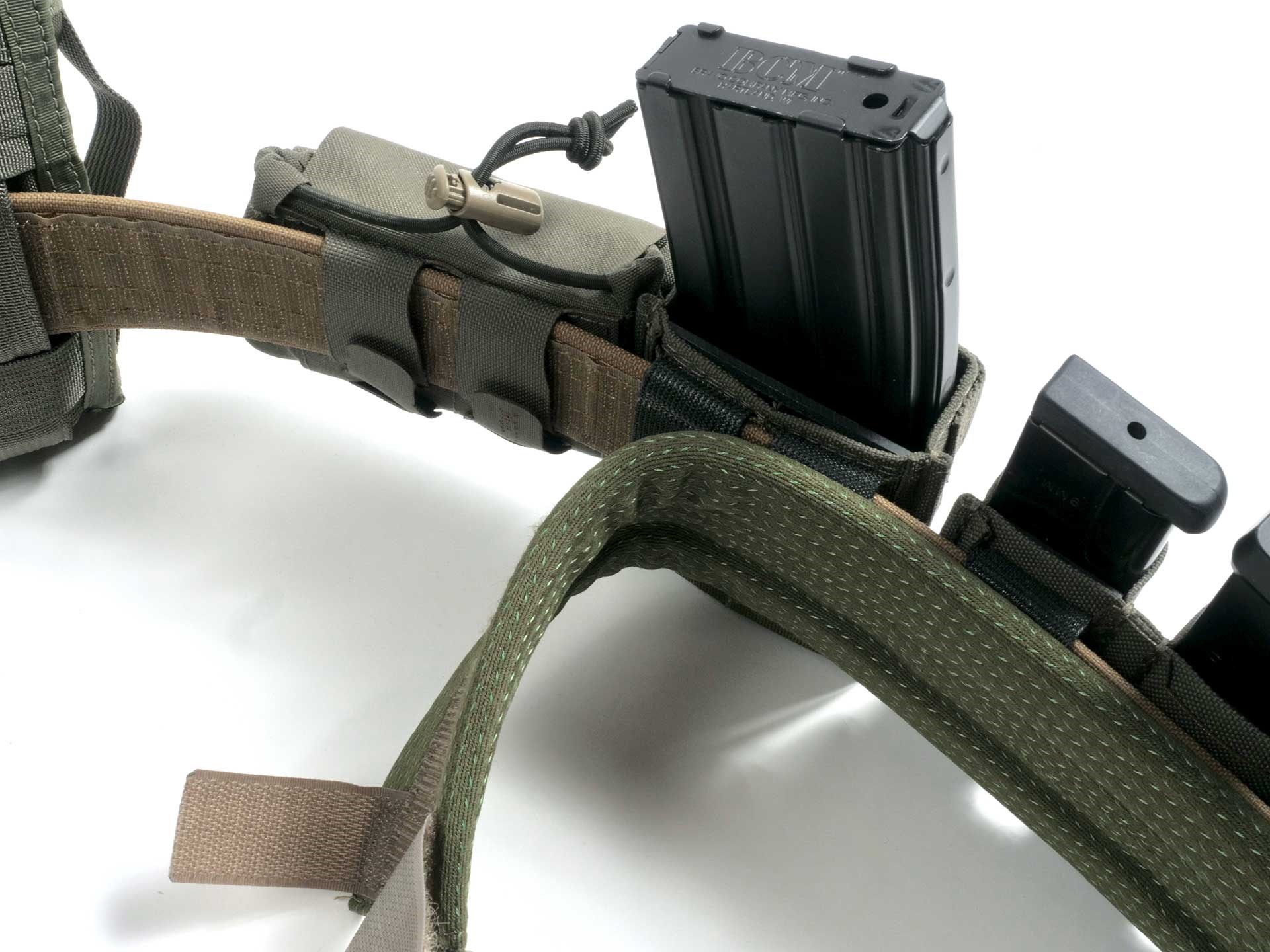
For maximum versatility, consider a 1.75-inch or 2-inch belt made of stiff SCUBA webbing. I prefer a belt with internal hook-and-loop lining paired with a removable padded liner. This allows the belt to function as either an inner/outer system or a “throw-on” standalone rig.
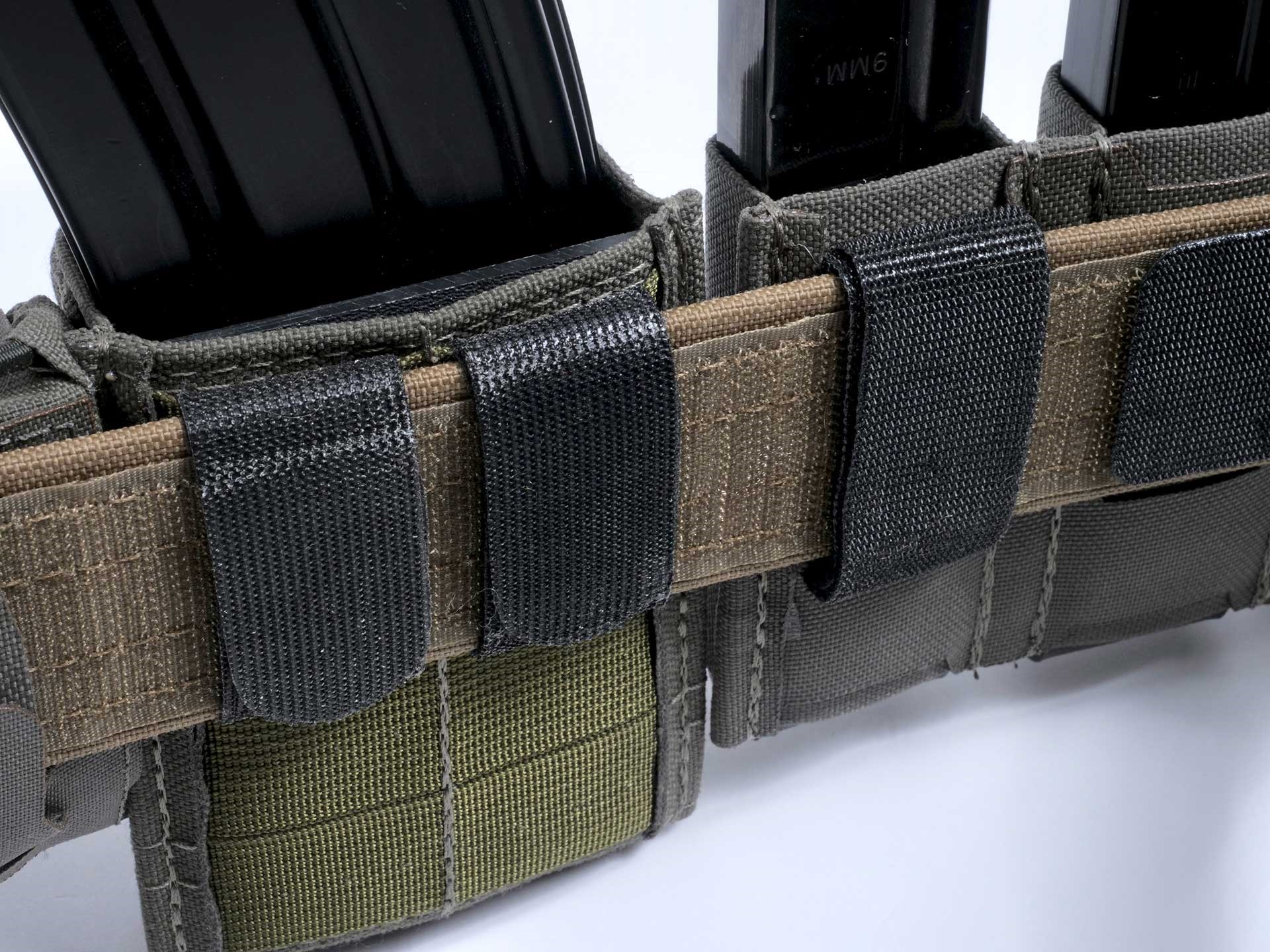
For pouch attachment, skip the bulk and looseness of traditional MOLLE straps. Using 1-inch hook-and-loop “one-wrap” allows you to secure pouches tightly to the belt. This method keeps the profile slim and holds the pouches tight to their positions.
The Bottom Line
The most effective tactical belts are surprisingly simple: a few magazines, a holster and medical gear. Consistency is the goal. By using a streamlined setup for everything from matches to training, your movements become automatic. You don’t need the most capable belt possible. Just the most consistent one.
Read the full article here