
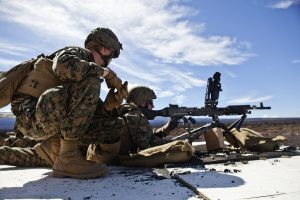
We have all seen the post-apocalyptic movies where improvise armored vehicles with machine guns roam the landscape. These Hollywood creations make for great entertainment but are such cobbled together machines just fantasy? The civil war in Somalia introduced the world to “Technicals”, or utilizing civilian vehicles, like decades old Datsun and Totota Hilux pickup trucks, as a platform to mount heavy machine guns, like the Soviet era DShK 12.7mm. Thirty years later and such vehicles are now being used on the battlefields of Ukraine. Not only has Ukraine made improvised war wagons out of civilian pickup trucks but they have used off-the-shelf drones to make an impressive improvised air force. Just as modern warfare has caused the need for improvisation, so will The End of the World as We Know It (TEOTWAWKI). How can we be better prepared to improvise when the time comes?
Knowledge and Skills
To me, knowledge is having the theoretical information in your head, while skill is being able to apply that information. Our modern world has created a workforce full of specialist, who do one thing very well. The problem is, these specialist might, for example, be able to write advance computer code but cannot change oil in the lawnmower. I was blessed enough to work in a field (disaster planning, response, and recovery) where I was required to be a generalist. I had to have a good understanding of meteorology so I could understand threats from floods, tornadoes, and snowstorms. I had to have a general knowledge of chemistry, biology, and geology. I had to understand the basics of our power grid, communications, transportation, as well as water and wastewater infrastructures. I had to understand building designs to understand how they may collapse to understand the complexities of rescuing trapped people.
Right before retirement, my family started our journey into homesteading and that required more subjects to gain knowledge and skills in such as, animal husbandry, soil management, veterinary medicine, horticulture, and many more. Skills in the trades and crafts such as welding, blacksmithing, plumbing, electrical, sheet metal working, engine repair and the like are the backbone skills for fabrication and improvisation.
Ater TEOTWAWKI, if you wanted to build an improvised windmill to pump water, think of the knowledge and he many skills you would need to complete the project. Understanding some basics of hydraulics to help understand the needed lift and friction loss. You might use sheet metal skills to fashion the blades of the windmill. Knowledge and skills in mechanical power distribution will allow you to take the turning of the windmill blades and transfer that power to turn a pump. The more knowledge and skills you have then the better prepared you will be to improvise when needed.
Know It Alls Do Not Exist
There are people who think they know everything but we all know that is not true. So what happens post-TEOTWAWKI when our intellectual knowledge and skills do not match our needs? This is where being part of a community comes into play. Finding out who can fix your radio after TEOTWAWKI is going to be difficult with no Internet or even Yellow Pages to help find someone. Identifying people within your immediate community (walking distance) with special knowledge and skills before a catastrophe and fostering a relationship will be priceless.
I recently took my Amish neighbor’s brother to their father’s home and noticed their father had the maple syrup bags hanging off the trees. That weekend I was talking with my neighbor and mentioned, I would like to watch his dad‘s maple syrup operation. He said his dad would enjoy the company. This is now one more subject that I have knowledge and skills for now. I buy dairy breed bull calves off a local dairy, the owner is a wealth of knowledge about health, feeding, and medical care of cattle.
Even if you have knowledge and skills in a particular subject it never hurts to know someone else who you can bounce ideas off or get a second opinion from. Think about blacksmithing and the numerous types of steels one could encounter, it would be nice to have a buddy who might have knowledge with different steel than you normally work with. Expand your network to include subject matter experts in areas that you may not be as knowledgeable or proficient in.
Tools of the Trade
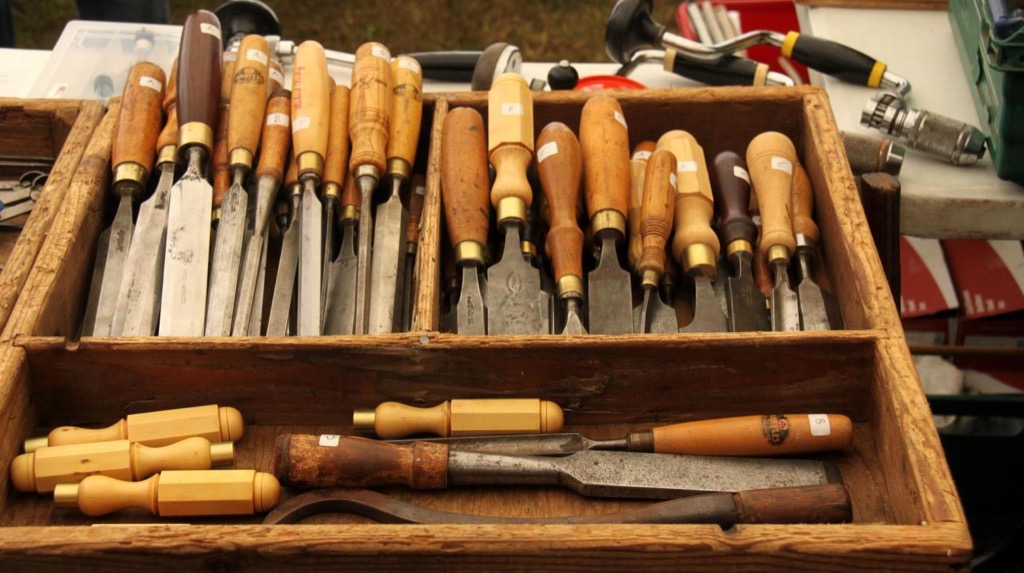
Once you have knowledge and skills, gathering the tooling needed to help you make improvised survival projects is key. I would like to say that I have never used a flat-head screw driver as an improvised chisel, but I am guilty. If you have ever had to commit such an “offense” you would probably agree that having the right-sized chisel would have been much better than a screwdriver. Having the right tools after TEOTWAWKI might mean the difference between your survival or your demise.
Preppers seem to enjoy having a gun safe full of different firearms to fit different needs, but that philosophy does not seem to carry over to our toolboxes. One gun does not fulfill all your needs and neither does one hammer. Another consideration is cordless electric tools versus hand-powered tools. I certainly plan to recharge my cordless drill batteries as long as I can but I do have several-hand powered old school alternatives such as Yankee drills, Bbraces, and hand drills. A good selection of hand tools is a must for building or improvising things.
There Used to be a Tool for That
As technology has advanced certain trades have all but disappeared and their tools too. You cannot go down to the local hardware store (in most cases) and pick up the speciality tools used for coopering (barrel making) or for making wooden wagon wheels (wheelwrighting). Think about our boots and how most footwear is made overseas and is basically designed and manufactured to be disposable. When I was growing up, my mom would take me with her to drop off and pick up footwear and other articles at the local shoe/leather repair shop. That shop has now been closed for about 30 years and it was not replaced. The skills of the “old man” who worked in the shop his whole life, learning the trade from his father, were not passed down. The tools were sold off at auction, many destined to antique shops.
After TEOTWAWKI, there will be a sudden reversion back to long-lost “technologies”. Having tools for these lost arts/trades/crafts will be priceless as surviving humans focus on rebuilding civilization. Have you ever seen a cast-iron cobbler’s anvil with shoe lasts? These pieces of equipment were, at one time, common and there would be several sets within a community. Not today. How do you know what tools you need for these lost arts? The answer lies with gaining the knowledge and skills for that particular trade/craft/art.
I watch a few YouTube channels dedicated to blacksmithing and the videos are a great way to learn about the various tooling used. The good news about blacksmithing is you can make most of your tooling once you have a few key things like a forge, anvil, and hammer but that is not the case with all the old trades. Antique shops, vintage tool shops, estate sales, and other second-hand sale venues are great places to find vintage specialized tools that will help you improvise after the collapse.
One of the local flea markets I frequent has an older gentlemen who sells old tools. He is a wealth of knowledge and is very eager to teach us younger fellows about antique tools. The other ways I learn about tools is when I see a tool I have not seen before at an auction or other second-hand venue I can now consult Google Lens to see if it has an idea. But, unfortunately, Google Lens is not always available in farm country via cell phone. If the price is right then I sometime will buy odd tools. Then I do my research once I get home.
(To be concluded tomorrow, in Part 2.)
Read the full article here