

In 2018, I bought a used 12-gauge Remington 870 Police Magnum, and recently, I decided to let Vang Comp Systems work its magic on the gun. Until this project, my experience with Vang Comp guns was extremely limited. Other than briefly handling Matt Haught’s worked-over Vang Comp 870 at the first-ever Thunderstick summit, I had no direct experience with such guns, but a review of the company’s background is enough to make any shotgun enthusiast interested in what they can do for a shotgun.
Vang Comp was founded in 1990 by gunsmith Hans Vang in California. Vang’s first and major order of business began after a government agency approached him with the desire to have its shotguns tuned and improved. This agency not only wanted its shotguns to hold tighter patterns in order to mitigate risks towards innocent bystanders, but it also wanted recoil and muzzle flash mitigation.
Vang used his expertise to modify shotgun barrels by extending the forcing cones, back-boring and porting shotgun barrels. These modifications encapsulate the core gist of what the Vang Comp shop does to shotgun barrels. Granted, the shop also labors on things beyond its shotgun barrel treatments, but this is Vang Comp’s main claim to fame.
Cones, Ports & Pellets
Shotguns’ forcing cones are analogous to a rifle barrel’s freebore or leade. Inside the barrel, the forcing cone is the transition space between the chamber and the remainder of the [smooth] bore. Abrupt forcing cones, with shorter and steeper angles disrupt the shot column and also cause the shotgun to buck harder under recoil.
Lengthening a shotgun’s forcing entails reforming this area of the bore to have a longer and gentler slope for a smoother transition between the chamber to the bore proper. The lack of an abrupt jump from chamber to bore prevents needless deformities in pellets, which helps them fly less erratically once they exit the muzzle. It also helps reduce recoil.
Aside from extending the forcing cone, the Vang Comp barrel conditioning process also involves back-boring the remainder of the barrel. Doing so creates a type of lengthened choke where there wasn’t one originally. The barrel walls then gradually taper toward the muzzle. As with extending the forcing cone, the idea behind back-boring the remainder of the shotgun barrel is to protect the pellets in the shot column as they travel through the bore. Pellets in solid shape tend to pattern better downrange.
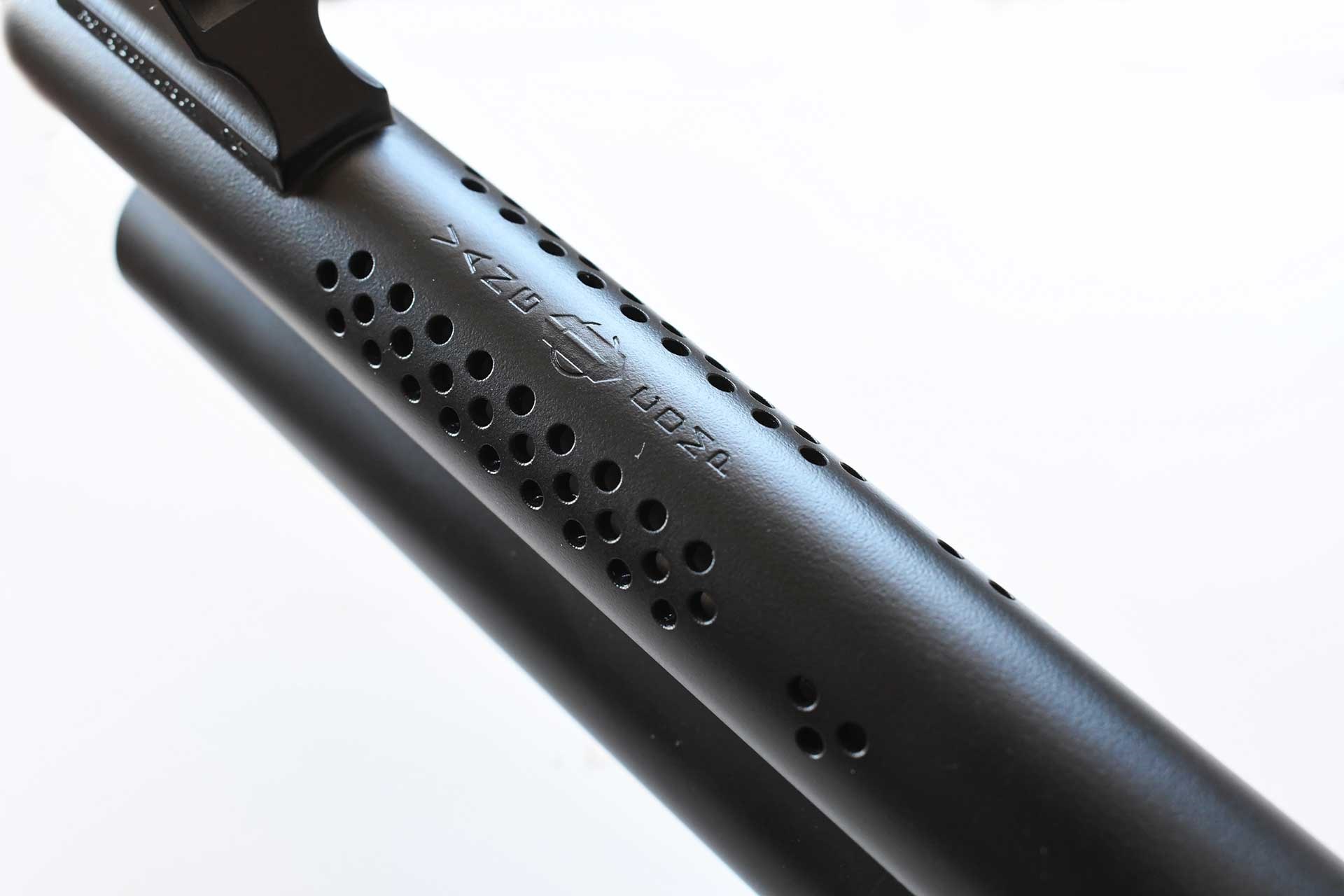
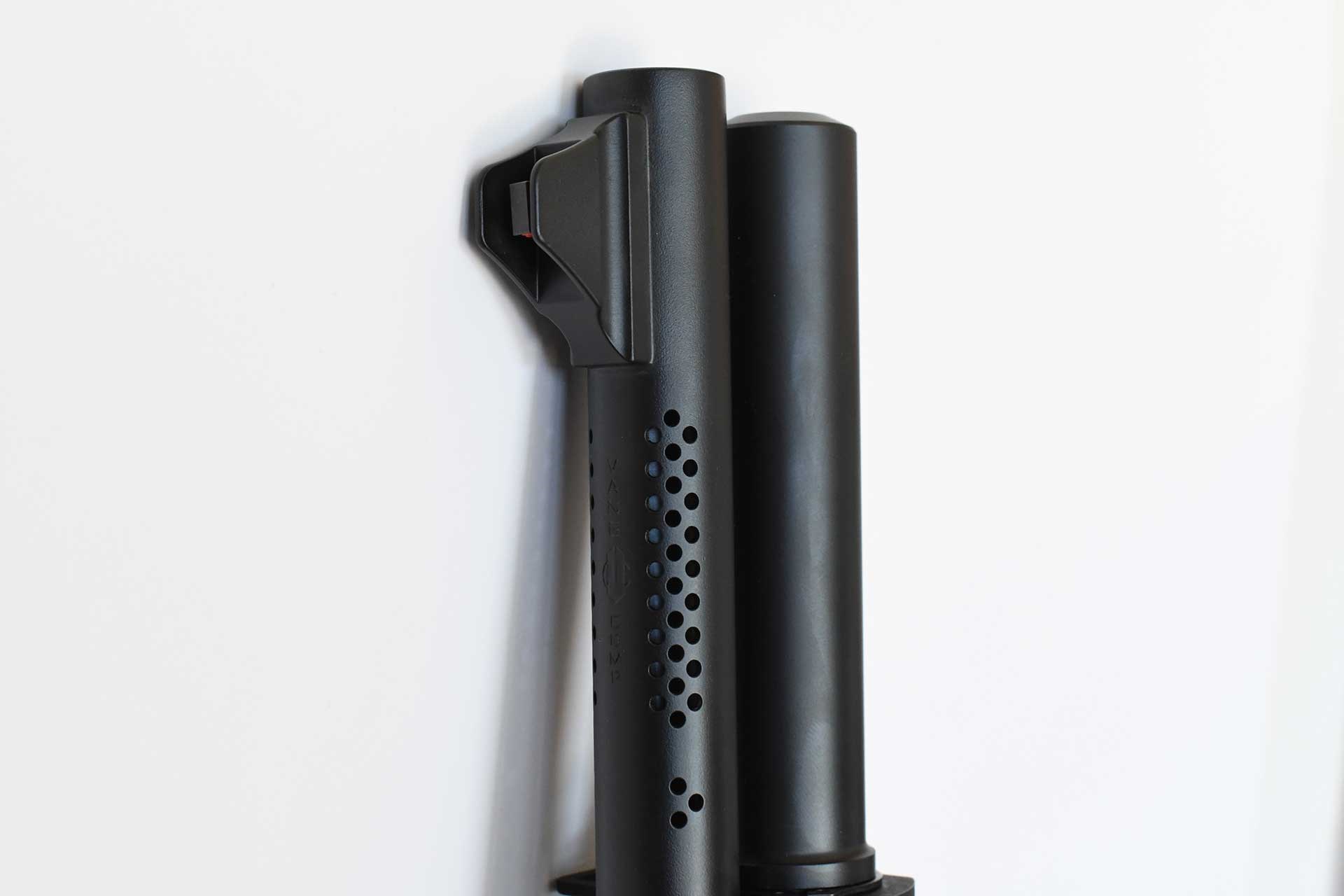
The final element to the Vang Comp shotgun barrel improvement equation lies in its ported barrel array. It consists of two banks of 31 individually drilled holes on either side of the barrel’s front sight. All 62 holes are specifically placed in their respective locations in order to vent gasses and help keep the muzzle level.
Before The Rehabilitation
My Remington 870 Police Magnum was made sometime around 2002. After paying less than $300 for it, I immediately installed Magpul 870 SGA stock to replace the prior junky stock it had. This upgrade alone made the shotgun considerably more manageable almost immediately. As a “Police Magnum,” this shotgun’s barrel was equipped with an improved cylinder and a 3-inch chamber. As an added bonus, it had a nice front sight and an old Scattergun Tech rear ghost-ring. This made it better than the typical bead-only cylinder-bore shotgun.
Unfortunately, many 870s of that era had a less-than-stellar finish. It was a matte-black with a chalky texture that was susceptible to lightly rusting over time. It scratched easily, and mine was full of brass streaks from handling shotshells in its proximity.
Every cop I’ve known from California to Texas who rolled out with an 870 police shotgun like mine usually had a gun with a light-brown patina thanks to that poor finish. It might have been similar to the 870 Express finish of the time period, too.
Racking the action on this shotgun, even in its used condition, never felt as smooth as the old-school Remington 870 Wingmasters from decades past. Of course, those old shotguns were “vibra-honed” at the factory, which made all the difference. Instead, my 870 Police Magnum always just felt “okay.” Since I spent less than $300, I wasn’t too concerned.
Wait, Is That My Shotgun?!
The real fun began after its second and major trip to Vang Comp’s current facility in Las Vegas.
After opening the package, I couldn’t believe it was the same shotgun. I’m not exaggerating either. I’d taken a few classes with this shotgun and even shot trap with it at the 16-yard line. I had a pretty good idea of how it handled and how it felt.
Ironically, this shotgun had visited Vang Comp at its Prescott, Ariz., location prior to Hans Vang retiring. It was before COVID and before the company’s third relocation from Prescott to Las Vegas, Nev. On that occasion, I had the Vang Comp boys give my shotgun a look-over for basic maintenance’s sake and change out some springs. They also added a few Vang Comp parts including the +2 tubular magazine extension, the stainless steel tactile follower and the domed safety.
It’s not just that Vang Comp completely overhauled the gun or even did the shotgun barrel modifications I previously described. Through their work, they also made this shotgun feel slicker than it has ever been before. Its action racks like never before, as if it rode on ball-bearings–practically like a “vibra-honed” like a vintage 870.
Overhaul Details
Naturally, conditioning the barrel to better handle shot-columns inside the bore is only one facet of a Vang Comp overhaul. As a full-scale shotgun gunsmithing shop with expertise on Remington and Mossberg pump shotguns, it offers more than just back-boring and stretching forcing cones.
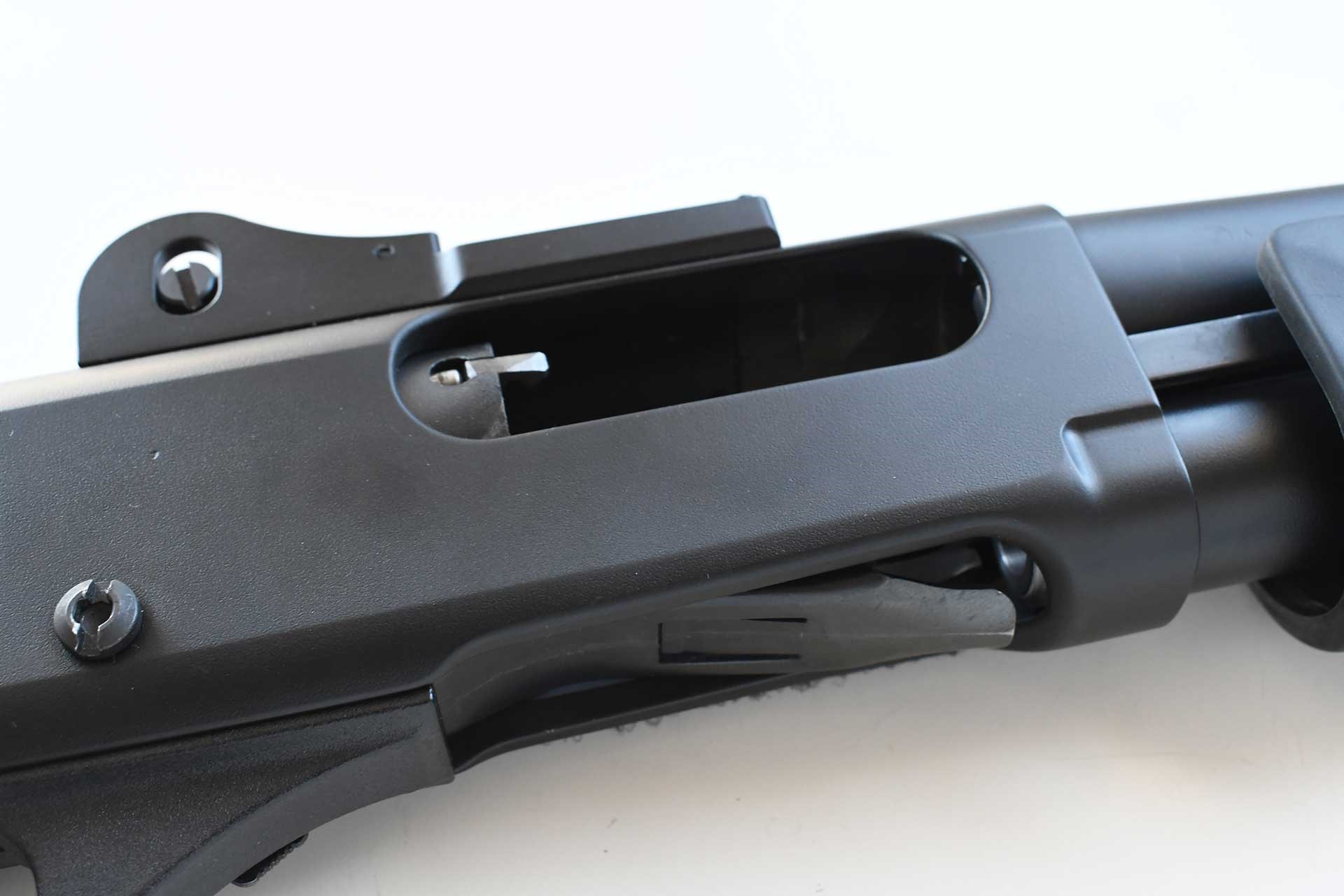
A great deal of the other modifications that Vang Comp does to shotguns is for the shooter’s benefit directly. Besides the multi-point inspections and mechanical work that Vang Comp performed, they applied a Cerakote finish to the barrel and the receiver. This is probably one of the changes I’m most thrilled about because the black Cerakote finish is light years ahead of that shotgun’s original finish.
Beyond the surface treatment of my shotgun’s metal parts, Vang’s gunsmiths also opened up the bottom of the shotgun’s receiver by the shell-lifter in order to facilitate loading the tube.
Related to loading–the shop outfitted my shotgun with its popular (and new to me) Vang Comp detachable ammunition carrier kit–Vang Comp’s modern and versatile take on the classic “side-saddle.” I had Vang Comp switch out the original plastic fore-end for a gripper Hogue Overmold, which is just more comfortable.
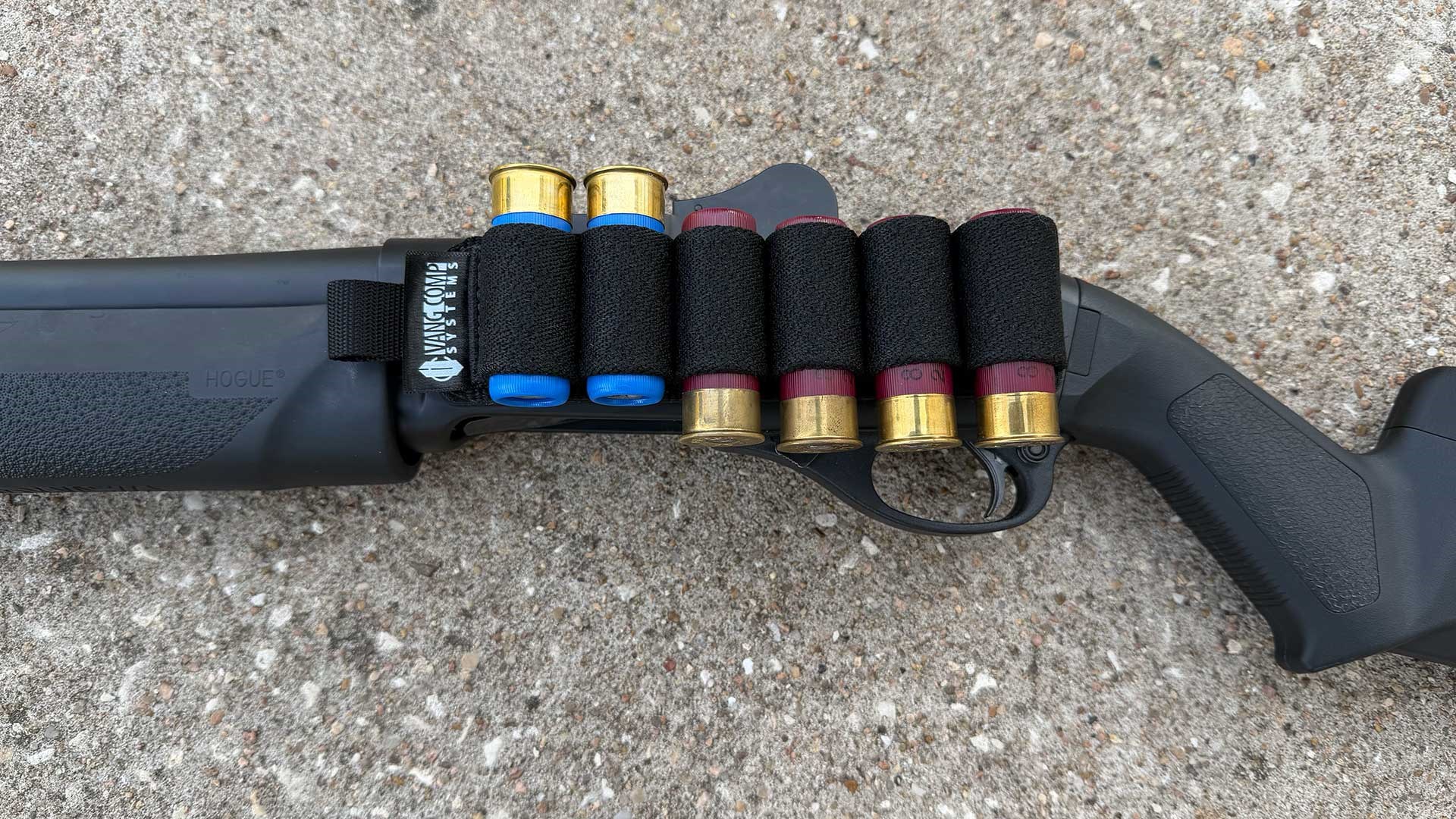
The system is built around a bracket with a hook-and-loop backing that bolts on to the 870’s receiver and accepts hook-and-loop-backed shotshell cards. These cards are made out of Nylon and rely on extremely rugged elastic loops. Pre-loaded cards will stick to other hook-and-loop surfaces, and the idea is that empty cards can be ripped off while loaded cards can be slapped onto the left side of the shotgun as needed. A loaded card fits in most AR-15 magazine pouches, which makes things quite convenient.
Optics Ready In Several Ways
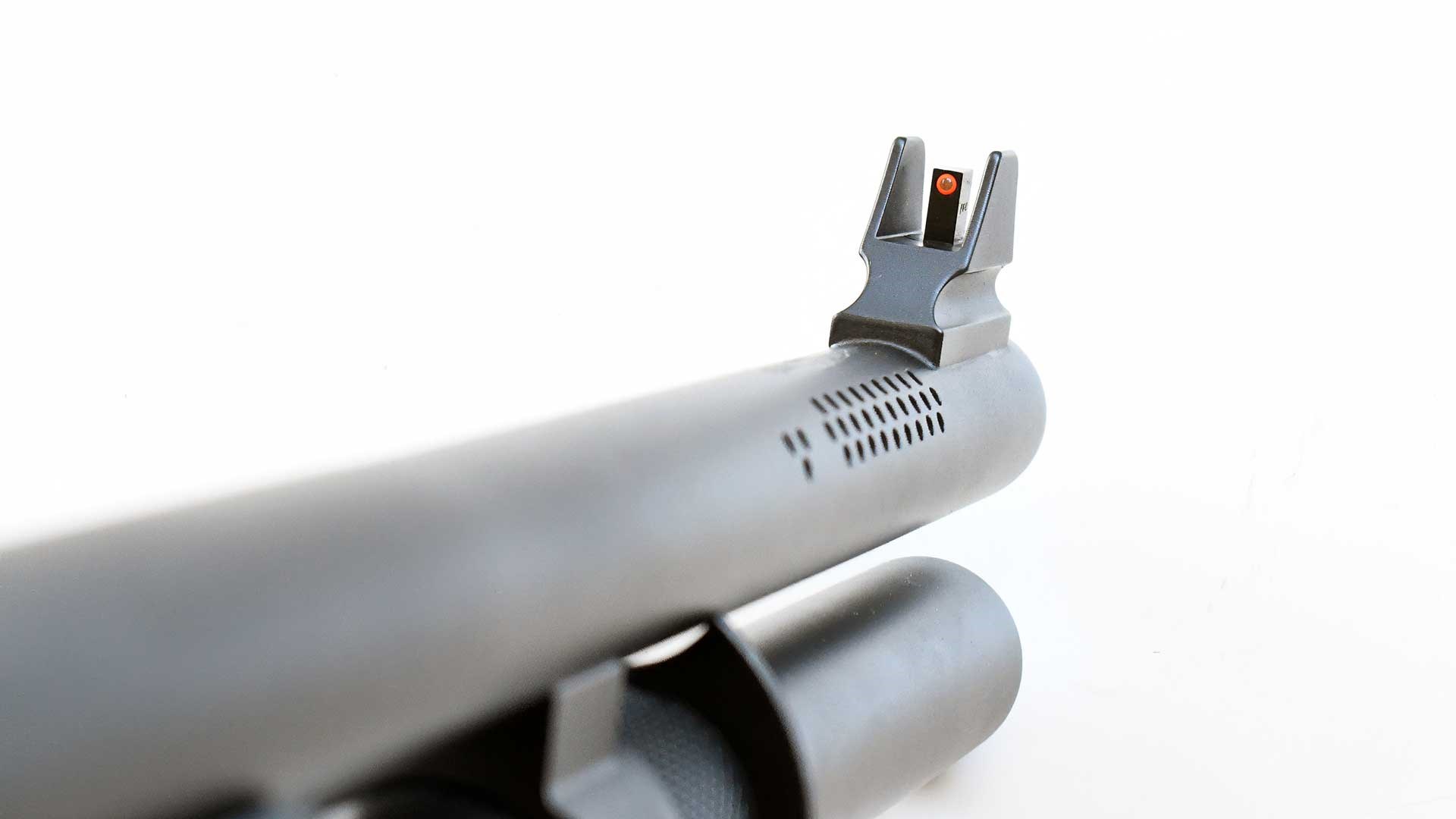
My shotgun now sports Vang Comp’s signature front sight, which includes a tall, square blade with a tritium insert flanked by protective wings. The shop also installed its newer combination ghost-ring sight and optic base. Mine has a Trijicon RMR footprint, but they’re also available for the Aimpoint ACRO and Aimpoint T1/T2/Duty RDS. The rear sight base itself also includes elevation and windage adjustments.
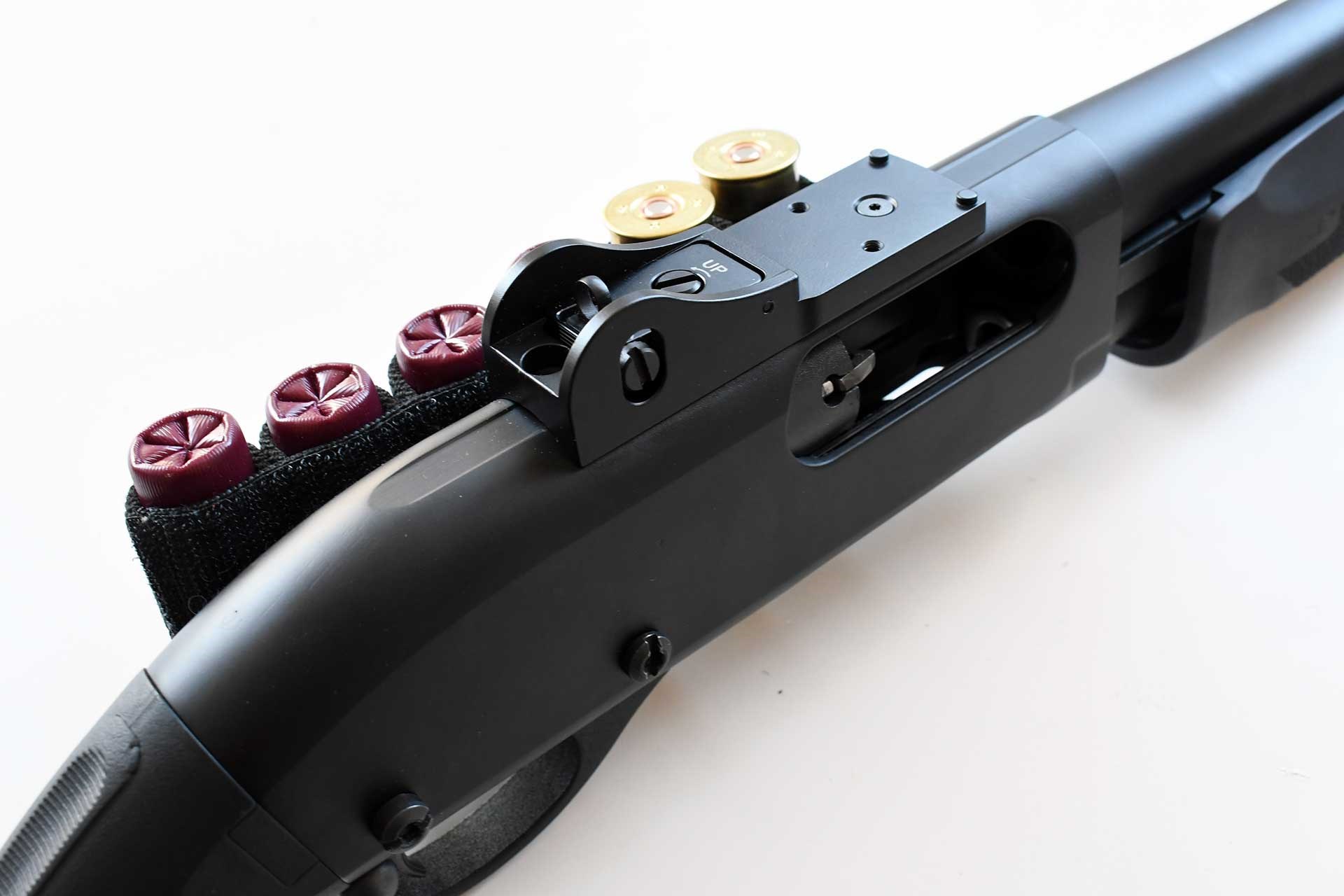
The rear sight features a fairly large aperture that’s fast and easy for the eye to pick up. Like the front sight, this rear unit is also buttressed by two protective wings. Despite the fact that I have an optics-ready base ready to take a red-dot sight, my shotgun’s new iron sights are well-executed. They don’t seem like an afterthought at all, and this is how I’m shooting this shotgun. I’m quite pleased with the sight picture they provide.
Range Time After Visiting Vang Comp
I took things to the extreme and chose some “challenging” buckshot loads that would likely not pattern too well due to excessive velocity, lack of pellet plating, grex (buffering) and/or basic wads. My goal was to see what would happen before and after. Though Vang Comp and the shotgun cognoscenti can recommend various defensive loads, I don’t regret taking the extreme approach because it taught me a couple of things.
I patterned my shotgun at 10 and 15 yards by firing two shots with each load to get a composite pattern (something I learned from Erick Gelhaus at Thunderstick Summit #1).
After my shotgun returned from Vang Comp, I went back to the range with my motley assortment of 12-gauge shotshells. Once again, I patterned at 10 and 15 yards shooting each load twice.
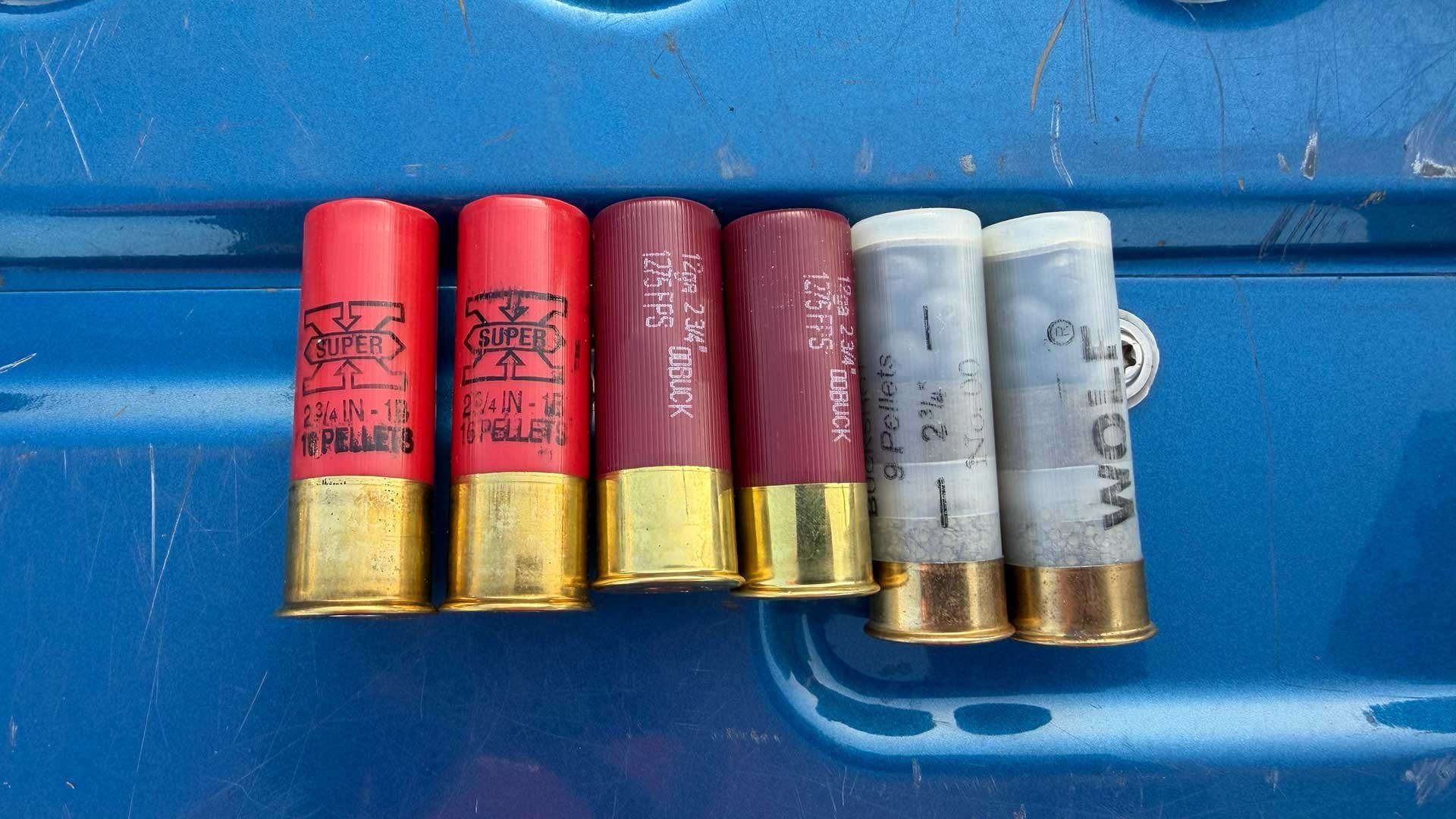
Just like one wouldn’t fuel their Ferrari with crummy gasoline and expect top performance, specific ammunition selection still plays a major role independently of barrel or shotgun quality. My range trip made that quite clear. The three loads I chose were for demonstration purposes only because I wanted to see what would happen. I had a Beretta 1301 Tactical with me on that second range trip.
Despite having an extremely high-quality Beretta Steelium barrel which shares similar characteristics to Vang Comp barrels in terms of extended forcing cones and back-boring, it hardly patterned that Aguila or Winchester 1-Buck any better at 15 yards (17 inches and 13 ¾ inches respectively). It could just be that those shells don’t mix well with these types of barrels. Either way, it is useful information.
Below are my patterning results, measured in inches from extreme spread.
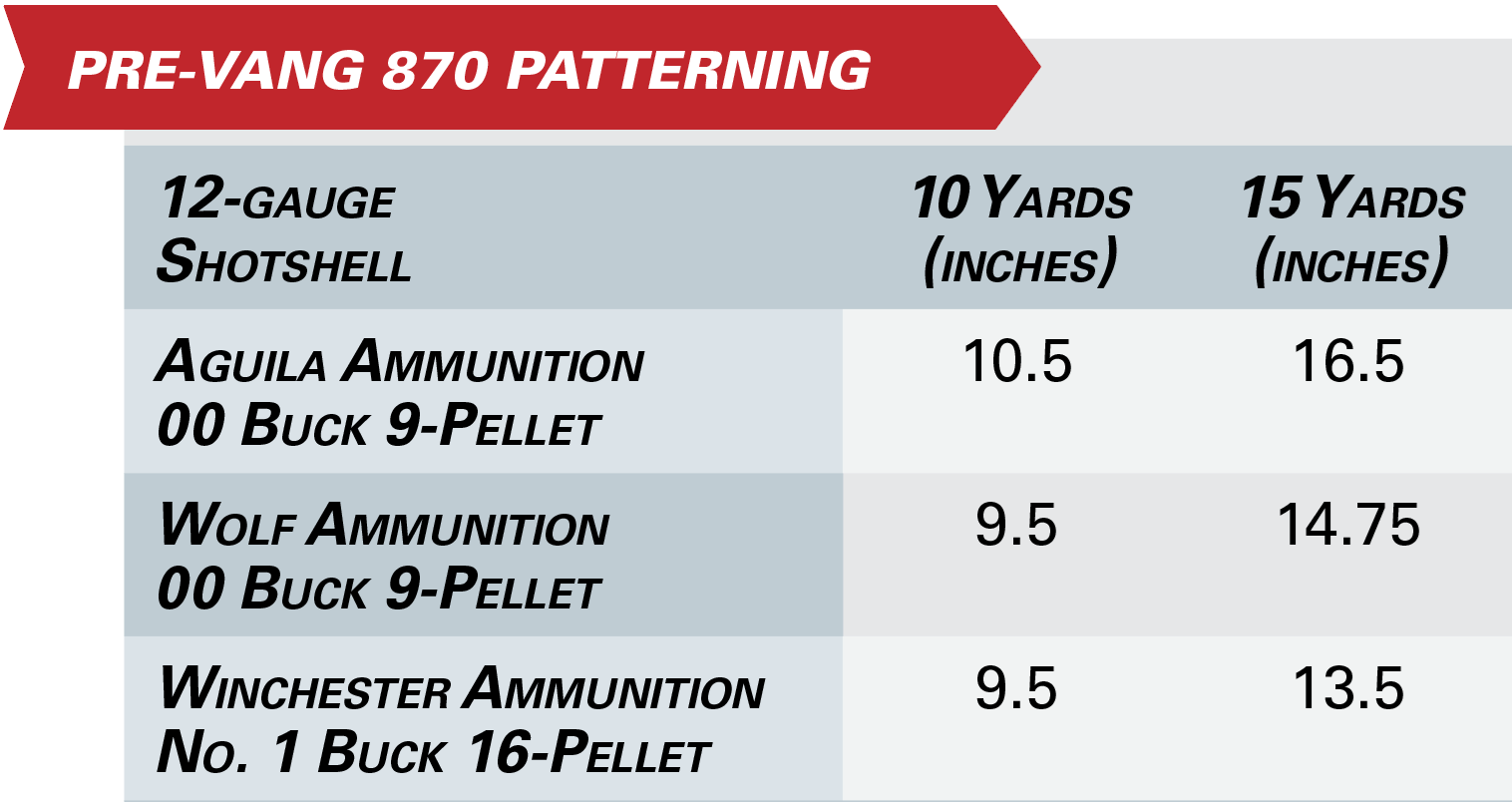
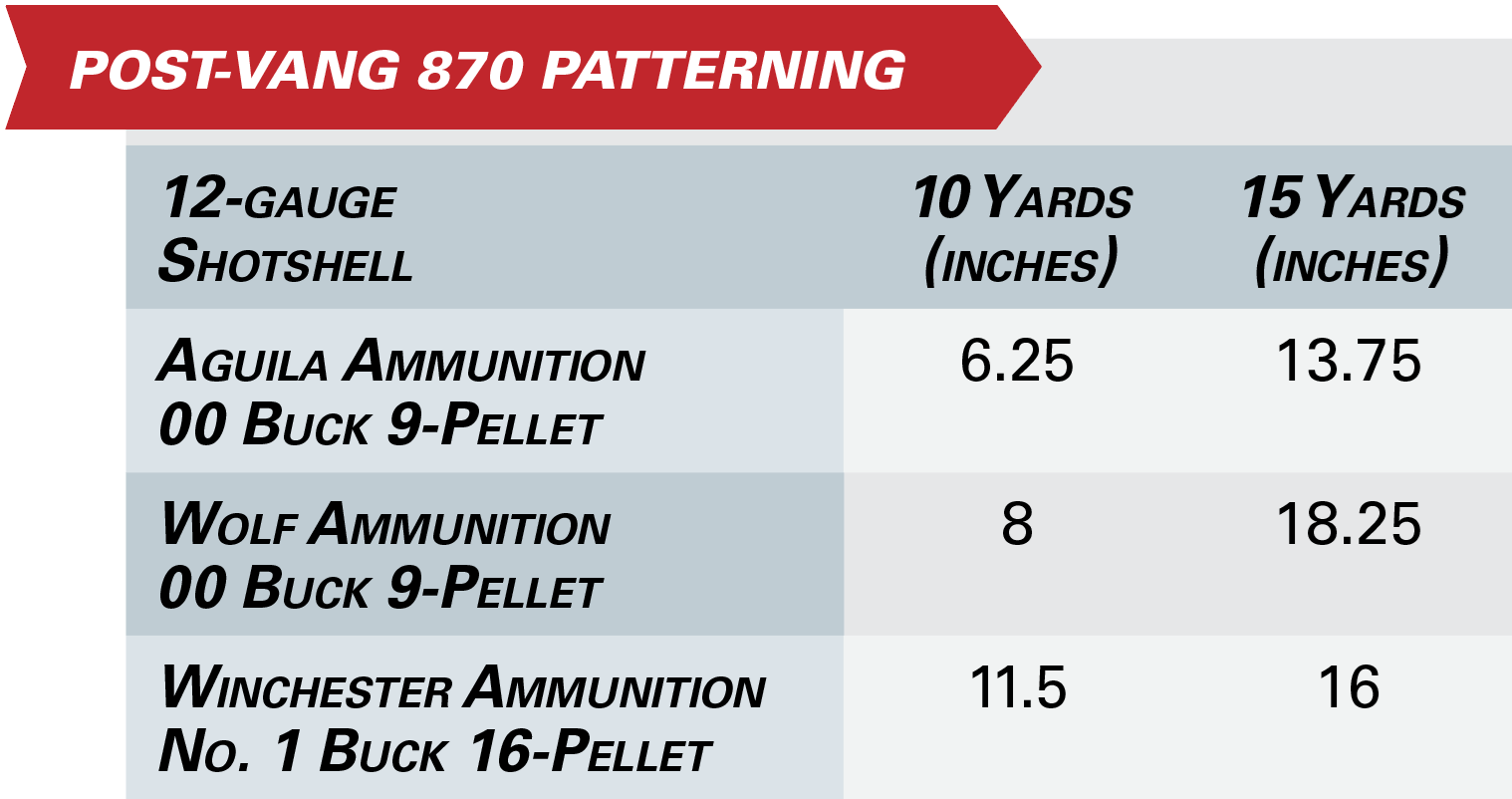
The barrel treatment improved the Aguila 00BK patterns the most. It reduced that load’s extreme spread by nearly 3.5 inches across the board.
The Wolf load, which is a European-style felt/horsehair wad load with unplated and unbuffered shot and a roll crimp with a paper cap, ended up opening up after the barrel treatment at 15 yards. This is in spite of the 10-yard pattern shrinking slightly. From experience, the 1301Ts don’t do too well with this type of load either.
It seems like the Winchester Super-X 16-Pellet 1-Buck opened up after the treatment, too. I was not expecting this, but it’s good to be aware of it. I learned something from this, and maybe you can, too.
My own exploratory shotshell selection aside, Vang Comp formally recommends its customers that they field a buckshot load that is:
- Ideally loaded with eight pellets only
- Has a muzzle velocity under 1,350 fps
- All pellets are plated with copper, nickel, alloy, etc.
Pumping Smoothly & Patterning Observations
Aside from patterning, I wanted to get a feel for how the newly rejuvenated shotgun felt. I took the liberty to cycle several boxes of birdshot and a few loose/mixed buckshot shells. Loading and pumping feels extremely smooth, and the reduction in recoil is also noticeable.
The Vang Comp barrel treatment system does work as advertised to tighten patterns and reduce recoil. However, as I saw in my own demonstration, load selection plays a major role in the final results. As time permits, I plan on patterning other loads through this shotgun to see what kind of trends I can trace.
I can’t remember the last time I had this much fun reviewing a pump-action shotgun, since running a pump-gun involves the shooter more directly–like driving a car with a manual transmission. And a tricked-out Vang Comp gun might as well be a race car in the pump-action realm!
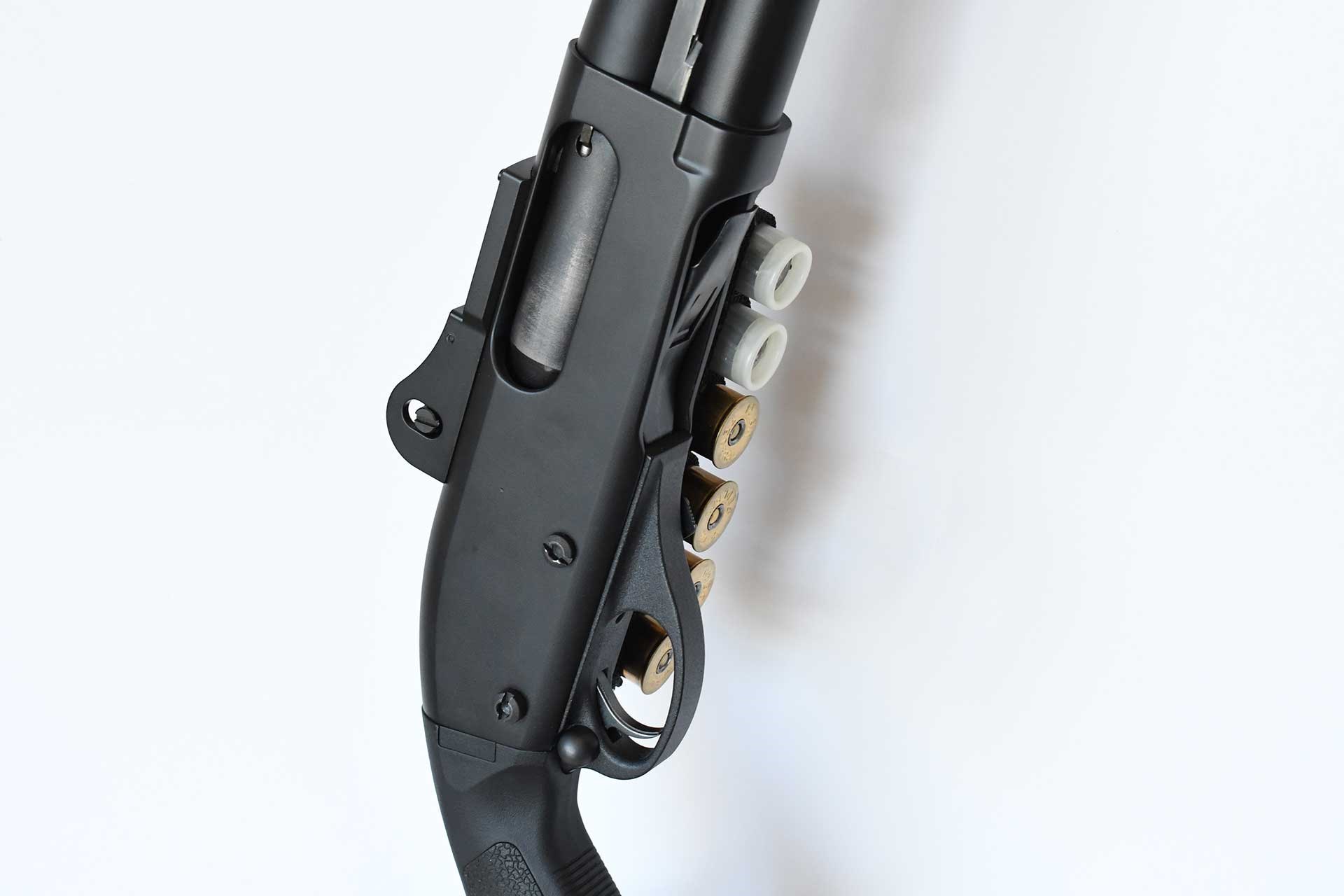
It didn’t take too long for 75 #7½ shells to end up as smoke and plastic hulls on the ground. I deliberately made it a point to load off the VCS shell-carrier kit, too. It works well, and the tough nylon elastic holds shells snugly in place, even during recoil.
Not that patterning #7½ birdshot in a defensive 12-gauge shotgun matters much, but it’s worth mentioning that the Vang Comp barrel did actually tighten the Federal #7½ loads at 5 yards while shooting at cardboard targets. In the past, I had noticed my shotgun’s 5-yard cardboard impacts tended to print wider.
Above all, Vang Comp’s service and expertise are a great fit with the discerning pump-action shotgun connoisseur.
Read the full article here