

The mid-19th century was a period of great evolution for both firearms and ammunition, and the U.S. military reaped the benefits of these technological leaps. The Army would enter the 19th century equipped with a smoothbore flintlock musket that differed little from the designs of the past, and it would exit the century with a modern, bolt-action, repeating rifle that used smokeless powder ammunition. Watch our “American Rifleman Television” feature segment above to see how U.S. Army small arms evolved from the dawn of the Civil War to the beginning of the 20th century.
“Of course, rifles had been used since the American Revolution, but they were never issued as a general standard arm,” American Rifleman Executive Editor Evan Brune said. “There were always separate units that were selectively issued with rifles, rather than the general soldier being issued with a rifle. That all changed with the U.S. Model 1855 rifle musket.”
Previous military rifles required soldiers to load patched round balls down a rifled bore in a slow, laborious process that limited the capabilities of rifle-equipped troops and kept them from dominating the battlefield. Advancements made in the design of ammunition, commonly credited to Frenchman Claude-Etienne Minié, resulted in a hollow-base bullet that could be loaded rapidly down the bore of a rifled arm, then expand into rifling grooves to impart spin on the bullet, leading to greater accuracy and velocity. The U.S. Model 1855 rifle musket was the first general service arm to take advantage of this novel technology. But it wasn’t a perfect design, particularly with its fragile Maynard tape-priming system.
“At the time the Civil War broke out in America, the U.S. Army had decided that this Maynard tape system that they pinned their hopes on back in 1855 was really not working. The caps could get wet, not fire, and the mechanism could get out of whack easily,” American Rifleman contributor Kenneth L. Smith-Christmas said. “And so they simply said, let’s do away with the Maynard tape and simply produce the same 1855 rifle musket, but without the Maynard tape. This is the rifle musket that was most used in the American Civil War in the north, and there was over 20 different private manufacturers who, up through 1863, were making these 1861 Springfields under contract for the War Department.”
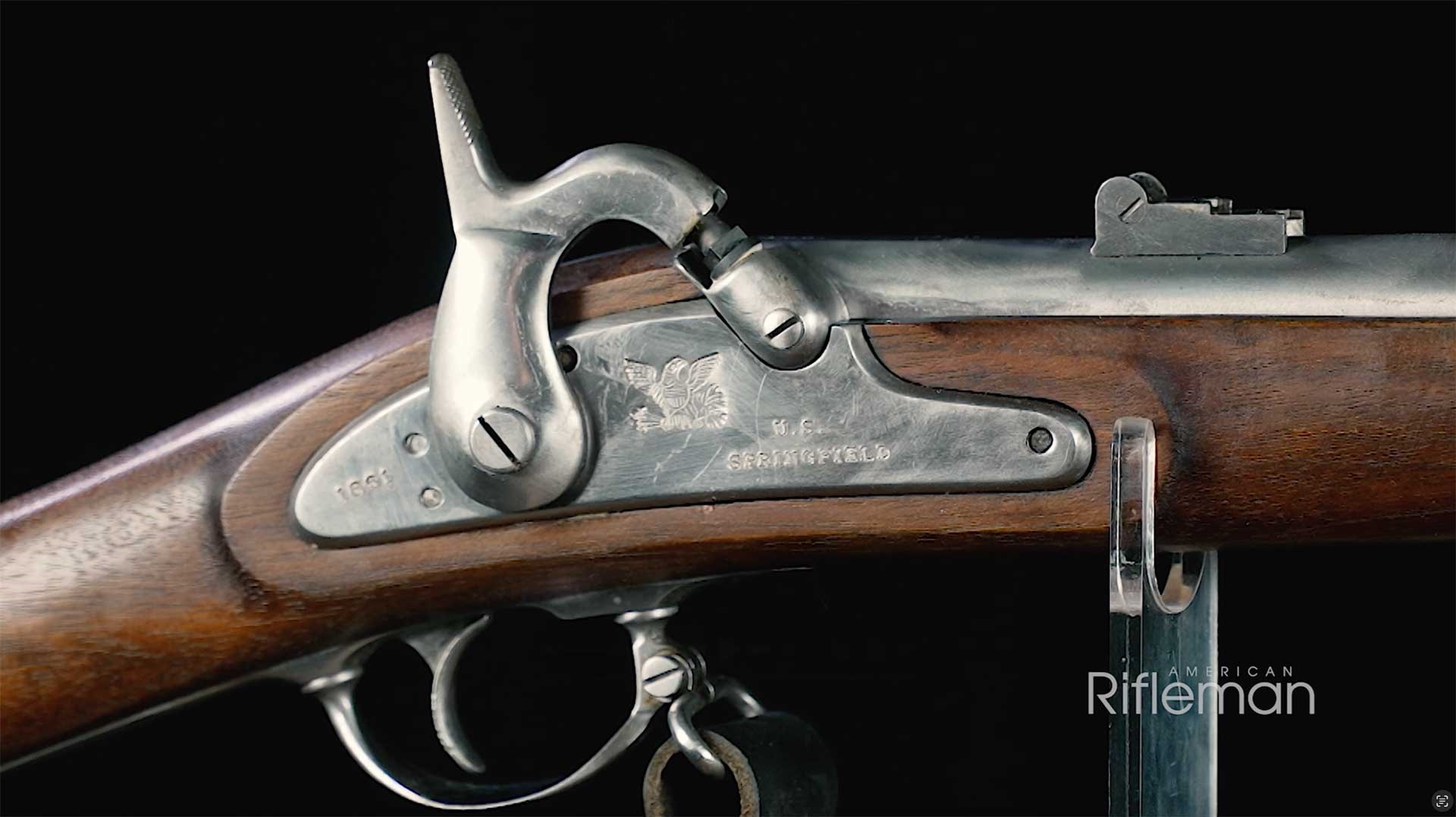
More than 1 million Model 1861 Springfield rifle muskets were produced during the American Civil War, leading to a significant surplus of arms following the cessation of the conflict in 1865. The U.S. military’s experience with more modern designs during the war, particularly breechloading cavalry carbines, combined with the adoption of breechloading service arms by other military powers, meant that an upgraded platform was needed.
“Well, the 1860s were a time of technological advancement, and it becomes pretty clear that the self-contained cartridge is going to be the way of the future, and that breechloading firearms are really the next step in military arms evolution,” Brune said. “The United States really knew they needed to have a breechloading design to compete, but they can’t afford to just do nothing with all of these muskets they’ve made over the course of, you know, four years of war.”
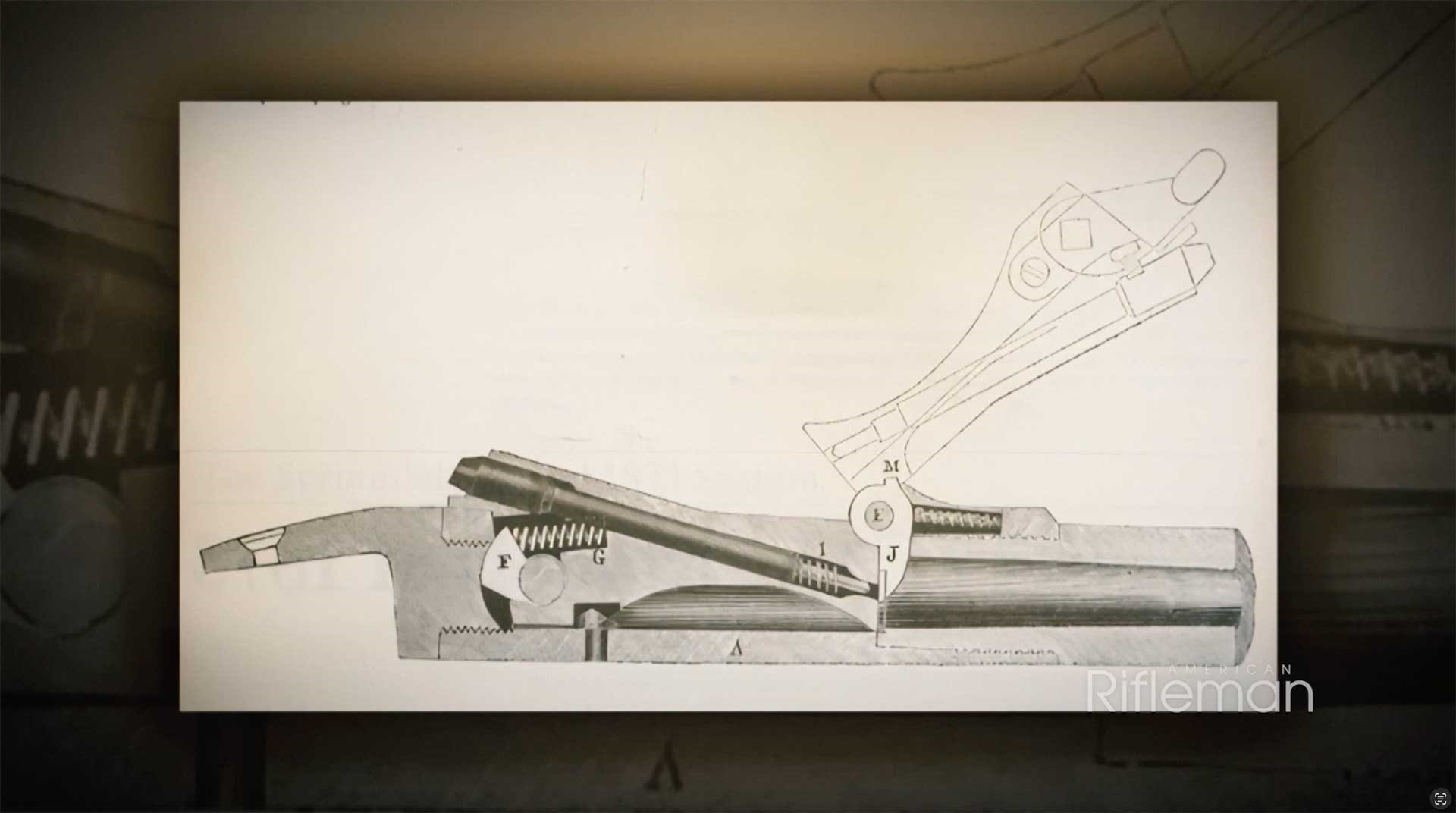
The solution came in the form of a modification of existing rifle muskets, thanks to a design from Springfield Armory Master Armorer Erskine S. Allin. Allin’s conversion process turned muzzleloading muskets into single-shot breechloaders by adding a hinged “trapdoor” to the back of the action. Subsequently, the Trapdoor Springfield, as it would come to be known, equipped U.S. troops from the late 1860s until the turn of the 20th century.
“It shot a .458-inch projectile weighing about 405 grains and backed by 70 grains of black powder, so that’s where you get the .45-70 name from. And this remains the standard U.S. service arm until the 1890s,” Brune said. “And again, in the 1890s, you have another arms revolution happening. That’s when you get the advent of smokeless powder. Of course, you know, French chemist Paul Vielle innovates with poudre B and quickly there’s an arms race among the nations of the world to see how quickly can they arm themselves with a smokeless powder military arm.”
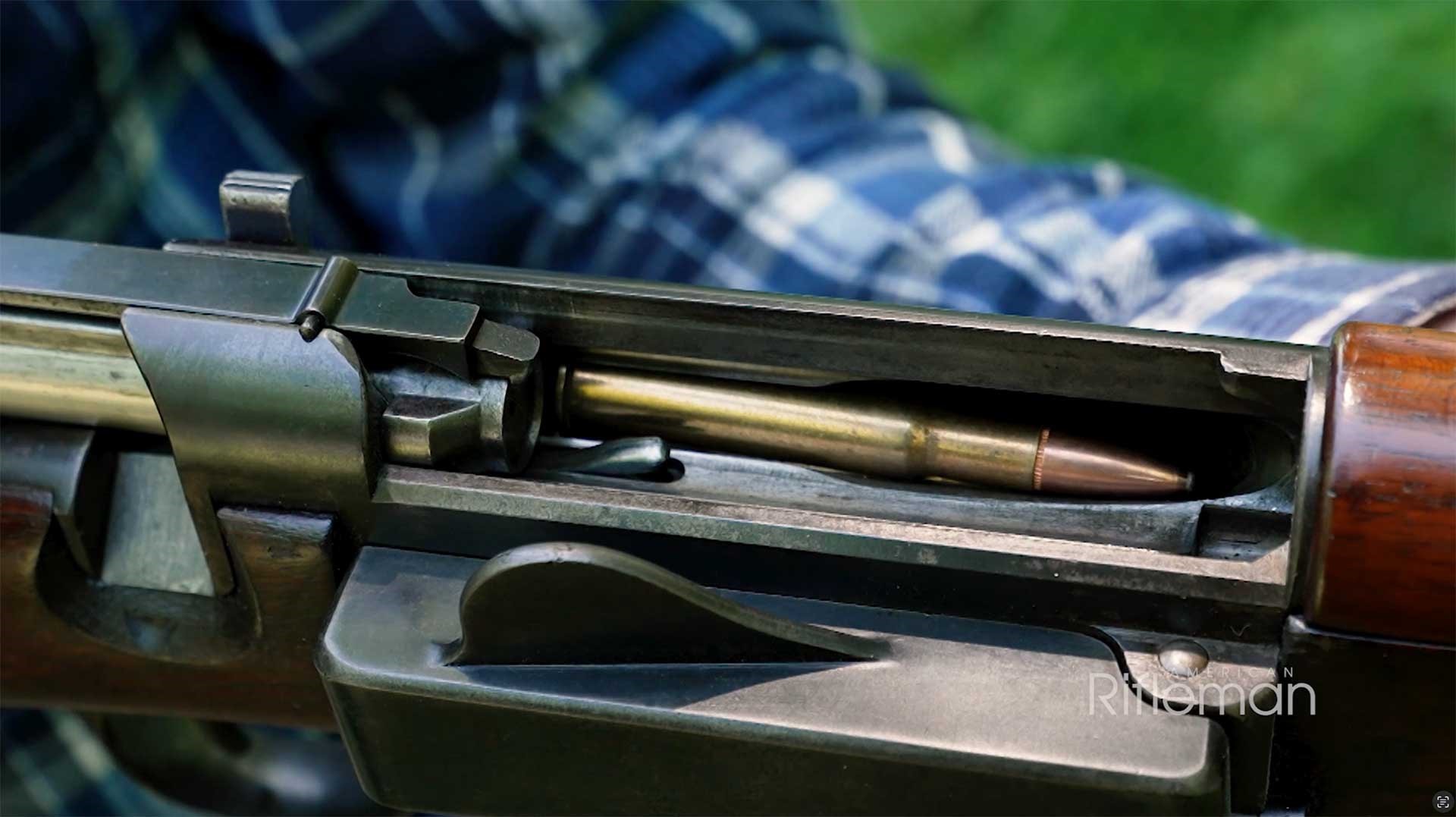
For the United States, its first bolt-action service rifle design came not from domestic sources but rather from Norway. Norwegian designers Erik Jorgensen and Ole Krag collaborated on a trial-winning design that was adopted in 1892 as the U.S. Krag-Jorgensen. Chambering a .30-caliber service cartridge, now known as the .30-40 Krag, the rifle had a unique side-mounted magazine that allowed troops to insert five cartridges that would be fed into the action, giving servicemen true repeating firepower for the first time in American military history.
“This comes at a critical and sensitive time, too, because what’s right around the bend is the perfection in the bolt-action rifle design in the form of the Mauser,” American Rifleman Field Editor Martin K.A. Morgan said. “We don’t really see perfection in the Mauser until 1898. That’s still years away. But where we stand at the point that the 1892 Krag rifle is adopted by the American military is that the Mauser was a design still very much in development.”
To watch complete segments of past episodes of American Rifleman TV, go to americanrifleman.org/videos/artv. For all-new episodes of ARTV, tune in Wednesday nights to Outdoor Channel 8:30 p.m. and 11:30 p.m. EST.
Read the full article here