

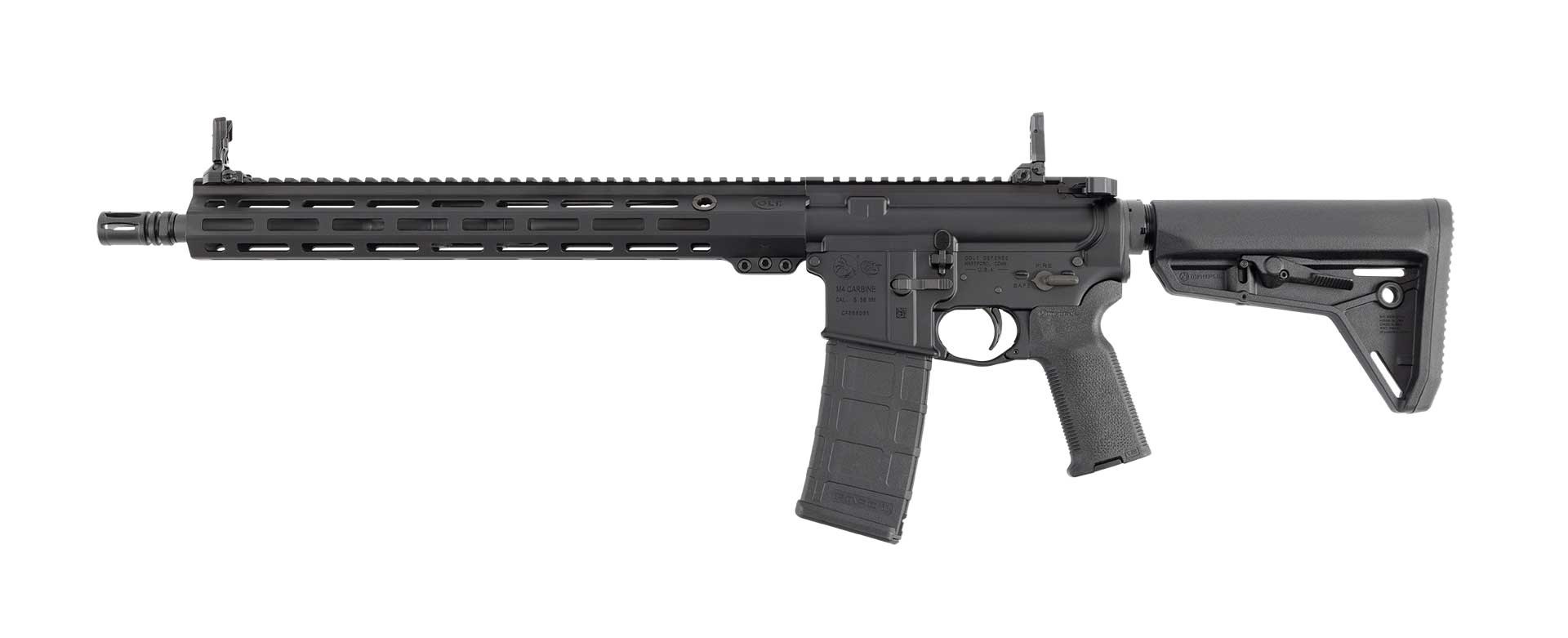
For many people, Colt is the benchmark in the AR-15 world. Even as the number of makers offering AR-style rifles has contracted in recent years, there are still so many that it can be difficult to track. At times, Colt has focused its attention on the military and law-enforcement markets, seeming casually indifferent to the demands of the civilian market while competitors have come and gone. Through it all, the standard of comparison has often remained the Colt 6920 model, which is the commercial fraternal twin to the military-issue M4 carbine. New to the market now is the Colt Enhanced Patrol Rifle (EPR) II Pro. For this new design, Colt took the proven 6920 and built it out with some of Magpul’s popular furniture, ambidextrous controls, a 15-inch, M-Lok-compatible, free-float handguard and MBUS Pro flip-up sights.
Other brands have, for quite some time, offered models dressed with myriad combinations of rails and furniture, but Colt is quite conservative with its AR-15 line, sticking to the basic formula with few exceptions. This makes the EPR immediately interesting. When I saw the combination of furniture and features, I was onboard. Most of the ARs in my stable for personal use, competition or teaching are minor variations on a theme; 14.5- to 16 inch barrels, 13- to 15-inch lightweight free-float rails and a mix of BCM and Magpul stocks and pistol grips. The new Colt is right there in my zone with the added bonus of an ambidextrous charging handle, safety and mag releases.
Under the long free-float rail is a standard government-profile barrel, M203 step in the contour and all. The 16-inch, chrome-lined, 1:7-inch twist barrel is affixed to a carbine-length gas system. When the rifle came in, the crew at my local shop were quick to notice and point out that the gas block is the traditional cross-pinned, front-sight-base type. Since they see all manner of builds at every possible price point come through the shop for upgrade or repair, they told me that the surest manner of fixing the gas block remains the Colt base with the cross pins.
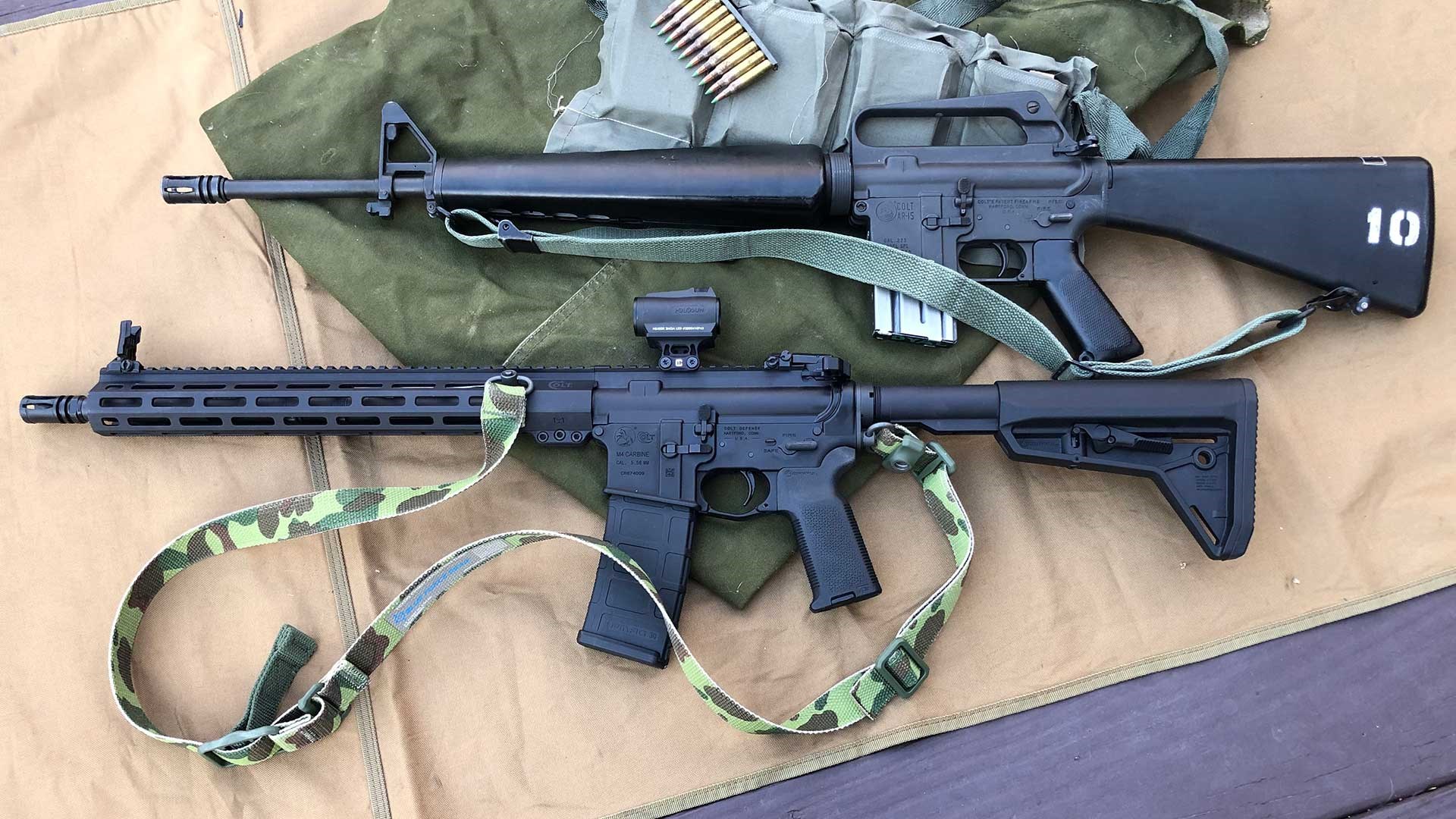
The rail itself is badged with a large “Colt” logo and has a non-rotating QD socket built in at the rear, a nice upgraded touch. The receiver’s end plate also has a corresponding socket, another upgrade from the base 6920. There are also mounting points on either side of the Magpul MOE SL stock. My longtime friend, Chris, gave me one of Blue Force Gear’s new Frogskin camouflage Vickers Slings, and I plugged it right into the Colt for the duration of testing.
The pistol grip is the excellent Magpul MOE K2 and the Colt has the same maker’s enlarged trigger guard. The charging handle is the ambidextrous and extended Raptor model from Radian Weapons and also wears a prominent Colt logo. Part of me thinks that, at some point down the road, Colt collectors being as thorough as they are, these badged charging handles will fetch a handsome price.
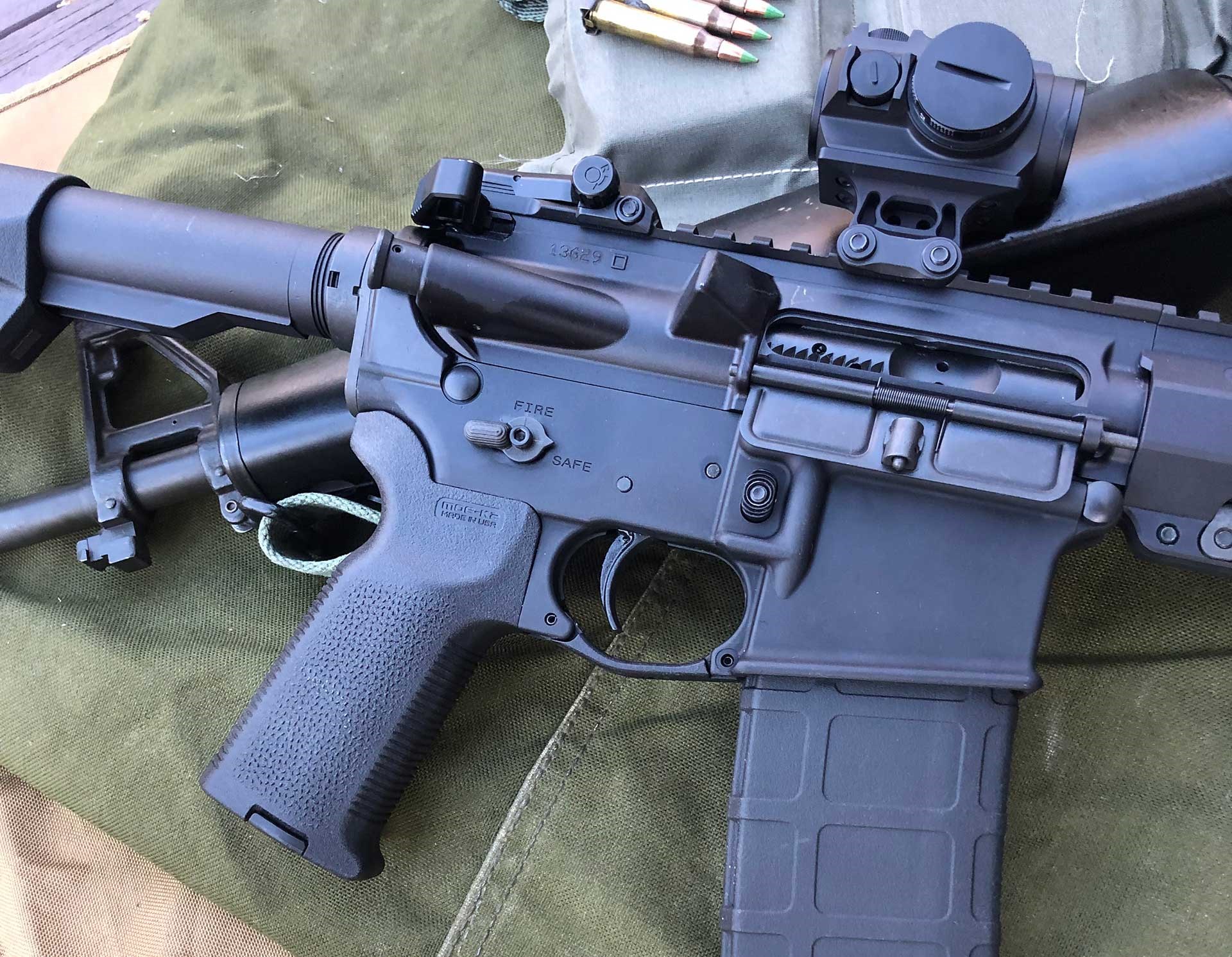
The Colt mil-spec trigger is the very definition of the standard, with all AR-15 triggers being compared to that known quantity. The EPR’s trigger took the usual breaking in over 100 or so snaps and then settled in to a smooth release with a workable bit of creep over6 pounds. It is right at that point where it is eminently usable for most shooters and most tasks, but it is the one part on the package that an enthusiast may be tempted to upgrade.
I shot the rifle a little with the provided sights, and as I confirmed zero, it seemed that the Colt had potential for above-average accuracy. I mounted a Nightforce NX8 1-8X compact scope and headed back to the range for some initial data. I was working on shooting from a tripod with my Pig Saddle, a clamping vise concept invented by a Marine Scout Sniper that swept the precision world a few years ago. A lightweight AR-15 fired from tripod while sitting is not quite the same as an ideal benchrest position, but it was stable enough to give an idea of how the rifle groups.
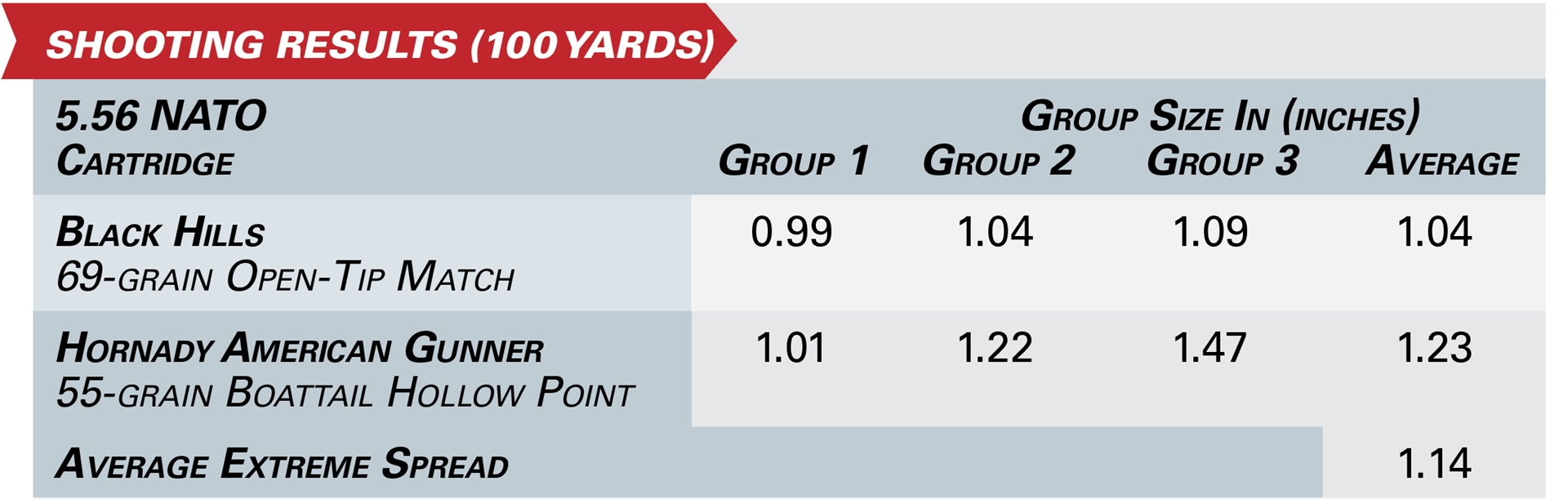
I fired three groups of five shots each from two different loads at 100 yards. The overall average across the six five-shot groups was a quite respectable 1.14 inches. Both the Black Hills Match load and the Hornady American Gunner had tight clusters that bracketed the perfect 1-inch mark. The EPR is not marketed as a special purpose rifle or competition rifle, but this particular sample seems to have ample precision for any reasonable task.
While I had a good zero and ammo that was shooting great, I set up to shoot the Colt on the 10 Shot Rifleman’s Roundup, a drill with strings from both artificial and body support only at 100 yards and standing at 50 yards. My first attempt with the new rifle yielded a score of 99 with the errant shot tantalizingly close to the 10 ring. That is excellent performance from an unfamiliar AR with a mil-spec trigger.
The same day, I did a walk-back drill on two hanging 8-inch steel plates, firing standing snap-shot pairs to the two targets at 50 and 80 yards, then standing or kneeling with the long rail braced against conveniently placed trees in 10-15 yard increments back to just over 150 yards. The Colt knocked the plates on their hooks with every shot. It is hard to imagine a scenario where a citizen or patrol officer would need more than what the EPR was capable of.
This informal exercise was a great example of why I like the longer rails that are slowly overtaking the old 7-inch units. I like having as much rail as possible, not just because I have long arms but also to be able to brace off of any available support with as much flexibility as possible. Short rails unnecessarily restrict bracing off of rests of opportunity. The longer rail also gives maximum space and flexibility for whatever accessories the shooter elects to add to the rifle, whether it be lights, lasers, thermals, bipods, etc.
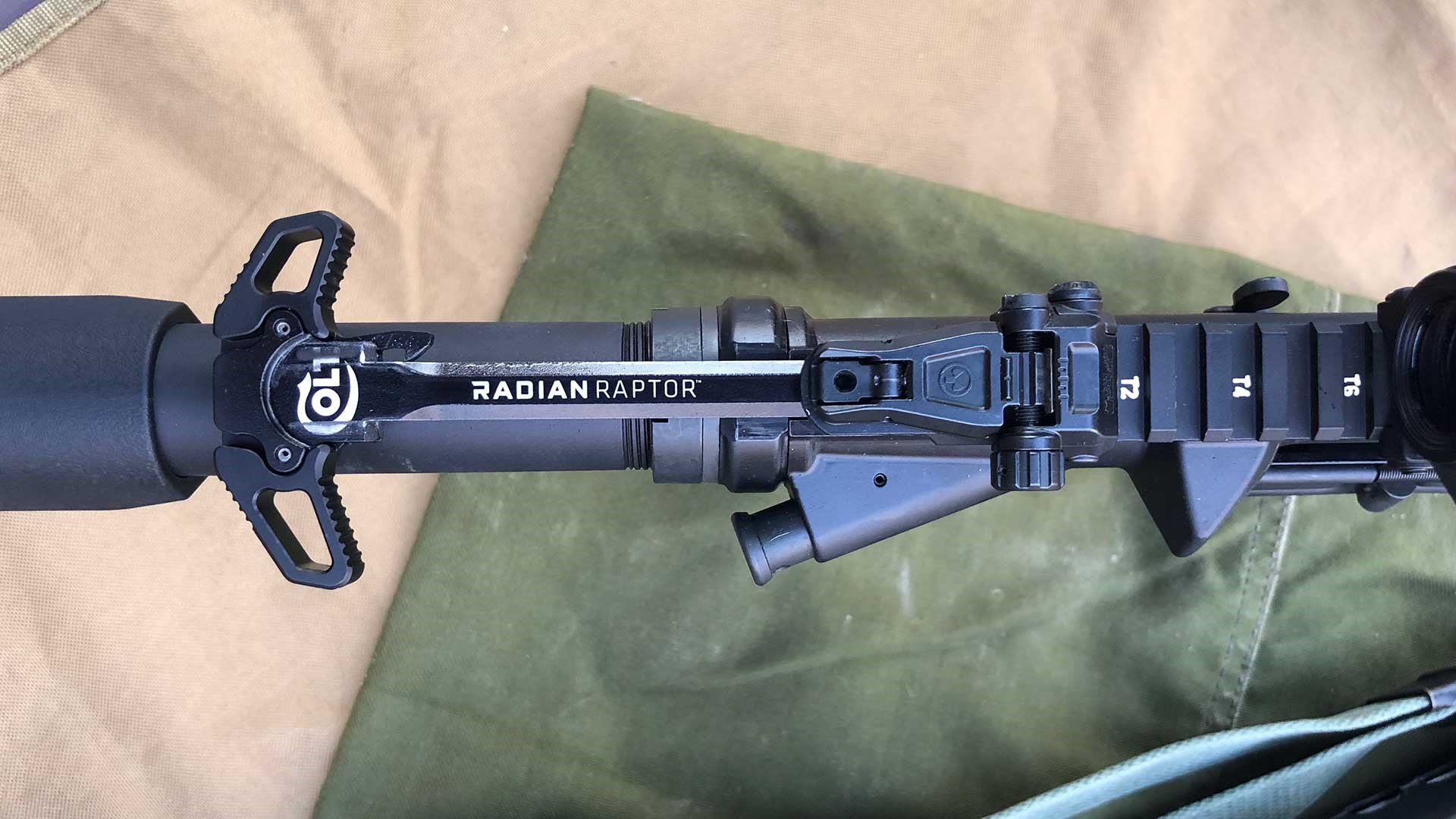
The 6.7-pound Colt balanced well in my hands, and reliability was perfect with the included PMAG and multiple generations, brands and types of other AR magazines. The MOE SL stock is actually one of my favorites, and the combination of it and the K2 pistol grip give the Colt a lively feel. I shot the EPR with the included irons, the Nightforce optic and a Holosun HS403R red-dot optic, and it paired well with each type of sighting system.
There are a number of well-established premium AR-15 builders in the market who got their start because Colt was focused on military contracts, with secondary priority going to the many large law-enforcement agencies who were migrating to the patrol rifle from the shotgun in the post-9/11 era. Many gun owners wanted a “real” Colt, but they were hard to find and priced accordingly.
Even when a shooter splurged for the no-kidding 6920 as supply caught up, the rifle was largely a base gun to which a free-float rail, improved furniture, upgraded controls and a flip-up, backup sight set would be added. This made the Colt quite an expensive proposition. Having been active in the carbine space while this was the state of play, I can’t help but see the EPR II as quite a value coming straight to the shooter well-laid-out and ready to go. Even better, the Colt is priced competitively in the current market.
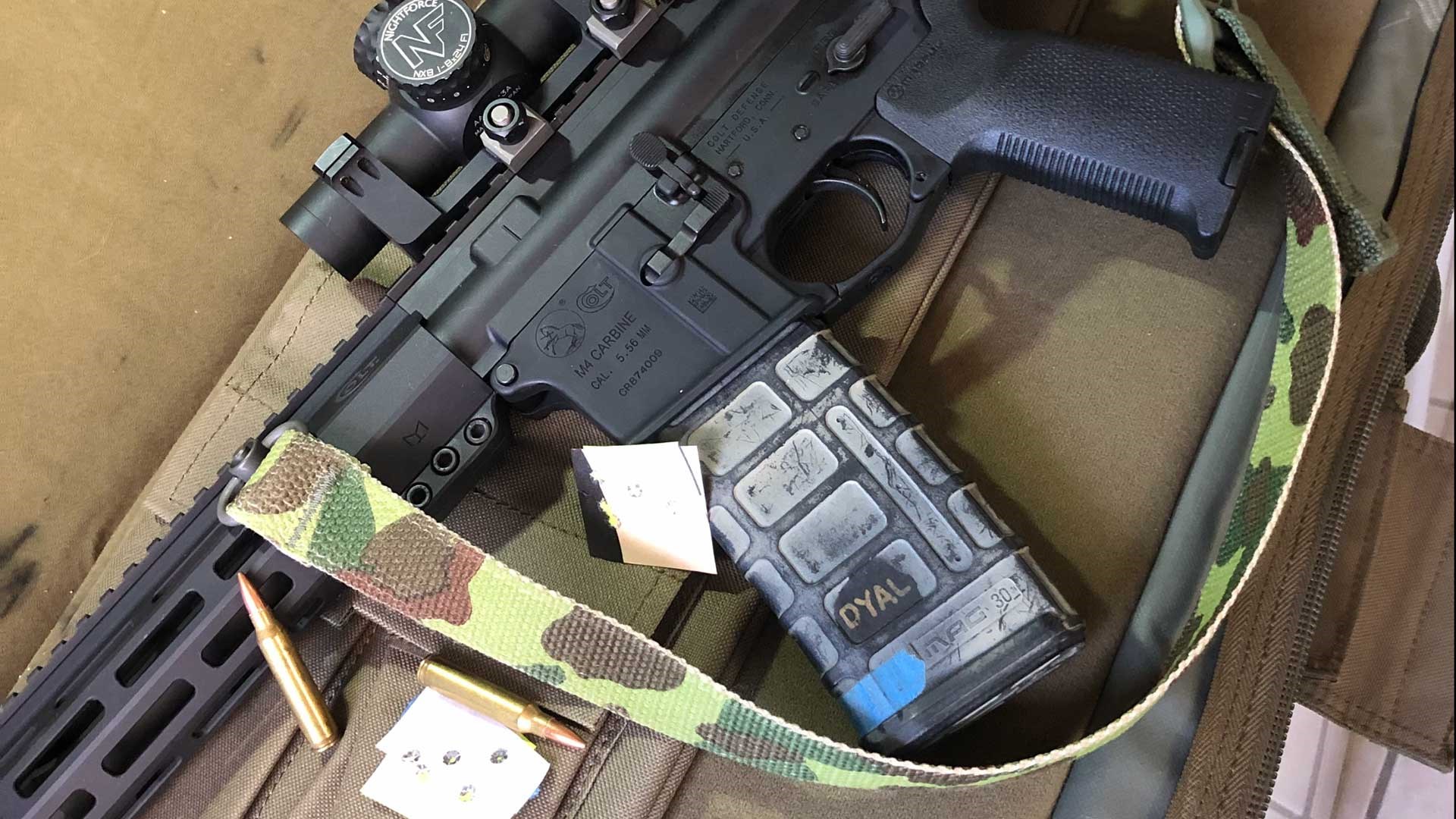
Nearly every feature that the upmarket premium AR boasts, M4 feed ramps, HP/MPI tested bolts and barrels, the forged 7075-T6 aluminum frame, etc., is derived from the Colt 6920 and its M4 brother. There are few hard-use rifles extant with the pedigree and long-term testing and length of service of the Colt M4. I am glad to see Colt move toward the commercial market with the EPR II package.
When I looked at the Colt Government Model 1911 Limited Edition a year or so ago, I came away thinking that it was the best blend of features I had seen on a Colt to date. It became one of my favorite stock 1911s and is a proud testament to Colt’s legacy. I think the Colt EPR II Pro fits right in on the AR side of the gunmaker’s roster with the best blend of features to date.
Read the full article here