


My goal in the essay is to use a well-known historical precedent to illustrate the U.S. Federal government’s untenable indebtedness predicament.
Spain, 1500-1590
In 1500, the New World had just recently been discovered, and Spain had just recently forced the Moorish invaders from the Iberian Peninsula. Expanding their army, expanding their navy, and the lengthy campaign to kick out the Moors had been expensive for the Spanish crown. They also needed to maintain a large army to keep the Islamic North Africans from returning. There were also the expenses of building and supplying a large fleet of ships, in the hopes of bringing back treasure and warding off pirates. And they also needed to arm and equip an army to subdue the various native tribes in the Americas.
When they began seizing territory from largely Stone Age tribesmen in the Americas, the Spanish luckily had the advantages of Spanish steel, matchlock muskets, cannons, and (unwittingly) deadly European microbes on their side. The latter included Swine flu, Smallpox, chickenpox, bubonic plague, measles, typhus, influenza, scarlet fever, pneumonia, and malaria. These germs killed far more native warriors than the Spanish soldiers and sailors ever did.
To finance building and equipping ships for their famed Armada Española and for raising armies, King Ferdinand II of Aragon and Queen Isabella I of Castile (and their successors) made the mistake of borrowing far too much money at interest, from northern European bankers. And even though silver and gold came back by the galleon-load, the Spanish monarchs could not stop borrowing. They became addicted to debt. They wrongly thought that they’d always have plenty of silver and gold coming in from the New World to service their debt load. However, by the 1590s they had a mountain of debt that was not offset by the inflow of gold. (By the way, most of that arriving gold and silver was privately held by merchants, and only lightly taxed by the Spanish crown.)
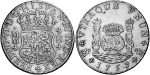 Following several national debt defaults (in 1557, 1575, and 1596), on November 29, 1596, King Phillip II of Spain ordered the devaluation of the country’s silver coinage. This included the famed Spanish Ocho Reales de Plata (“Pieces of Eight”) silver coin. By the 1630s, most coin mintages had 20% to 30% less silver than previously required. The Spanish coinage debasement led to the decline of the Spanish empire, and that decline has lasted for five centuries. To this day, Spain is still a third-rate world power.
America’s Mountain of Debt
Spain’s history has been partly mirrored in American history. But a key difference is that we held on to our colonized American soil. Starting in the early 20th Century, the United States began to accumulate a mountain of debt. The first large debts came during World War 2. The next wave of large-scale debt began in the 1960s, when congress approved spending for both President LBJ’s “Great Society” socialist programs and the large expenditures for the Vietnam War. By 1981, the National Debt reached $1 trillion for the first time. But, with out-of-control spending, it took just four years to amass another trillion in debt. Ponder that for a moment: It took 200 years for our government to accumulate its first trillion of debt, but then just four years for the second trillion. Parenthetically, when I published the first draft of my novel Patriots in the early 1990s, the national debt had grown to $3 trillion. Today, it is $38 trillion and rapidly climbing at more than $1 trillion per year.
Alarmingly, the aggregate long-term Federal obligations (including pensions) are roughly $100 trillion. That enormous sum is difficult to visualize. The Federal debt burden is now compounding so rapidly that the interest on the national debt has become the single largest Federal budget item, each year. At this point, it is mathematically impossible to repay the national debt. So, either there will be a debt default or a period of hyperinflation. There are no other viable exit strategies.
The Federal debt burden is so great that if interest rates were to spike back up above 8%, then the government would be technically insolvent. I predict that the U.S. Treasury and the Federal Reserve will attempt to inflate their way out of this problem. To me, the situation sounds a lot like what I fictionally described in the first chapter of Patriots.
Key Turning Points
In retrospect, anyone who studies monetary history can see that there were three key turning points for the U.S. Dollar that came in 1913, 1933, and 1963. These were:
1913: The Federal income tax was unconstitutionally enacted and the Federal Reserve banking cartel was established and put in control of setting interest rates. By extension, that also gave the Federal Reserve control of the gross money supply.
1933: President FDR and Congress reset the official price of gold and banned the private possession of non-numismatic gold. This partially debased our currency. But at least we still had genuine 90% silver coinage, and some Silver Certificates.
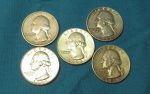 1963: Congress changed the composition of the “Dollar” by eliminating 90% silver coinage. Dimes and quarters were fully debased to clad coinage starting in 1964. (A clad coin is a copper slug that is plated with silver.) Half dollars were debased to 40% silver starting in 1964, and then fully debased to clad coinage in 1970. Ever since then, our “dollar” has been a fully fiat currency, with no redeemibilty for real money.
America’s Corporate “Persons”
Corporations — especially banking corporations — now essentially run America. They provide both the driving engine of the economy and the tax base that allows the profligate spenders in Washington, D.C. to continue their mischief. But one characteristic of modern multinational corporations is that they have no national loyalty. They only have loyalty to their bottom lines. So when markets change, they redirect their capital, accordingly. Corporations know no borders. They are like fickle lovers.
Furthermore, there are two fairly large problems with the American legal system: 1.) As affirmed by the Supreme Court, it gives corporations legal standing as “persons”, so they can legally conduct political lobbying, and 2) It allows foreign individuals and foreign corporations to buy American real estate, including mining, farming, and timber land. Canada has a similar legal loophole. (In contrast, most other nations only allow foreigners to lease land – typically in 99-year increments.)
It all comes down to tangibles
Because all modern currencies are unbacked fiat script, the fate of the 21st Century economy will all come down to who holds assets that are not denominated in those gradually inflating currencies. The Asian nations and the BRICS+ nations want tangibles, most notably silver and gold. They are buying up all that they can find, as a hedge on the degrading value of all the world’s fiat currencies.
Meanwhile, the corporations want their own tangibles hedge: U.S. and Canadian real estate. With the wise counsel of their CFOs, corporate managers now have a quite well-reasoned desire to acquire real estate. They rightly see it as one of the few safe havens in this age of inflation. Huge private equity firms like Blackstone and Home Partners of America are buying up as many houses as they can, to turn them into rentals. It is estimated that by 2030, corporations will own 60% of single-family homes in America, mostly held in Real Estate Investment Trusts (REITs).
Taking Collateral?
With an inevitable United States debt default on the horizon, it is safe to assume that the holders of U.S. Treasury debt must be wondering how and when they will be repaid, in the event of an American debt collapse. In effect, most loans have the backing of collateral. We all know what happens if you stop making your car payments: Your car gets towed away. And if you stop making your house payments: Your interest in the property is signed over to the bank and then quite shortly, sheriff’s deputies escort you to the curb. Then, the bank either does a short sale or auctions the house and land. In any debt default, collateral reverts.
Coincidentally, the Federal government has announced tentative plans to sell off 80 to 250 million acres of land with mineral rights in 11 western states. (Those states are: Alaska, Arizona, California, Colorado, Idaho, Nevada, New Mexico, Oregon, Utah, Washington, and Wyoming.) The Bureau of Land Management (BLM) and the US Forest Service (USFS) have been tasked with identifying the precise geocode parcel descriptions of more than 250 million acres of eligible “excess” land. If and when a Federal land sale happens, it will most likely be via land auctions. At an estimated realized price of $10,000 per acre, the aggregate revenue would be just a pittance compared to our national debt. But it would fully cover the obligations of current Treasury bonds, as they come up on their rollover dates. Surely, the timing of the land sale study was just a coincidence.
Oh, and let’s not forget that the Trump Administration also started the Gold and Platinum Visa systems. Also, surely just a coincidence.
Planning Ahead

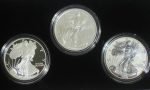 At the risk of sounding repetitive, I strongly encourage my readers to invest in tangibles. Think: silver, land, and guns. To date, my advice has been sound. The spot price of gold has increased 125% in the past five years, while in the same period, silver is up 137%. (And I still expect silver to continue to outperform gold in the long run. I foresee the silver-to-gold price ratio dropping below 40-to-1.) While most commercial real estate has languished, residential land values have doubled in the past six years in many markets. In the 21st Century, the evidence has shown that tangibles rule.
Don’t trust the U.S. Dollar. Like all other fiat currencies, the Dollar is doomed. A rational distrust in the Dollar also means, to a lesser extent, distrusting any dollar-denominated investments. In a period of mass inflation, they will also surely suffer.
We can expect renewed inflation, a financial collapse, a stock market collapse, and perhaps a dollar collapse at any time. All that it will take is for the investors in U.S. Treasury paper to reach a psychological breaking point. Then, bang! Interest rates will go parabolic and, simultaneously, the value of the Dollar will go into freefall. Count on it. Welcome to a Spanish future, folks! – JWR
—
Note: Permission to re-post this article is granted, as long as it is re-posted in full, with all links intact, and credit given to the author (James Wesley, Rawles) and to SurvivalBlog.com.
Read the full article here