
Short-barrel, subcompact revolvers, also colloquially known as snub-nose revolvers or snub guns, have a long and storied history. It can be traced all the way back to the smaller caliber cap-and-ball wheelguns of the 19th century. In the early-to-mid 20th century, guns like the Colt Detective Special and the Smith & Wesson Model 36 “Chiefs Special” were popular defensive arms and still serve as the blueprint for most of the modern double-action concealed carry revolvers we see in production today.
In recent weeks, I’ve had the opportunity to handle a pair of 2-inch-barreled concealed carry revolvers that launched this year. One is the Diamondback Firearms SDR-A, an aluminum-framed version of the company’s six-shot chambered in .38 Spl. +P. The other is the second-generation version of Smith & Wesson’s Bodyguard 38, which is the latest option in the company’s impressively diverse lineup of five-shot J-Frames.
Some folks who are more recent arrivals on the defensive handgun scene may be wondering why some manufacturers are developing new snubbys, let alone producing them at all. It’s understandable that they may not appreciate what these little wheelguns bring to the table. After all, handgun-related media these days is highly focused on polymer-framed, striker-fired 9 mm pistols in compact and subcompact sizes.
But regardless of the various concealed carry trends that have garnered attention over the last few decades, the snub guns have continued to sell steadily and quietly, despite the lack of fanfare from the shooting sports community. What is it that gives these little guns this degree of staying power? Here are just a few reasons this class of revolvers keep finding their way into self-defender pockets, purses and holsters.
Simplicity of Operation
When faced with the duress of a self-defense situation, simplicity is a bonus. Revolvers provide one of the least-complex manual of arms that many self-defenders find easy to understand and to operate. Open the cylinder, load the chambers and close it. Now the gun is ready to use. When it is time to shoot, draw it from the holster, align the sights and then pull the trigger. That’s it.
There is no need for a chamber check, no slide to cycle or magazines to insert or swap out. There are no external safeties to fuss with. In fact, the relatively heavy double-action trigger serves as a safety since it requires a deliberate pull to cycle the action and fire. And there is no need to tap-and-rack or run other malfunction drills. If the revolver goes click instead of bang, just pull the trigger again to fire the next round in the cylinder.
Reliability
Semi-automatic pistols depend on the pressure generated by the ammunition used to cycle the action. As a result, they can, at times, suffer from “ammunition sensitivity.” Significant shifts in pressure levels can potentially lead to a variety of malfunctions, the most common being a too-low level of pressure causing a failure to feed or to eject properly. Also, a given cartridge’s bullet shape may not be compatible with a particular pistol’s feeding ramp or chamber. This, in turn, can cause feeding failures and jams, requiring semi-automatic handgun owners to thoroughly test any defensive ammunition in their firearm before depending on it for daily carry.
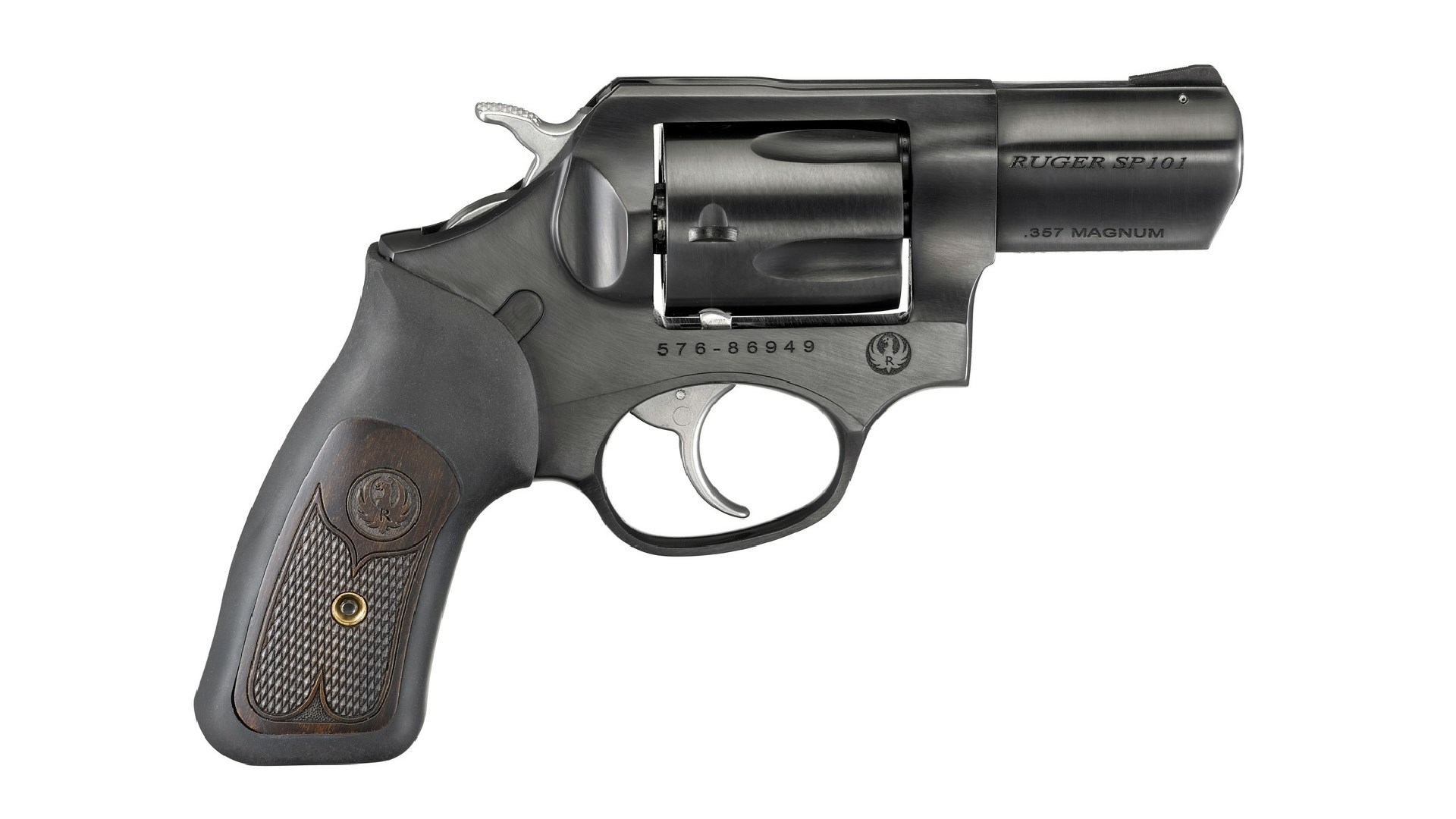
Ammunition sensitivity is almost unheard of in a revolver because the action is cycled mechanically. Squeezing the trigger rotates the cylinder to line up the next round with the bore of the barrel. This means cartridge pressures can shift dramatically without affecting reliability. Revolvers are just as forgiving when it comes to bullet shape or type. This allows small revolvers to be stoked with a wide variety of defensive rounds, depending on the individual’s needs.
Interchangeable Grips
When purchasing a semi-automatic pistol, the grip frame you buy is, for the most part, the grip you get. Yes, some of the more recent polymer-framed models have interchangeable backstraps that can be traded out to make the grip slightly larger or smaller or to change the angle a bit. But the rest of the grip remains the same.
Snub-nose revolvers are a different story. Thanks to their removable grips and their relatively small grip frames, the shape and size of what the shooter holds on to can be altered much more significantly than a pistol. This is a boon for folks with small hands, large hands and those who are looking for a particular grip profile, either to make the gun easier to conceal or more comfortable to shoot. And if pebbled black rubber is not your style, small-frame revolver grips are available in a variety of materials including smooth hardwood, checkered laminates, textured G10 and faux ivory, to name a few.
Caliber Options
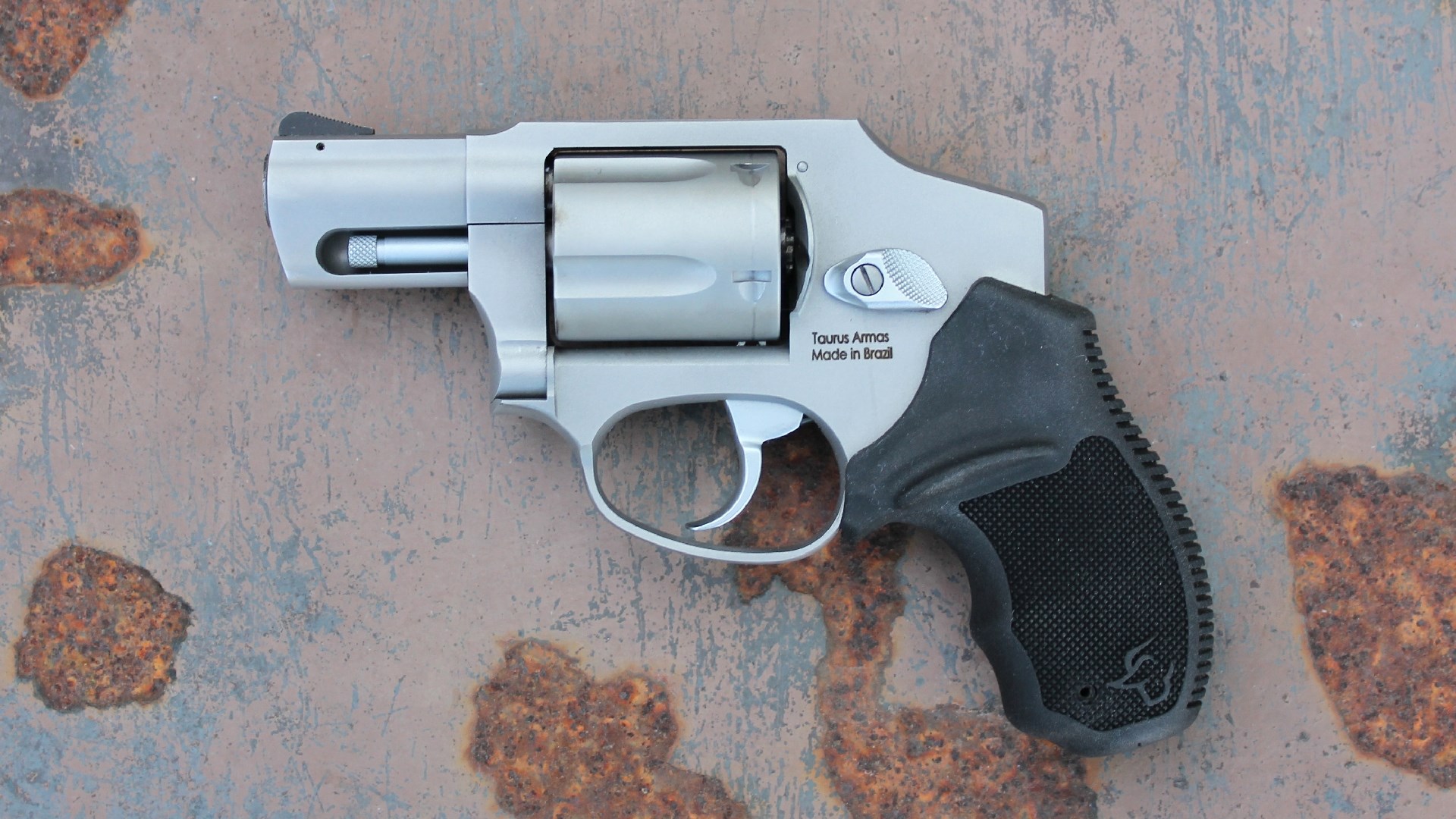
The classic snub-nose revolver chambering is the tried-and-true .38 Special. It has a long and proven track record of success in this platform and remains the most popular caliber today. Older models should usually be fired using standard-pressure loads. If the barrel of the gun is stamped “+P” then it can handle these high pressure rounds with ease if your wrist is willing to cooperate.
But there are more options to choose from than folks might expect. Commonly built with an all-steel construction, the .357 Mag. snubbies can be stoked with loads ranging from soft-shooting .38 Spl. wadcutters up to 180-grain, hard-cast-lead, deep-penetration rounds for dangerous game. Models chambered for .327 Fed. Mag. or .32 H&R Mag. are typically chambered for six rounds instead of five. Although they are not as common, 9 mm models that use full moon clips are available. And there there is a fairly good selection small-frame revolvers chambered in .22 LR and .22 WMR.
To learn more about snub-nose revolvers, take a look at the following articles:
The Taurus 650: Embracing The Snubby Lifestyle
Diamondback SDR-A Lightweight .38 Spl. Revolver
Diamondback SDR 9 mm
Fink’s Custom Ruger SP101: A ‘Trail-To-Town’ Revolver
Refining the Snub Gun: Smith & Wesson’s 640 Pro Series
Read the full article here