

For most of the Western world, World War II began in September 1939, with the German invasion of Poland. However, by 1939, the Japanese army had been in combat for years in China, and it learned some important lessons about its small arms during the conflict, leading to the development of its Type 97 machine gun. Watch our “American Rifleman Television” I Have This Old Gun segment above to see the Type 97 in action.
“What the Japanese experience in combat in China is that they’re going up against Chinese troops who are fighting them with Mauser rifles in 8 mm and Czechoslovakian light machine guns, namely the ZB 26, also chambered for 8 mm. What the Japanese very quickly realized is that, the Chinese troops, they possessed much greater barrier penetration than the lighter bullets being fired from the Japanese Type 38 rifles and the Type 11 light machine guns,” American Rifleman contributor Martin K.A. Morgan said. “The Japanese quickly realized that they need something more powerful for an automatic weapon. They will eventually then decide to develop a heavier-caliber tank machine gun, which is designated ‘Type 97.'”
Largely based on the Czechoslovakian ZB vz.26 light machine gun design, the Japanese Type 97 feeds from a detachable, 20-round box magazine located at the top of the action. But where the design differs from the ZB 26 machine gun is in the addition of a folding buttstock that allowed the gun to be used within the tight confines of a tank or other armored vehicle.
“But more importantly, it is chambered for this new cartridge, 7.7×58 mm,” Morgan said. “This is significant because it’s marking the point at which the Japanese, when they adopt the Type 97 machine gun, which is in 1937, they have recognized that we need something that fires a heavier bullet. The first thing they do is adopt this tank version.”
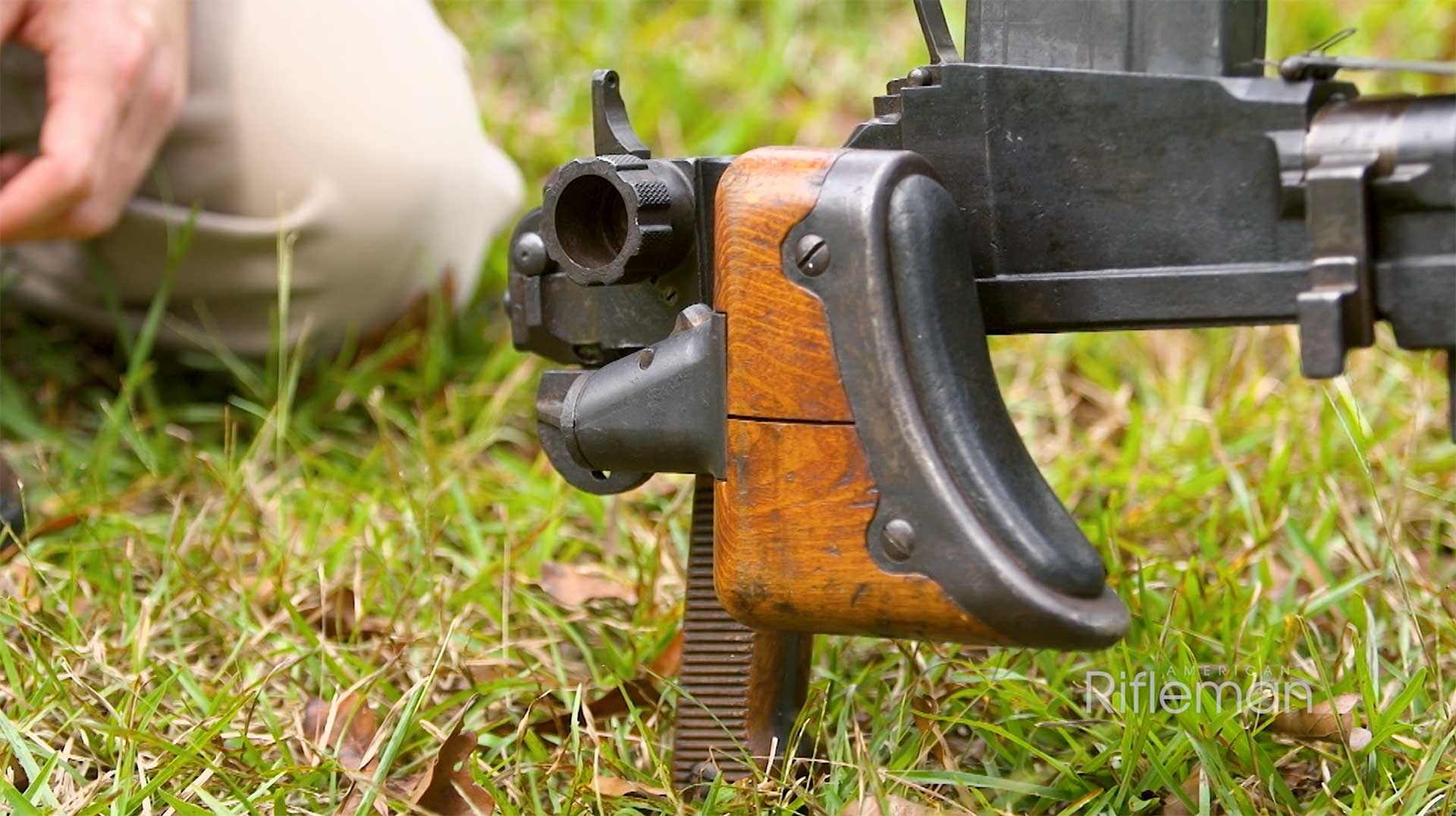
Ultimately, Japan produced about 18,000 Type 97 machine guns, and the overwhelming majority of these guns were used in conjunction with Japan’s limited tank and armored-vehicle force. These guns saw combat with the Imperial Japanese army from its adoption in 1937 all the way to the end of World War II in the summer of 1945.
“The other thing that’s notable and interesting is the Type 97 was designed to be issued and used with a 1.5X magnified optic that sat along the left side of the bore axis,” American Rifleman Executive Director Evan Brune said.” Since it couldn’t sit at the top of the receiver because of where the magazine was located. Because of that, typically you think of the British Bren having its iron sights on the left side of the receiver, on the Type 97, they’ve actually been relocated to the right side of the receiver in order to accommodate this magnified optic.”
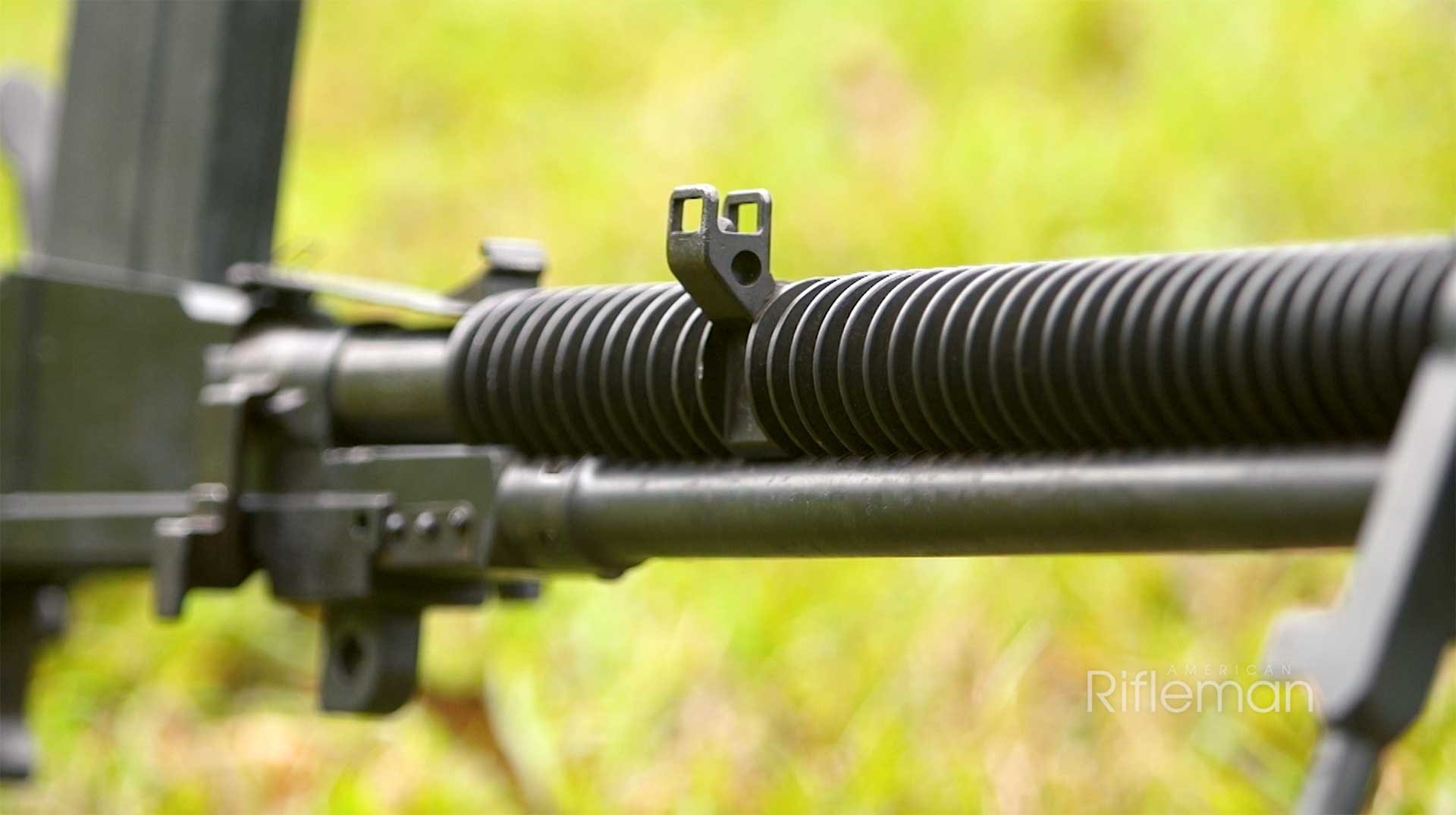
Today, original optics for the Japanese Type 97 are exceedingly scarce, and most surviving examples that exist on the NFA registry are seen without their magnified optic.
To watch complete segments of past episodes of American Rifleman TV, go to americanrifleman.org/videos/artv. For all-new episodes of ARTV, tune in Wednesday nights to Outdoor Channel 8:30 p.m. and 11:30 p.m. EST.
Read the full article here