

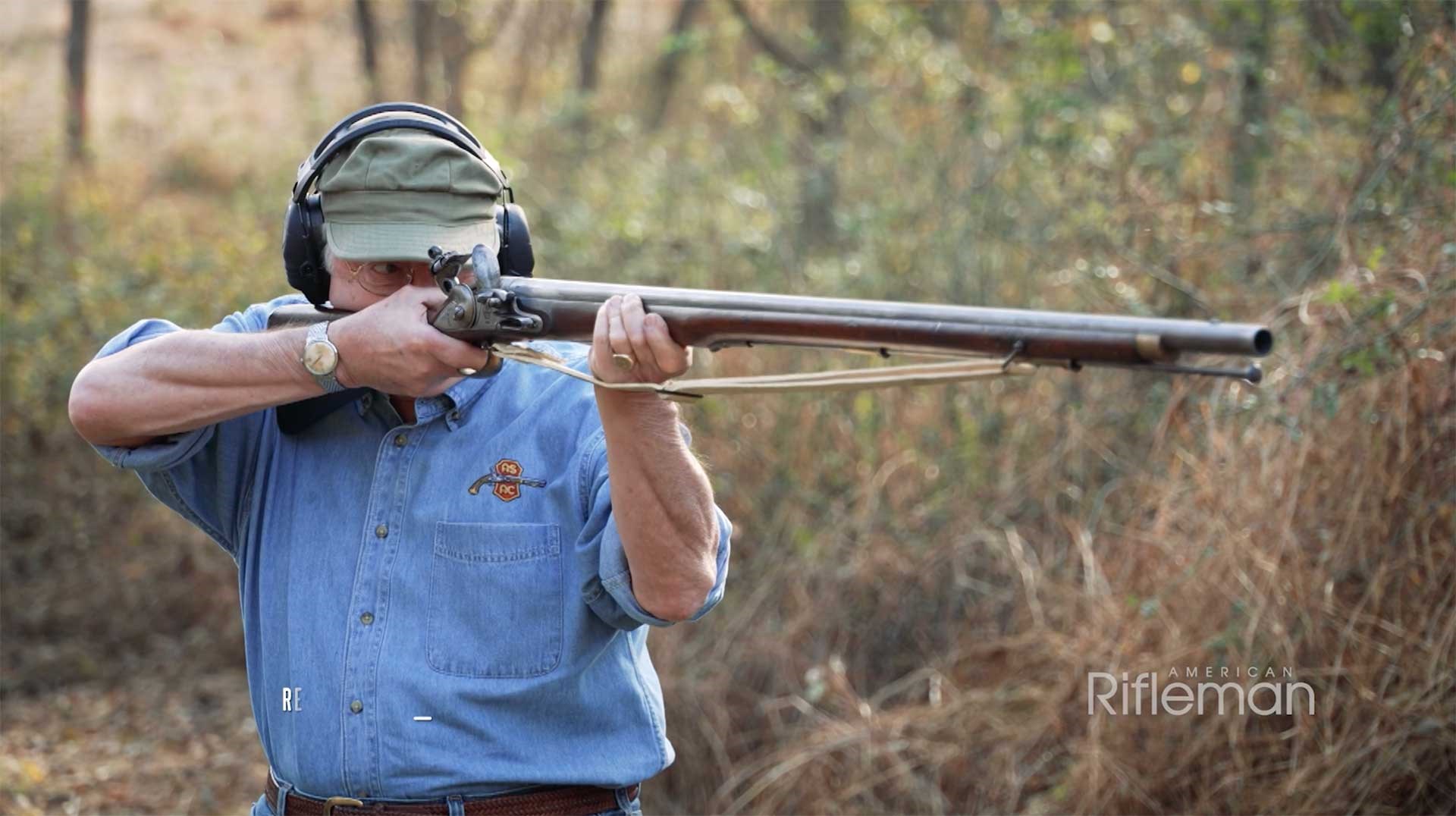
One of the most iconic military longarms ever made, the British Land Pattern musket, more commonly known as the “Brown Bess,” equipped British infantrymen across the world for more than a century. Watch our “American Rifleman Television: I Have This Old Gun” segment above to hear the history of the Brown Bess and see one fired on the range.
“Prior to the 1720s, really, I mean, military armament, it was kind of all over the place,” American Rifleman Executive Editor Evan Brune said. “So one of the things that, you know, militaries early on wanted to standardize on was a standard bore size, a standard pattern that meant that you had a standard manual of arms that everyone could basically agree on. And for the British military, this was their Land Pattern musket.”
The British Brown Bess was nominally a .75-caliber firearm designed to fire a sub-caliber .69-caliber projectile loaded using a paper cartridge. The flintlock mechanism was an advancement over earlier lock designs, which had evolved from the matchlocks of the 16th and 17th centuries to the snaphaunces and doglocks that characterized early flintlock development.
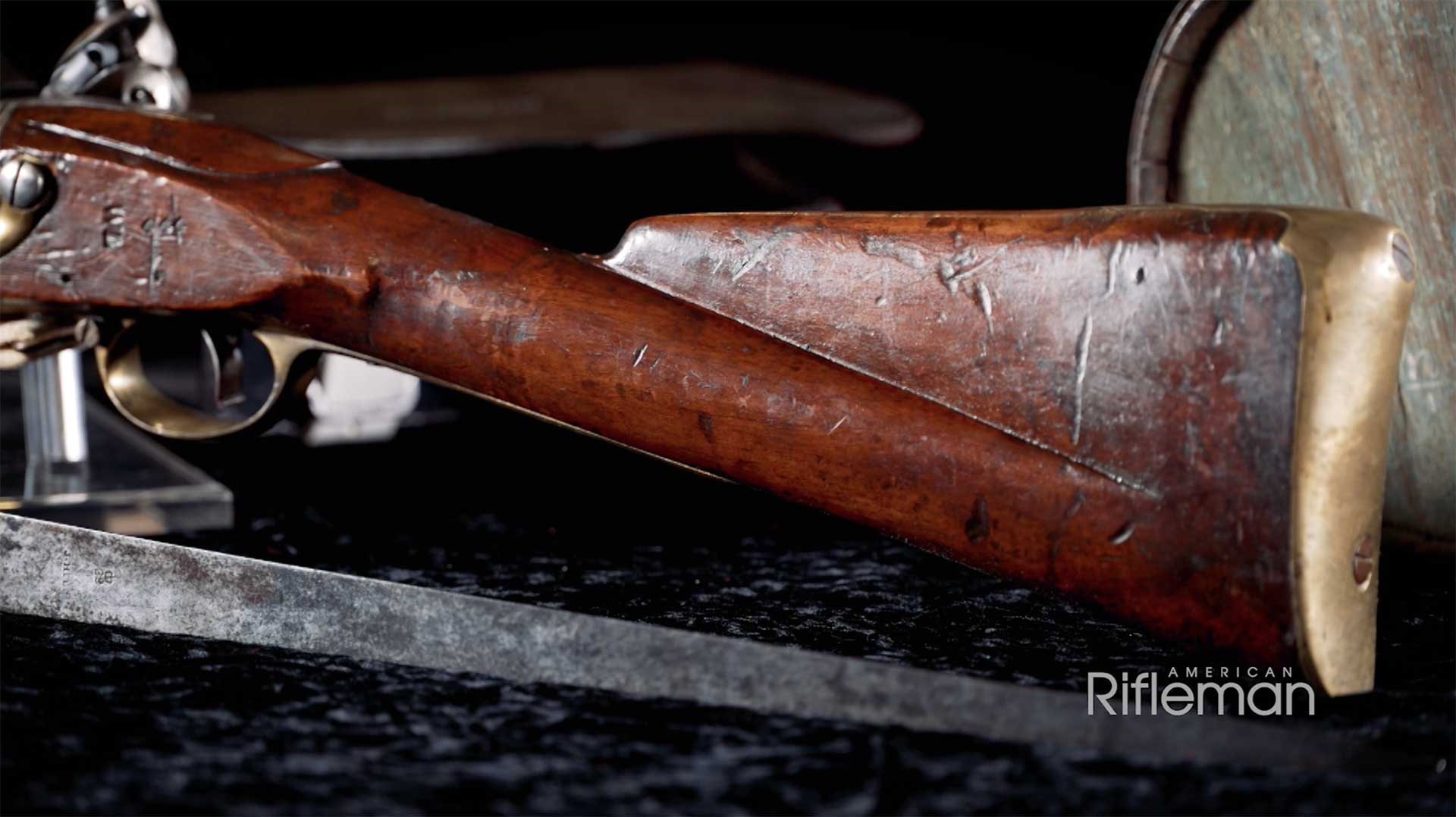
“The first guns of this type of period, around 1720, and then in the 1740s, they were kind of modified to a Short Land Lattern, where the 46-inch barrel was reduced to 42 inches,” American Rifleman Field Editor Garry James said. “They were really a very handsome musket, lots of brass work, brass buttplate, brass trigger bow, brass sideplate, brass ramrod thimbles, bright barrel and usually a stock of walnut.”
After the French Revolution and the execution of French King Louis XVI, Great Britain began ramping up production of military arms in anticipation of a coming conflict with France. To expedite its military buildup, the British army began purchasing guns that had initially been produced for the British East India Company.
“These were initially known as the Windus Pattern Arms, named after Lieutenant Colonel Edward Windus, who was the small arms inspector for the East India Company,” James said. “They started bringing these guns into East India Company service from 1771 onward. And, you know, the British military establishment didn’t, I mean, they kind of didn’t pay attention to these guns. It just wasn’t up to the standards of the British military, which was quite a bit smaller than the East India Company forces at this time.”
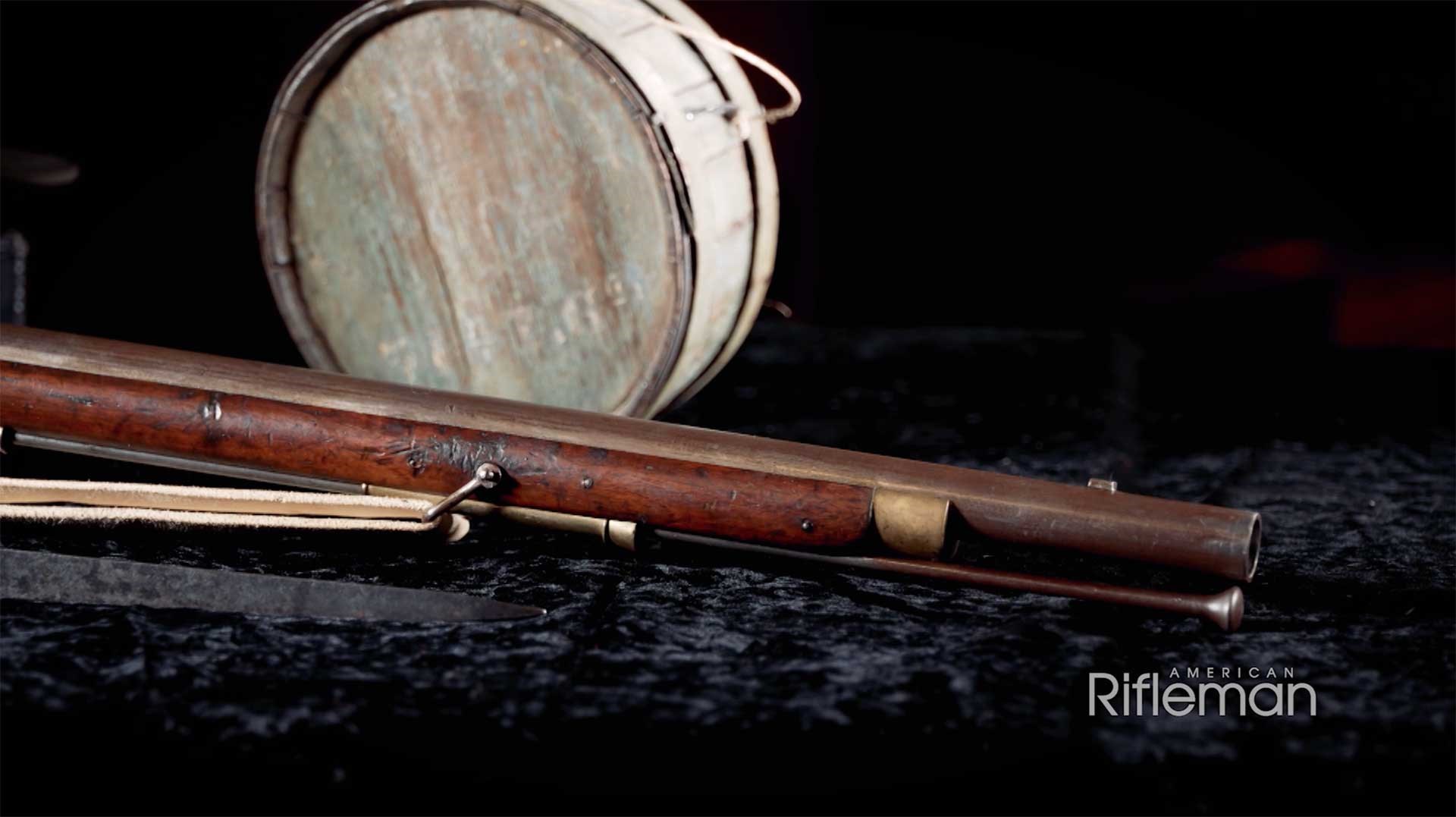
The onset of the French Revolutionary Wars, then the Napoleonic Wars resulted in a massive expansion of British armed forces, necessitating the production of a new, simpler model of Brown Bess musket that was officially adopted in the 1790s. Often called the Third Model, or India Pattern, these simplified Brown Besses were produced in enormous numbers well into the early 19th century.
“They continued using this gun and variants thereof up until the percussion era,” James said. “And a lot of these things were sold surplus, so you saw them all over the world. As a matter of fact, in the United States, the Mexican military bought them and they were used at the Alamo, and they were used during the Mexican War. They were the primary Mexican musket of that period.”
To watch complete segments of past episodes of American Rifleman TV, go to americanrifleman.org/videos/artv. For all-new episodes of ARTV, tune in Wednesday nights to Outdoor Channel 8:30 p.m. and 11:30 p.m. EST.
Read the full article here