
You’ve seen it yourself. There’s a guy in every room who thinks he’s the most dangerous man there. You can spot him in less than 3 seconds. He’s the one broadcasting it. The squared stance that never relaxes. The eyes that sweep too hard, too often. The clothes that try to whisper “low profile” but end up shouting “look at me trying not to be seen.”
He’s broadcasting capability, maybe real, maybe imagined, but it leaks out of him like light under a door. And here’s the problem: Anyone who knows how to look can see it just as fast.
The real truth, the one that doesn’t sell so well on social media, the one that doesn’t look as good in a selfie, is that the most capable person in that same room is almost always the one who never caught your attention. Not because they’re hiding or playing some game, but because they’ve removed themselves from the signal entirely. They’re not trying to display operational competence. They’re actually living it. That’s gray-man cool. It’s not a look. It’s a discipline.
In our modern-day culture built on signaling, where identity is worn, posted, tagged and broadcast in real time, the idea of intentional invisibility feels almost subversive. People want to be known. They want to be recognized. They want to belong to something visible. Even the idea of “preparedness” has been turned into a costume, complete with its own uniform, language and tells.
However, the true professionals who’ve had to move through denied areas, hostile and high-threat environments without attracting attention figured out something a long time ago. Visibility is a liability. Recognition is risk. The moment you can be described, categorized or remembered, you’ve given something away.
Gray-man cool starts with a simple premise: If someone can describe you in one sentence, you failed. That failure usually begins with appearance.
Most people think blending in means dressing down. It doesn’t. It means matching. Not just category—shirt, jeans, jacket and boots—but also the deeper layers that people don’t consciously register but absolutely notice. Fit, wear, texture, the way the fabric breaks at the elbow, the fade pattern on the knees, the scuff on the toe box; real environments produce real patterns. When you show up looking like a catalog version of the role, you stand out more than if you’d worn a flashing neon sign.
Statistical invisibility is the target. You don’t want to be the best-dressed guy in the room, and you definitely don’t want to be the worst. You want to sit in the dead center of the bell curve, where pattern-recognition doesn’t flag.
That contractor who looks like he just stepped out of a brand shoot? Flagged. The civilian trying too hard to look rugged? Flagged. The guy wearing “tactical casual” or “tacti-cool” like it’s a uniform? Flagged twice.
This is where most people lose the thread. They confuse preparedness with presentation. They start building an identity around capability instead of building capability itself. And that leads straight into what might be the fastest way to get noticed in any environment: the “cosplay” instinct.
Looking tacti-cool is a tell. It doesn’t matter how subtle you think it is. The clusters are real. Logos, cuts, color palettes, even posture—they group you. Humans are wired for pattern recognition, and predators are very, very good at it. You’re either part of the background noise, or you’re a category. Once you’re a category, you can be evaluated.
The irony is brutal. The more someone tries to look like they know what they’re doing, the more they expose themselves to people who actually do. Real operators don’t wear the uniform unless the job requires it. Off-duty, off-mission or in civilian space, the uniform goes away. What’s left is nothing you can grab onto visually or otherwise. No tribal markers. No shorthand identifiers. No visual hooks. Just another person. This zebra looks like all the other zebras, and that’s the point.
However, appearance is only the opening move. Behavior is where the real signature lives.
People notice movement before they notice faces, and have since caveman days—it’s older than language. Something that moves wrong triggers attention at a level you don’t consciously control. Too fast, too sharp, too deliberate, too out of sync with the environment; it doesn’t matter why, it just registers as wrong.
Don’t be aggressive in expressing yourself. You don’t want to be the “loud” guy. Also, keep away from esoteric subjects that would reveal your training or martial interests. photos: Adobe firefly
You see it all the time. The guy doing the exaggerated “situational awareness” scan, head on a swivel like he’s in a training video. The person who stops in the wrong place, pivots too cleanly, tracks people with their eyes instead of letting their gaze settle naturally. They think they’re being aware. What they’re actually doing is flashing like a warning light.
Gray-man movement is boring on purpose. It’s task-oriented. It flows with the environment instead of cutting into or against it. There are pauses, but they make sense. There’s direction, but it doesn’t look forced. You don’t look like you’re managing a situation. You look like you’re living in it.
This also extends to pace. Speed mismatches are one of the easiest ways to stand out. Moving too fast in a slow environment makes you look urgent. Moving too slowly in a fast environment makes you look lost and can flag you as a potential target. Either way, you’ve broken the rhythm, and rhythm is what people subconsciously use to decide who belongs. You move at the speed of the environment, not at the speed of your internal state. That’s harder than it sounds.
Your heart rate can be up. Your awareness can be high. You can track exits, people, potential threat indicators and anomalies. None of that shows in your pace. None of it shows in your posture. The internal and external are decoupled. That’s gray-man discipline.
Position matters just as much. People who don’t belong tend to either hide badly or stand in the wrong place—either dead-center with no purpose or tucked away where there’s no natural reason to be. Both draw attention. The gray man occupies positions that make sense, such as blended edges, transitions, places where movement and presence are normal. You’re not hiding. You’re fitting in.
Then there are the hands. Hands are one of the biggest tells in human behavior. They broadcast intent constantly—that’s the reason cops key in on them. Fidgeting, checking, adjusting, gripping a phone like a lifeline, touching gear, rechecking pockets; it all reads like a screen display to the seasoned predator. Most people don’t realize how much they’re saying with their hands until they try to stop.
In gray-man discipline, hands are either doing something normal or doing nothing at all. There’s no middle ground. No self-checking loops. No constant reassurance behaviors. If you have to keep adjusting something, the problem isn’t your awareness, it’s your setup, which is something you can manage ahead of time. Capability that requires maintenance in public is something that needs work and is not dialed in.
How you talk is no different. Your voice can light you up across a room faster than your clothes ever will. Volume, tone, pacing, content—it all signals. The guy telling war stories at full volume, the person correcting others mid-conversation to show knowledge or the one dropping jargon that doesn’t fit the environment are all not communicating. They’re displaying.
Gray-man speech is low, brief and contextual. You talk to transact only. You say what’s needed for the moment and nothing more. No teaching unless it’s required, no proving anything, no need to be the smartest voice in the space. Because the moment you start trying to be seen as something, you are seen. And once you are seen, you are remembered.
In the past, that might have been where the conversation stopped. Physical presence, behavior, interaction. But the modern environment has a second layer that’s just as critical: online presence. Your digital footprint is part of your signature, whether you like it or not.
People document everything now. Locations, routines, habits, preferences. They post in real time, tag themselves, geotag environments, build a running narrative of where they are and what they’re doing. It feels harmless because it’s normal. It’s also a pattern generator.
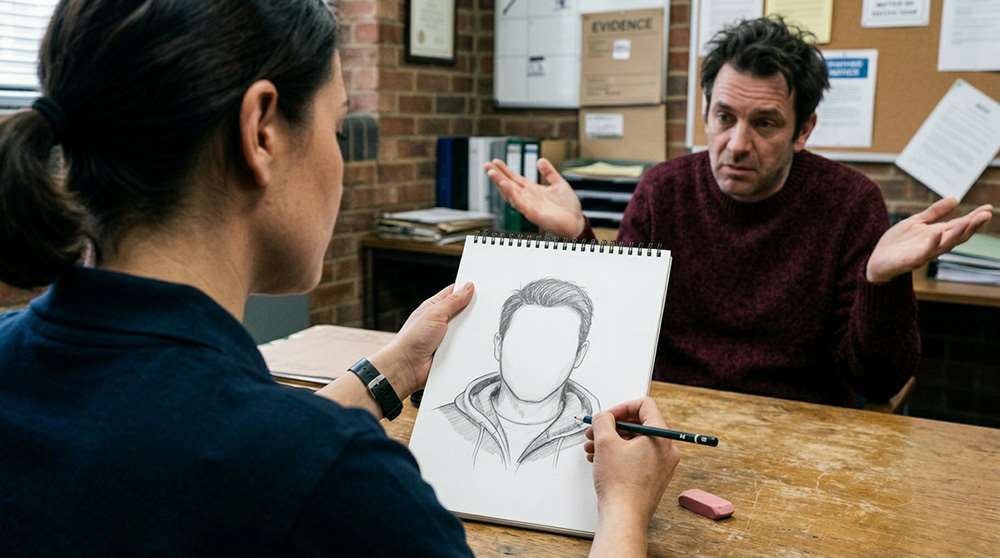
Be cordial, but not memorable. Don’t leave an impression. There shouldn’t be any one thing by which a casual observer could describe you. photos: Adobe firefly
Gray-man discipline doesn’t require you to disappear from the digital world completely. It requires you to stop feeding it predictability. Strip geotagging. Delay posting. Avoid broadcasting routines. The goal isn’t secrecy theater. It’s breaking the ability for someone to triangulate your patterns over time, because predictability is the real vulnerability. And it shows up everywhere.
It even shows up in something as simple as your car. Your vehicle is an extension of your presence. It tells a story, whether you intend it to or not. Vanity plates, decals, identity markers—they all cluster you. They all make you easier to categorize. Even parking behavior can stand out. Choosing a spot because it’s “tactically optimal,” but visually odd, draws more attention than parking where everyone else parks.
What’s inside the vehicle matters as much as what’s on it, because glass is an invitation and most people furnish their car like a display case without realizing it. A backpack tossed on the passenger seat, a laptop sleeve half under a jacket, range bags, tool kits, spare magazines, even a pile of charging cables all read as value, and value is what drives selection. Smash-and-grab isn’t about who you are, rather it’s about what can be seen in 3 seconds from 10 feet away.
Outside, the mistakes are louder and last longer. A single sticker can advertise tools in the trunk, weapons on board, political leanings, travel habits—even where you’ll be on a given weekend. It narrows you into a lane, and once you’re in a lane, you’re easier to read, easier to track and easier to target.
The same goes for anything that implies capability or inventory: brand marks that signal expensive gear, slogans that suggest what you carry, affiliations that tell a stranger where you spend time. Gray-man discipline strips that all the way back. No statements, no breadcrumbs, no shorthand for a stranger’s assessment. From 10 paces, your vehicle should collapse into the background, another shape in an ocean of shapes. Because the vehicle isn’t just transportation, it’s a rolling signature, and every mark you put on it is a sentence someone else gets to finish.
Gray-man vehicle discipline is clean, maintained, unremarkable: don’t make statements or broadcast your identity. It makes your car a tool for transportation, not expression. That same principle applies to routine. Humans are pattern machines. We build habits because they’re efficient. Same route, same time, same stops. Over time, that creates a map, not just for you, but for anyone watching you.
Controlled variation is the answer. Not chaos. Not randomness for its own sake. Just enough shift in timing, route and micro-behavior to break clean pattern-recognition. You’re still efficient. You’re still functional, but not legible, and legibility is what predators rely upon.
That’s the other side of this conversation that people don’t like to talk about. There are individuals out there who are very good at identifying soft targets. They’re not guessing. They’re reading. Behavior, posture, awareness, intoxication level, distraction, isolation; it all feeds into an accurate, rapid assessment.
One of the biggest flags in that assessment is impairment. Alcohol, drugs or even simple distraction can shift someone from neutral to target in seconds. Slowed reactions, reduced awareness, compromised ability to make decisions, loud or obnoxious behavior—it all reads as opportunity to malefactors.
Gray-man discipline doesn’t demand abstinence, but it demands awareness of how quickly perception changes under the influence. Once you’re flagged, you don’t get to argue your way out of it.
It all circles back to one thing that quietly undermines more people than anything else: the very uncomfortable and sensitive topic of ego. It’s the need to be recognized, the subtle hope that someone notices or the quiet satisfaction of standing out just a little bit. It’s human. It’s normal. And it’s exactly what breaks the gray-man profile.
Competence without audience is the standard. You don’t need the room to validate you. You don’t need to be the guy people point to and say, “That one knows what he’s doing.” In fact, if they can say that easily, you’ve already given up ground. The real asset isn’t invisibility for its own sake. It’s control of visibility—you decide when you’re seen.
Most of the time, you’re background. You move, you observe, you operate without friction. And then, when it matters, when something actually requires action, you can step forward, act decisively and appropriately, and discreetly resolve the problem. Then you disappear again. No signature, no story, no lingering presence.
Now that’s gray-man cool. It’s not flashy. It doesn’t photograph well. It won’t get you followers or likes or nods from across the room. What it will get you is something far more valuable in the real world: freedom of movement. Reduced attention. Lower probability of being selected, targeted or remembered.
Read the full article here