


Those familiar with the manufacturing history of Taurus know that some of the company’s early pistols were based on Beretta designs. This includes the PT series of tip-up barrel pocket pistols, which were essentially clones of the Beretta 21 Bobcat. Models included the PT22 and PT25, chambered in .22 LR and .25 ACP respectively, with aluminum and eventually polymer frames.
Although the affordably priced PT pistols sold fairly well over the years, they were dropped from the Taurus catalog nearly a decade ago. One factor that contributed to their discontinuation was the launch of similarly sized .32 ACP semi-automatics in the 1980s and 1990s followed by the explosive popularity of .380 ACP pocket pistols starting in the late 2000s. The other challenge facing the PTs was a history of quality-control issues that plagued the platform.
However, back in 2019, Taurus underwent a company-wide overhaul. It started with upper level management and trickled all the way down into the production lines. The goal was to address quality-control issues and to launch practical new models, including the TX22 series of American-made .22 LR pistols that launched that same year. The TX22s have proven to be popular, top-quality pistols with a lineup that has grown to include more than a dozen configurations.
That’s why when word got around that Taurus would be launching a new rimfire pocket pistol in 2024, I hoped it would be a scaled-down version of the TX22. As it turned out, it would be a next generation tip-up-barrel pocket pistol dubbed the 22TUC. This was a bit disappointing at first, considering the PT series’ history. But a little research revealed that the company was not just re-launching an old platform. Instead, they had taken it back to the drawing board and, like the TX22, the 22TUC is made here in the United States. These changes, in addition to the current interest in sub-caliber pocket pistols, were enough for me to give this pistol a try.
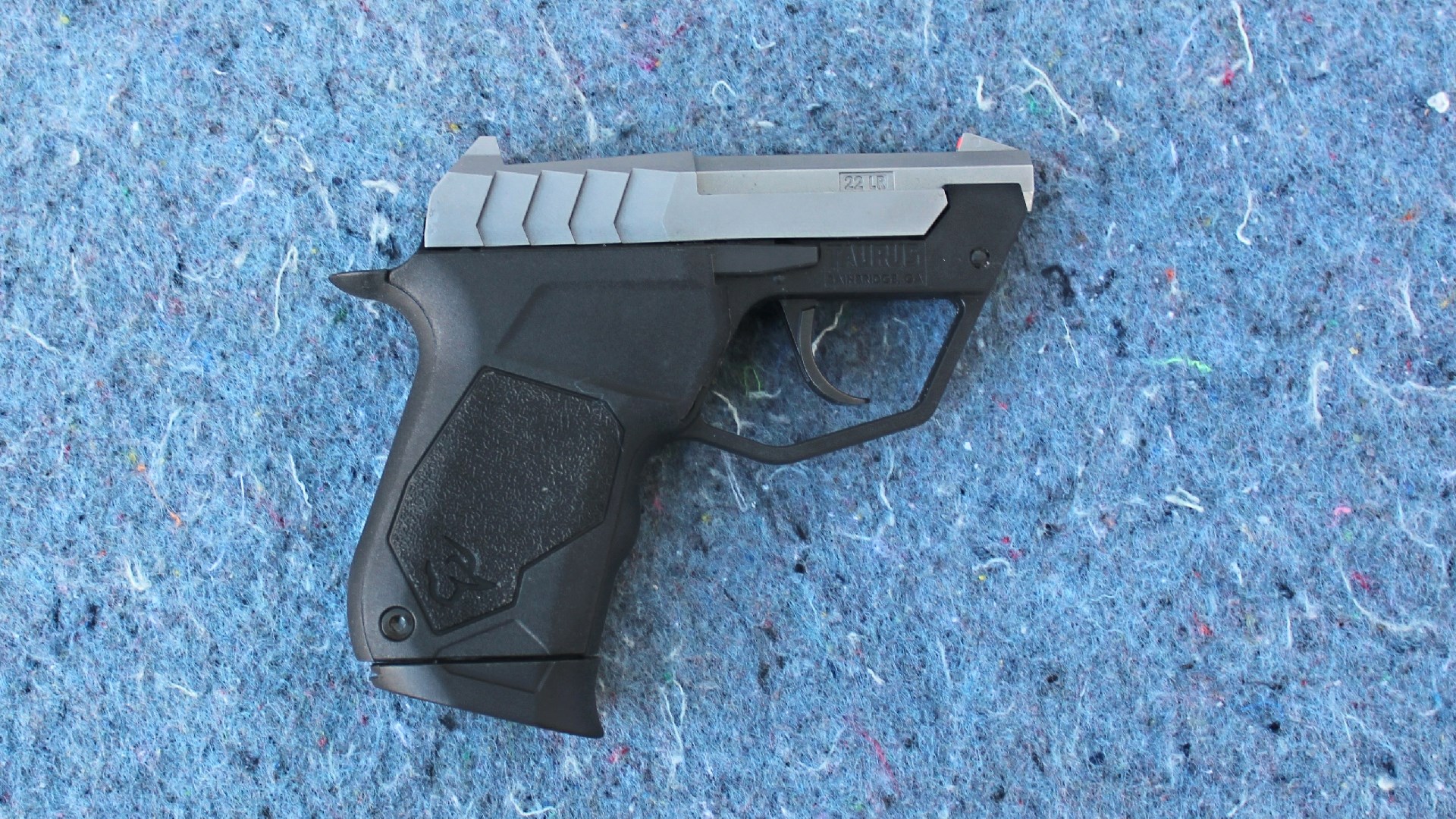
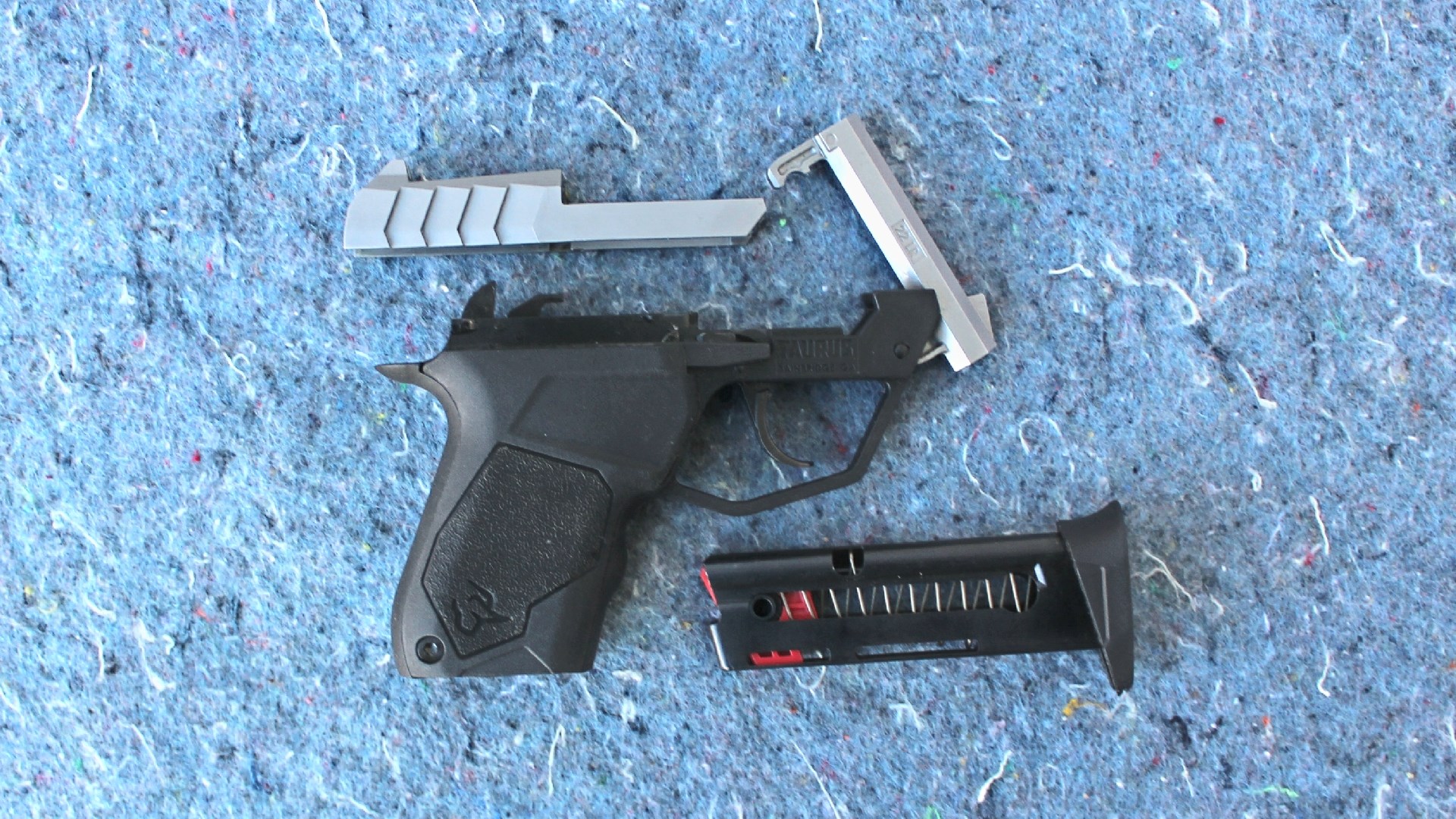
The Taurus 22TUC is a blowback-operated, semi-automatic pistol chambered for .22 LR. This means it has just about as simple of an action as possible for a pistol. There is no extractor or recoil assembly in the slide. The tip-up barrel remains fixed in place when the pistol is fired. It is the force of the cartridge case being driven backwards that clears the spent cartridge case from the barrel’s chamber and cycles the slide so as to chamber a fresh round from the single-stack magazine.
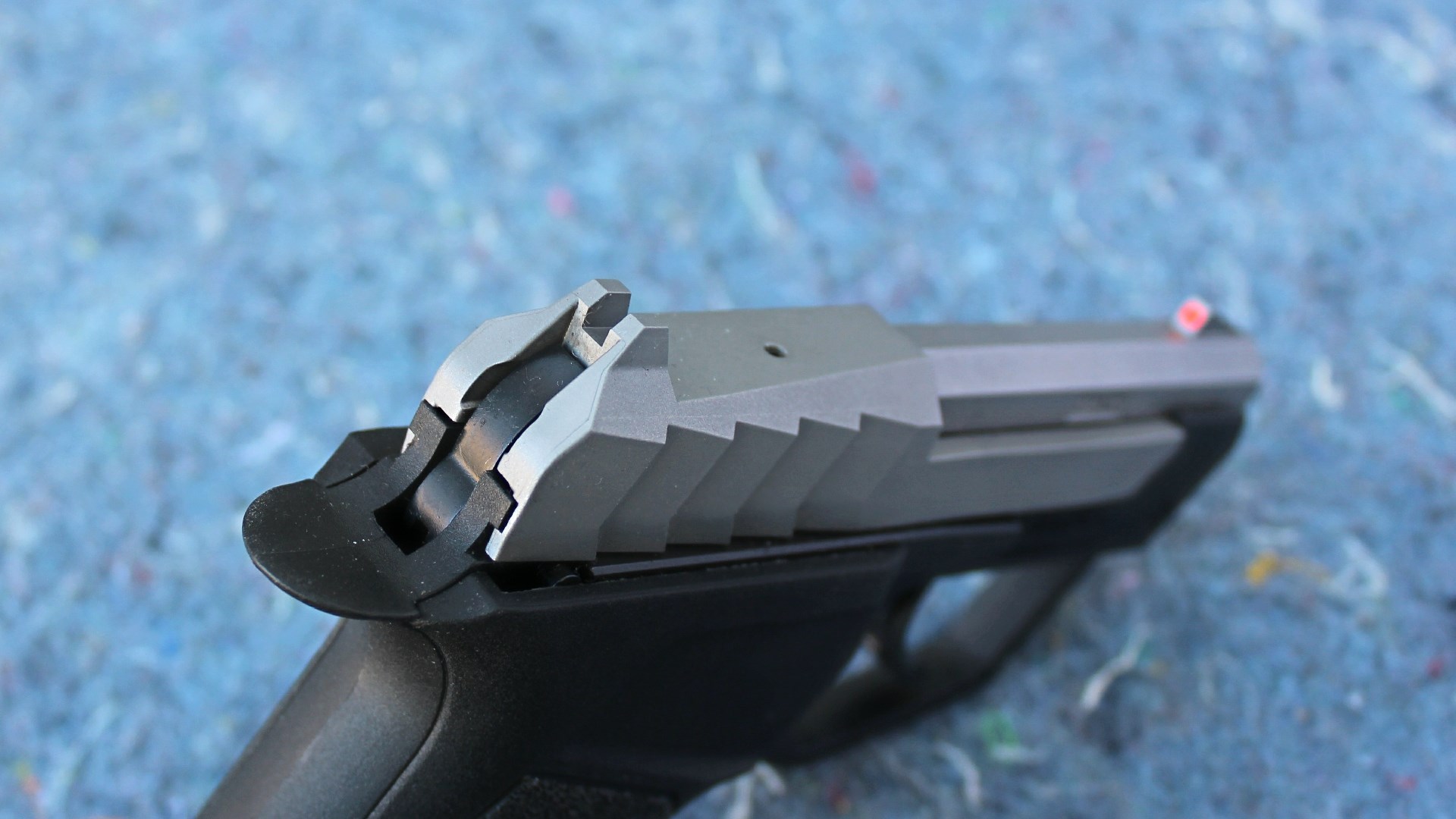
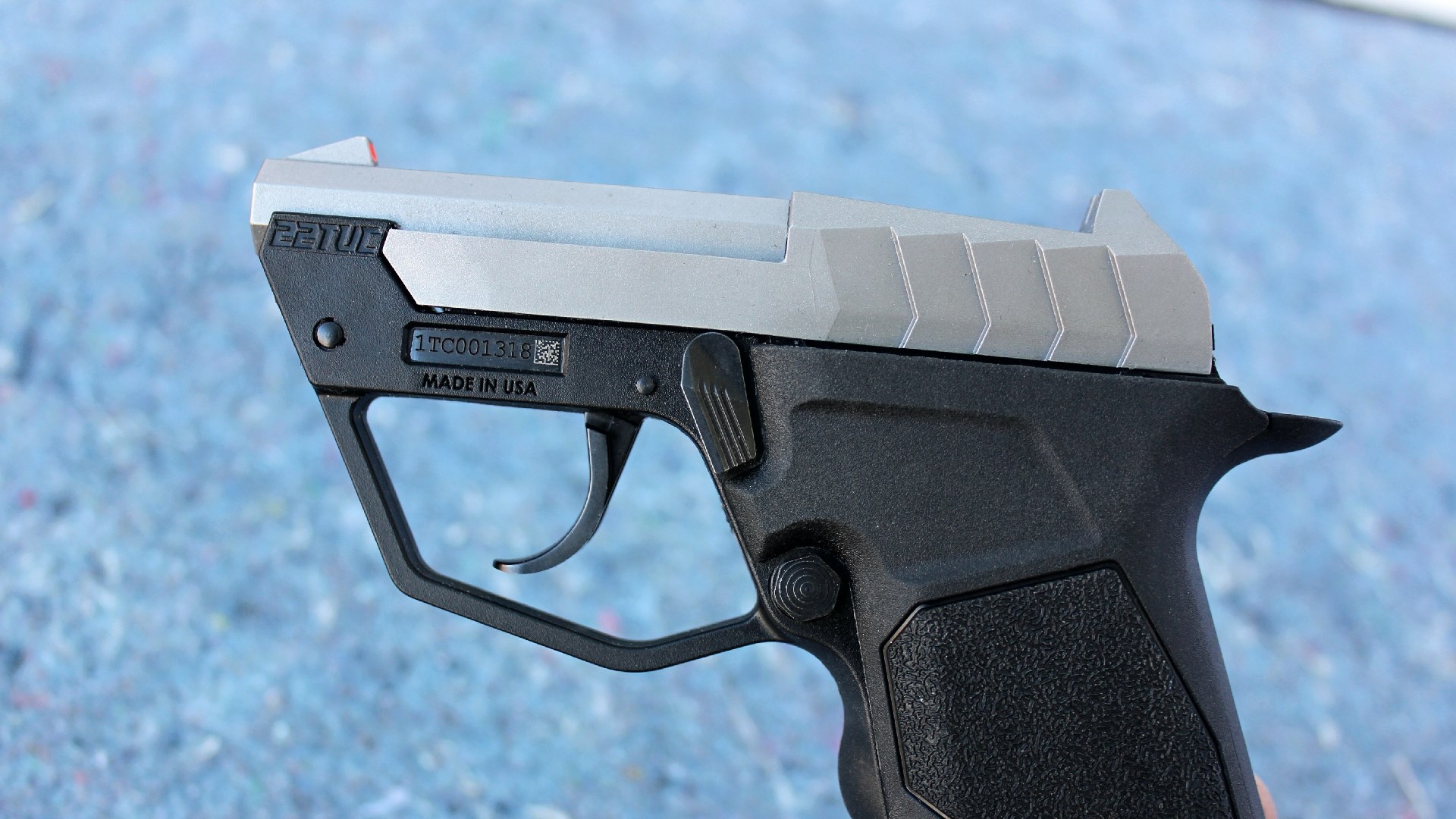
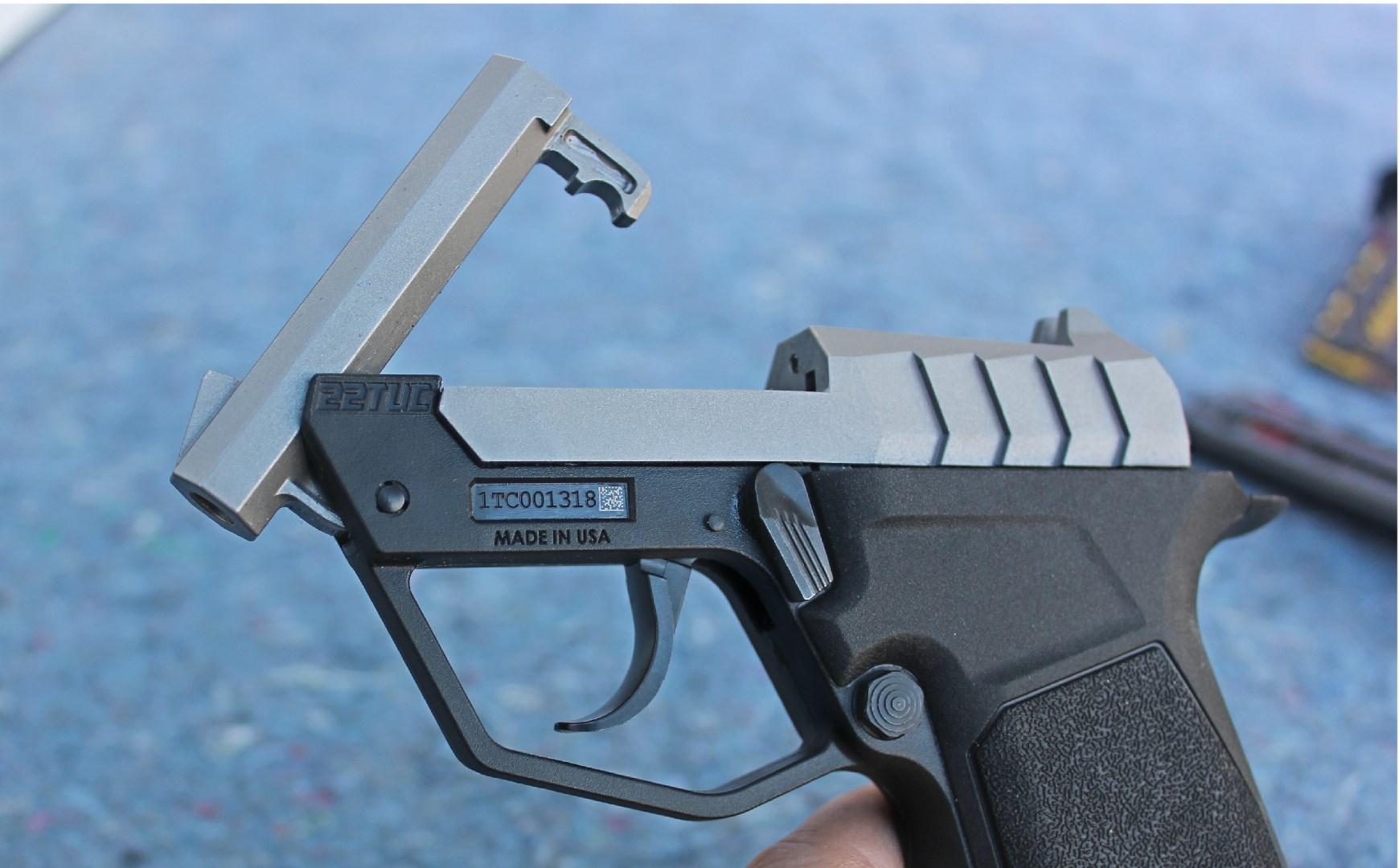
This pistol is made with a 2.5-inch barrel and slide formed from stainless steel with either a matte black or natural silver finish (shown). The octagonal barrel’s spring-supported pivot point is pinned into the polymer frame just above the front of the trigger guard. The fixed orange-dot front sight is paired with the slide’s integral square notch rear sight. Thankfully the sights are tall enough to be useful without interfering with this gun’s pocket-sized design.
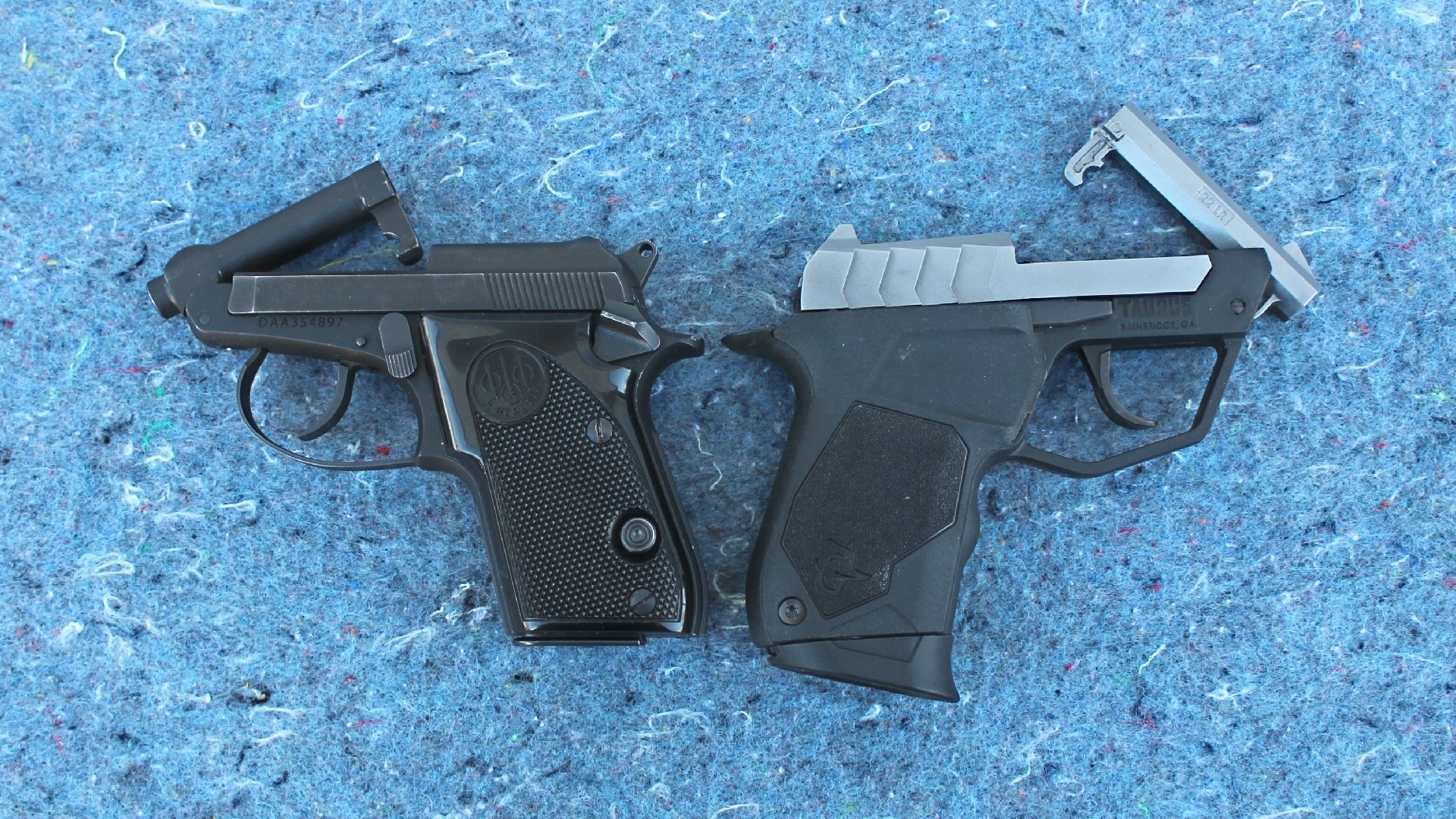
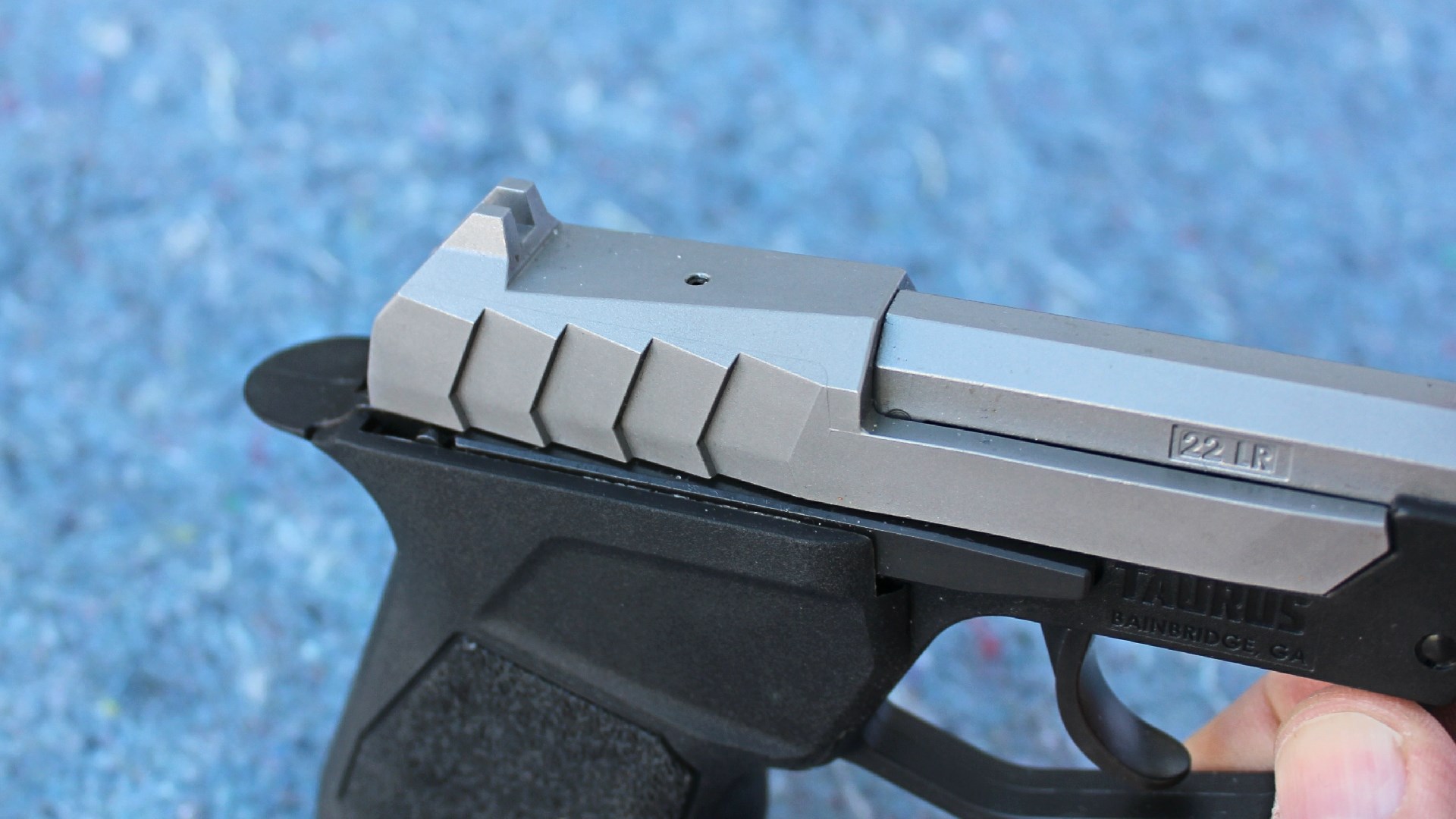
The slide’s rear cocking serrations are some of the deepest and most aggressive that I’ve worked with on a pistol, which proved to be a good design choice. The almost oversized slide cuts seemed odd choice for a pistol with a tip-up barrel at first. The frame’s left-side barrel release is pressed forward so that the barrel’s chamber pops up and away from the slide. This feature can be used to insert a cartridge or to verify the state of the chamber without cycling the slide.
However, there are shooters, like me, who have years of muscle memory development around racking the slide when a pistol runs to empty. It may also be necessary to pull back on the slide in order to clear a malfunction. With these factors in mind, I cycled the slide manually to reload in the course of testing and found the aggressive slide serration to be most useful, if not necessary, when pulling it back due to the slide’s small size and fairly heavy resistance.
The black polymer frame is molded over an aluminum chassis that provides the support for the barrel’s hinge pin, the fire control group and a pair of tiny rails for the slide. The angular trigger guard is generously sized and houses a deeply curved, smooth faced steel trigger. The octagonal push-button magazine release is located on the left side of the frame where the trigger guard meets the grip’s front strap.
The trigger bar is positioned on the right side of the frame to cycle the bobbed, double-action-only exposed hammer. The trigger pull is relatively long, like a double-action revolver, with a fairly heavy pull weight of 8 pounds, 5 ounces, according to a Wheeler Engineering digital trigger gauge. The heavier trigger serves two roles.
First off, it guarantees the hammer will deliver a good, solid strike to the firing pin for more reliable ignition of .22 LR cartridges’ rimfire primers. Secondly, the heavier trigger requires a deliberate pull in order to fire the pistol, which serves as the gun’s only external safety mechanism. That being said, the trigger pull is clean, smooth and consistent. As a double-action revolver fan, I found it surprisingly pleasant to work with.
At first glance, the grip frame appears to be a one piece design. But a closer look reveals that the left and right side textured black polymer grip panels are removable. The grip’s front strap has a subtle singular finger groove, more of a bump really, with an effective beavertail extension at the top of the back strap.
With a slide width of 0.75 inch and a grip width of 1.05 inches, the grip frame looks to be a bit oversized for a small-caliber, single-stack pistol. That is, until you pick it up. The grip is actually sized and contoured to be comfortable to use with a variety of hand sizes. It’s hand-filling without feeling bulky, and the magazine’s baseplate is shaped to support the little finger of the shooting hand. As a result, unlike some pocket pistols, this is one that is actually enjoyable to shoot for extended practice sessions at the shooting range.
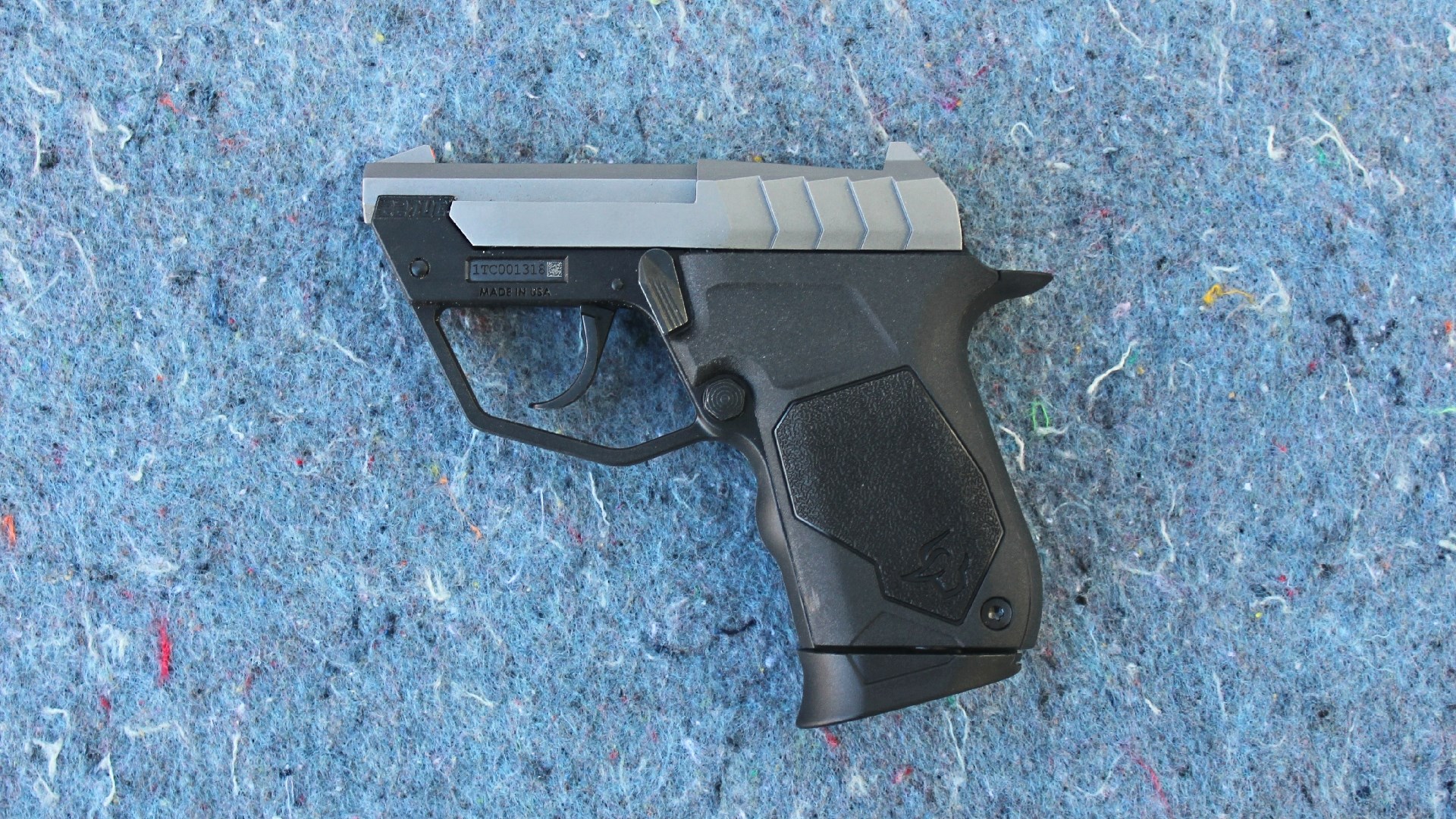
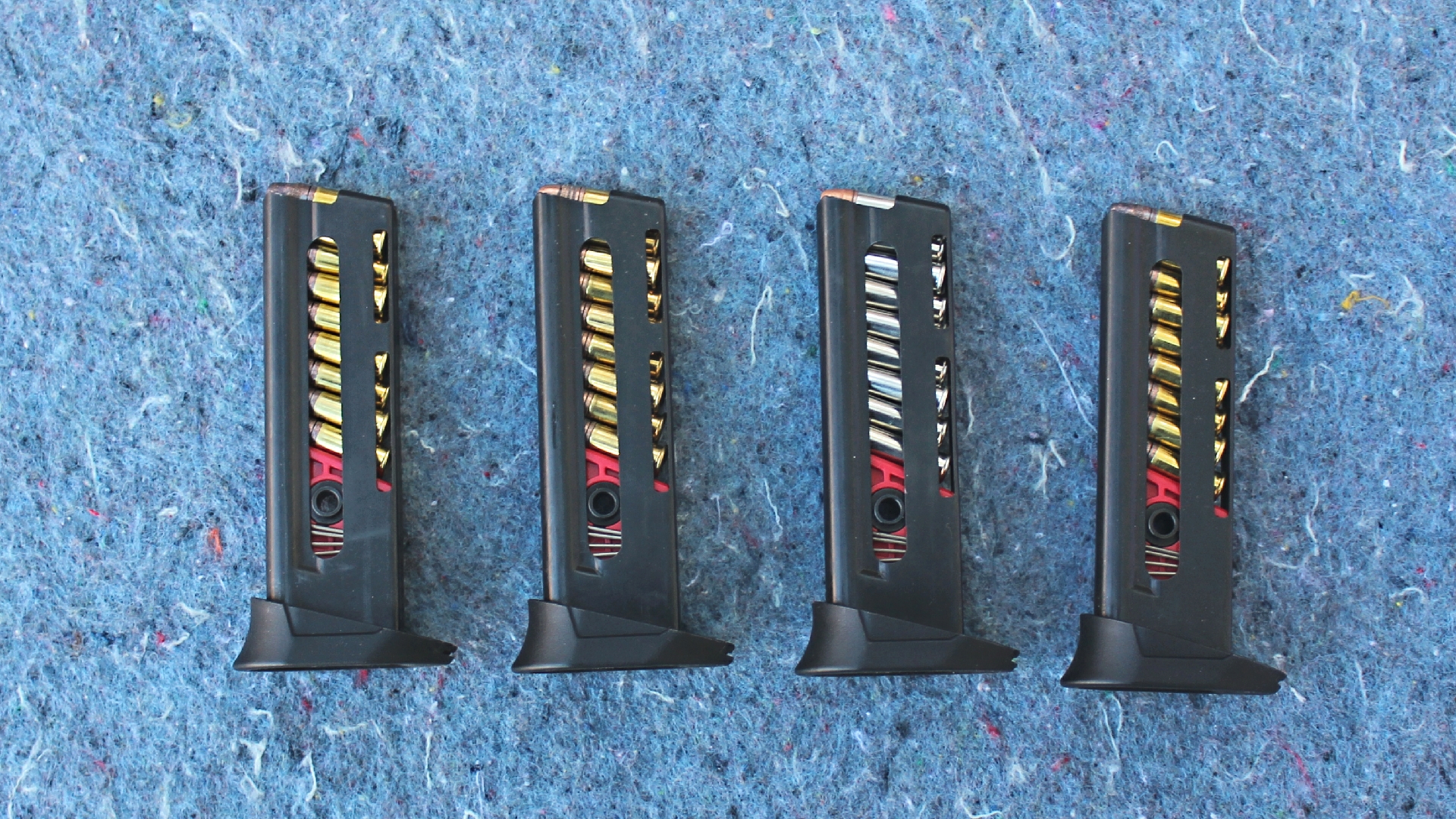
Weighing in at just 10.3 ounces with an empty magazine, the 22TUC exhibited a clean, neat fit and finish throughout without the rough spots or mold marks common to some of the less-expensive polymer pistols on the market. As mentioned earlier, the slide is harder to cycle manually than some models but it is properly fit with a smooth feel. One nine-round, blued-steel magazine is provided. It has a bright red polymer follower and a ported steel follower support. This support can be pinched to pull down on the follower when loading. It will also accommodate a pin punch or similar tool for those with less hand strength.
Pistols chambered for .22 LR are, in general, among the most finicky semi-automatics on the market when it comes to ammunition selection. This is especially true when it comes to the pocket-sized guns like this one. This is due in no small part to the .22 LR cartridge’s popularity and flexibility. Ammunition is available with an impressively broad selection of grades (plinking to premium hunting loads) bullet weights, shapes, coatings and velocity ranges.
And as the cartridge’s name implies (LR stands for Long Rifle), the vast majority of loads available are designed for use in long guns with 16-inch to 20-inch barrels. The 22TUC has a 2.5-inch barrel. After deducting the nominal cartridge case length of 0.613-inch, that leaves about 1.89 inches of rifled bore for the powder charge to develop. As a result, bullet energy levels will drop significantly when fired from pocket pistols, resulting in reduced pressure levels which may or may not cycle the slide reliably.
It’s only been in the last few years that we’ve seen just a handful of .22 LR loads designed specifically for small pistols with 2-inch or shorter barrels. And don’t expect the same degree of accuracy potential from a pocket-sized .22 LR when compared to the sporting pistols outfitted with 4-inch or longer barrels. The TX22 Black T.O.R.O., released in 2024, can comfortably print five-shot groups in the 2.5-inch range at 25 yards. The 22TUC prints similar group-size averages but at a distance of 7 yards.
Based on manufacturers’ recommendations, and my own experience with several different .22 LR pistols, a good rule of thumb to use for ammunition selection is to stick with high-velocity .22 LR loads with 36-grain to 40-grain bullet weights. Subsonic and standard-velocity loads usually do not generate enough energy to cycle the slide. Hyper-velocity loads usually work just fine but they can cost more without providing better performance or accuracy than the high-velocity rounds.
It should be noted that, in some cases, lighter bullets can cycle reliably when using certain specialty loads. The CCI Stinger has long been a preferred daily carry round for small, defensive .22 LR pistols. In this case, the 32-grain copper plated hollow point had an average muzzle velocity of 1,005 fps for 72 ft-lbs. of muzzle energy. It would have been among the top performers in this test, if not for some failures to feed in this particular gun (more on that later).
The lightest bullet tested was the Federal Punch Personal Defense 29-grain nickel-plated flat nose, which proved to be utterly reliable and the fastest round in the test. However, this particular cartridge is one of those few .22 LR rounds with a powder charge formulated specifically for short-barrel handguns.
With these ammunition parameters in mind, it’s still safe to say that all bets are off when it comes to firing your favorite .22 LR rifle rounds through a pocket pistol. All of the high-velocity loads selected for this pistol test have performed beautifully in a variety of rifles and carbines over the years. But two failed badly enough with this gun to be dropped from the evaluation. My point is, a particular load not working well in a pocket pistol is not a critique of the ammunition maker or even that particular load. It just shows that the load in question is not a good fit for this short-barreled semi-automatic.
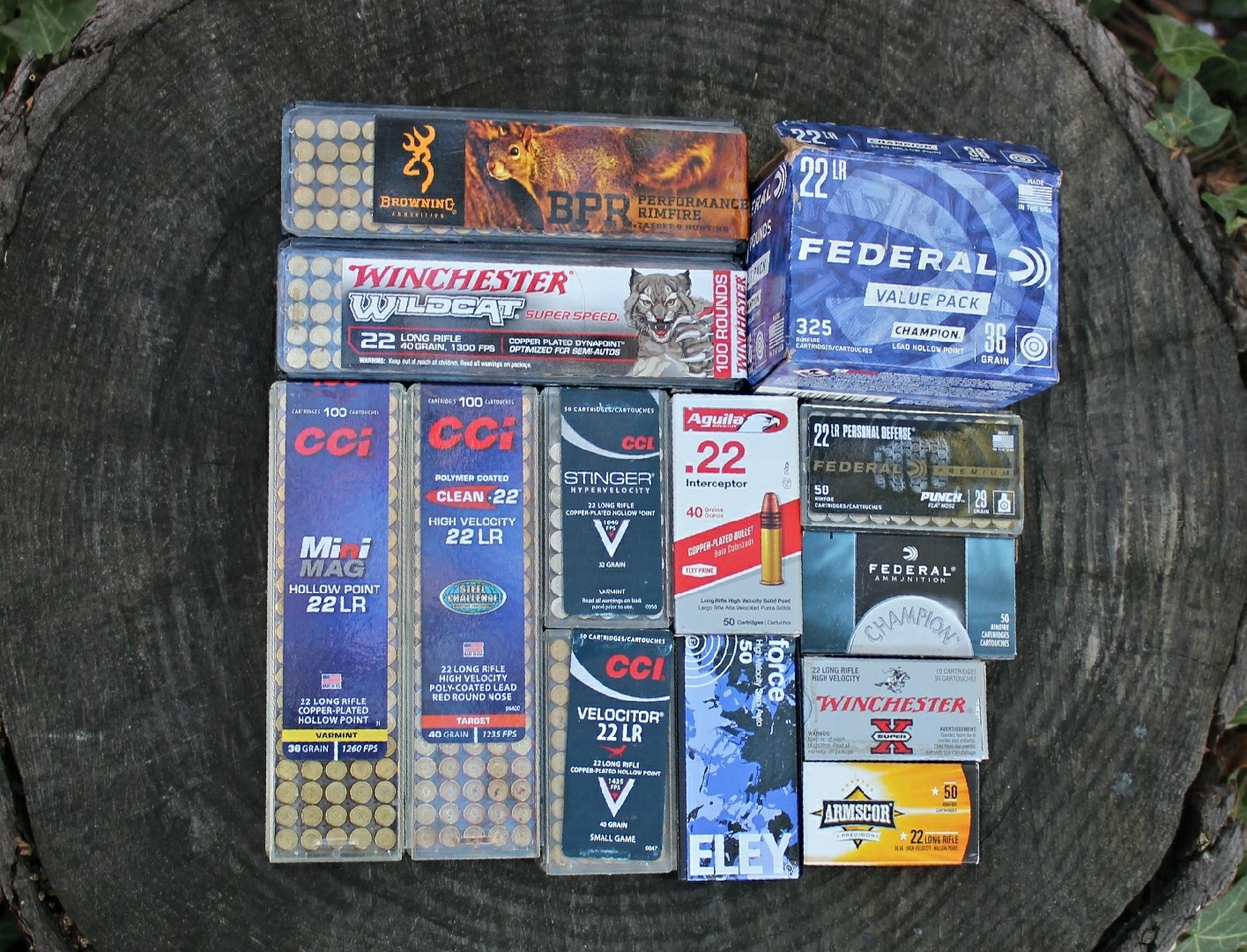
Because previous Taurus rimfire pocket pistols have exhibited so-so reliability, I decided to give the 22TUC a very thorough workout. This consisted of firing more than 350 rounds without cleaning the gun, using a total of four factory magazines. Test ammunition included 13 different high-velocity loads from Aguila, Armscor, Browning, CCI, Eley, Federal and Winchester seen in the picture below. The notable absence of any Remington .22 LR loads was due solely to the fact that the rounds I had on hand at the time of this writing were of the subsonic and standard-velocity varieties.
Here is a summary of the ammunition reliability results:
- CCI Clean-22 Target would not feed reliably into the chamber from any of the magazines. After mashing half a dozen rounds, it was dropped from further testing.
- CCI Velocitor produced five jams in the first 15 rounds fired, so it was dropped as well.
- At least 25 rounds of each of the remaining 11 loads were fired with some loads shot more extensively, including the Browning load (40 rounds) and the Federal Champion bulk box load (~100 rounds).
- CCI Stinger exhibited three failures to feed from the bottom of magazine No. 2 very early in the testing. However, there were no other problems with that magazine or that load later on, so it could possibly have been the magazine needing to break in.
- CCI Mini Mag produced one failure to feed in which the bullet was bent against the chamber. My best guess is that this singular round was a little out of spec.
- Of the ~100-rounds of the Federal Champion bulk rounds fired, two malfunctioned. One had a bad primer, which is not uncommon with budget priced plinking loads. The other produced a last-round stovepipe with the base of the cartridge case pinched between the slide and the chamber. It fell away when the next magazine was loaded and a fresh round chambered, meaning it did not impede the operations of the pistol.
- The remaining eight loads operated without any failures, jams or malfunctions.
It’s hard to miss the pattern here. This particular pistol is not all that fond of CCI ammunition. But this is unlikely to be a universal problem for this series. I’ve seen this kind of ammunition brand sensitivity before where a particular gun does not get along with a given manufacturer’s offerings while another pistol of the same make and model will fire those loads without any issues.
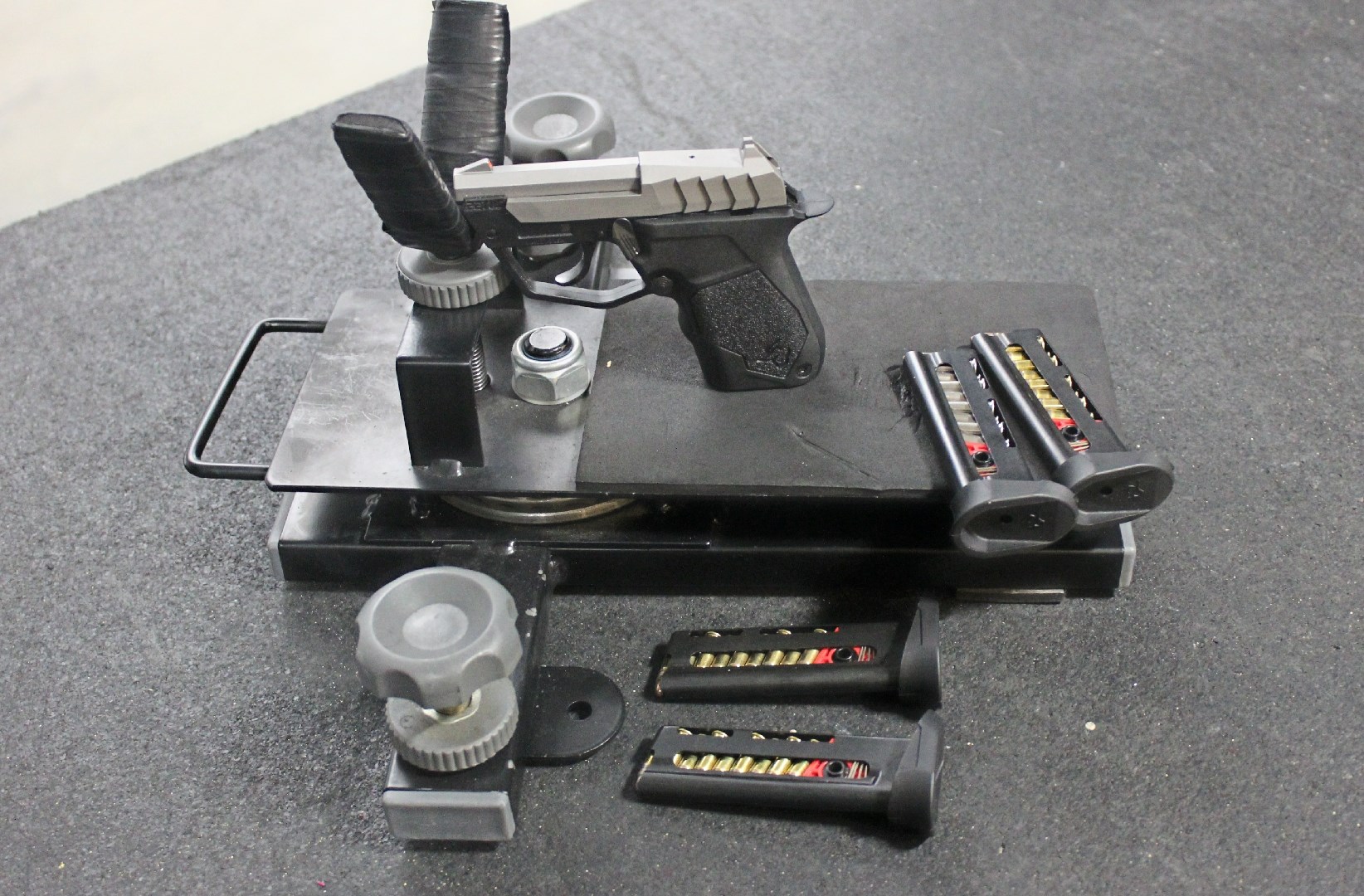
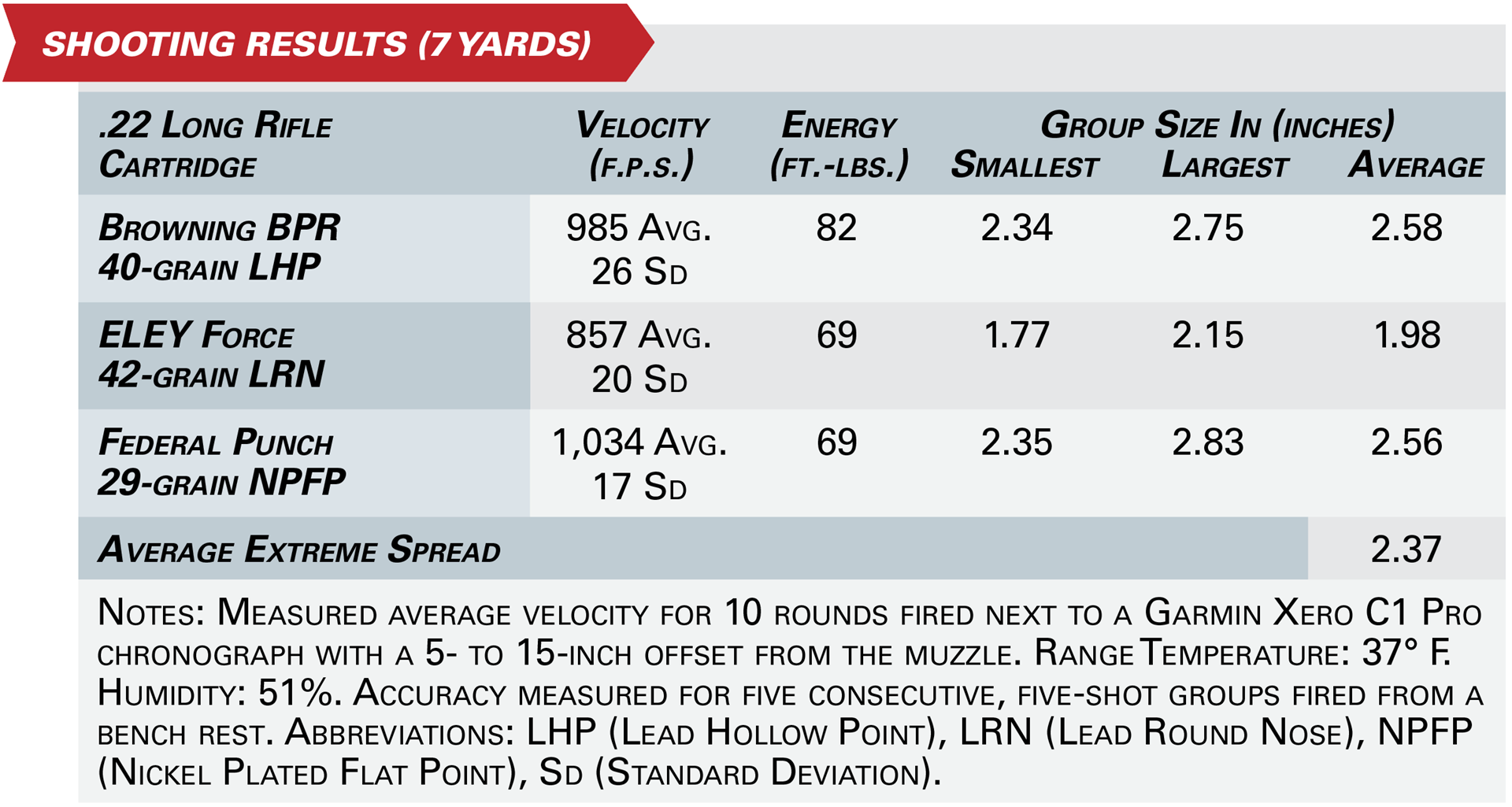
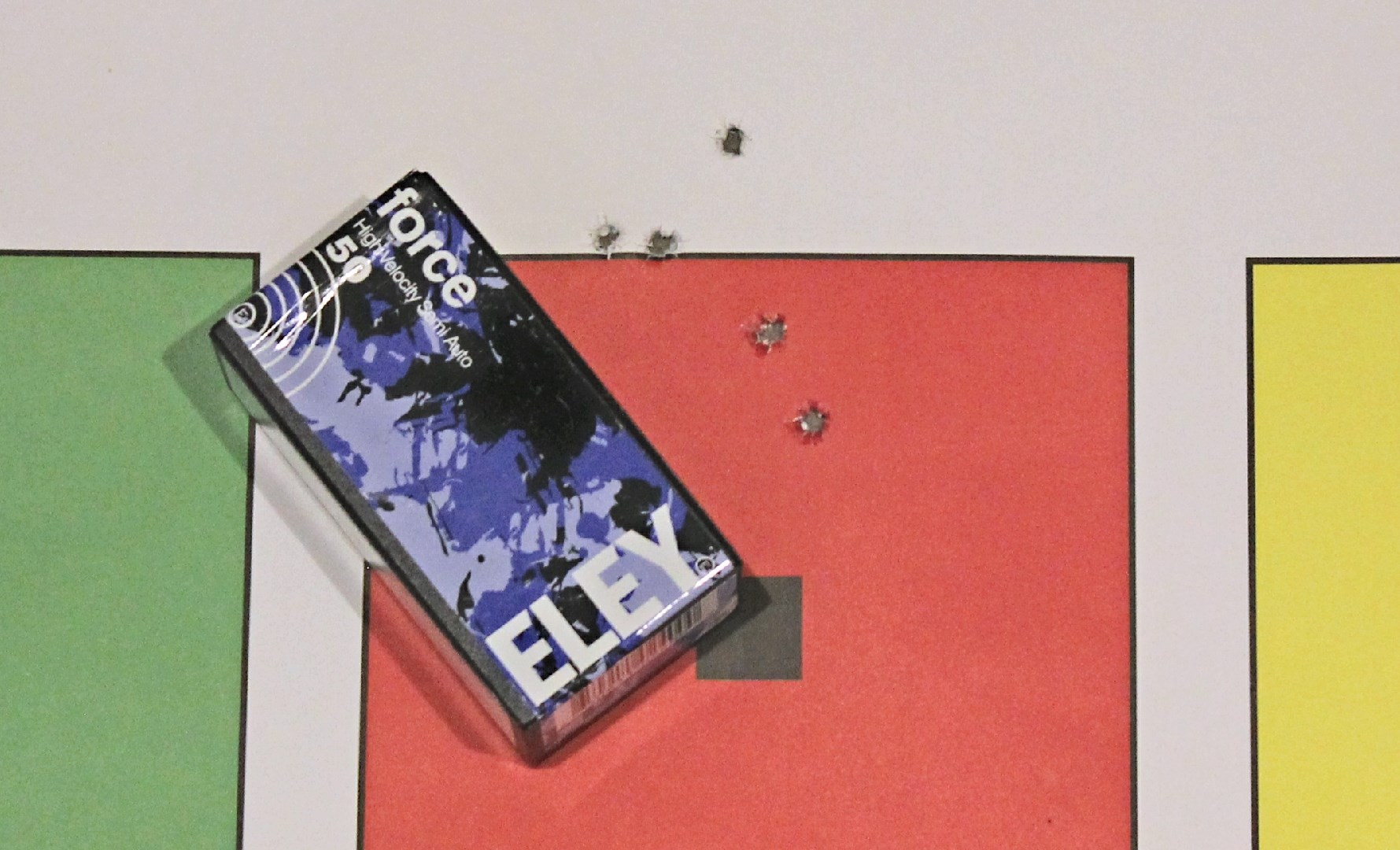
Bullet velocities were measured for 10-shot strings using a Garmin Xero C1 Pro chronograph with bench-rested five-shot groups fired at 7 yards. I went through the range results for the eight loads that operated flawlessly to find the top performers. Here are the full range results for the three top performers, including the highest muzzle energy level, the most accurate and the fastest load:
The rimfire micro-compact pistols have always, and probably always will be, controversial options for concealed carry and personal defense due to their limited performance potential. Nevertheless, guns like the Taurus 22TUC generate mild levels of felt recoil, they are affordable to purchase, less-expensive to feed and comfortable to use at the shooting range. As a result, there continues to be a demand for them.
I stepped into this evaluation of the 22TUC with concerns about its dependability. But more than 350 rounds later, this pistol has proven to be reliable and enjoyable to use, despite my best efforts to prove otherwise. Whether or not a little .22 is a good fit for your needs is up to you to determine. But if this type of gun is what you are looking for, then the 22TUC is well worth your consideration.
Read the full article here