
By now, anyone who has ever cocked a hammer or pulled a trigger knows that this year marks our great nation’s 250th anniversary, a semiquincentennial celebration centered upon a number of inalienable rights, not the least of which is the right to keep and bear arms. As part of America’s festivities this year, the Second Amendment has been recognized by a number of firearm manufacturers, all of which have created limited-edition tributes to this momentous occasion.
However, most of these have been patriotically themed versions of currently made guns. But as a gunwriter who has primarily based his decades-long shooting and writing career on firearms that can trace their lineage to previous eras, I felt compelled to salute our country’s two and a half centuries of existence in a way that was not only historical, but deeply personal, one that would not only symbolize America’s 250th anniversary but would epitomize our nation’s earliest fight for freedom.
Obviously, it had to be a flintlock, and during the period of the Revolutionary War, colonists used smoothbore fowlers, longrifles and muskets for hunting and self-defense, firearms that were ultimately repurposed and drafted into battle by patriots fighting to be free of the tyrannical rule of King George III and forge the foundation for a new nation. Consequently, most villages and towns required that all able-bodied citizens keep a serviceable longarm on hand at all times. In fact, one of the earliest precursors to our Second Amendment was a 1658 Virginia statute that declared, “…every man able to beare armes have in his house a fixt gunn.”
If I were a writer during America’s revolutionary years and no doubt inspired by individuals such as Benjamin Franklin and Thomas Paine, I might have worked as a journalist or historian, chronicling events of the day. As such, unlike agrarian endeavors, I would not need a multi-purpose fowler, nor would I have carried a musket like the militia. No, I would have had a longrifle that, unlike smoothbore fowlers and muskets, was capable of long-range accuracy and thus, suitable for the white-tailed deer and black bear in the area, as well as for battles against the Redcoats and Loyalists who sided with the British.
Now I had to decide what type of longrifle and who would make it, for I had long ago affirmed that I would never drive, fly or shoot anything that I had built myself. It’s not that I am unfamiliar with tools, it’s just that I am not very good with them (I’ve been accused of needing instructions just to use a hammer). Besides, there are those in gunmaking circles who are much more skillful that I could ever be.
After conferring with colleagues in the firearm industry, coupled with a thorough surfing on the internet, I discerned two crucial facts: First, having a qualified craftsman build a longrifle from scratch can take as long as three years, and second, buying a ready-made, high-quality longrifle can cost anywhere from $3,000 to $7,000—or more. As I wanted this rifle to celebrate our country’s semiquincentennial in historically correct style, I had both time and money challenges facing me.
However, after reading numerous online muzzleloading forums, one name kept resurfacing: Jim Kibler of Kibler Longrifles (kiblerslongrifles.com). I soon discovered that Kibler’s muzzleloading kits are not only historically authentic but are the easiest to build, even for those who have never built a muzzleloading rifle before.
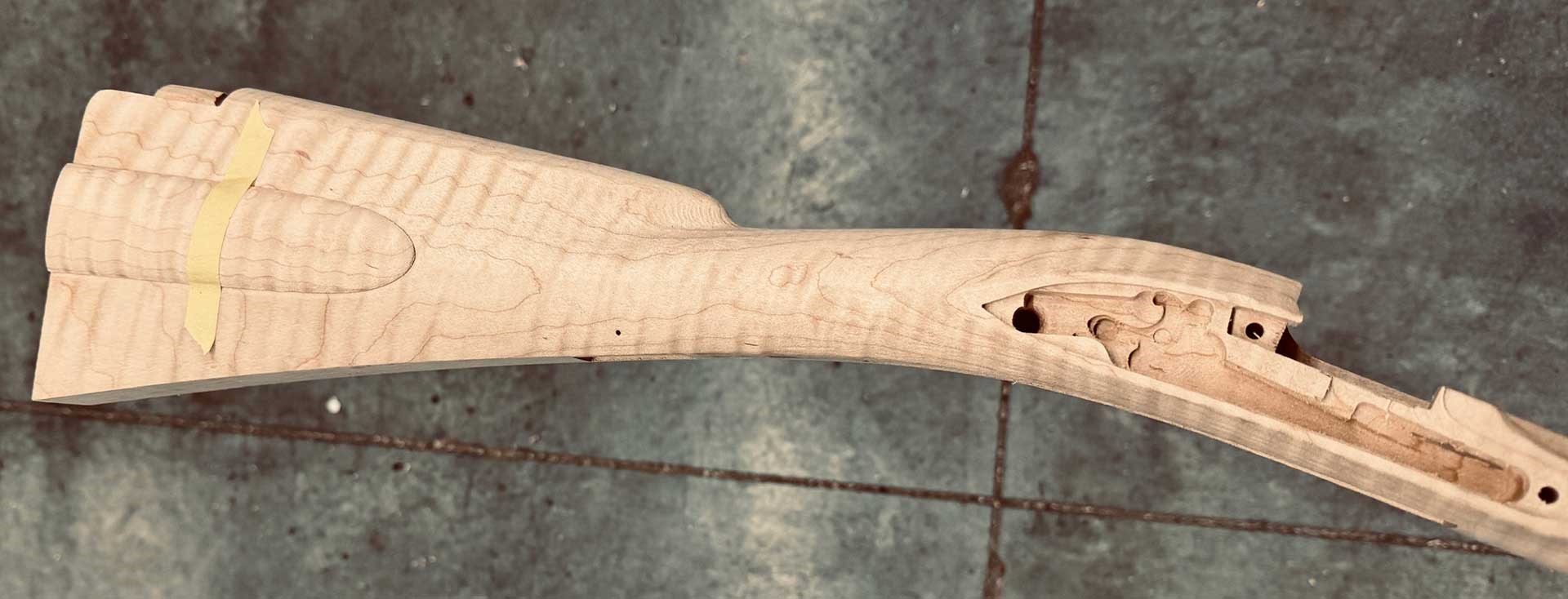
That’s because Kibler, who has been building muzzleloading rifles since he was 14 and is well-known and respected in today’s muzzleloading community, has used his engineering background to pioneer complete CNC kits that are ready-made to such close tolerances—including having the ordinarily time-consuming lock mortise and barrel channel already CNC-carved into the stocks—that minimal fitting is required.
Every hole is pre-drilled and all parts, including, pins, all cast and machined furniture, and Kibler’s own Ketland or English round-faced locks, are supplied. Although some reviewers have referred to Kibler’s kits as being “snap-together,” that is an over-simplification. You still need to do some elementary wood sanding and metal filing, as well as final stock staining and metal finishing (Kibler sells these additional finishing supplies on his website). Plus, there are numerous YouTube videos (the best are done by Jim himself) that take you through the entire kit building process, step by step.
Using his intimate knowledge of American history, Kibler currently offers six CNC kits that he designed, of which the Woodsrunner ($1,750), Fowler ($1,560) and the Colonial American Longrifle ($1,375) are period-correct for the Revolutionary War era. Fancy maple, walnut and cherry wood grain upgrades are available, as well as optional CNC stock relief carvings.
In addition, for an extra cost, your kit can be shipped already assembled but “in the white,” meaning you will still have to do some sanding and, of course, wood and metal finishing. It should be noted these extra options may delay delivery of your Kibler kit, as each is pretty much built to order and are normally backordered one to two months. But, occasionally, Kibler offers “Quick Ship” kits of certain models that for one reason or another (slight wood imperfections, overruns, etc.) are available for immediate sale.
For me, of course, the choice of Kibler’s kits was obvious; it had to be the Colonial American Longrifle, with its handsome 1760-1770s stock profile reminiscent of flintlocks from the Shenandoah Valley, and its long 43¼-inch tapered and slightly muzzle-flared barrel. Although .50-caliber rifled and both rifled and smoothbore .54-caliber barrels are offered, I opted for .50 caliber as ideal for a flintlock of this style, especially when backed by 85 to 90 grains of FFG black powder for the deer I hoped my rifle might eventually encounter. The barrel is made by Green River, with Kibler machining the exterior profile, while my stock exhibited a fancy maple upgrade from Kibler’s standard wood.
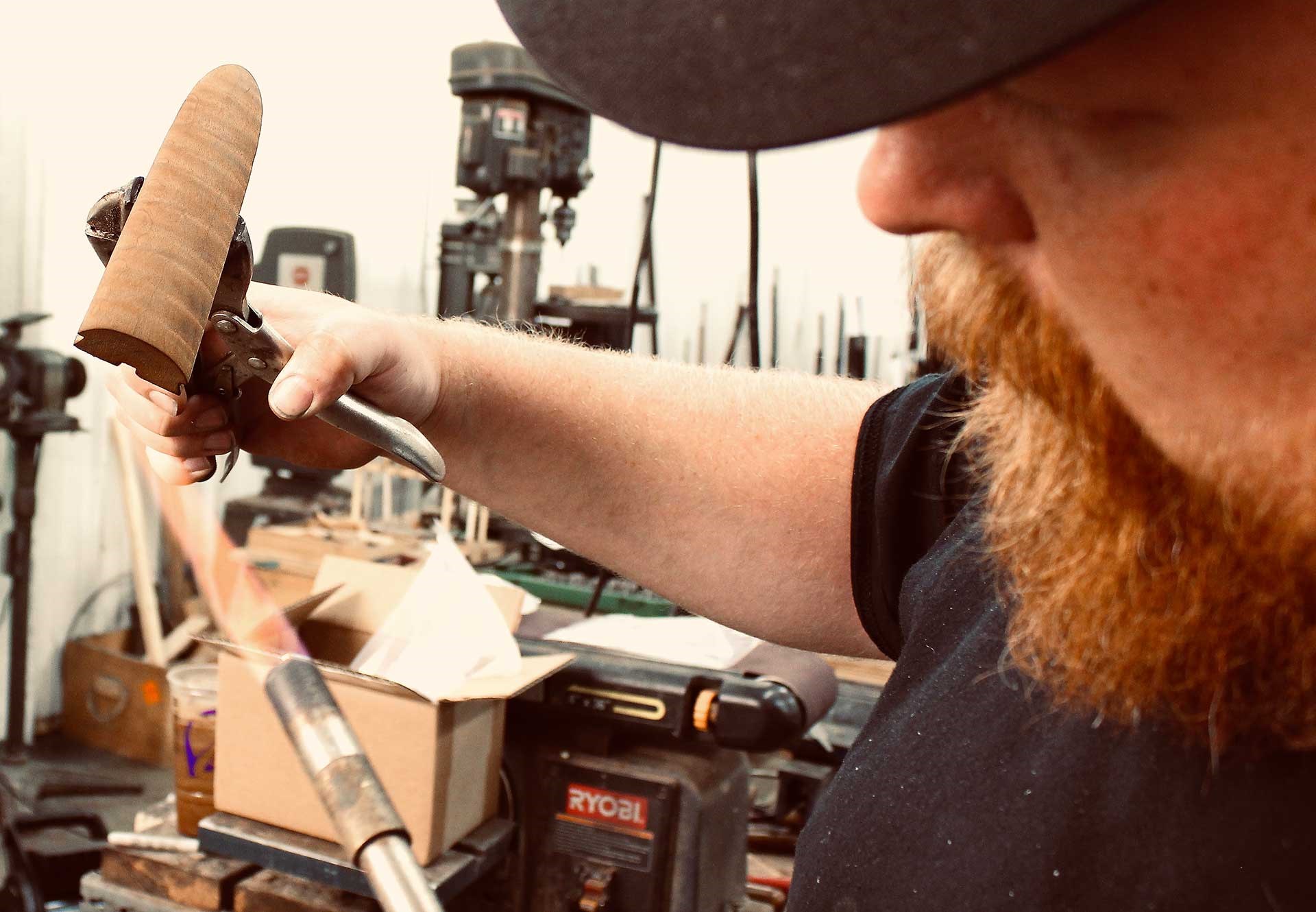
With images of my future rifle floating in my head, my next decision was to select a skilled builder. Jim Kibler kindly offered a few suggestions of talented individuals who had built his rifles for other customers, but for me, after careful deliberation, there emerged only one choice, David Stavlo, who with his wife, Danielle, own Lodgewood Mfg. (lodgewood.com), a company renowned for early American firearm restorations and David’s museum-quality recreations of 18th- and 19th-century flintlocks.
In addition, David currently offers assembly and finishing services for muzzleloading kits from all the major suppliers, encompassing everything from 17th-century wheellocks to Civil War muskets, as well as having built more than a dozen Kibler kits for customers.
Having viewed Stavlo’s website and after conversing with David at length, as well as with a few of my fellow gunwriters who have had Stavlo build historically correct flintlocks for them, my choice was confirmed. David’s meticulous work is not inexpensive, but there are others who charge more. And while it is often said you get what you pay for, I discovered that, with Stavlo’s penchant for perfection, you actually get more than you pay for.
Consequently, I had Jim Kibler send my Colonial American Longrifle kit directly to Lodgewood Mfg, with the admonition to David that it was not to be just assembled and stained but antiqued and finished in the manner of an 18th-century flintlock that had been used but well cared for. And given the occasion, I needed it by July 4th! Thankfully, although Stavlo was backordered, the fact that my rifle was a Kibler made my deadline possible.
“Traditionally, the most time consuming component of building a custom flintlock is fitting and shaping the stock, but all of Kibler’s kits can be assembled into shootable guns in less time than it takes to inlet a butt plate on a traditional kit,” Stavlo said. “A Kibler kit can be finished in about 12 hours, give or take.” But he also noted that on my rifle much of that time would be spent in building up the stock finish as well as a convincing aging of the parts.
“Just about any other kit that still relies on stock duplicators and (separate) cast components requires between 30 to 40 hours to achieve the same result,” David continued. “From a builder’s standpoint, the difference between Kibler’s CNC kits and other ‘traditionally-made’ kits is night and day.”
In anticipation of this article, I asked Danielle Stavlo to photographically chronicle the building of my rifle. Her first photo was notable, as it showed the long wooden shipping crate securely containing the Colonial’s barrel, stock and ramrod anchored by foam inserts, with the rest of the parts conveniently packaged in two boxes. The shipping crate itself was of such quality that David hates to throw them away; he has stacks of them all over his workshop!
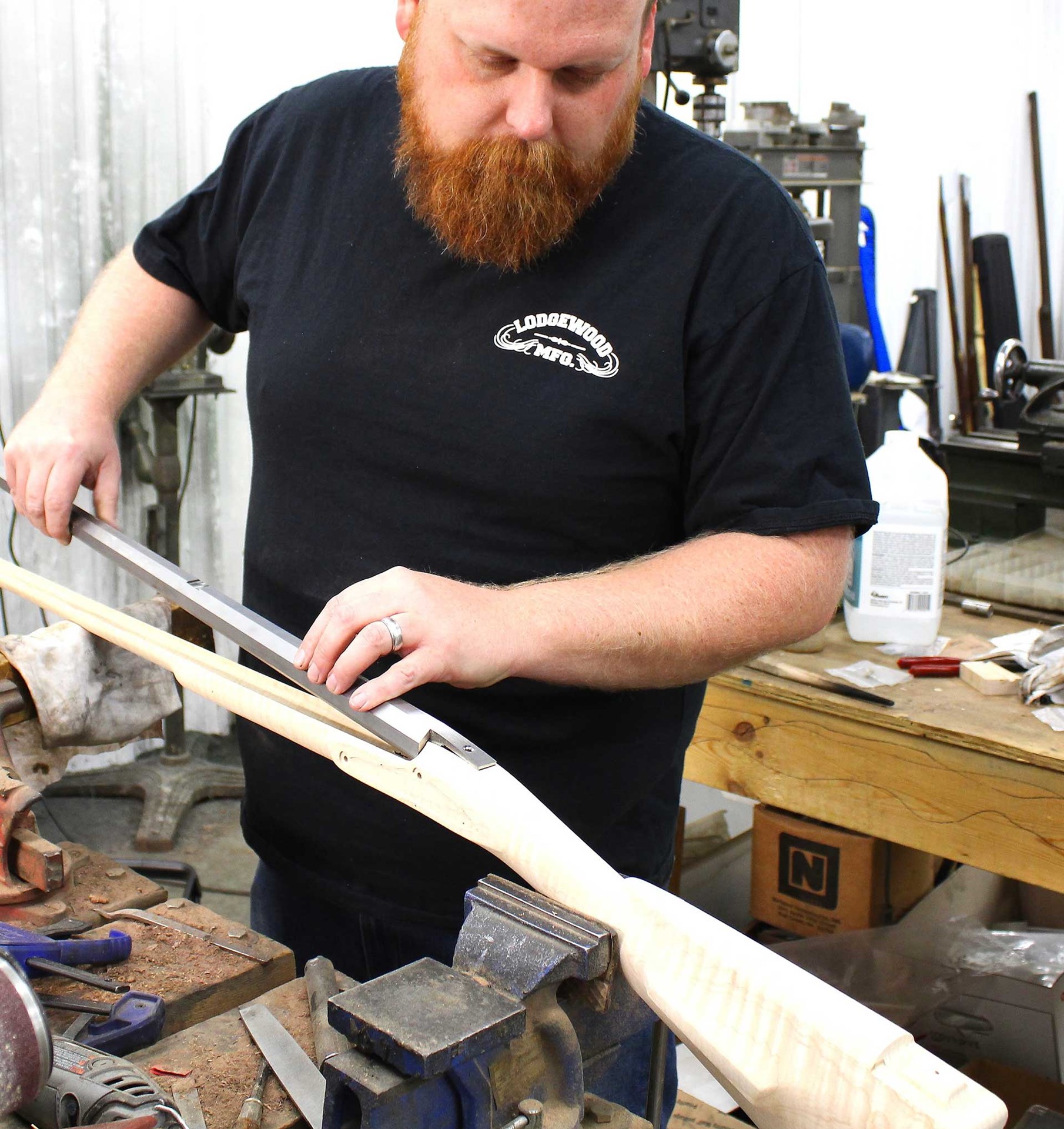
After unpacking the kit, the first thing David did was fit the barrel into the stock (which may require a slight amount of wood removal around the breech and tang) to give the long, slim forestock some rigidity along the barrel channel and thus, minimize the possibility of breakage during the building process. The rest of the rifle goes together relatively effortlessly, but first David meticulously sanded the stock with 220 grit, then moistened it to raise the wood fiber, then gave it a resanding and buffing with #0000 steel wool. This process was repeated three times before staining and antiquing the stock in order to achieve the look I wanted.
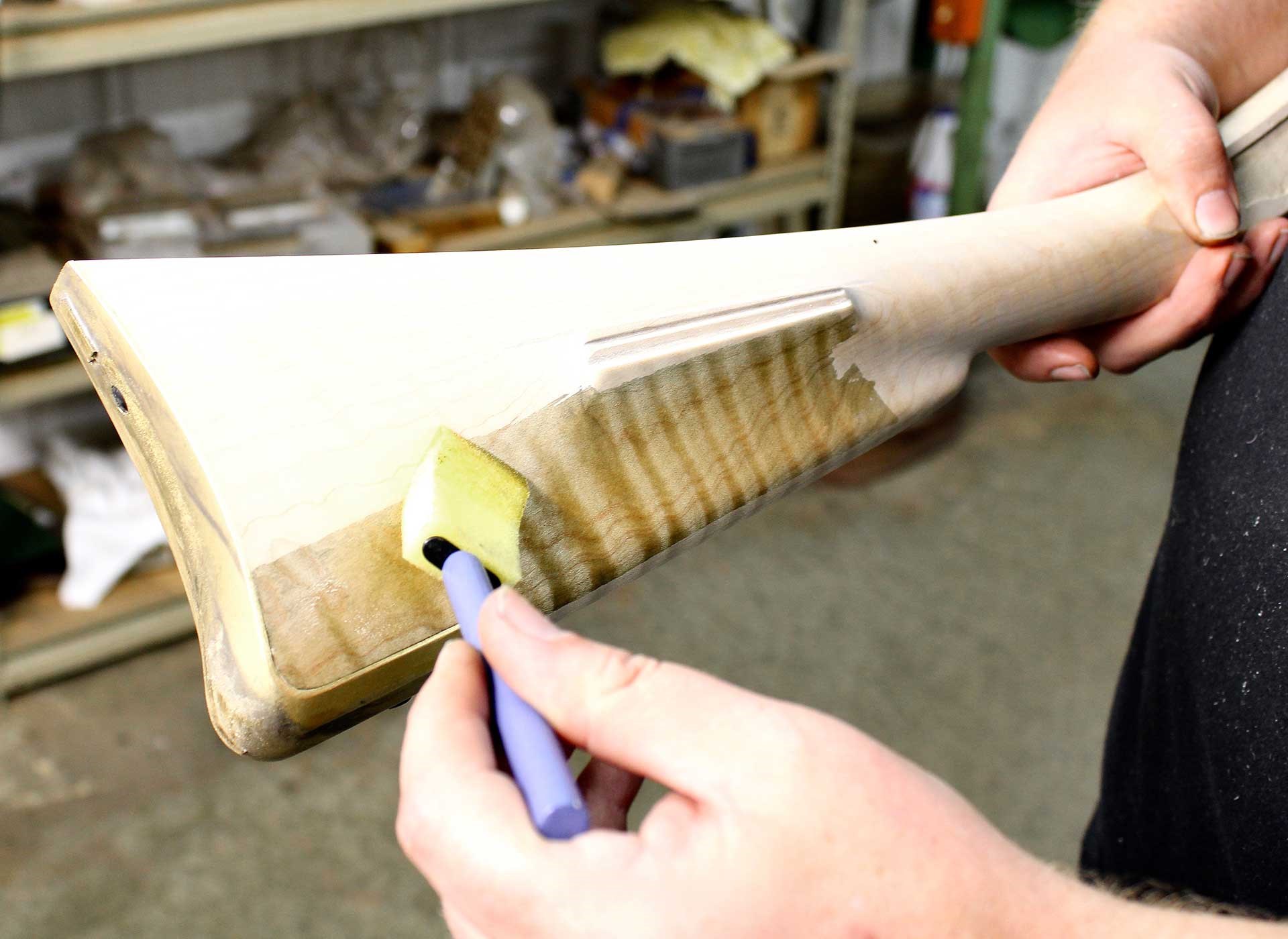
“I used a traditional iron nitrate stain, historically known as aqua fortis, which was used on original maple gunstocks,” David said. “It gives a nice reddish-brown color and is particularly good at helping the grain of curly maple really ‘pop.’ It acts through a chemical reaction within the wood, rather than just sitting on the surface, bringing out an incredible 3D depth and a natural contrast of the curl in tiger maple.”

The next step was to carefully apply heat to the stained wood via a blowtorch to start a natural reaction of the stain with the tannins in the wood, which permanently anchors the stain into the wood, rather than just coating it. Finally, multiple thin coats of a polymerized linseed oil-based finish was hand rubbed into the wood.
“Including drying time, the stock took over a full week to color and finish,” David noted, “which included ‘aging’ the stock, which required a few more hours compared to finishing it ‘as new.’ But the bulk of the work was in finishing and aging all the metal furniture, as every individual component was filed and polished by hand to achieve the correct look and feel of a traditional long rifle. I used a combination of acids to add rust and patina, building the finish up slowly, buffing it back, then adding more, over weeks. I also softened the corners of the barrel flats to simulate wear. The goal is not to fool anyone into thinking the gun is an antique but to make it look like it has a story to tell.”
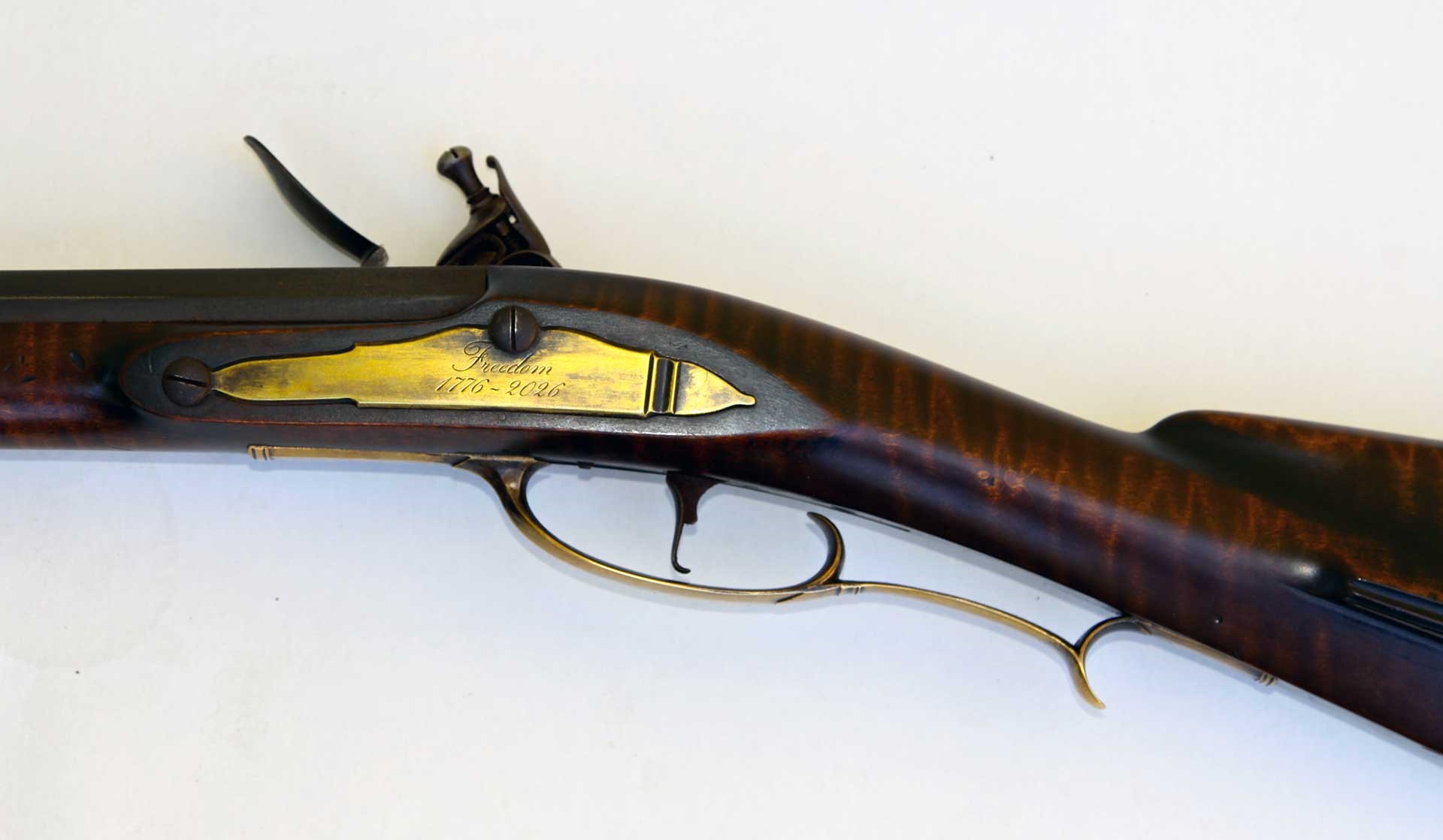
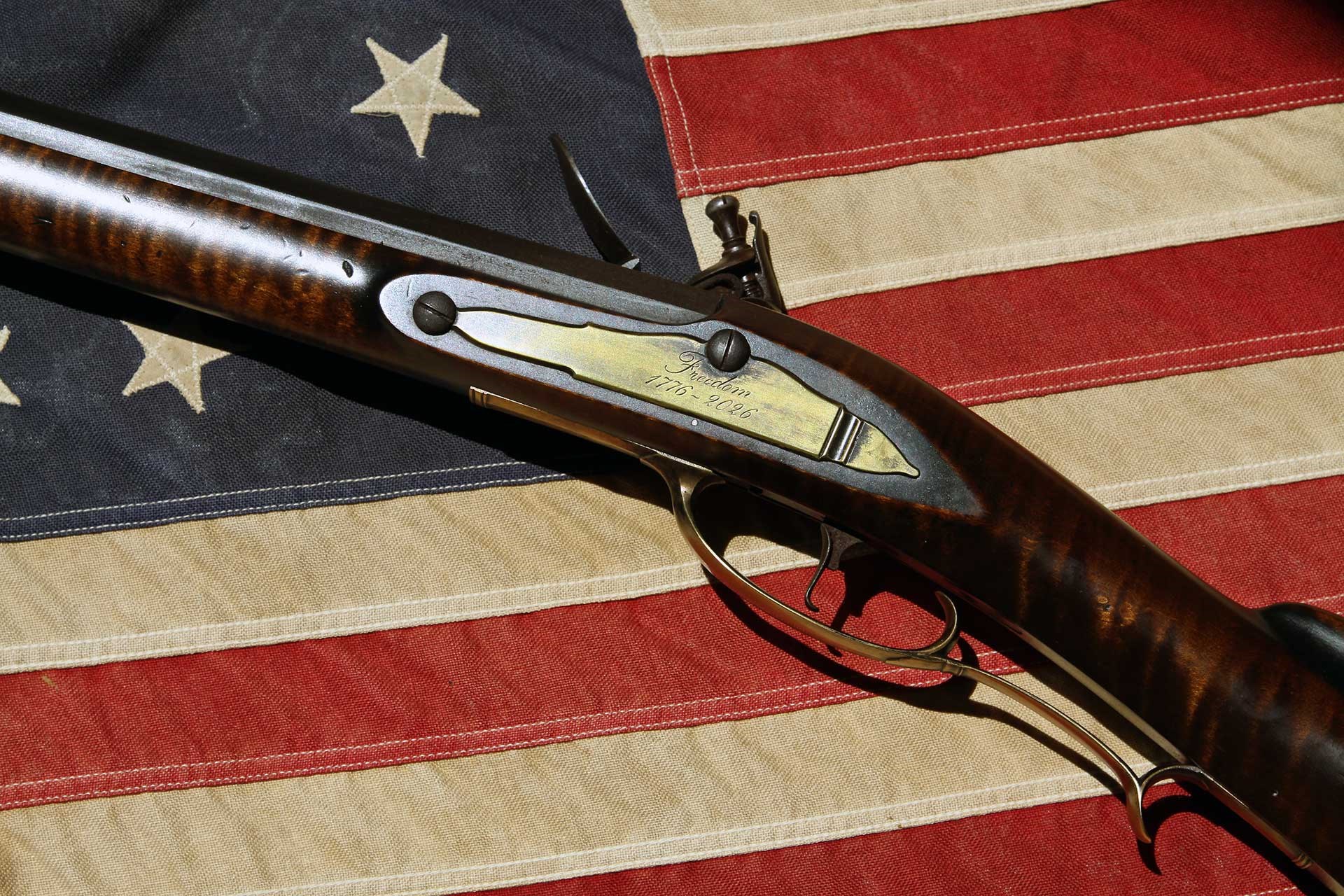
But there was one more step I wanted. To properly commemorate the occasion and the rifle, I had the brass sideplate engraved with “Freedom 1776-2026” in 18th-century script. Now my rifle was complete, and just in time. It arrived at my house via UPS on Friday, July 3, but I purposely did not unpack it until the next day—July 4, 2026. Upon testing the lock, David’s words came back to me: “It sparks like the 4th of July!”
It was a fitting accolade for my tribute to our country’s 250th anniversary—a masterfully crafted, historically significant rifle that, to me, symbolizes the freedom associated with our great nation.
Read the full article here