Somehow, enemy firearms always seem more interesting than your own. Maybe it is simple battlefield curiosity, or maybe it’s a case of the grass being greener on the other side. Whatever the reason, American troops took a healthy interest in Axis small arms during World War II. Sometimes they were simply looking to collect a war trophy. On other occasions, their interest was deadly serious, as the GIs and Marines were looking to use those firearms against their former owners.
“Knowing something about these weapons might prove mighty useful someday.”
During the summer of 1944, the U.S. Signal Corps produced a color film titled “Seven Infantry Weapons of the German.” The film quickly provides important details about the Mauser 98k, the P08 Luger pistol, the MP40 submachine gun, the MG34 and MG42 machine guns, the Stielhandgranate (stick grenade), and the 80 mm Granatwerfer 34 mortar. In the film, there’s no bad-mouthing the German gear or gung-ho propaganda praising U.S. small arms above all else. In this case, the U.S. military took an exceptionally practical approach, as the narrator explains:
“Talk to veterans of the African and Sicilian invasions, talk to the paratroopers that led the Allied armies into France. Many of them could tell of instances in which their own weapons were out of service or unavailable, and in order to get themselves out of a tight spot, enemy weapons were found and put to good use. This is a common thing; it has happened many times. So, along with a million and one lessons the Allied soldier has to learn, there must be added at least a brief glance at the seven basic infantry weapons of the German.”
Much of the time, the U.S. Military advised against collecting enemy arms as souvenirs, citing safety concerns and the need to maintain the technical intelligence of enemy equipment recovered on the battlefield. But in this case, the life-saving practicality of using captured small arms was clearly addressed—”in order to get themselves out of a tight spot.” What might otherwise seem like a Hollywood contrivance could make a real difference in a firefight.
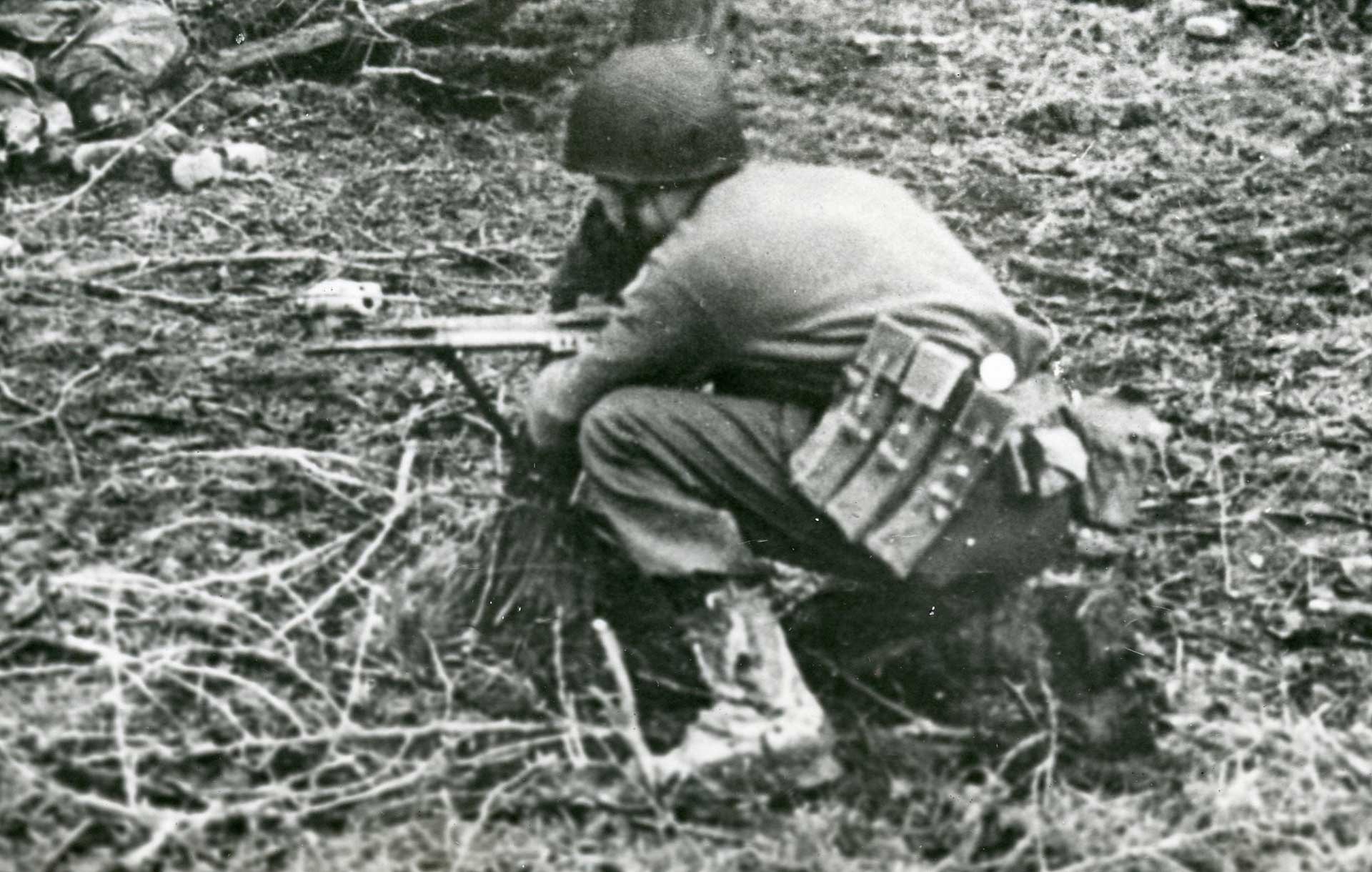
Ask any NRA member, and they’ll tell you that training makes all the difference in safe handling of a firearm while delivering the best performance. However, small-arms training was frequently lacking, particularly with replacement troops as the war continued. Not every Soldier or Marine could simply pick up an enemy firearm and put it to use.
The 1944 training film “Automatic Weapons: American vs. German,” was primarily designed to teach new recruits how to identify the sounds of German machine guns and help ease the fears of the fast-firing MG42 (The so-called “Hitler’s Buzz Saw” featured a cyclic rate of up to 1,200 rounds per minute). This film clearly identifies the firing signatures of the MG34, the MG42 and the MP40 SMG.
Interestingly, the 12th Army Group’s “Battle Experiences in Normandy” contained a short passage that described how important audio can be in firearm recognition: “Several men wished they had received training in recognizing the sound of German weapons.”
The Dangers of a Characteristic Sound
Once learned, the sound of enemy small-arms fire won’t be forgotten. This could have dire consequences for an American soldier choosing to use a captured firearm. This was discussed in the U.S. Army journal “Combat Lessons,” in the summer 1944 edition. Lieutenant Fosdick, a platoon leader of the 4th Infantry Division in combat in France, reports: “When captured enemy weapons are to be used by any member of a unit, all members of the unit must be so informed. On one occasion a sergeant was killed when he began to fire with a captured German machine pistol. This weapon has a characteristic sound when fired. Other troops of the sergeant’s own unit thought a German sniper was in their midst and fired on the sergeant, killing him.”
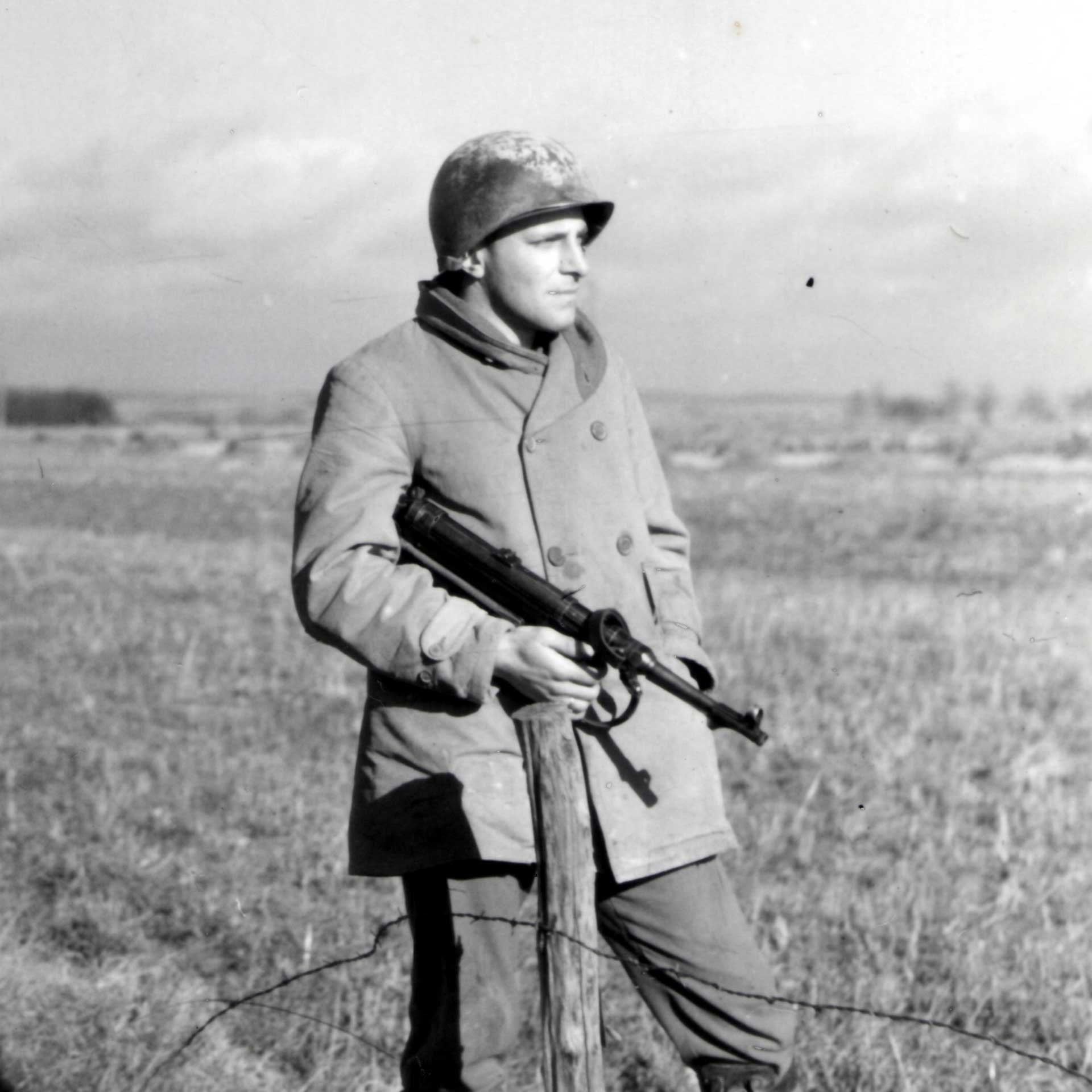
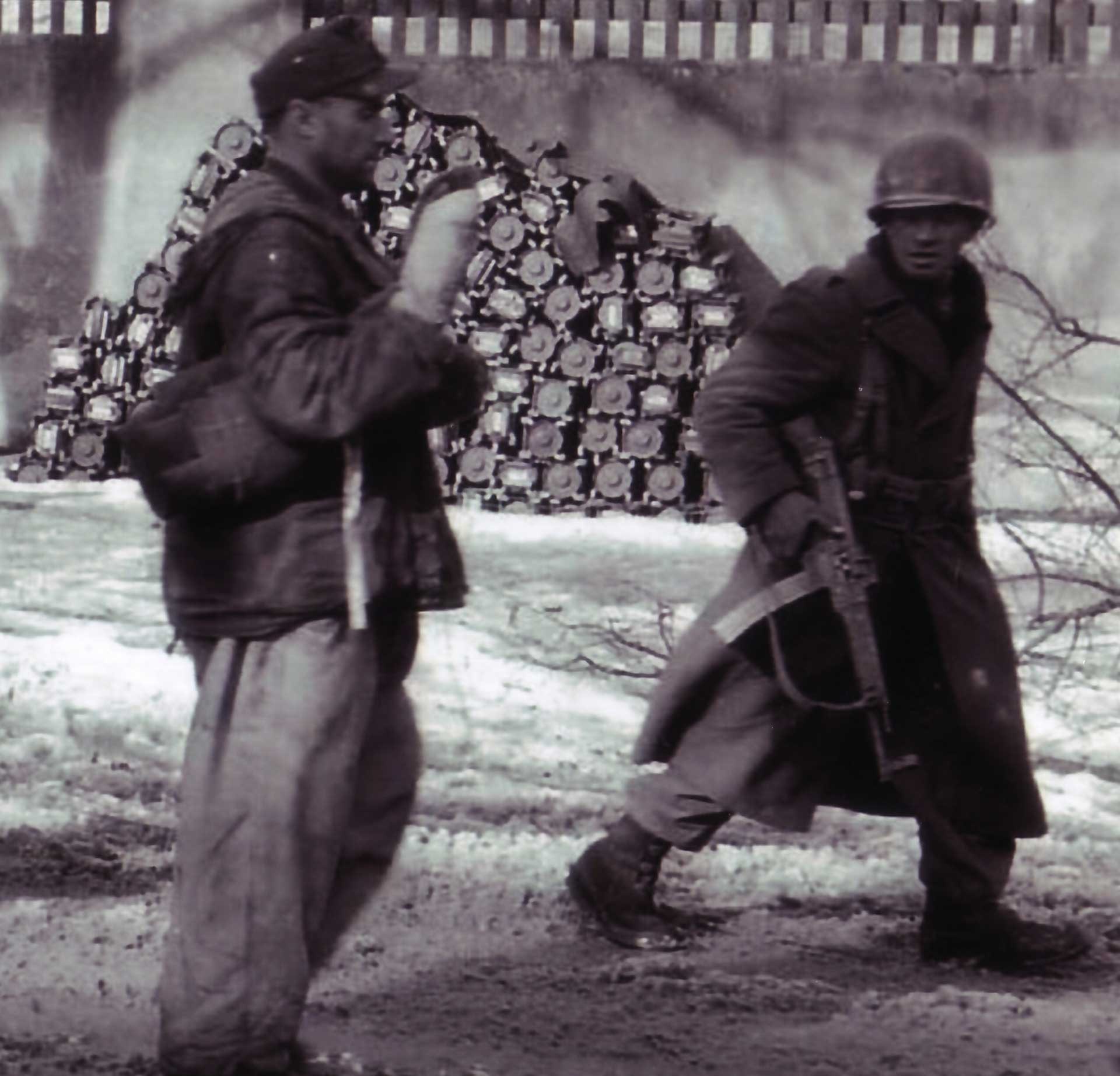
Despite its distinctive firing signature, the German MP40 seems to be the most used of any captured Axis small arm. For many American GIs, it quickly transitioned from a war trophy to a useful tool. The MP40 was an impressive design, and its combination of light weight and short-range firepower made it an attractive option as a battlefield pickup.
The German SMG was popular with Allied infantrymen across the board. The great W.H.B. Smith wrote this about the MP38/40 in his “Basic Manual of Military Small Arms” (1942 edition): “A study of Russian news reels discloses а very wide use of this weapon by Russians, both soldiers and partisans. The Russians have shown amazing adaptability in converting to their use superior types of captured equipment.”
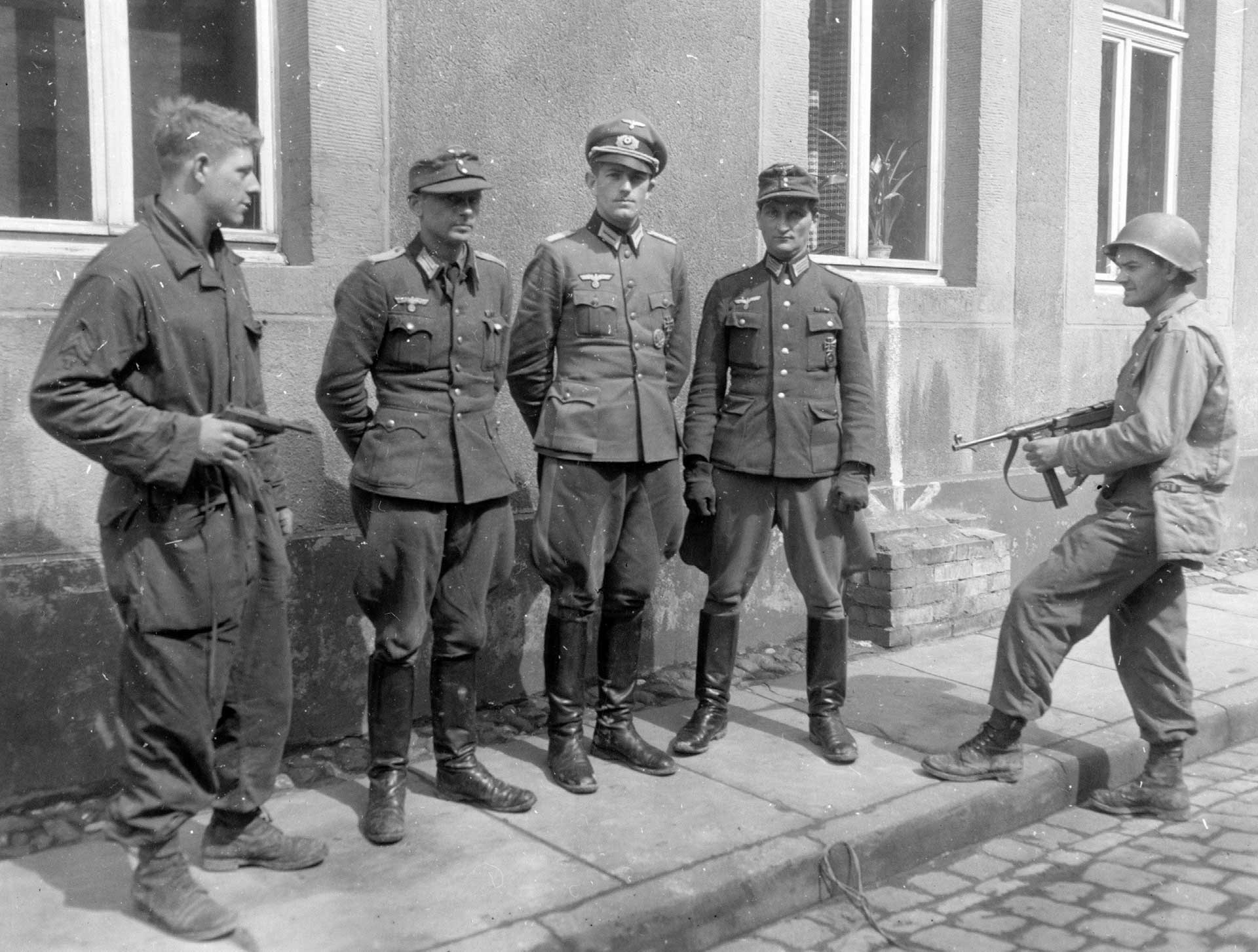
Consequently, U.S. Army documentation of German small arms didn’t hesitate to provide information how to use the MP40. The following is from one infantry training manual detailing the use of the MP40:
How To Operate:
(1) Safety. The only safety on these guns is the notch marked “S” (Sicher=”safe”) at the butt end of the cut made for the operating handle in the receiver.
To make the gun “safe,” pull the operating handle back as far as it will go and then push it upward into the safety notch. This is not a positive safety, as a jump or a fall may disengage the operating handle from the safety notch and leave the gun ready to fire.
(2) To load and fire. Press the thumb catch above the pistol grip in order to release the skeleton shoulder stock from its folded position. Snap the shoulder stock into the extended position and unfold the butt plate. Pull the operating handle back and switch it into the safety notch. Insert a loaded magazine into the feedway on the underside of the receiver until the magazine catch engages. Disengage the operating handle from the safety notch; then aim and squeeze the trigger. The magazine can serve as a grip while firing (but see fig. 9 for the German method of firing).
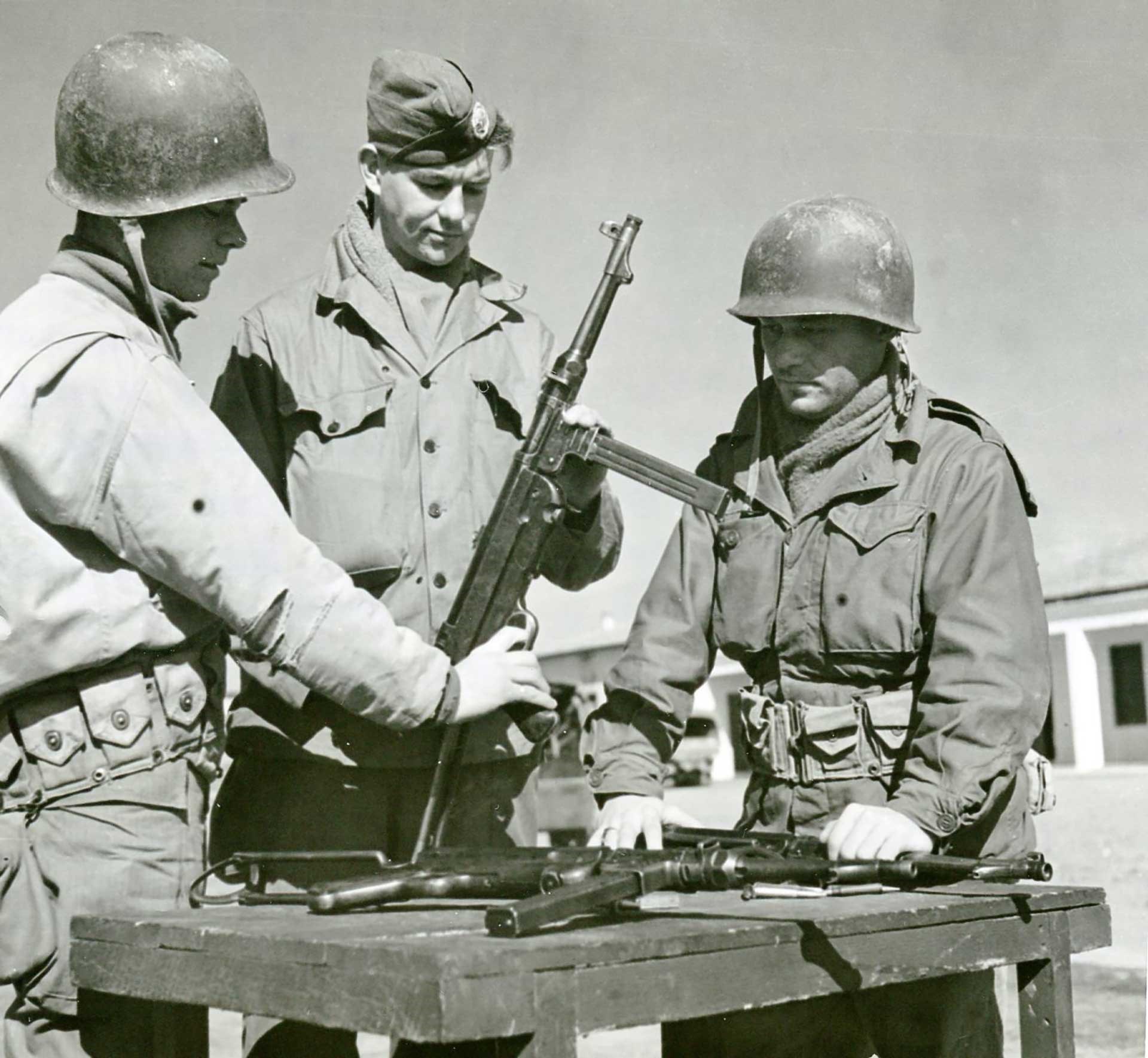
It is interesting to note that the “fig. 9” mentioned shows that the Germans were taught not to grasp the magazine. The US training film “Enemy Weapons: German Infantry Small Arms” contradicts the printed documentation, instructing the troops: “When firing this weapon, don’t grasp the magazine as it will cause a malfunction.” If we were to decide whether or not to grasp the MP40 magazine while firing from watching Hollywood productions over the years, we would have to conclude that everyone always grabbed hold of the 32-round mag.
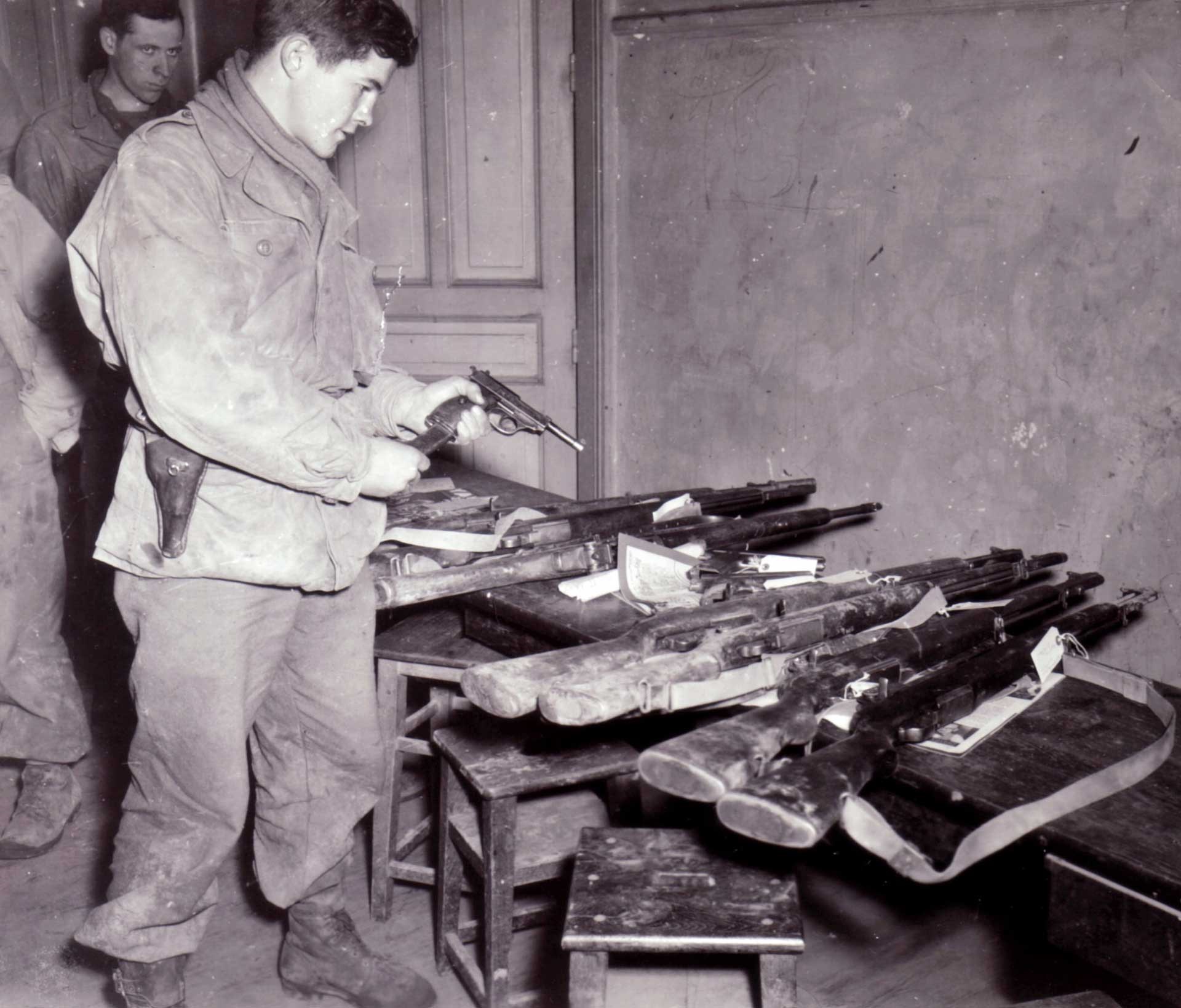
Other German firearms were popular among U.S. troops, particularly the 9 mm P08 Luger and the Walther P38 pistols. American troops loved handguns, and since there were never enough M1911 .45-caliber handguns to go around, many GIs picked up a German sidearm to serve as their backup weapon.
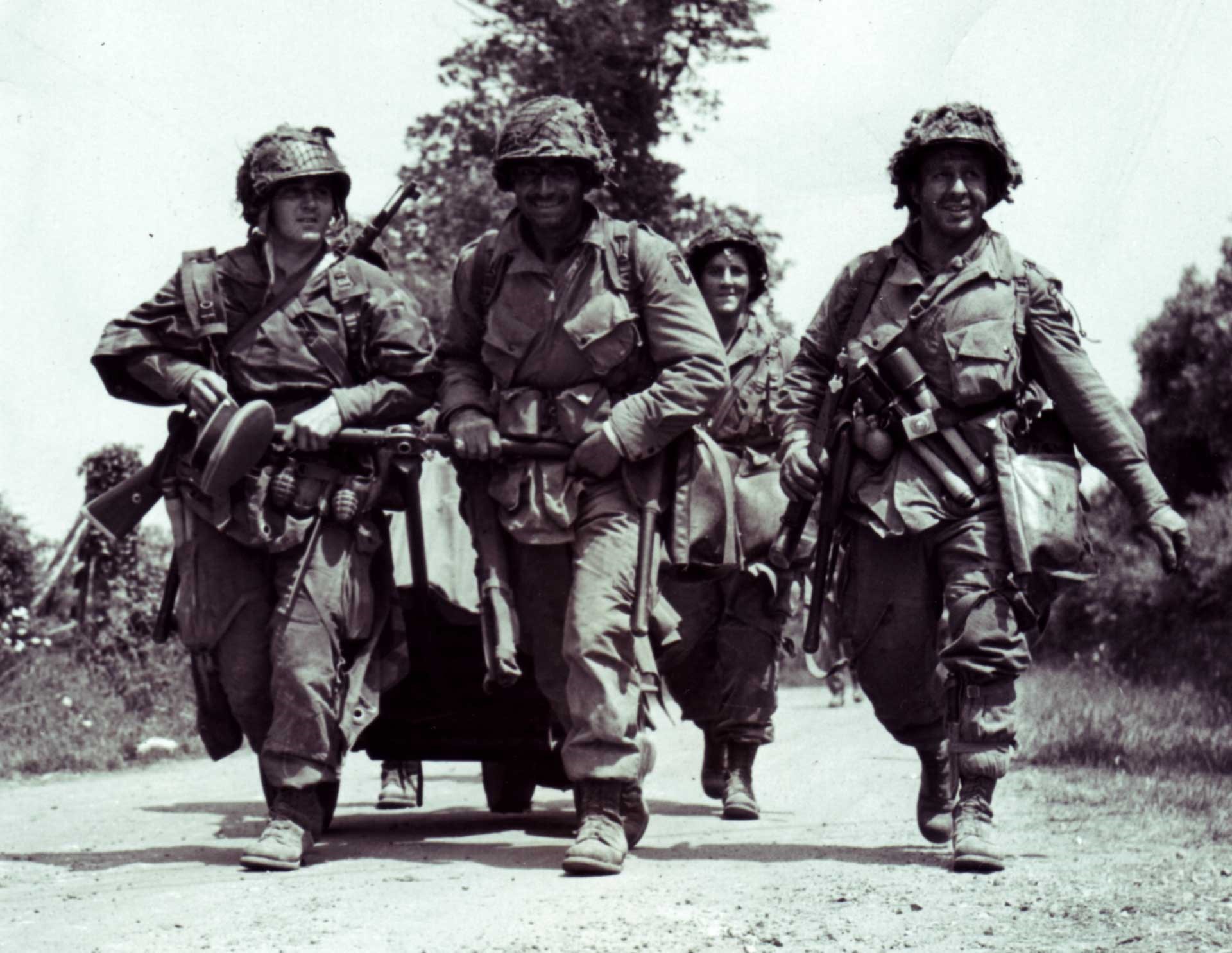
There are an abundance of photos that show American troops using the German Mauser 98k bolt-action rifle (8 mm Mauser)—and this makes sense, as the Mauser rifles were very similar to the Springfield M1903 rifle with which many GIs were familiar. Offering good range and accuracy, it seems the Mauser rifle often used by artillery crews or support troops looking for something with a little more power than their M1 carbines.
Late in the war the German Sturmgewehr StG43/44 rifles attracted a lot of GI attention, and these selective-fire arms were appreciated for their combination of moderate weight and high firepower.
The Ammunition Issue
When GIs opted to use captured German small arms, that choice came with significant challenges. Beyond the dangers of the “enemy firing signature” of the firearm, ammunition supply and spare parts availability were ongoing problems. With guns like the MP40 and StG44, extra magazines were particularly valuable and usually in short supply.
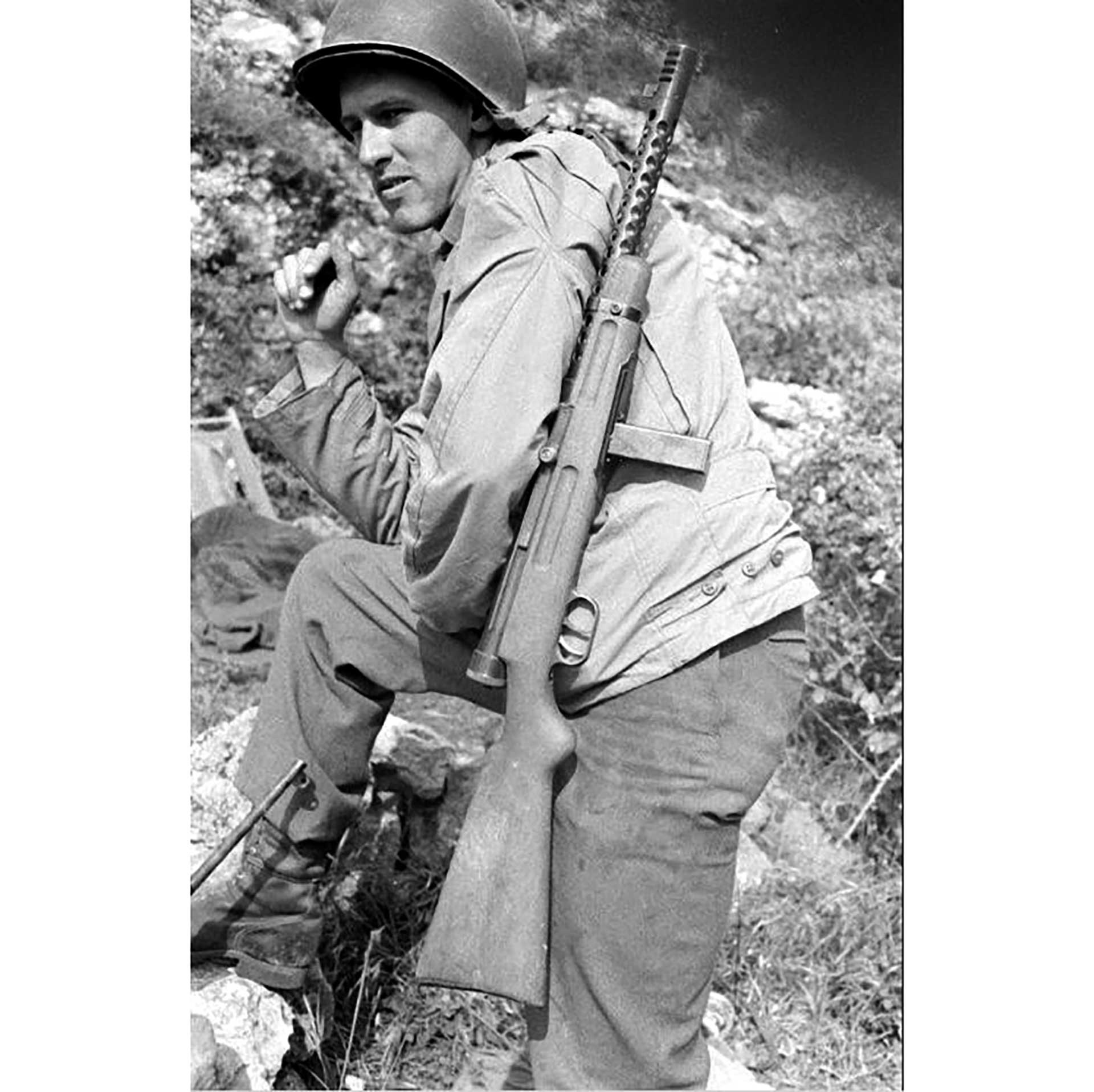
The German MG34 and MG42 machine guns were very effective and highly regarded by American troops. However, both of the MGs consumed ammunition at a very high rate, and this limited their use as captured arms to emergency situations.
Not every unit commander approved of the use of captured small arms, and there were some who were specifically concerned about booby traps. One infantry officer in the European Theater of Operations (ETO) commented in “Combat Lessons:” “I have had no casualties from booby traps in my platoon due to the fact that I do not permit my men to pick up enemy weapons, watches or any other articles from enemies killed in action.”
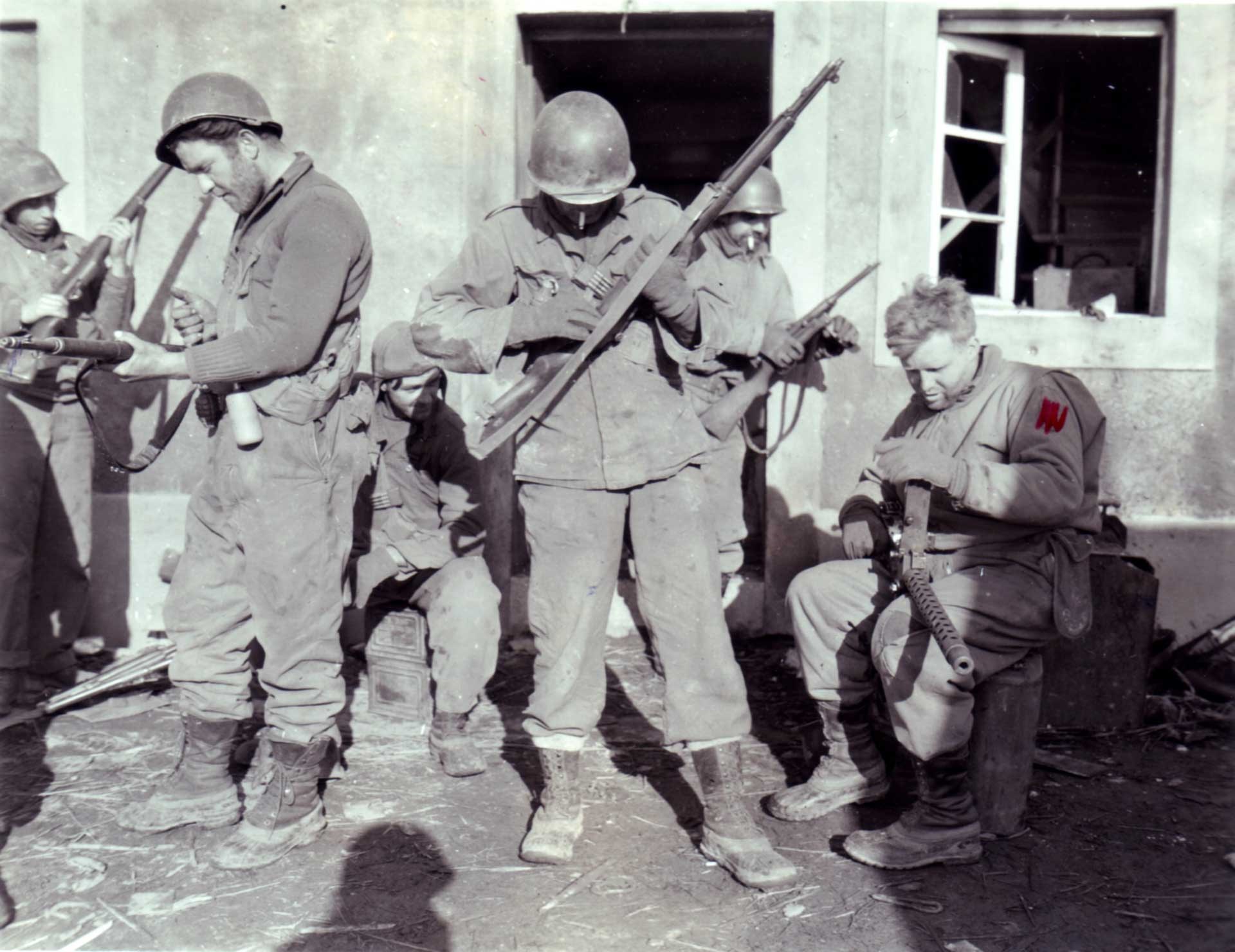
The concern about booby-trapped firearms in the ETO is not without basis. The February 1945 edition of “Intelligence Bulletin” warns about “charges concealed in weapons:”
The Germans sometimes conceal a small charge in the mechanism of a rifle or Luger pistol that they plan to leave behind in a fairly obvious place, to attract the attention of Allied soldiers. The charge, which is sufficiently powerful to injure a man severely, is detonated if the trigger of the weapon is pressed.
Captured Small Arms in the Pacific
“Generally speaking, while Japanese weapons are extremely serviceable and well-made, they lag far behind our own in design, durability, and effectiveness.”
From “Enemy Weapons: Japanese” (US Army Film Bulletin #80, 1943)
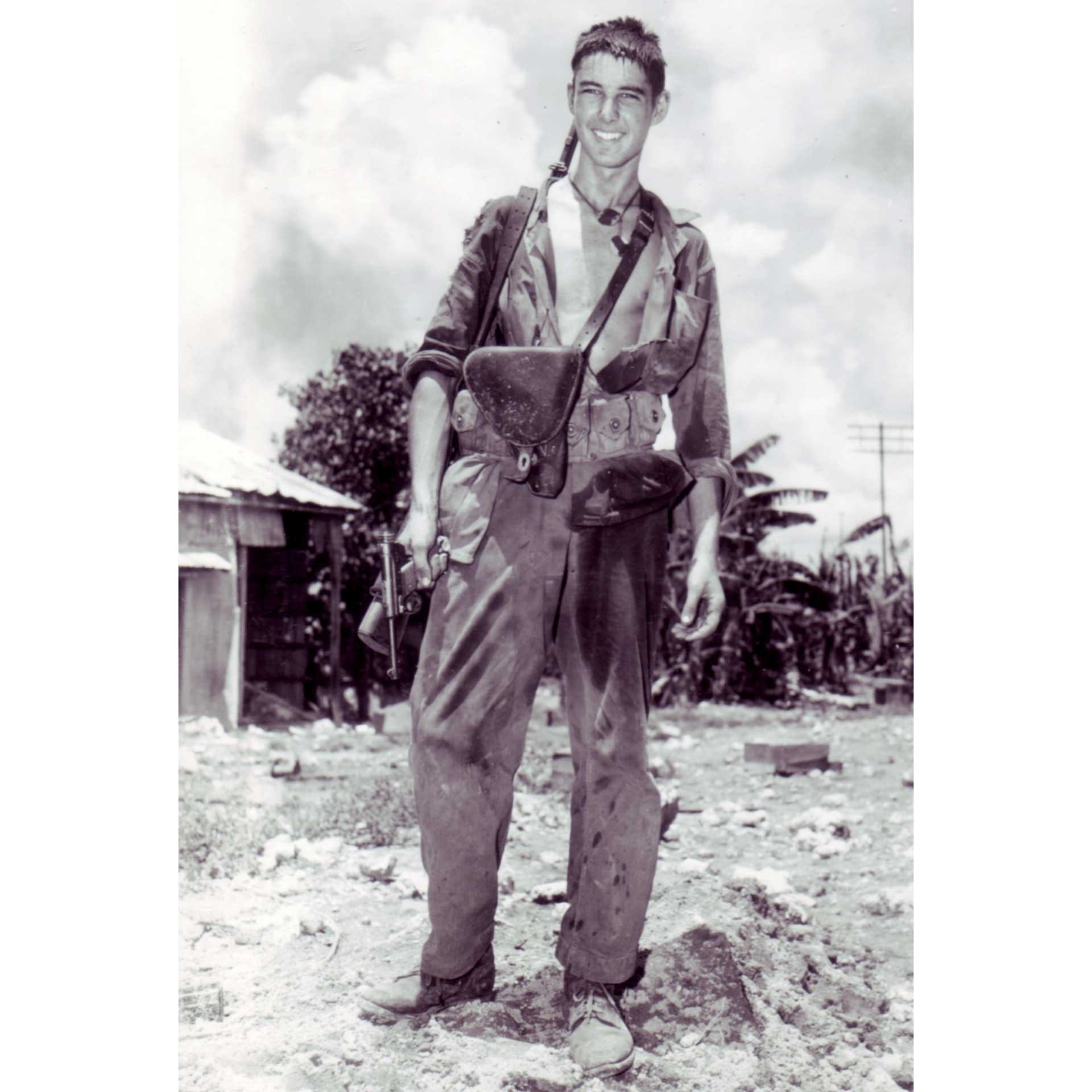
For the most part, the U.S. military had a relatively dim view of Japanese small arms, particularly when compared to German guns. Consequently, American troops were less likely to use captured Japanese guns in combat. Even so, there are many instances of Marines and GIs supplementing their firepower with small arms of the Rising Sun.
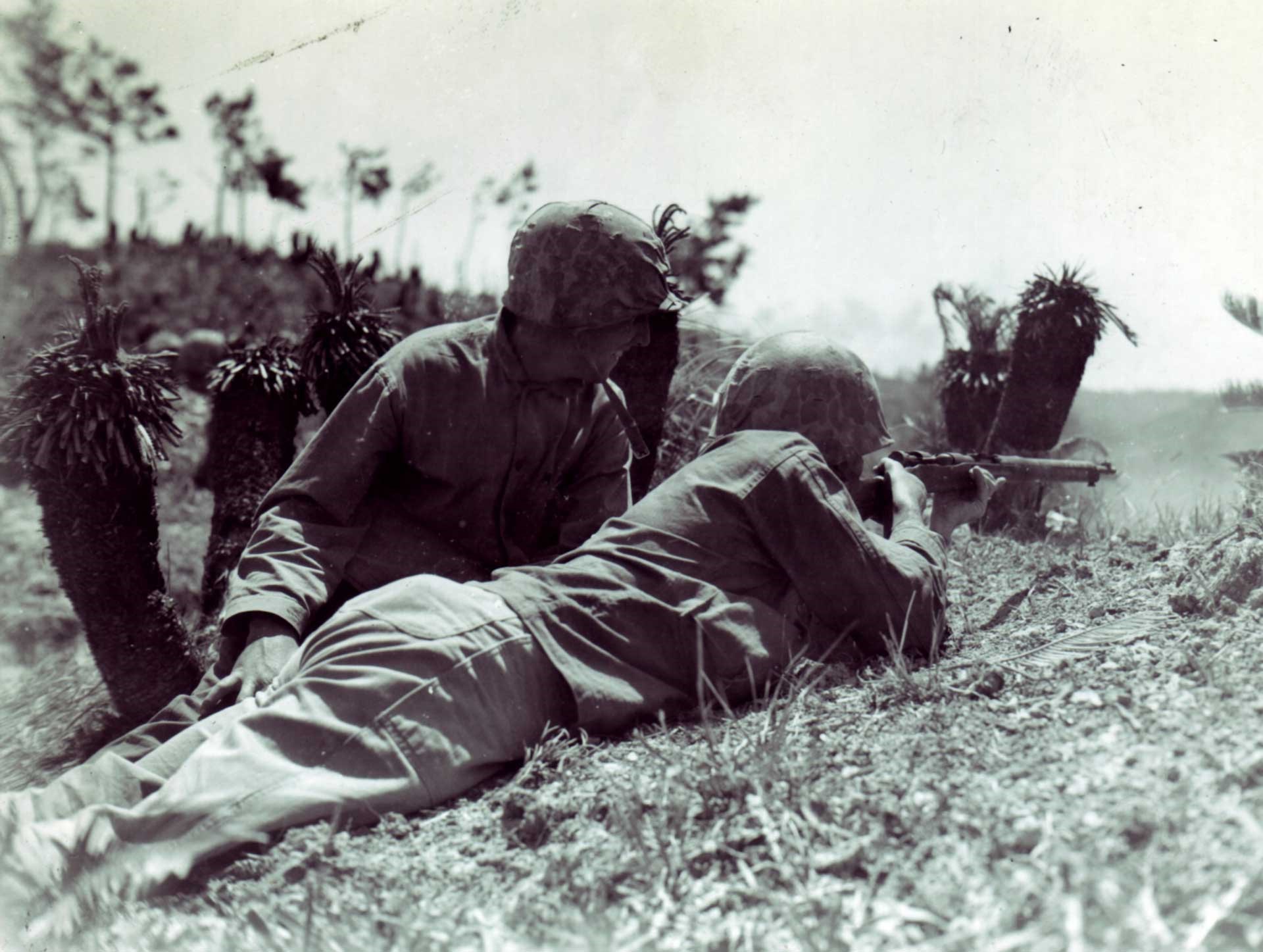
As in Europe, U.S. troops gladly used captured pistols as a backup firearm. In the Pacific Theater, the Nambu Type 14 and the Nambu Type 94 (both chambered in 8 mm Nambu) pistols were popular as war trophies and occasionally saw use as backups.
Lieutenant Colonel John B. George, writing about his World War II experiences in “Shots Fired in Anger” (1981, National Rifle Association), offers us a tremendous resource on Japanese small arms. About the Nambu Type 14 pistol, George said: “They were well finished guns, nice to handle and shoot.” And about carrying a captured Nambu: “I would have put up with the weight of it rather than to have thrown it away.”
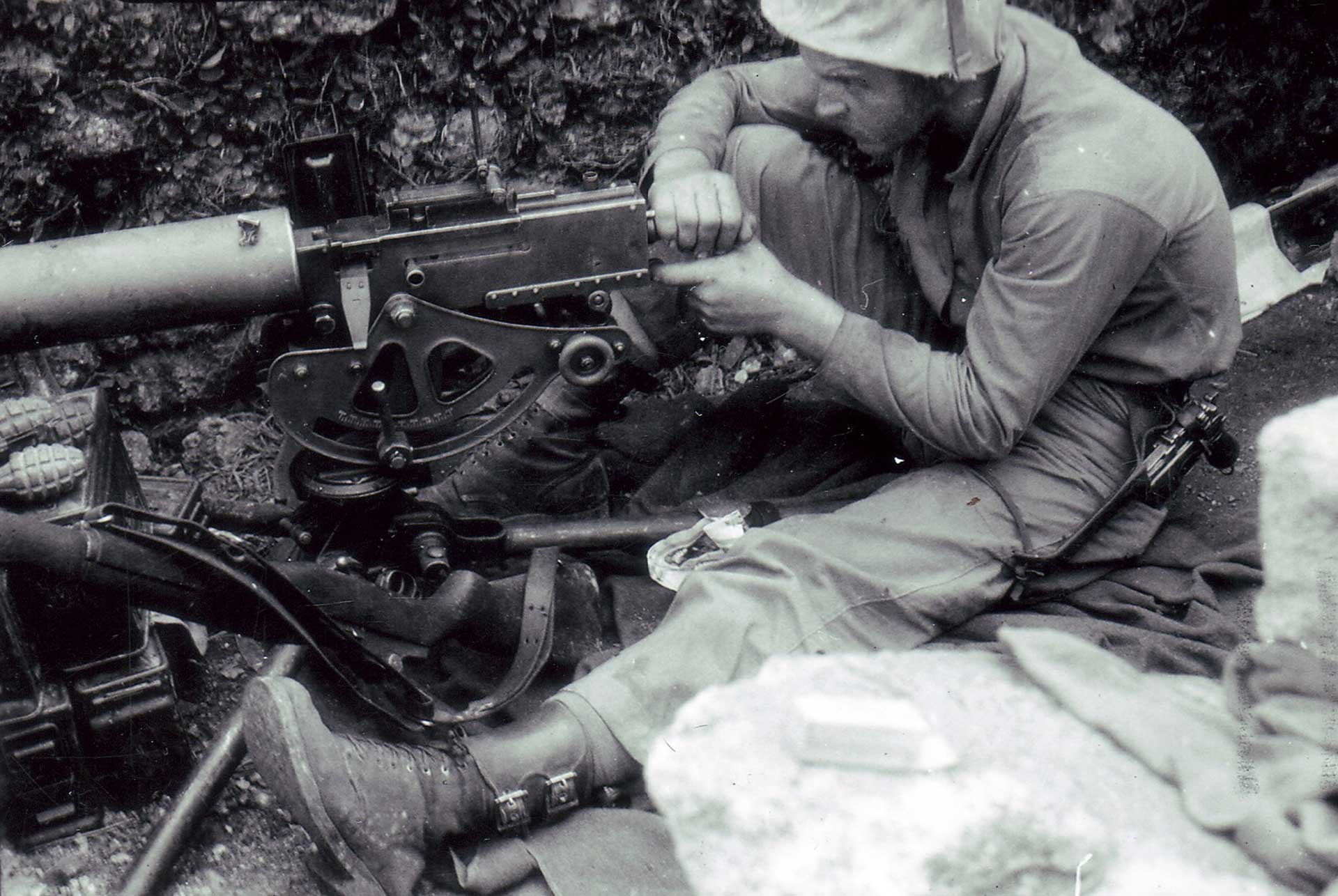
Several U.S. reviews of Japanese firearms described the Arisaka rifles as similar to the American M1903 Springfield rifle—and both were based on the Mauser design. Lieutenant Colonel George made a careful study of Japanese rifles and described them thusly:
“They made their rifles entirely too long. The standard Model 38 6.5mm for instance, had a ridiculous thirty-one and a quarter inch barrel screwed into it, which gave the weapon an overall length of fifty and a quarter inch. The only worthwhile purpose served by making the barrels that long was a great reduction of muzzle blast and flash—which furnished the American uninformed (including one high ranking general) with reasons for stating erroneously that the Japs had developed an absolutely smokeless powder, much better for jungle fighting than any of ours.”
The Arisaka rifle I have described is a pretty good gun. It is clumsier than any of ours, but in slow fire it is easier to shoot. It has practically no recoil, what with its lengthy barrel, its moderately loaded cartridge, and its weight of ten pounds with sling. It has fair accuracy up to about 500 yards…”
The Japanese Type 89 Grenade Discharger (sometimes nicknamed “Knee Mortar” by U.S. troops) made a tremendous impression on American forces during World War II. The 50 mm launcher was so effective in jungle fighting that several U.S. combat leaders requested that it be copied and made for American troops.
The December 1942 publication “Notes on Jungle Warfare: from the US Marines and US Infantry on Guadalcanal Island” openly stated: “The Japanese knee-mortar is needed. An all-purpose hand grenade, which, in addition to being used as a hand grenade, can be used in the knee-mortar and as a rifle grenade, should be adopted.” While the U.S. Ordnance Department never developed a grenade discharger during World War II, American reviews of Japanese infantry arms described the “knee mortar” in detail to help U.S. troops put captured examples into action.
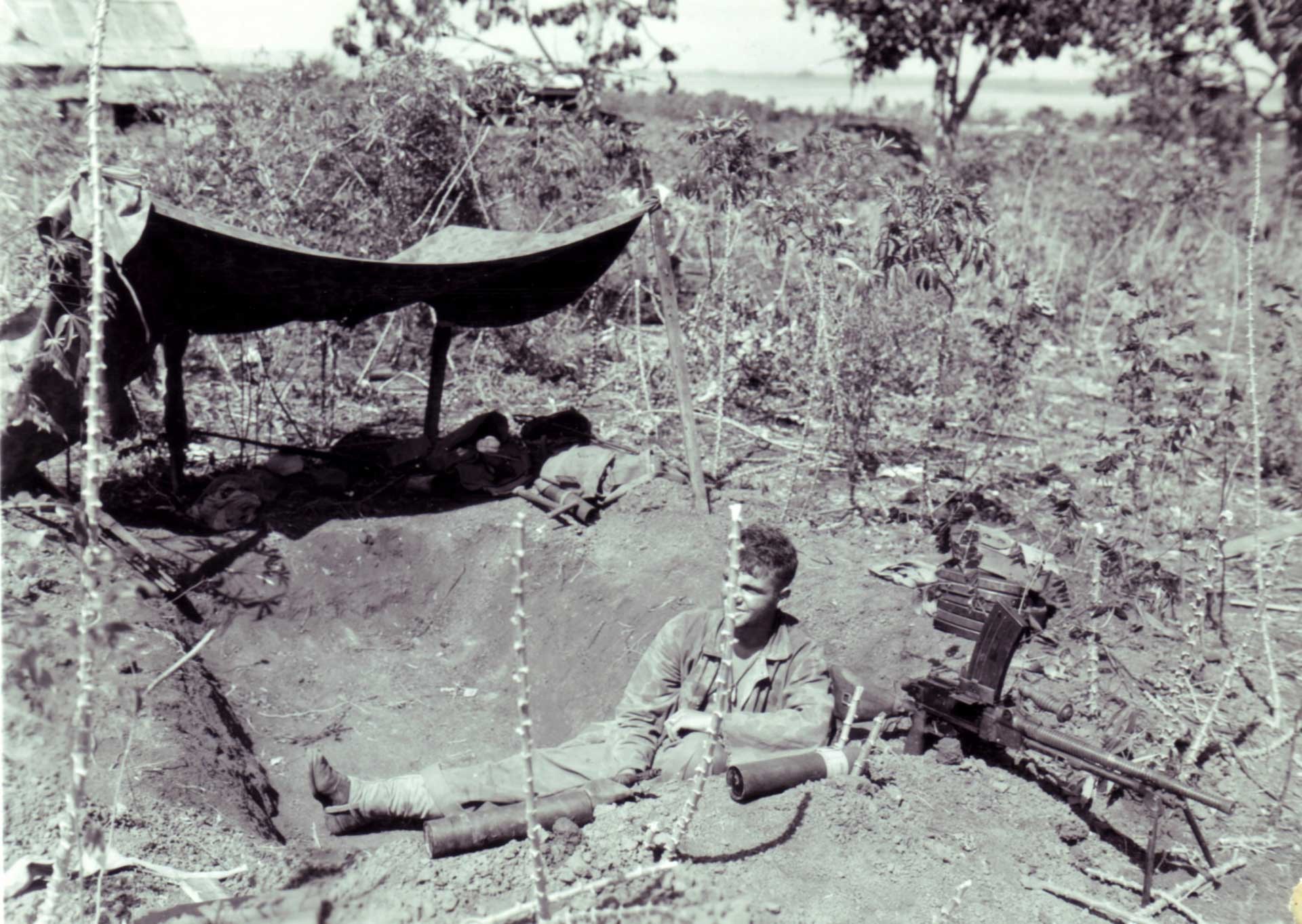
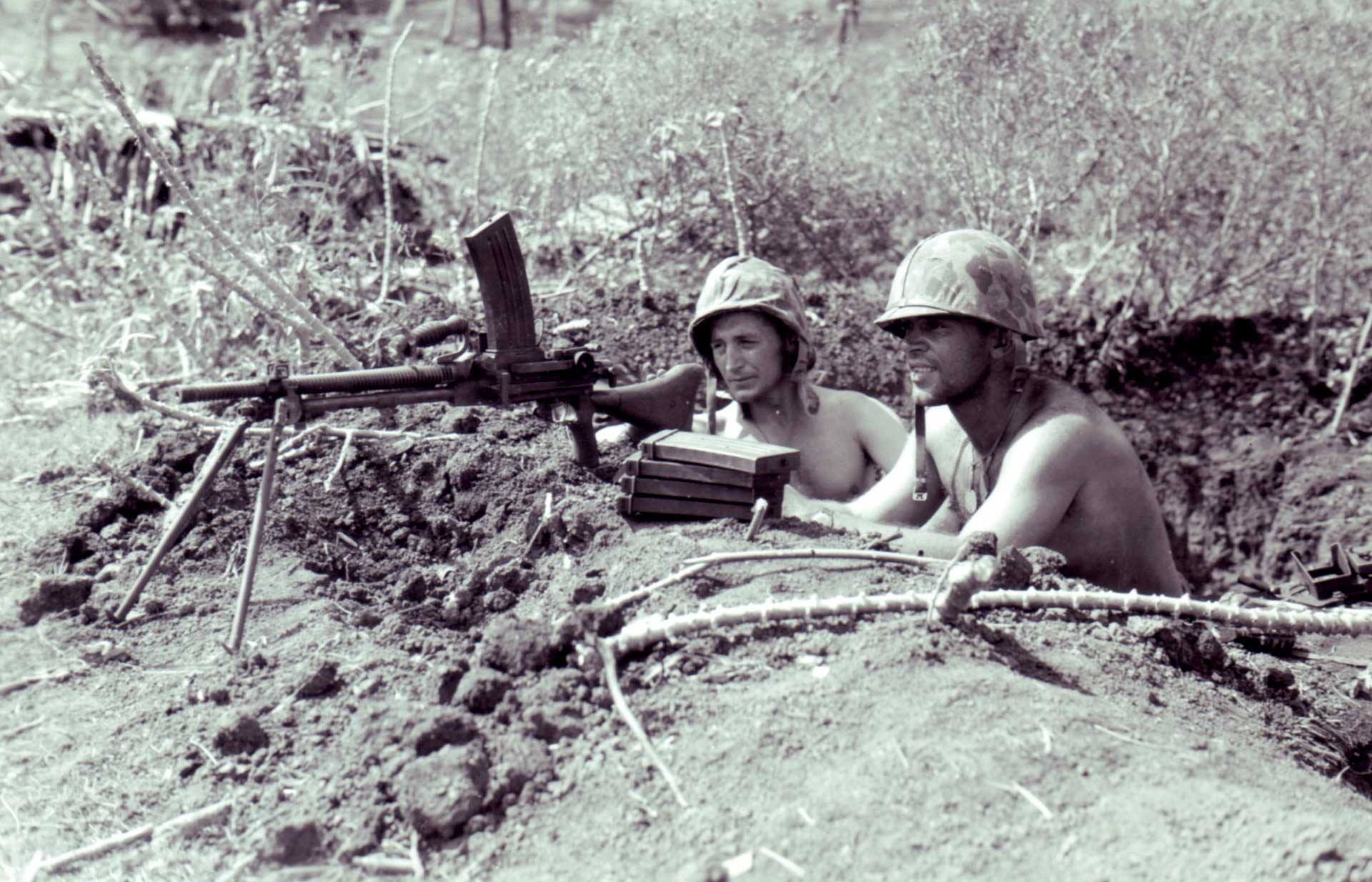
Photographs show that the Japanese Type 96 Light Machine Gun (6.5 mm Arisaka) was sometimes used to supplement American firepower in defensive positions. The 20-pound Type 96 was comparable to the American Browning Automatic Rifle and offered a carrying handle above the barrel and a 30-round magazine capacity. The cyclic rate was highly controllable at 550 rpm.
Comparing the BAR and the Type 96 LMG, Lt. Col. George said: “I have shot both weapons rather extensively and I am sure of myself when I say that I would rather be armed with a M1936 Nambu than with any of our BAR types. I believe it to be a better gun, though slightly less reliable in function.”
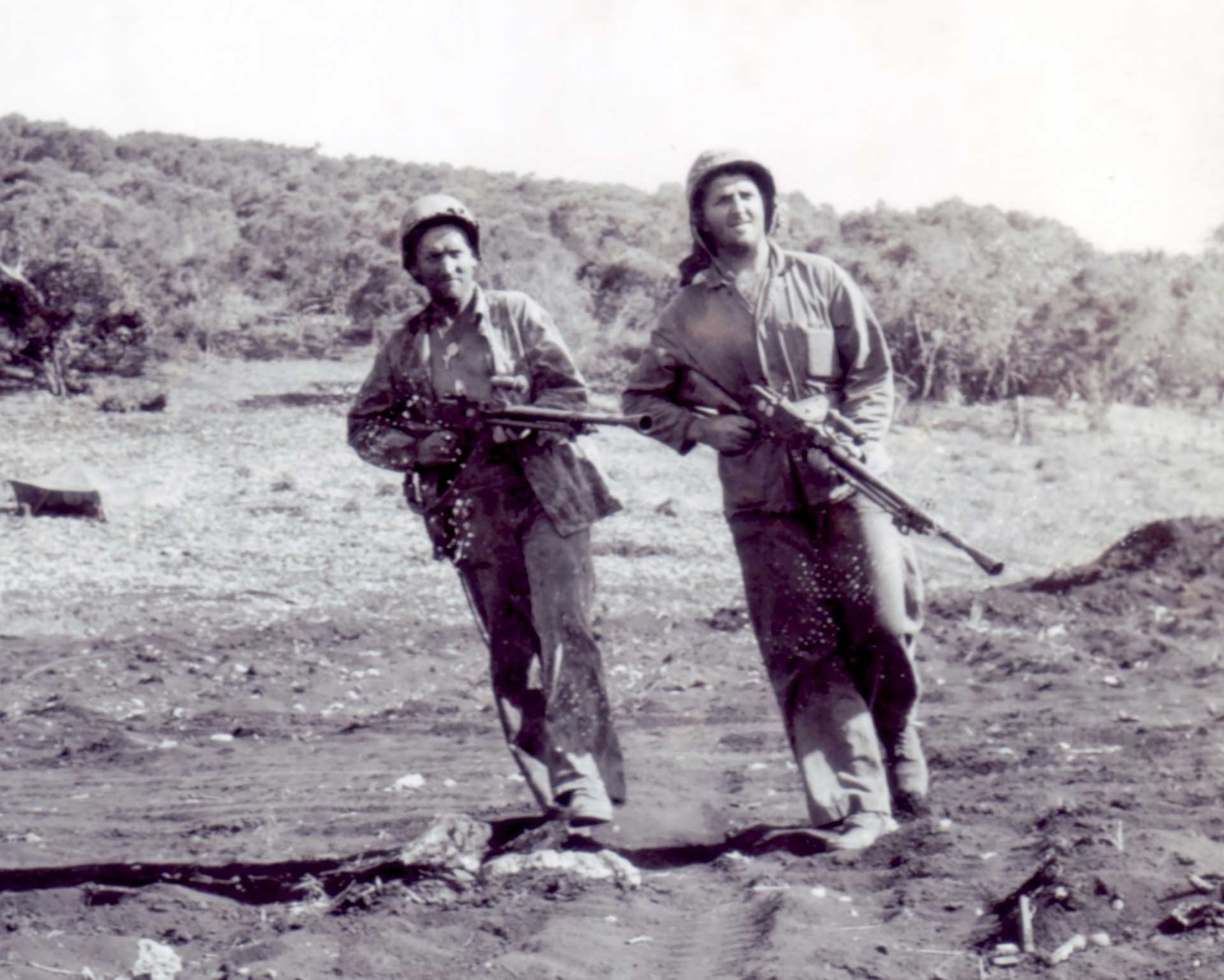
The December 1943 U.S. War Department publication “Japanese Infantry Weapons” provides an entire chapter on light machine guns and offers many details on the operation of the Type 96 Light Machine Gun. For example:
How to Operate
(1) Safety. The safety is located on the left side of the trigger housing in front of and above the trigger. In the horizontal position it is set to “fire”; in the vertical position, to “safe.” At “safe” the trigger mechanism is locked by the surface of the pin preventing movement of the trigger. At “fire” the cutaway portion of the pin allows the sear to move.
(2) To load and fire. Open the magazine-opening cover on the top of the receiver. Insert a loaded 30 round magazine into the opening, catching the front side of the magazine first and pulling it back until the catch on the back of the magazine opening engages the magazine. Pull the operating handle to the rear until the sear engages the operating slide. Return the operating handle to its forward position and set the range on the sight drum. The gun is now ready to be fired.
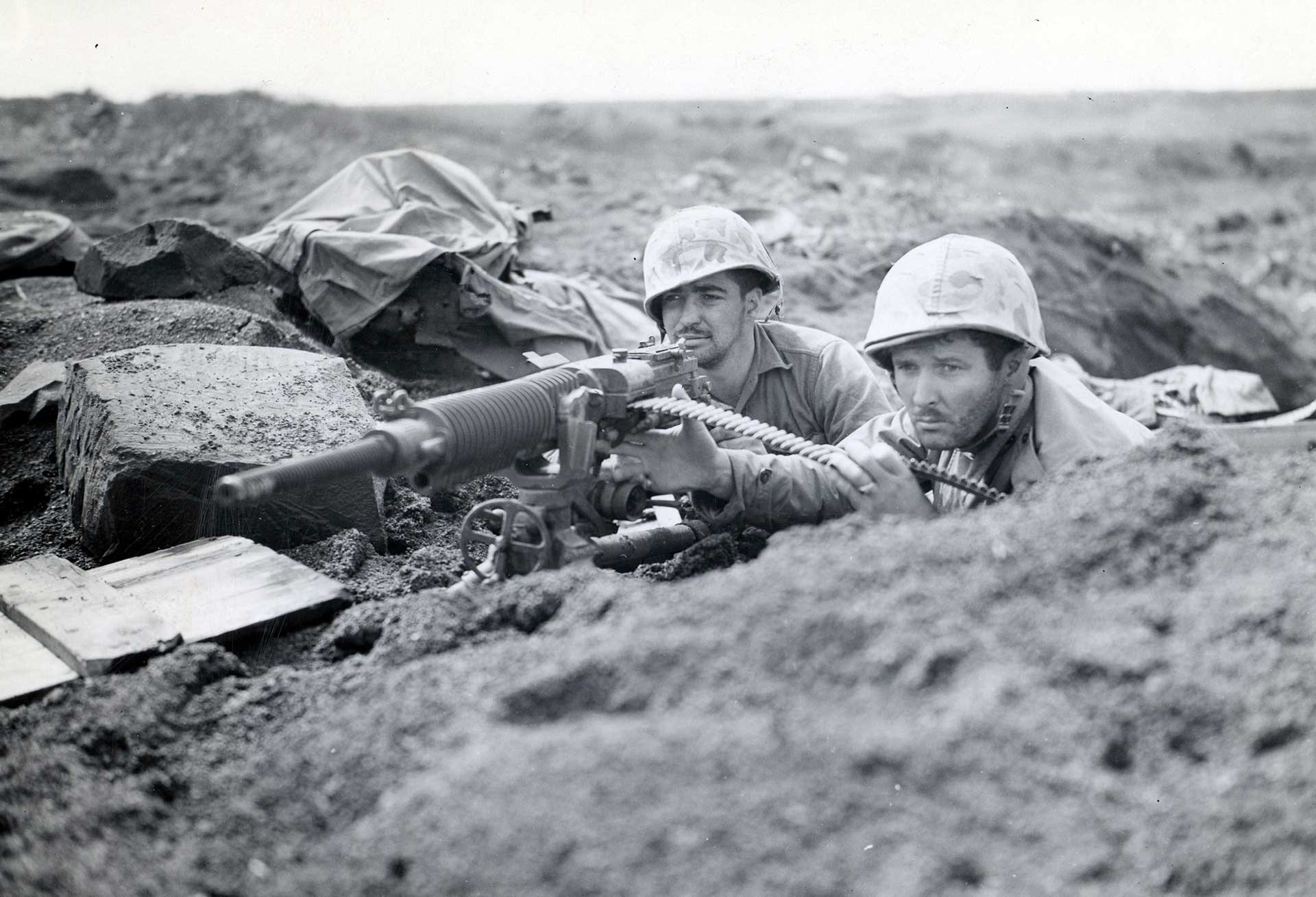
Apparently, the Japanese Type 96 LMG and the U.S. Thompson SMG had a similar firing signature, as noted in this report from the 43rd Infantry Division on Munda: “In spite of its handicap of sounding like a Japanese .25 caliber light machine gun, the Thompson submachine gun was very satisfactory for specialized personnel such as linemen, forward observers, vehicle drivers and reconnaissance personnel.”
Finally, in May 1945, the U.S. Army publication “Battle Experiences against the Japanese” noted that some preparatory training on captured small arms went a long way in combat with this comment from the Sixth Army headquarters:
“Training in the operation of Japanese weapons proved its merit with one task force. Several types of Japanese weapons were made available for familiarization firing. Good use was later made of captured weapons to bolster defenses.”
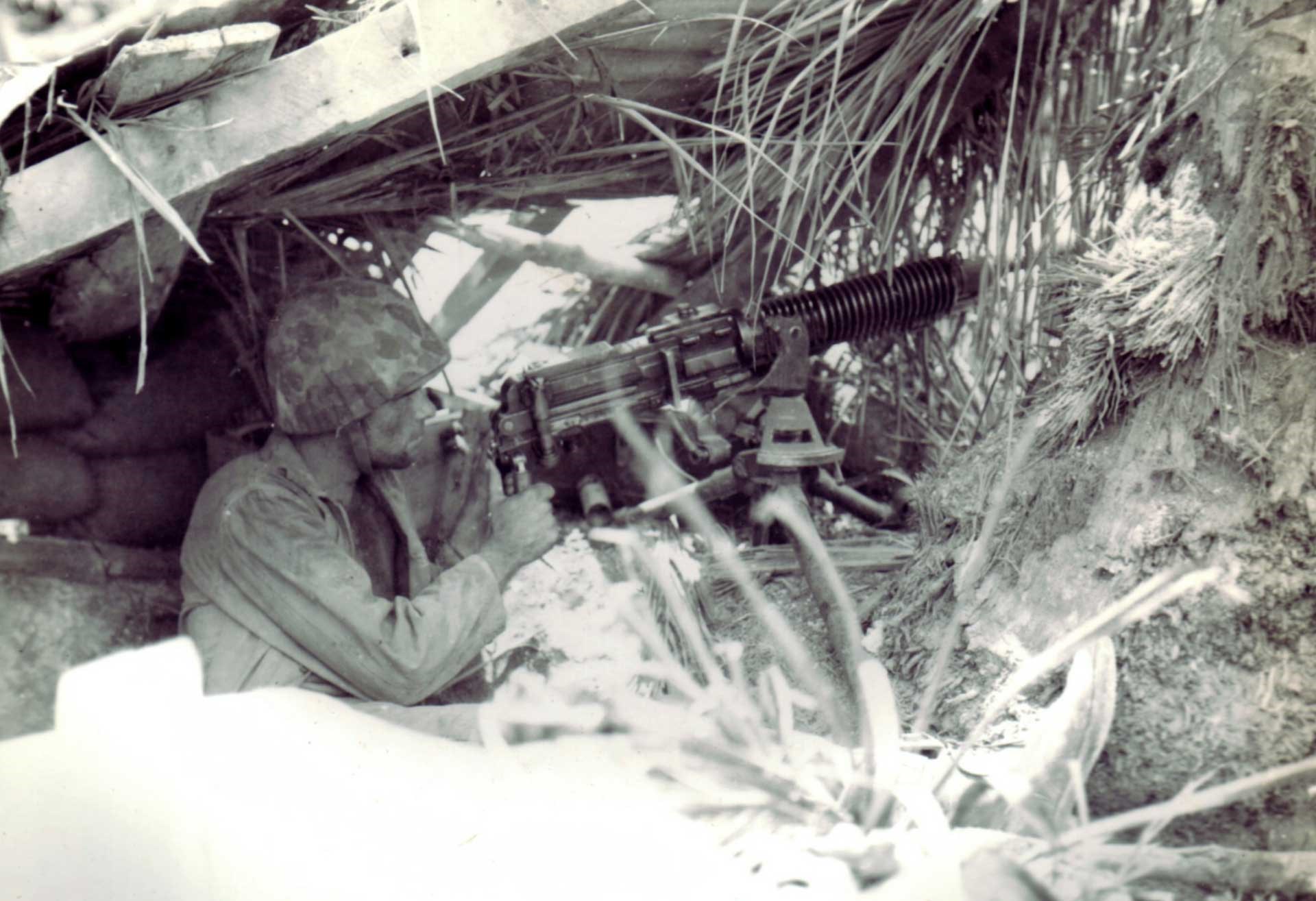
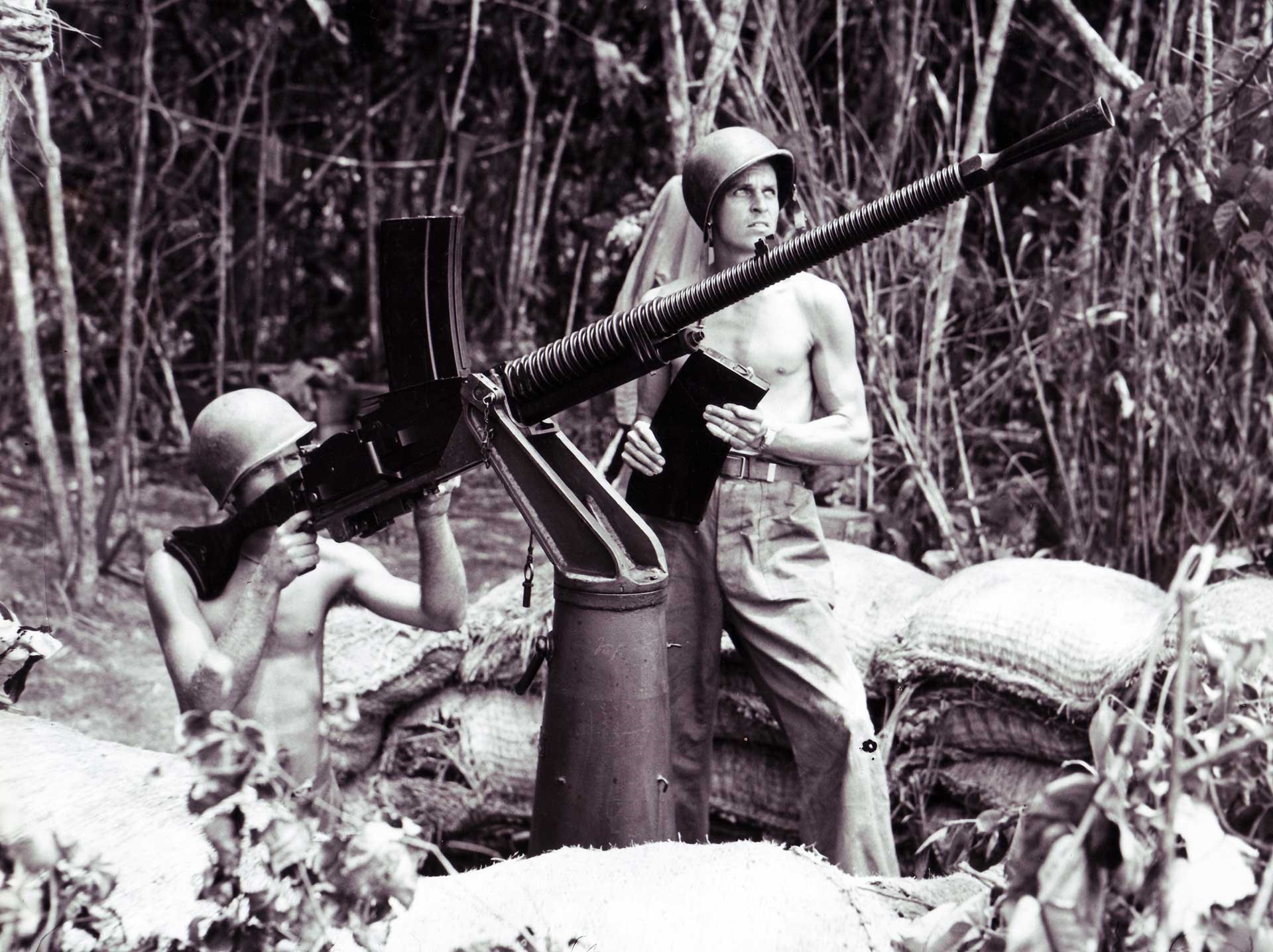
Throughout World War II, U.S. troops proved that, no matter how well they may be armed at the outset, tactical conditions may demand that war trophies become combat-ready in an instant, and the ability to use captured enemy firearms can be the deciding factor in a desperate firefight.
Read the full article here